
Browse "Things"
-
Article
Music at Expo 67
Expo 67 was the largest event among the celebrations marking Canada's centenary. It ran from 28 April to 27 October 1967, and its theme was “Man and His World.” The exposition was located on 400 hectares (ha) of man-made islands in the St Lawrence River adjacent to Montréal.
"https://d3d0lqu00lnqvz.cloudfront.net/media/media/cdc1cbf6-5629-4242-b120-0c5581706f36.jpg" // resources/views/front/categories/view.blade.php
https://d3d0lqu00lnqvz.cloudfront.net/media/media/cdc1cbf6-5629-4242-b120-0c5581706f36.jpg
-
Article
Music at Expo 86
World exposition sanctioned by the International Bureau of Expositions, held in Vancouver 2 May-30 Oct 1986. The theme, Transportation and Communication, celebrated the centenaries of the founding of Vancouver and the arrival on the Pacific coast of the first passenger train.
"https://thecanadianencyclopedia.ca/images/tce_placeholder.jpg?v=e9dca980c9bdb3aa11e832e7ea94f5d9" // resources/views/front/categories/view.blade.php
https://thecanadianencyclopedia.ca/images/tce_placeholder.jpg?v=e9dca980c9bdb3aa11e832e7ea94f5d9
-
Article
Exports from Canada
Exports are goods or services that residents of one country sell to residents of another country. Since its earliest days, Canada’s economic prosperity has relied on exports to larger markets; first through its colonial ties to Britain and later due to its geographic proximity to the United States. Billions of dollars of goods and services cross Canada’s border each year. (See International Trade.) Exports make up about a third of Canada’s gross domestic product (GDP). In 2019, Canadians exported $729 billion worth of goods and services. Almost 75 per cent of Canada’s total exports go to the United States. (See Canada-US Economic Relations.) Other major markets include the European Union, China and Japan.
"https://d3d0lqu00lnqvz.cloudfront.net/media/media/33b5ca34-f7a3-4d8f-a618-a261bba3a0ef.jpg" // resources/views/front/categories/view.blade.php
https://d3d0lqu00lnqvz.cloudfront.net/media/media/33b5ca34-f7a3-4d8f-a618-a261bba3a0ef.jpg
-
Macleans
Expos Bought by Loria
An ardent baseball fan since the 1950s and a minority owner of the Montreal Expos, Mark Routtenberg concedes that even his passion for the Grand Old Game waned during the past year.This article was originally published in Maclean's Magazine on December 13, 1999
"https://thecanadianencyclopedia.ca/images/tce_placeholder.jpg?v=e9dca980c9bdb3aa11e832e7ea94f5d9" // resources/views/front/categories/view.blade.php
https://thecanadianencyclopedia.ca/images/tce_placeholder.jpg?v=e9dca980c9bdb3aa11e832e7ea94f5d9
-
Article
Canadian Foreign Relations
Throughout its history, Canada has taken a series of steps to develop from a British colony into an independent nation. Both the First and Second World War were turning points; Canada’s military sacrifices gave it the strength and confidence to demand its own voice on the world stage. In the postwar era, Canada maintained its role in both Western and global alliances. (See NATO; NORAD; GATT.) However, economics have shaped Canadian diplomacy to a remarkable extent. Because of the United States’ singular importance to Canadian security and trade, relations with the US have dominated Canada’s foreign policy since Confederation.
"https://d3d0lqu00lnqvz.cloudfront.net/media/media/9da06892-ef18-4652-b682-3bb385411454.jpg" // resources/views/front/categories/view.blade.php
https://d3d0lqu00lnqvz.cloudfront.net/media/media/9da06892-ef18-4652-b682-3bb385411454.jpg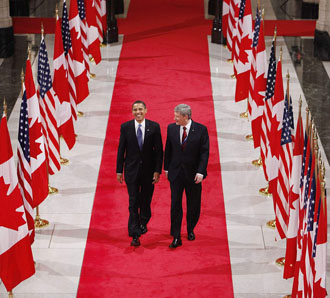
-
List
Extinct Animals in Canada
As of May 2021, 18 animal species once found in Canada are now extinct, according to the Committee on the Status of Endangered Wildlife in Canada (COSEWIC). The committee’s definition of a wildlife species includes taxonomic categories as well as geographically distinct populations. For example, the Atlantic salmon appears on COSEWIC’s list of at-risk species 15 times, as there are 15 populations of Atlantic salmon in Canada facing different threats to their survival. Similarly, when one of these populations goes extinct — as was the case for Atlantic salmon in Lake Ontario in 1898 — there are specific, cascading effects for the ecosystem that the population belongs to. Communities may lose fishing opportunities and other animals may lose a source of food. Though the Atlantic salmon is an example of a species with populations still observable in the wild, this list of 18 also includes animals that no longer exist anywhere on the planet, such as the sea mink or great auk. The reasons for the extinction of these animals range from overhunting to predation from invasive species to, in the case of the Eelgrass limpet, a plight of slime mould.
"https://d3d0lqu00lnqvz.cloudfront.net/media/new_article_images/ExtinctAnimalList/GreatAukPainting.jpg" // resources/views/front/categories/view.blade.php
https://d3d0lqu00lnqvz.cloudfront.net/media/new_article_images/ExtinctAnimalList/GreatAukPainting.jpg
-
List
Extinct Plants in Canada
There is one plant native to Canada that is extinct. Called Macoun’s shining moss (Neomacounia nitida), this plant grew near Belleville, Ontario. Given the abundance of plant species found in Canada, it’s perhaps surprising that only one is extinct, especially when compared to the number of extinct animals in the country — 18 as of 2021. However, Macoun’s shining moss is likely not the only extinct Canadian plant. It is possible that many more species went extinct before botanists observed and recorded them. Because early settlers were more likely to notice animals and use them for food and economic purposes, their disappearance was better documented. (See also Extinct Animals in Canada.)
"https://d3d0lqu00lnqvz.cloudfront.net/media/new_article_images/ExtinctPlants/MacounsMoss1.jpg" // resources/views/front/categories/view.blade.php
https://d3d0lqu00lnqvz.cloudfront.net/media/new_article_images/ExtinctPlants/MacounsMoss1.jpg
-
Editorial
Extreme Weather and the Canadian Psyche
The following article is an editorial written by The Canadian Encyclopedia staff. Editorials are not usually updated.
"https://d3d0lqu00lnqvz.cloudfront.net/media/media/d81f3a59-7d06-4216-b784-966dbba49c9a.jpg" // resources/views/front/categories/view.blade.php
https://d3d0lqu00lnqvz.cloudfront.net/media/media/d81f3a59-7d06-4216-b784-966dbba49c9a.jpg
-
Macleans
Exxon and Mobil to Merge
This article was originally published in Maclean’s magazine on December 14, 1998. Partner content is not updated. On a chilly spring day in 1911, the decision reverberated through the executive offices of the Standard Oil Trust like a thunderclap: the worlds biggest oil company was to be broken into 34 corporate pieces by order of the U.S. government. Upon hearing this, John D.
"https://thecanadianencyclopedia.ca/images/tce_placeholder.jpg?v=e9dca980c9bdb3aa11e832e7ea94f5d9" // resources/views/front/categories/view.blade.php
https://thecanadianencyclopedia.ca/images/tce_placeholder.jpg?v=e9dca980c9bdb3aa11e832e7ea94f5d9
-
Article
Faba Bean
The faba Bean, or broad bean (Vicia faba or Faba vulgaris), is a legume family member, which is not a true bean but a vetch.
"https://d3d0lqu00lnqvz.cloudfront.net/media/media/2a7ad121-90f0-4a5b-9d7e-fe347ca924d6.jpg" // resources/views/front/categories/view.blade.php
https://d3d0lqu00lnqvz.cloudfront.net/media/media/2a7ad121-90f0-4a5b-9d7e-fe347ca924d6.jpg
-
Macleans
Faint Hope: Background
This article was originally published in Maclean’s magazine on August 18, 1997. Partner content is not updated. Danny Homers calm, detached tone belies the fact that he is talking about the murder that put him behind bars for life. The prisoner, now 38, explains that he was a teenager living in Regina in January, 1977, when he killed Ira McDonald, a 23-year-old partner in crime.
"https://thecanadianencyclopedia.ca/images/tce_placeholder.jpg?v=e9dca980c9bdb3aa11e832e7ea94f5d9" // resources/views/front/categories/view.blade.php
https://thecanadianencyclopedia.ca/images/tce_placeholder.jpg?v=e9dca980c9bdb3aa11e832e7ea94f5d9
-
Article
Fake News (a.k.a. Disinformation) in Canada
Fake news is falsified information created with the intent of misleading people. It aims to shape public opinion by eliciting an emotional and biased response that is divorced from facts but in alignment with a particular ideology or perspective. Fake news can effectively weaponize information. It uses disinformation, misinformation or mal-information to demonize or damage a political foe, or to sow confusion and mistrust among the public. Fake news came to the fore of public consciousness during and immediately after the 2016 US presidential election, though its origins date back much further.
"https://d3d0lqu00lnqvz.cloudfront.net/media/new_article_images/FakeNews/640px-FAKE_NEWS.png" // resources/views/front/categories/view.blade.php
https://d3d0lqu00lnqvz.cloudfront.net/media/new_article_images/FakeNews/640px-FAKE_NEWS.png
-
Article
Falcon
The falcon (family Falconidae) is a small to medium-sized predatory bird noted for its swiftness in flight. With 63 species, falcons range in size from sparrow-sized (the falconet of Southeast Asia) to raven-sized (the powerful, arctic-dwelling gyrfalcon).
"https://d3d0lqu00lnqvz.cloudfront.net/media/media/d94ee6d6-cf87-4001-9183-a07490901889.jpg" // resources/views/front/categories/view.blade.php
https://d3d0lqu00lnqvz.cloudfront.net/media/media/d94ee6d6-cf87-4001-9183-a07490901889.jpg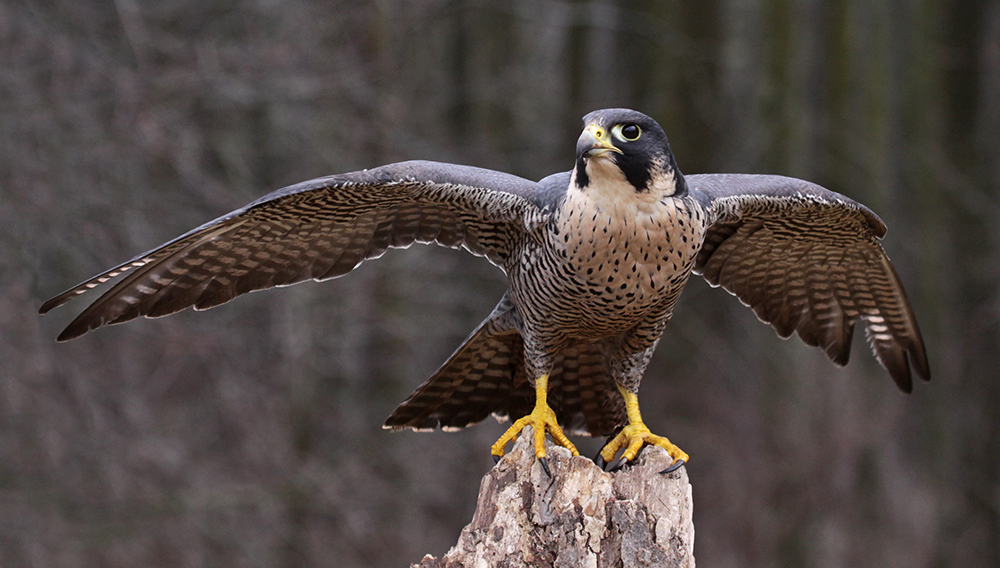
-
Article
False Face Society
Curing, the restoration of well-being for the community and health for the individual, was a vital part of Indigenous religious practice. The best known of several curing societies among the Haudenosaunee (Iroquois) of the lower Great Lakes was the False Face Society.
"https://d3d0lqu00lnqvz.cloudfront.net/media/media/52de6e51-1e15-479d-a990-01bee3bcc255.jpg" // resources/views/front/categories/view.blade.php
https://d3d0lqu00lnqvz.cloudfront.net/media/media/52de6e51-1e15-479d-a990-01bee3bcc255.jpg
-
Article
Family
There is no such thing as "the Canadian family." Membership in a family, the activities of those members in and out of the household, and the relationship among members varies with economic conditions and also with regions, historical periods, SOCIAL CLASS, sexual orientation, race and ethnicity.
"https://thecanadianencyclopedia.ca/images/tce_placeholder.jpg?v=e9dca980c9bdb3aa11e832e7ea94f5d9" // resources/views/front/categories/view.blade.php
https://thecanadianencyclopedia.ca/images/tce_placeholder.jpg?v=e9dca980c9bdb3aa11e832e7ea94f5d9