Browse "Things"
-
List
Elections to Remember
We love them and we hate them. They bring out the best in us, and the worst. They frequently divide us, and sometimes — as with John Diefenbaker's thunderous victory in 1958 — federal elections succeed in uniting the country behind a single impulse, or a single voice. One thing's for sure: amid all the change that has swept across Canada since Confederation, there has remained one steadfast certainty — that every few years, we ordinary citizens have the right to collectively choose who should govern us. Today, this privilege is not shared by billions of the world's people. How lucky that our democracy endures. When Canadians return to the polls, not only will we be carrying out the business of voting, we'll be writing a new chapter in Canada's rich electoral history. It's an intriguing story, filled with high stakes, hijinks and high passions, not to mention a colourful cast of political characters. Here are some famous elections from the past, and how they changed Canada...
"https://d3d0lqu00lnqvz.cloudfront.net/media/media/e38df4dd-d940-43c5-b849-2f2518c8f29d.jpg" // resources/views/front/categories/view.blade.php
https://d3d0lqu00lnqvz.cloudfront.net/media/media/e38df4dd-d940-43c5-b849-2f2518c8f29d.jpg
-
Article
Voting Behaviour in Canada
The decision to vote for a particular political party is affected by many factors. These include socio-demographic factors, such as gender, race, ethnicity, religion and region of residence. Such factors can influence voters’ values and political attitudes. Together, all of these elements combine to shape an individual’s choice of political party during an election. Electoral dynamics vary considerably between individuals and groups; there is no one rule fits all.
"https://d3d0lqu00lnqvz.cloudfront.net/media/media/48885018948_00316777f6_c.jpg" // resources/views/front/categories/view.blade.php
https://d3d0lqu00lnqvz.cloudfront.net/media/media/48885018948_00316777f6_c.jpg
-
Article
Electoral Reform in Canada
Electoral reform is the process of reviewing and reconfiguring the structure of electoral politics, i.e., the way in which voters elect their representatives. In Canada, electoral reform has historically occurred through reconfigurations of electoral ridings, or the extension of the right to vote to previously disenfranchised groups of people. Attempts have been made to change electoral systems on a number of occasions, at both the provincial and federal level. The matter was of specific interest throughout 2016 due to the Liberal Party’s pledge during the 2015 federal election campaign to enact reform by 2019. However, the Trudeau government abandoned this in February 2017, citing a lack of consensus on the issue.
"https://d3d0lqu00lnqvz.cloudfront.net/media/media/32642e72-c51c-4512-baa4-7f33f2446699.jpg" // resources/views/front/categories/view.blade.php
https://d3d0lqu00lnqvz.cloudfront.net/media/media/32642e72-c51c-4512-baa4-7f33f2446699.jpg
-
Article
Canadian Electoral System
Electoral systems are methods of choosing political representatives. (See also Political Campaigning in Canada.) Elections in Canada use a first-past-the-post system, whereby the candidate that wins the most votes in a constituency is selected to represent that riding. Elections are governed by an elaborate series of laws and a well-developed administrative apparatus. They occur at the federal, provincial, territorial and municipal levels. Canada’s federal election system is governed by the Canada Elections Act. It is administered by the Chief Electoral Officer. Provincial election systems, governed by provincial election acts, are similar to the federal system; they differ slightly from each other in important details. Federal and provincial campaigns — and that of Yukon — are party contests in which candidates represent political parties. Municipal campaigns — and those of Northwest Territories and Nunavut — are contested by individuals, not by parties.
"https://d3d0lqu00lnqvz.cloudfront.net/media/media/3fcad776-7e8d-47da-86aa-c77b5a9d2744.jpg" // resources/views/front/categories/view.blade.php
https://d3d0lqu00lnqvz.cloudfront.net/media/media/3fcad776-7e8d-47da-86aa-c77b5a9d2744.jpg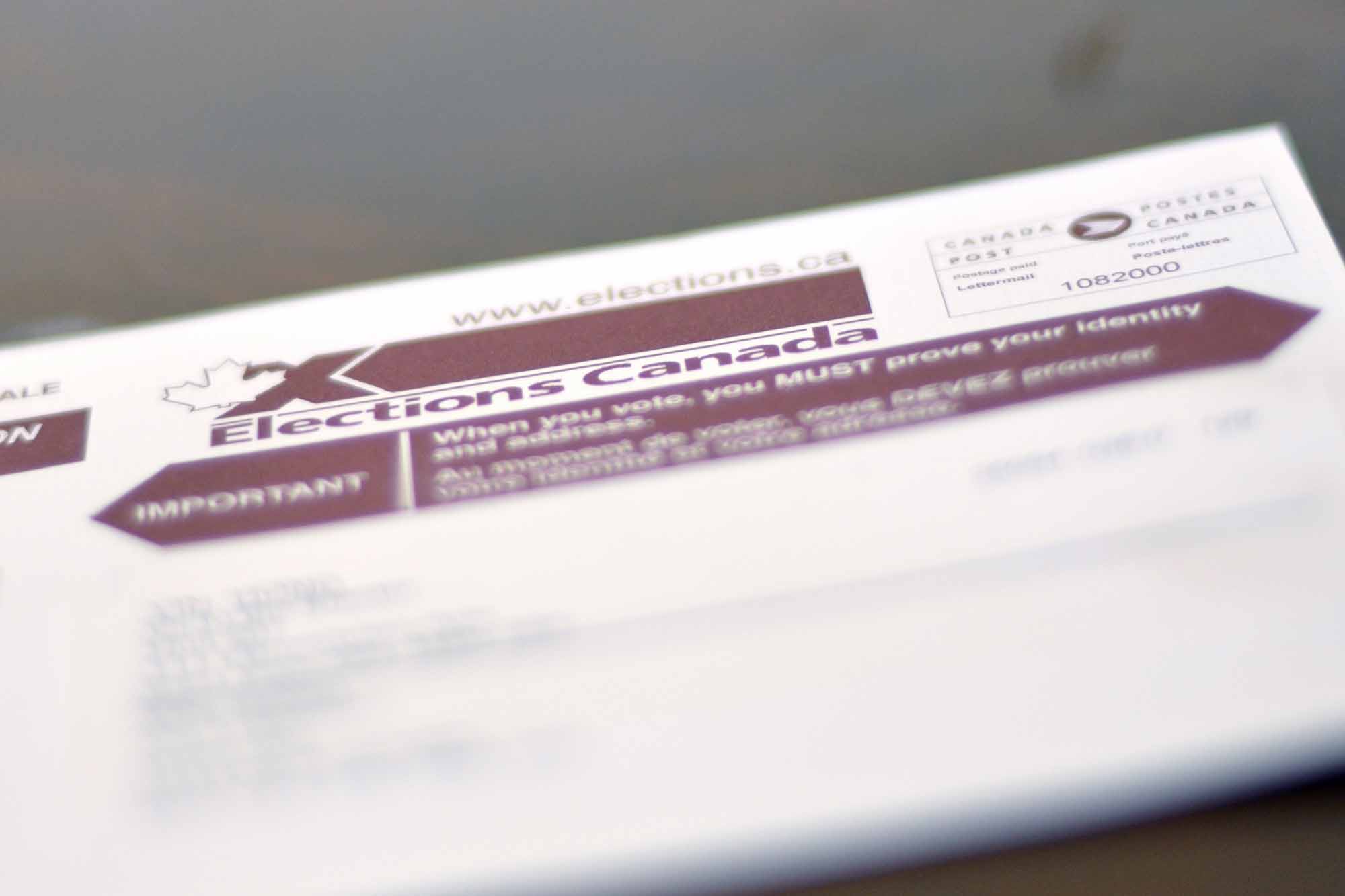
-
Macleans
Electric Cars to be Marketed
This article was originally published in Maclean’s magazine on July 29, 1996. Partner content is not updated. O'Callaghan was one of the first people in Canada to drive the Impact, a compact electric vehicle (known as an EV) that will soon be the subject of a joint research project by General Motors Corp., B.C. Hydro and the British Columbia government.
"https://d3d0lqu00lnqvz.cloudfront.net/media/media/7024f0cf-140f-4776-9c23-55385216584a.jpg" // resources/views/front/categories/view.blade.php
https://d3d0lqu00lnqvz.cloudfront.net/media/media/7024f0cf-140f-4776-9c23-55385216584a.jpg
-
Article
Electric Power
Electricity is a property of the atomic structure of matter, and is manifested as attraction between 2 oppositely charged bodies or repulsion between 2 similarly charged bodies.
"https://thecanadianencyclopedia.ca/images/tce_placeholder.jpg?v=e9dca980c9bdb3aa11e832e7ea94f5d9" // resources/views/front/categories/view.blade.php
https://thecanadianencyclopedia.ca/images/tce_placeholder.jpg?v=e9dca980c9bdb3aa11e832e7ea94f5d9
-
Article
Development of Electric Power in Canada
The development of electric power in 19th-century Canada went hand in hand with advances in lighting technology and industrialization.
"https://d3d0lqu00lnqvz.cloudfront.net/media/media/c4b720e6-aa16-41ea-89bf-d498acb719b2.jpg" // resources/views/front/categories/view.blade.php
https://d3d0lqu00lnqvz.cloudfront.net/media/media/c4b720e6-aa16-41ea-89bf-d498acb719b2.jpg
-
Article
Electric-Power Generation
In Canada the 2 basic methods of producing electric power are hydroelectric generation, based on the energy contained in flowing water, and thermal generation, based on the production of steam.
"https://d3d0lqu00lnqvz.cloudfront.net/media/media/97405108-6888-496b-ad3a-0fc0522a04e9.jpg" // resources/views/front/categories/view.blade.php
https://d3d0lqu00lnqvz.cloudfront.net/media/media/97405108-6888-496b-ad3a-0fc0522a04e9.jpg
-
Article
Electric-Power Transmission
Electric-power transmission lines carry power from generating plants (see electric-power generation) to the distribution systems that feed electricity to domestic, commercial and industrial users.
"https://thecanadianencyclopedia.ca/images/tce_placeholder.jpg?v=e9dca980c9bdb3aa11e832e7ea94f5d9" // resources/views/front/categories/view.blade.php
https://thecanadianencyclopedia.ca/images/tce_placeholder.jpg?v=e9dca980c9bdb3aa11e832e7ea94f5d9
-
Article
Electric Utilities
Electric utilities are private or government organizations involved in the production, transmission, distribution, marketing and sale to consumers of electric power. Canadian electric utilities account for approximately 92% of the total production of electrical energy in Canada.
"https://thecanadianencyclopedia.ca/images/tce_placeholder.jpg?v=e9dca980c9bdb3aa11e832e7ea94f5d9" // resources/views/front/categories/view.blade.php
https://thecanadianencyclopedia.ca/images/tce_placeholder.jpg?v=e9dca980c9bdb3aa11e832e7ea94f5d9
-
Article
Electrical Appliances Industry
The dominant activity of the electrical appliance industry in Canada is the design, manufacture and sale of major household appliances. The core products (ie, those with very high saturation levels, approaching the category of necessities) are refrigerators, ranges, automatic washers and dryers.
"https://thecanadianencyclopedia.ca/images/tce_placeholder.jpg?v=e9dca980c9bdb3aa11e832e7ea94f5d9" // resources/views/front/categories/view.blade.php
https://thecanadianencyclopedia.ca/images/tce_placeholder.jpg?v=e9dca980c9bdb3aa11e832e7ea94f5d9
-
Article
Electrical Engineering
Upon graduation, many electrical engineers form their own companies to manufacture electrically based products or to provide consulting services. Others become involved in research, design, manufacture, sales or maintenance of electrical equipment.
"https://thecanadianencyclopedia.ca/images/tce_placeholder.jpg?v=e9dca980c9bdb3aa11e832e7ea94f5d9" // resources/views/front/categories/view.blade.php
https://thecanadianencyclopedia.ca/images/tce_placeholder.jpg?v=e9dca980c9bdb3aa11e832e7ea94f5d9
-
"https://thecanadianencyclopedia.ca/images/tce_placeholder.jpg?v=e9dca980c9bdb3aa11e832e7ea94f5d9" // resources/views/front/categories/view.blade.php
https://thecanadianencyclopedia.ca/images/tce_placeholder.jpg?v=e9dca980c9bdb3aa11e832e7ea94f5d9
-
Article
Elites
As used every day, elite is an adjective referring to the upper echelon of any activity - eg, elite athletes or elite soldiers. Used more analytically as a noun, elites are those who hold the uppermost decision-making positions in important activities organized in a definite hierarchy.
"https://d3d0lqu00lnqvz.cloudfront.net/media/media/5090b907-78e2-4d1d-82a1-12e989970250.jpg" // resources/views/front/categories/view.blade.php
https://d3d0lqu00lnqvz.cloudfront.net/media/media/5090b907-78e2-4d1d-82a1-12e989970250.jpg
-
Article
Elizabeth Fry Society
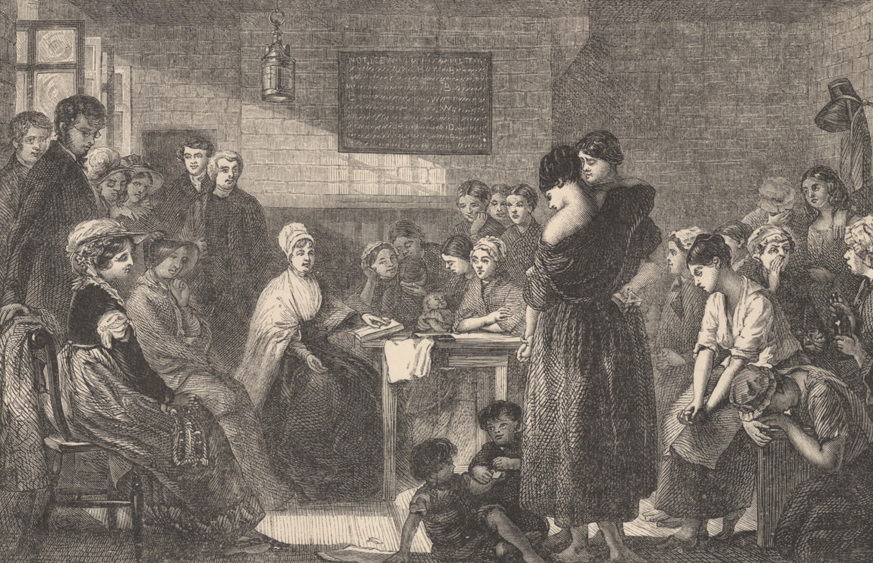
The Elizabeth Fry Society is a not-for-profit social service agency that provides support for women and girls involved in the Canadian justice system. The Society provides a range of services to women who are criminalized and to women who are at risk of being criminalized. It works to reduce the impact of criminalization, to provide equal opportunities for women in the justice system and to empower marginalized women.
"https://d3d0lqu00lnqvz.cloudfront.net/media/Mrs._Fry_reading_to_the_prisoners_in_Newgate_John_Johnson.jpg" // resources/views/front/categories/view.blade.php
https://d3d0lqu00lnqvz.cloudfront.net/media/Mrs._Fry_reading_to_the_prisoners_in_Newgate_John_Johnson.jpg