Browse "Things"
-
Macleans
Eaton's Hard Times
Mere hours before the official reopening of its fashion floors in Torontos Yorkdale mall last week, there appeared perhaps the perfect illustration of Eatons quest to remake itself. Downstairs, the array of cosmetics and fashion accessories was deliciously tempting.This article was originally published in Maclean's Magazine on November 30, 1998
"https://thecanadianencyclopedia.ca/images/tce_placeholder.jpg?v=e9dca980c9bdb3aa11e832e7ea94f5d9" // resources/views/front/categories/view.blade.php
https://thecanadianencyclopedia.ca/images/tce_placeholder.jpg?v=e9dca980c9bdb3aa11e832e7ea94f5d9
-
Macleans
Eaton's Seeks Bankruptcy Protection
This article was originally published in Maclean’s magazine on March 10, 1997. Partner content is not updated. All had gathered to pay their last respects to Signy Eaton, the matriarch of the Eaton clan, widow of John David who had led the family's mighty retail chain in the halcyon days of the 1950s and 1960s, when the company controlled half of the country's department store sales.
"https://d3d0lqu00lnqvz.cloudfront.net/media/media/30340d9c-4251-4336-8bb7-59c9f52bc37f.jpg" // resources/views/front/categories/view.blade.php
https://d3d0lqu00lnqvz.cloudfront.net/media/media/30340d9c-4251-4336-8bb7-59c9f52bc37f.jpg
-
Macleans
Ebola Virus Strikes Again
The virus first makes its presence felt when the victim runs a high temperature, followed by vomiting, chest pains and skin rashes. Then hemorrhaging develops - from the eyes and ears, the stomach and the bowels.This article was originally published in Maclean's Magazine on May 22, 1995
"https://thecanadianencyclopedia.ca/images/tce_placeholder.jpg?v=e9dca980c9bdb3aa11e832e7ea94f5d9" // resources/views/front/categories/view.blade.php
https://thecanadianencyclopedia.ca/images/tce_placeholder.jpg?v=e9dca980c9bdb3aa11e832e7ea94f5d9
-
Article
Echinodermata
Echinodermata [Gk "spiny skin"], phylum of exclusively marine invertebrate animals. The 6000 known species occur from shores to greatest depths of all oceans.
"https://d3d0lqu00lnqvz.cloudfront.net/media/media/13013e6e-ff67-461b-a42c-416983fc0e43.jpg" // resources/views/front/categories/view.blade.php
https://d3d0lqu00lnqvz.cloudfront.net/media/media/13013e6e-ff67-461b-a42c-416983fc0e43.jpg
-
Article
École de musique Jocelyne Laberge
École de musique Jocelyne Laberge. Music school founded in 1978 in Châteauguay, south of Montréal, by Jocelyne Laberge (born 9 May 1930 in Montréal, QC; died 25 November 2015 in Candiac, QC).
"https://thecanadianencyclopedia.ca/images/tce_placeholder.jpg?v=e9dca980c9bdb3aa11e832e7ea94f5d9" // resources/views/front/categories/view.blade.php
https://thecanadianencyclopedia.ca/images/tce_placeholder.jpg?v=e9dca980c9bdb3aa11e832e7ea94f5d9
-
Article
École Nationale de l'Humour
The École Nationale de l'Humour (Québec comedy school) was founded by Gilbert Rozon in 1988.
"https://thecanadianencyclopedia.ca/images/tce_placeholder.jpg?v=e9dca980c9bdb3aa11e832e7ea94f5d9" // resources/views/front/categories/view.blade.php
https://thecanadianencyclopedia.ca/images/tce_placeholder.jpg?v=e9dca980c9bdb3aa11e832e7ea94f5d9
-
Article
École normale de musique
École normale de musique. Conservatory and teacher-training institution founded in 1926. It formed part of the Institut pédagogique of Westmount (Montreal), run by the Sisters of the Congregation of Notre Dame.
"https://thecanadianencyclopedia.ca/images/tce_placeholder.jpg?v=e9dca980c9bdb3aa11e832e7ea94f5d9" // resources/views/front/categories/view.blade.php
https://thecanadianencyclopedia.ca/images/tce_placeholder.jpg?v=e9dca980c9bdb3aa11e832e7ea94f5d9
-
Article
Economic and Regional Development Agreements
Economic and regional development agreements (ERDAs) refer to bilateral agreements between the federal government and each of the 10 provinces in effect from 1984 to 1994. The ERDA system was a major component of federal-regional economic policy over that period.
"https://thecanadianencyclopedia.ca/images/tce_placeholder.jpg?v=e9dca980c9bdb3aa11e832e7ea94f5d9" // resources/views/front/categories/view.blade.php
https://thecanadianencyclopedia.ca/images/tce_placeholder.jpg?v=e9dca980c9bdb3aa11e832e7ea94f5d9
-
Article
Canada–US Economic Relations
Economic relations between Canada and the US are of paramount importance to Canada.
"https://d3d0lqu00lnqvz.cloudfront.net/media/media/9da06892-ef18-4652-b682-3bb385411454.jpg" // resources/views/front/categories/view.blade.php
https://d3d0lqu00lnqvz.cloudfront.net/media/media/9da06892-ef18-4652-b682-3bb385411454.jpg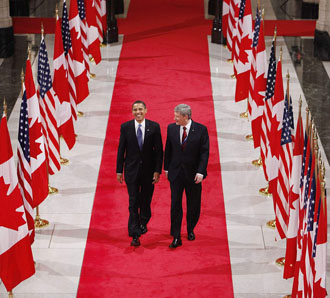
-
Article
Economic Council of Canada
The Economic Council of Canada was established 1963 and dissolved 1993.
"https://thecanadianencyclopedia.ca/images/tce_placeholder.jpg?v=e9dca980c9bdb3aa11e832e7ea94f5d9" // resources/views/front/categories/view.blade.php
https://thecanadianencyclopedia.ca/images/tce_placeholder.jpg?v=e9dca980c9bdb3aa11e832e7ea94f5d9
-
Article
Economic Forecasting
Economic forecasting is the projection or estimation of statistical measures of the performance of a country, group of countries, industry, firm or community.
"https://thecanadianencyclopedia.ca/images/tce_placeholder.jpg?v=e9dca980c9bdb3aa11e832e7ea94f5d9" // resources/views/front/categories/view.blade.php
https://thecanadianencyclopedia.ca/images/tce_placeholder.jpg?v=e9dca980c9bdb3aa11e832e7ea94f5d9
-
Article
Economic History of Canada
The economic history of what is now Canada begins with the hunting, farming and trading societies of the Indigenous peoples. Following the arrival of Europeans in the 16th century, the economy has undergone a series of seismic shifts, marked by the early Atlantic fishery, the transcontinental fur trade, then rapid urbanization, industrialization and technological change. Although different industries have come and gone, Canada’s reliance on natural resources — from fur to timber to minerals to oil, and on export markets for these commodities, particularly the United States — has underpinned much of the economy through the centuries and does so still in many regions today.
"https://d3d0lqu00lnqvz.cloudfront.net/media/media/30416a6f-5846-430d-9621-dbd0ce22e17e.jpg" // resources/views/front/categories/view.blade.php
https://d3d0lqu00lnqvz.cloudfront.net/media/media/30416a6f-5846-430d-9621-dbd0ce22e17e.jpg
-
Article
Economic History of Atlantic Canada
Nova Scotia, Prince Edward Island, New Brunswick and Newfoundland constitute the Atlantic provinces of Canada, a region that in 2016 accounted for 6 per cent of Canada’s gross domestic product (GDP). The economic history of what is now Atlantic Canada begins with the hunting, farming and trading societies of the Indigenous peoples. Following the arrival of Europeans in the 16th century, the economy has undergone a series of seismic shifts, marked by the early Atlantic fishery, the transcontinental fur trade, then rapid urbanization, industrialization and technological change.
"https://d3d0lqu00lnqvz.cloudfront.net/media/media/1c5bff08-0848-45ad-a132-880e22ac3515.jpg" // resources/views/front/categories/view.blade.php
https://d3d0lqu00lnqvz.cloudfront.net/media/media/1c5bff08-0848-45ad-a132-880e22ac3515.jpg
-
Article
Economic History of Central Canada
Ontario and Quebec constitute Central Canada, a region that accounts for over 58 per cent of Canada’s gross domestic product (GDP). The economic history of the region begins with the hunting, farming and trading societies of the Indigenous peoples. Following the arrival of Europeans in the 16th century, the economy has undergone a series of seismic shifts, marked by the transcontinental fur trade, then rapid urbanization, industrialization and technological change.
"https://d3d0lqu00lnqvz.cloudfront.net/media/media/2a01defb-42f2-4ad3-b7f1-cf7966378002.jpg" // resources/views/front/categories/view.blade.php
https://d3d0lqu00lnqvz.cloudfront.net/media/media/2a01defb-42f2-4ad3-b7f1-cf7966378002.jpg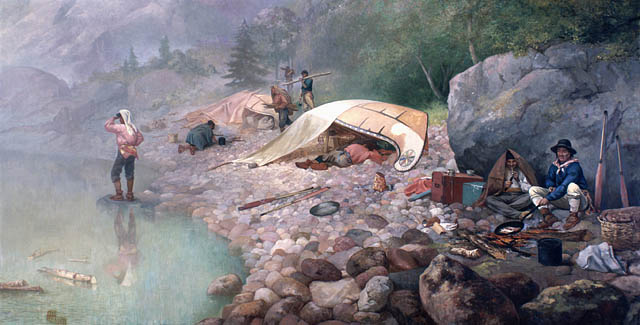
-
Article
Economic History of Western Canada
Manitoba, Saskatchewan, Alberta and British Columbia constitute Western Canada, a region that accounts for 35 per cent of the Canada’s gross domestic product (GDP). The economic history of the region begins with the hunting, farming and trading societies of the Indigenous peoples. Following the arrival of Europeans in the 18th century, the economy has undergone a series of seismic shifts, marked by the transcontinental fur trade, then rapid urbanization, industrialization and technological change.
"https://d3d0lqu00lnqvz.cloudfront.net/media/media/804ad87a-c2a5-4d29-814e-542e786b1778.jpg" // resources/views/front/categories/view.blade.php
https://d3d0lqu00lnqvz.cloudfront.net/media/media/804ad87a-c2a5-4d29-814e-542e786b1778.jpg