
Browse "Things"
-
Article
Conn Smythe Trophy
The Conn Smythe Trophy is awarded annually to the player judged most valuable to his team in the National Hockey League’s Stanley Cup playoffs. The player is selected by the Professional Hockey Writers’ Association following the final game of the playoffs. The trophy was first presented in 1964 in honour of Conn Smythe, former coach, manager and owner of the Toronto Maple Leafs. However, the only Maple Leaf to win the award is Dave Keon (1967). Two-time winners include Bobby Orr (1970, 1972), Bernie Parent (1974, 1975), Wayne Gretzky (1985, 1988), Mario Lemieux (1991, 1992) and Sidney Crosby (2016, 2017). Patrick Roy won the award three times (1986, 1993, 2001). Six players have won the trophy despite their team losing the Stanley Cup Final: Roger Crozier (1966), Glenn Hall (1968), Reggie Leach (1976), Ron Hextall (1987), Jean-Sébastien Giguère (2003) and Connor McDavid (2024). Jordan Staal became the oldest winner (at 37 years, 277 days) when he was awarded the trophy in 2026.
"https://d3d0lqu00lnqvz.cloudfront.net/media/media/29f71bdd-9624-48a6-873e-67754b572db0.jpg" // resources/views/front/categories/view.blade.php
https://d3d0lqu00lnqvz.cloudfront.net/media/media/29f71bdd-9624-48a6-873e-67754b572db0.jpg
-
Article
The Conquest of New France
The Conquest (La Conquête) is a term used to describe the acquisition of Canada by Great Britain during the Seven Years’ War. It also refers to the resulting conditions experienced by Canada’s 60,000 to 70,000 French-speaking inhabitants and numerous Indigenous groups. French forces at Quebec City surrendered to British forces on 18 September 1759, a few days after the crucial Battle of the Plains of Abraham. French resistance ended in 1760 with the capitulation of Montreal. In 1763, the Treaty of Paris surrendered New France to Britain. The Royal Proclamation of 1763 introduced assimilative policies that ultimately failed. They were replaced by the provisions of the Quebec Act of 1774. Although it helped spark the American Revolutionary War (1775–83), the Act also granted Canadians enviable conditions that resulted in generations of relative stability.
"https://d3d0lqu00lnqvz.cloudfront.net/JamesWolfe/Benjamin_West_DeathofGeneralWolfe.jpg" // resources/views/front/categories/view.blade.php
https://d3d0lqu00lnqvz.cloudfront.net/JamesWolfe/Benjamin_West_DeathofGeneralWolfe.jpg
-
Article
Conscription in Canada
Conscription is the compulsory enlistment or “call up” of citizens for military service. It is sometimes known as “the draft.” The federal government enacted conscription in both the First World War and the Second World War. Both instances created sharp divisions between English Canadians, who tended to support the practice, and French Canadians, who generally did not. Canada does not currently have mandatory military service. The Canadian Armed Forces are voluntary services.
"https://d3d0lqu00lnqvz.cloudfront.net/media/media/e38df4dd-d940-43c5-b849-2f2518c8f29d.jpg" // resources/views/front/categories/view.blade.php
https://d3d0lqu00lnqvz.cloudfront.net/media/media/e38df4dd-d940-43c5-b849-2f2518c8f29d.jpg
-
Article
Conscription in Canada (Plain-Language Summary)
Conscription is the drafting of people for mandatory military service. Canadians have been conscripted twice in history. Both times, only males were conscripted. The first time was during the First World War. The second time was during the Second World War. Conscription was an issue that divided Canada. Most English-speaking Canadians supported it. Most French-speaking Canadians opposed it. (This article is a plain-language summary of Conscription in Canada. If you are interested in reading about this topic in more depth, please see the full-length entry.)
"https://d3d0lqu00lnqvz.cloudfront.net/media/media/aab5fda7-e041-4148-b6de-40ea15191996.jpg" // resources/views/front/categories/view.blade.php
https://d3d0lqu00lnqvz.cloudfront.net/media/media/aab5fda7-e041-4148-b6de-40ea15191996.jpg
-
Article
Conseil québécois de la musique
Conseil québécois de la musique; formerly, Association des organismes musicaux du Québec. Non-profit organization incorporated in 1987.
"https://thecanadianencyclopedia.ca/images/tce_placeholder.jpg?v=e9dca980c9bdb3aa11e832e7ea94f5d9" // resources/views/front/categories/view.blade.php
https://thecanadianencyclopedia.ca/images/tce_placeholder.jpg?v=e9dca980c9bdb3aa11e832e7ea94f5d9
-
Article
Conservation
Conservation can be defined as the planned and efficient use of natural resources for industrial and nonconsumptive purposes (e.g., recreation, research) so as to ensure their permanence, productivity and diversity.
"https://d3d0lqu00lnqvz.cloudfront.net/media/media/1911e7e2-238f-4b9a-b660-623a1f22b0e0.jpg" // resources/views/front/categories/view.blade.php
https://d3d0lqu00lnqvz.cloudfront.net/media/media/1911e7e2-238f-4b9a-b660-623a1f22b0e0.jpg
-
Article
Conservation of Movable Cultural Property
Conservation is the technology by which preservation (one of the four classic museum functions: acquisition, preservation, research, presentation) is achieved.
"https://thecanadianencyclopedia.ca/images/tce_placeholder.jpg?v=e9dca980c9bdb3aa11e832e7ea94f5d9" // resources/views/front/categories/view.blade.php
https://thecanadianencyclopedia.ca/images/tce_placeholder.jpg?v=e9dca980c9bdb3aa11e832e7ea94f5d9
-
Article
Conservatism
The range of beliefs among those who call themselves conservatives in Canada is wide. Some, like the policy analysts of the Fraser Institute or like Stephen HARPER, the leader of the CANADIAN ALLIANCE, believe in a policy agenda of lower taxes, greater deregulation and increased privatization.
"https://thecanadianencyclopedia.ca/images/tce_placeholder.jpg?v=e9dca980c9bdb3aa11e832e7ea94f5d9" // resources/views/front/categories/view.blade.php
https://thecanadianencyclopedia.ca/images/tce_placeholder.jpg?v=e9dca980c9bdb3aa11e832e7ea94f5d9
-
Article
Conservative Party
The centre-right Conservative Party was the founding political party of Canada. It governed for the first 29 years after Confederation. Since then, the party has not been as electorally successful as the rival Liberal Party. Notable Conservative prime ministers include Sir John A. Macdonald, John Diefenbaker, Brian Mulroney and Stephen Harper. The party has evolved through different incarnations, including the Progressive Conservative Party and the current Conservative Party of Canada. Recently, the party has been most successful when it has complemented its stronghold of anglophone conservatives in the West with sympathetic voters in the typically more Liberal Ontario and Quebec. Under Harper, the party adopted a brand of ideologically pure conservatism that leaves little room for more “progressive” tendencies. In the federal elections of 2019 and 2021, the Conservatives failed to form government despite winning the national popular vote. In the 2025 election, the party increased its seat count and vote share but once again lost to the Liberals. Pierre Poilievre has been the leader of the Conservative Party and the Official Opposition since September 2022.
"https://d3d0lqu00lnqvz.cloudfront.net/media/media/a010c6ef-8141-4a58-b41e-867ee56f2f82.jpg" // resources/views/front/categories/view.blade.php
https://d3d0lqu00lnqvz.cloudfront.net/media/media/a010c6ef-8141-4a58-b41e-867ee56f2f82.jpg
-
Article
Conserver Society
"Canadians as individuals, and their governments, institutions and industries [must] begin the transition from a consumer society preoccupied with resource exploitation to a conserver society engaged in more constructive endeavours.
"https://thecanadianencyclopedia.ca/images/tce_placeholder.jpg?v=e9dca980c9bdb3aa11e832e7ea94f5d9" // resources/views/front/categories/view.blade.php
https://thecanadianencyclopedia.ca/images/tce_placeholder.jpg?v=e9dca980c9bdb3aa11e832e7ea94f5d9
-
Article
Constitution of Canada
The Constitution of Canada is the country’s governing legal framework. It defines the powers of the executive branches of government and of the legislatures at both the federal and provincial levels. Canada’s Constitution is not one document; it is a complex mix of statutes, orders, British and Canadian court decisions, and generally accepted practices known as constitutional conventions. In the words of the Supreme Court of Canada, “Constitutional convention plus constitutional law equal the total constitution of the country.” The Constitution provides Canada with the legal structure for a stable, democratic government.
"https://d3d0lqu00lnqvz.cloudfront.net/media/media/231555c5-c09f-428e-8a64-bbd73e0e0c0a.jpg" // resources/views/front/categories/view.blade.php
https://d3d0lqu00lnqvz.cloudfront.net/media/media/231555c5-c09f-428e-8a64-bbd73e0e0c0a.jpg
-
Article
Constitution Act, 1867
The Constitution Act, 1867 was originally known as the British North America Act (BNA Act). It was the law passed by the British Parliament on 29 March 1867 to create the Dominion of Canada. It came into effect on 1 July 1867. The Act is the foundational document of Canada’s Constitution. It outlines the structure of government in Canada and the distribution of powers between the central Parliament and the provincial legislatures. It was renamed the Constitution Act, 1867 with the patriation of the Constitution in 1982.
"https://d3d0lqu00lnqvz.cloudfront.net/media/media/f8f2bab3-d387-4165-9fbc-617c30019b95.jpg" // resources/views/front/categories/view.blade.php
https://d3d0lqu00lnqvz.cloudfront.net/media/media/f8f2bab3-d387-4165-9fbc-617c30019b95.jpg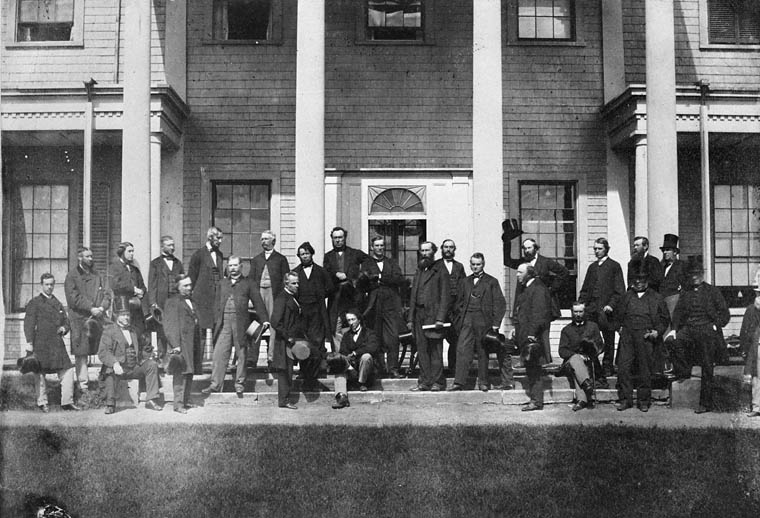
-
Article
Constitution Act, 1867 (Plain-Language Summary)
The British North America Act (BNA Act) created the Dominion of Canada. The Act was passed by the British Parliament on 29 March 1867. It came into effect on 1 July 1867. The Act is the foundation of Canada’s Constitution. It outlines how governments in Canada are to be structured. It also says which powers are given to Parliament and to the provinces. The BNA Act was renamed the Constitution Act, 1867 in 1982. This took place when the Constitution was patriated (taken back) from Britain. (This article is a plain-language summary of the Constitution Act, 1867. If you are interested in reading about this topic in more depth, please see our full-length entry, Constitution Act, 1867.)
"https://d3d0lqu00lnqvz.cloudfront.net/media/media/9a650dcd-e8ad-4685-8baf-c4bba9cae8e7.jpg" // resources/views/front/categories/view.blade.php
https://d3d0lqu00lnqvz.cloudfront.net/media/media/9a650dcd-e8ad-4685-8baf-c4bba9cae8e7.jpg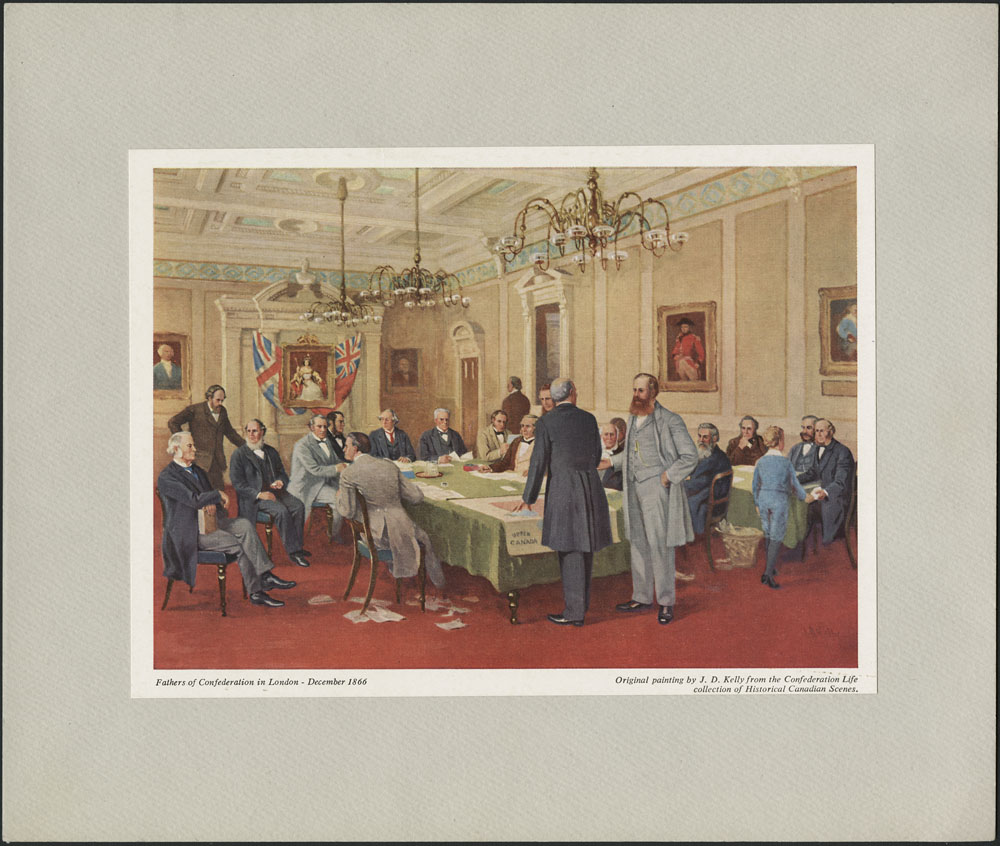
-
Article
Constitution Act, 1982
The Constitution Act, 1982 is a landmark document in Canadian history. It achieved full independence for Canada by allowing the country to change its Constitution without approval from Britain. It also enshrined the Charter of Rights and Freedoms in Canada’s Constitution, the highest law of the land. The Act was passed after a fierce, 18-month political and legal struggle that dominated headlines and the agendas of every government in the country. (See Patriation of the Constitution.)
"https://d3d0lqu00lnqvz.cloudfront.net/media/media/231555c5-c09f-428e-8a64-bbd73e0e0c0a.jpg" // resources/views/front/categories/view.blade.php
https://d3d0lqu00lnqvz.cloudfront.net/media/media/231555c5-c09f-428e-8a64-bbd73e0e0c0a.jpg
-
Article
Constitution Act 1982 Document
Constitution Act, 1982: DocumentPart I, Canadian Charter of Rights and FreedomsWhereas Canada is founded upon principles that recognize the supremacy of God and the rule of law: Guarantee of Rights and Freedoms 1. The Canadian Charter of Rights and Freedoms guarantees the rights and freedoms set out in it subject only to such reasonable limits prescribed by law as can be demonstrably justified in a free and democratic society. Fundamental Freedoms 2. Everyone has the...
"https://thecanadianencyclopedia.ca/images/tce_placeholder.jpg?v=e9dca980c9bdb3aa11e832e7ea94f5d9" // resources/views/front/categories/view.blade.php
https://thecanadianencyclopedia.ca/images/tce_placeholder.jpg?v=e9dca980c9bdb3aa11e832e7ea94f5d9