
Browse "Politics & Law"
-
Article
Quarantine Act
Canada adopted quarantine legislation in 1872, five years after Confederation. It was replaced by the current Quarantine Act, which was passed by the Parliament of Canada and received royal assent in 2005. The act gives sweeping powers to the federal health minister to prevent the introduction and spread of communicable diseases. These powers can include health screenings, the creation of quarantine facilities and mandatory isolation orders. The Quarantine Act was introduced in the wake of the severe acute respiratory syndrome (SARS) crisis of 2003. It was invoked in March 2020 in response to the COVID-19 pandemic.
"https://d3d0lqu00lnqvz.cloudfront.net/media/media/0332fe7a-6266-457b-b839-06a558ff5047.jpg" // resources/views/front/categories/view.blade.php
https://d3d0lqu00lnqvz.cloudfront.net/media/media/0332fe7a-6266-457b-b839-06a558ff5047.jpg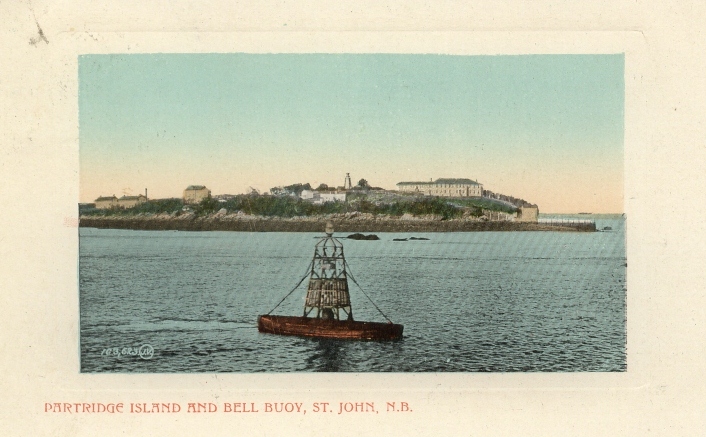
-
Article
Quebec Act, 1774
The Quebec Act received royal assent on 22 June 1774. It revoked provisions in the Royal Proclamation of 1763 that had aimed to assimilate the French-Canadian population under English rule. The Quebec Act was put into effect on 1 May 1775. It was passed to gain the loyalty of the French-speaking majority of the Province of Quebec. Based on recommendations from Governors James Murray and Guy Carleton, the Act guaranteed the freedom of worship and restored French property rights. However, the Act was unpopular in the Thirteen American Colonies and was one of the causes of the American Revolutionary War (1775–83). It was followed by the Constitutional Act in 1791. This is the full-length entry about the Quebec Act of 1774. For a plain language summary, please see The Quebec Act, 1774 (Plain-Language Summary).
"https://d3d0lqu00lnqvz.cloudfront.net/media/media/bcf0dcc3-ce34-4098-8543-00bcccbaabe0.jpg" // resources/views/front/categories/view.blade.php
https://d3d0lqu00lnqvz.cloudfront.net/media/media/bcf0dcc3-ce34-4098-8543-00bcccbaabe0.jpg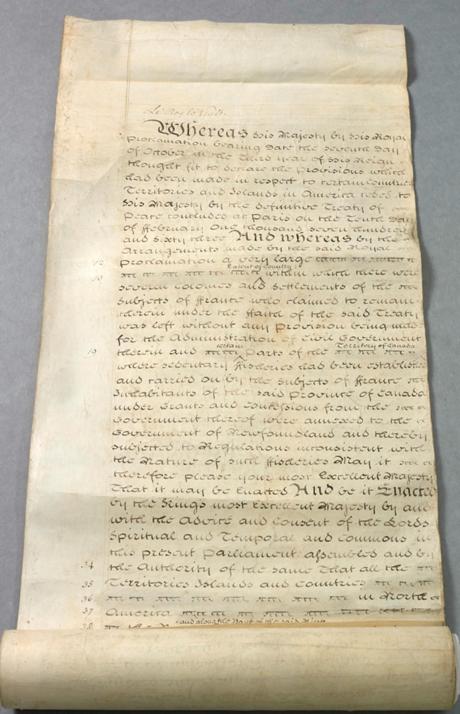
-
Article
Quebec as a Distinct Society
The concept of “distinct society” distinguishes Quebec from English Canada. This concept originated during the Quiet Revolution, at a time when French Canada came to no longer be seen as a single entity, but as a collection of regional francophone communities. It is found in the 1965 preliminary report of the Royal Commission on Bilingualism and Biculturalism shared by Laurendeau and Dunton. It was subsequently used on a number of occasions, notably during the negotiation of the Meech Lake Accord (1987–90). Today, the concept of “distinct society” continues to be used in debates regarding various political, social and cultural issues.
"https://d3d0lqu00lnqvz.cloudfront.net/media/media/98975740-c322-469b-9fe0-d603876f072d.png" // resources/views/front/categories/view.blade.php
https://d3d0lqu00lnqvz.cloudfront.net/media/media/98975740-c322-469b-9fe0-d603876f072d.png
-
Article
Quebec Bar
Lawyers practiced their profession in Québec well before the constitution of the Bar of Lower-Canada by a law passed on May 30, 1849 (the Upper-Canada Bar had obtained its charter in 1797).
"https://thecanadianencyclopedia.ca/images/tce_placeholder.jpg?v=e9dca980c9bdb3aa11e832e7ea94f5d9" // resources/views/front/categories/view.blade.php
https://thecanadianencyclopedia.ca/images/tce_placeholder.jpg?v=e9dca980c9bdb3aa11e832e7ea94f5d9
-
Article
Quebec Biker War (1994–2002)
The Quebec Biker War was an almost decade-long territorial conflict between two outlaw motorcycle gangs in Quebec: the Hells Angels and the Rock Machine. The war centred on control over the narcotics trade in Quebec. It was also driven by intense rivalries and deep-seated animosities between major figures in Quebec’s criminal underworld. (See Organized Crime.) The conflict involved over 80 bombings, some 130 cases of arson and 20 disappearances. More than 160 people were killed and over 200 were injured, including many innocent bystanders.
"https://d3d0lqu00lnqvz.cloudfront.net/media/Hells_Angels_Quebec_-_Nomads.svg.png" // resources/views/front/categories/view.blade.php
https://d3d0lqu00lnqvz.cloudfront.net/media/Hells_Angels_Quebec_-_Nomads.svg.png
-
Article
(Quebec) Charter of Human Rights and Freedoms
Québec's Charter of Rights and Freedoms is not a simple anti-discriminatory statute, but a genuine fundamental law largely inspired by international documents (eg, the Universal Declaration of the Rights of Man, the Covenant on Civil and Political Rights, the Covenant on Economic, Social and Cultural Rights).
"https://thecanadianencyclopedia.ca/images/tce_placeholder.jpg?v=e9dca980c9bdb3aa11e832e7ea94f5d9" // resources/views/front/categories/view.blade.php
https://thecanadianencyclopedia.ca/images/tce_placeholder.jpg?v=e9dca980c9bdb3aa11e832e7ea94f5d9
-
Article
Quebec Conference, 1864
From 10–27 October 1864, politicians from the five British North American colonies gathered in Quebec City to continue discussing their unification into a single country. These discussions began at the Charlottetown Conference the previous month. The most important issues decided in Quebec City were the structure of Parliament and the distribution of powers between the federal and provincial governments. The broad decisions from the Charlottetown and Quebec conferences were made into 72 resolutions, known as the Quebec Resolutions. These formed the basis of Confederation and of Canada’s Constitution.
"https://d3d0lqu00lnqvz.cloudfront.net/media/media/1e88decf-02d6-4b89-b522-383f360ecac4.jpg" // resources/views/front/categories/view.blade.php
https://d3d0lqu00lnqvz.cloudfront.net/media/media/1e88decf-02d6-4b89-b522-383f360ecac4.jpg
-
Article
Quebec Conference, 1864 (Plain-Language Summary)
From 10–27 October 1864, leaders from the five British North American colonies met in Quebec City. They continued to talk about merging into a single country. These talks had begun at the Charlottetown Conference the month before. At Quebec City, the Fathers of Confederation chose how the new Parliament would be structured. They also worked out the division of powers between the federal and provincial governments. The decisions that were made in Charlottetown and Quebec formed 72 resolutions. They were known as the Quebec Resolutions. They formed the basis of Confederation and of Canada’s Constitution. This article is a plain-language summary of the Quebec Conference, 1864. If you would like to read about this topic in more depth, please see our full-length entry: Quebec Conference, 1864.
"https://d3d0lqu00lnqvz.cloudfront.net/media/media/9c333485-1e08-4272-be36-0eae7a34dcf5.jpg" // resources/views/front/categories/view.blade.php
https://d3d0lqu00lnqvz.cloudfront.net/media/media/9c333485-1e08-4272-be36-0eae7a34dcf5.jpg
-
Editorial
Quebec Conference of 1864
The following article is an editorial written by The Canadian Encyclopedia staff. Editorials are not usually updated. There was no media circus surrounding the conference. The press was banned from the discussions, so the newspaper reports said a great deal about the miserable October weather, but precious little about what was discussed in the meetings.
"https://d3d0lqu00lnqvz.cloudfront.net/media/media/1eda021b-6ecb-4d9c-99cc-7cc3a1cee783.jpg" // resources/views/front/categories/view.blade.php
https://d3d0lqu00lnqvz.cloudfront.net/media/media/1eda021b-6ecb-4d9c-99cc-7cc3a1cee783.jpg
-
Article
Québec Conferences 1943, 1944
King himself was most comfortable playing host to the conferences in Québec, and he was amply photographed and filmed with Churchill and Roosevelt.
"https://d3d0lqu00lnqvz.cloudfront.net/media/media/0e3038c4-afb4-4a8b-acdb-3ece6a061304.jpg" // resources/views/front/categories/view.blade.php
https://d3d0lqu00lnqvz.cloudfront.net/media/media/0e3038c4-afb4-4a8b-acdb-3ece6a061304.jpg
-
Article
Quebec Cultural Policies
The evolution of Québec's cultural policy is markedly distinct from that in Canada as whole, in terms of trends and dynamics and through federal action as well as the initiatives in other provinces.
"https://thecanadianencyclopedia.ca/images/tce_placeholder.jpg?v=e9dca980c9bdb3aa11e832e7ea94f5d9" // resources/views/front/categories/view.blade.php
https://thecanadianencyclopedia.ca/images/tce_placeholder.jpg?v=e9dca980c9bdb3aa11e832e7ea94f5d9
-
Macleans
Quebec Election Campaign
On the crisp wintry morning after the televised leaders debate that was supposed to save his sinking election campaign, Quebec Liberal Leader Jean Charest took his remaining hopes home to the comfort of Quebecs Eastern Townships.This article was originally published in Maclean's Magazine on November 30, 1998
"https://thecanadianencyclopedia.ca/images/tce_placeholder.jpg?v=e9dca980c9bdb3aa11e832e7ea94f5d9" // resources/views/front/categories/view.blade.php
https://thecanadianencyclopedia.ca/images/tce_placeholder.jpg?v=e9dca980c9bdb3aa11e832e7ea94f5d9
-
Article
Quebec Family Policy
In accordance with the Canadian Constitution, the governance of health and welfare services falls to the provinces. However, to ensure equity between the provinces and standardization of assistance to citizens the federal government has used a co-financing formula since the 1920s.
"https://thecanadianencyclopedia.ca/images/tce_placeholder.jpg?v=e9dca980c9bdb3aa11e832e7ea94f5d9" // resources/views/front/categories/view.blade.php
https://thecanadianencyclopedia.ca/images/tce_placeholder.jpg?v=e9dca980c9bdb3aa11e832e7ea94f5d9
-
Article
Québec Inc.
The term Quebec Inc. refers to both francophone companies and to the Quebec state economic policies resulting from the Quiet Revolution. The Quebec Inc. development model is characterized by consultation between the Quebec government and the major players in Quebec society regarding the economic issues of concern to them. It is based on an alliance between the public and private sectors.
"https://thecanadianencyclopedia.ca/images/tce_placeholder.jpg?v=e9dca980c9bdb3aa11e832e7ea94f5d9" // resources/views/front/categories/view.blade.php
https://thecanadianencyclopedia.ca/images/tce_placeholder.jpg?v=e9dca980c9bdb3aa11e832e7ea94f5d9
-
Article
Quebec Language Policy
Quebec is the only province in Canada where francophones make up the majority population. For almost two centuries, many have maintained that preserving the French language was the only possible safeguard for the survival of the Quebec nation (see Francophone Nationalism in Quebec). However, it wasn’t until the Quiet Revolution in the 1960s that governments in Quebec began to actively legislate on the issue. Since 1974, French has been the only official language in the province, although some government services remain accessible in English. Quebec has the distinction of being bilingual on constitutional and federal levels, while officially allowing only French in its provincial institutions.
"https://d3d0lqu00lnqvz.cloudfront.net/media/media/f5334d5b-f5d1-427d-a2d3-31be752d419a.jpg" // resources/views/front/categories/view.blade.php
https://d3d0lqu00lnqvz.cloudfront.net/media/media/f5334d5b-f5d1-427d-a2d3-31be752d419a.jpg