Browse "Politics & Law"
-
Macleans
Postal Strike Ends
At Golfinn Internationals offices in Brampton, Ont., Dave Finn is busily scratching numbers on a notepad, trying to arrive at some reasonably accurate estimate of the damage.This article was originally published in Maclean's Magazine on December 15, 1997
"https://thecanadianencyclopedia.ca/images/tce_placeholder.jpg?v=e9dca980c9bdb3aa11e832e7ea94f5d9" // resources/views/front/categories/view.blade.php
https://thecanadianencyclopedia.ca/images/tce_placeholder.jpg?v=e9dca980c9bdb3aa11e832e7ea94f5d9
-
Article
Potlatch Ban
From 1885 to 1951, the Indigenous ceremony known as the Potlatch was banned by the federal government of Canada. The government justified their decision to ban the Potlatch because they believed it was preventing the assimilation of Indigenous Peoples. Today, this ban is recognized as an aspect of cultural genocide (see Genocide and Indigenous Peoples in Canada). Though the Potlatch was illegal during this period of time, the ban was only ever sporadically enforced. This was in part a result of the vagueness of the wording of the law. The law was rewritten and prosecutions increased. In 1922, Indian agents, aided by police, arrested individuals who had participated in a Potlatch held in the community of ʼMimkwa̱mlis. They arrested 45 people. Ultimately, this resulted in imprisonment and the confiscation of hundreds of precious ceremonial objects.
"https://d3d0lqu00lnqvz.cloudfront.net/media/media/f2fed9a9-c6dc-429a-80cd-98e6c7825449.jpg" // resources/views/front/categories/view.blade.php
https://d3d0lqu00lnqvz.cloudfront.net/media/media/f2fed9a9-c6dc-429a-80cd-98e6c7825449.jpg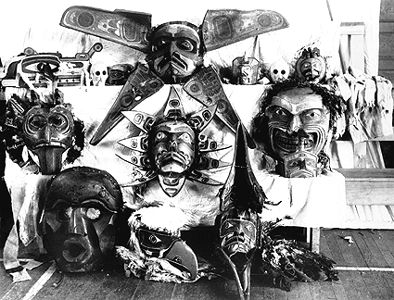
-
Macleans
Power Deal
Tobin's chipper words aside, there remain daunting hurdles to overcome if the premier's power play is to become a reality by 2007, the target completion date.This article was originally published in Maclean's Magazine on March 23, 1998
"https://d3d0lqu00lnqvz.cloudfront.net/media/media/697bba1d-7d03-4ef3-aa0b-5ac5d05a02bc.jpg" // resources/views/front/categories/view.blade.php
https://d3d0lqu00lnqvz.cloudfront.net/media/media/697bba1d-7d03-4ef3-aa0b-5ac5d05a02bc.jpg
-
Article
Powley Case
R. v. Powley was a legal case concerning Métis hunting rights in Canada. In 1993, the province of Ontario charged Steve and Roddy Powley with illegal hunting. The Powleys disputed their conviction, arguing that the Aboriginal rights enshrined in section 35 of the Constitution Act, 1982 protected their hunting rights as Métis people. The case concluded in 2003, when the Supreme Court of Canada ruled that the Powleys were, in fact, exercising lawful Métis hunting rights. The Powley case established criteria on who can legally qualify for Métis rights. It outlined 10 specific criteria, known as the Powley Test, which applies to Métis communities across Canada. The case also clarified that the Métis are a distinct people, separate from First Nations and Inuit peoples in Canada. Some legal experts believe the Powley case might lead to expanded Métis rights, including harvesting and fishing rights and possibly self-government.
"https://d3d0lqu00lnqvz.cloudfront.net/media/media/4de10db1-6b8b-45ef-a60a-55998c7afca0.jpg" // resources/views/front/categories/view.blade.php
https://d3d0lqu00lnqvz.cloudfront.net/media/media/4de10db1-6b8b-45ef-a60a-55998c7afca0.jpg
-
Article
History of Settlement in the Canadian Prairies
The Canadian Prairies were peopled in six great waves of migration, spanning from prehistory to the present. The migration from Asia, about 13,300 years ago, produced an Indigenous population of 20,000 to 50,000 by about 1640. Between 1640 and 1840, several thousand European and Canadian fur traders arrived, followed by several hundred British immigrants. They created dozens of small outposts and a settlement in the Red River Colony, where the Métis became the largest part of the population. The third wave, from the 1840s to the 1890s, consisted mainly but not solely of Canadians of British heritage. The fourth and by far the largest wave was drawn from many nations, mostly European. It occurred from 1897 to 1929, with a pause (1914–22) during and after the First World War. The fifth wave, drawn from other Canadian provinces and from Europe and elsewhere, commenced in the late 1940s. It lasted through the 1960s. The sixth wave, beginning in the 1970s, drew especially upon peoples of the southern hemisphere. It has continued, with fluctuations, to the present. Throughout the last century, the region has also steadily lost residents, as a result of migration to other parts of Canada, to the United States, and elsewhere.
"https://d3d0lqu00lnqvz.cloudfront.net/media/media/e1c671ab-3dcf-459c-b108-0bc6e4a86b99.jpg" // resources/views/front/categories/view.blade.php
https://d3d0lqu00lnqvz.cloudfront.net/media/media/e1c671ab-3dcf-459c-b108-0bc6e4a86b99.jpg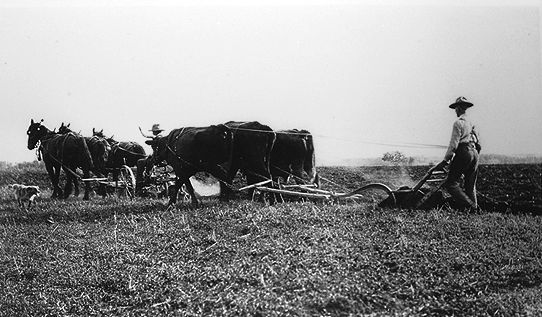
-
Article
Premier
A premier is the chief minister of a provincial government. Because of the shared framework of cabinet government, the office of provincial premier is similar to that held by Canada's Prime Minister.
"https://thecanadianencyclopedia.ca/images/tce_placeholder.jpg?v=e9dca980c9bdb3aa11e832e7ea94f5d9" // resources/views/front/categories/view.blade.php
https://thecanadianencyclopedia.ca/images/tce_placeholder.jpg?v=e9dca980c9bdb3aa11e832e7ea94f5d9
-
Macleans
Premier Danny Williams Gives Prominence to Newfoundland's Concerns
This article was originally published in Maclean’s magazine on December 20, 2004. Partner content is not updated. The suits are more conservative these days, the partying is toned down, but there's still plenty of mischief at the heart of Danny Williams.
"https://d3d0lqu00lnqvz.cloudfront.net/media/media/eee3ae29-ece8-4e05-8734-c9161cf6442f.jpg" // resources/views/front/categories/view.blade.php
https://d3d0lqu00lnqvz.cloudfront.net/media/media/eee3ae29-ece8-4e05-8734-c9161cf6442f.jpg
-
Macleans
Premiers and National Unity
This article was originally published in Maclean’s magazine on September 29, 1997. Partner content is not updated.
"https://thecanadianencyclopedia.ca/images/tce_placeholder.jpg?v=e9dca980c9bdb3aa11e832e7ea94f5d9" // resources/views/front/categories/view.blade.php
https://thecanadianencyclopedia.ca/images/tce_placeholder.jpg?v=e9dca980c9bdb3aa11e832e7ea94f5d9
-
Article
Prerogative Powers
Prerogative powers are defined as "the residue of discretionary or arbitrary authority which at any given time is legally left in the hands of the CROWN.
"https://thecanadianencyclopedia.ca/images/tce_placeholder.jpg?v=e9dca980c9bdb3aa11e832e7ea94f5d9" // resources/views/front/categories/view.blade.php
https://thecanadianencyclopedia.ca/images/tce_placeholder.jpg?v=e9dca980c9bdb3aa11e832e7ea94f5d9
-
Article
Pressure Group
A pressure group, also known as an interest group or lobby, is an organization formed by like-minded people who seek to influence PUBLIC POLICY to promote an interest. Pressure groups exist in all modern pluralist democracies and have sprung up on all sides. Some defend producer interests.
"https://thecanadianencyclopedia.ca/images/tce_placeholder.jpg?v=e9dca980c9bdb3aa11e832e7ea94f5d9" // resources/views/front/categories/view.blade.php
https://thecanadianencyclopedia.ca/images/tce_placeholder.jpg?v=e9dca980c9bdb3aa11e832e7ea94f5d9
-
Article
Prime Minister's Office
The Prime Minister's Office (PMO) is a central agency that came into its own in the late 1960s.
"https://d3d0lqu00lnqvz.cloudfront.net/media/media/0f1551ef-6d07-484c-8e51-b818a1e1af7c.jpg" // resources/views/front/categories/view.blade.php
https://d3d0lqu00lnqvz.cloudfront.net/media/media/0f1551ef-6d07-484c-8e51-b818a1e1af7c.jpg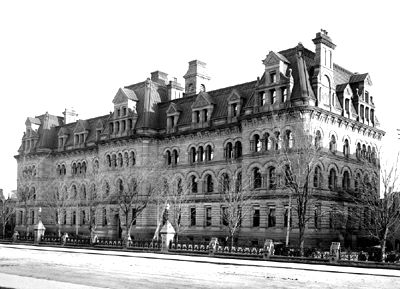
-
Article
Prime Suspects: Canada's Prime Ministers, Caricatured
In this exhibit of political artwork, cartoonist Bruce MacKinnon marks 2017, Canada's 150 birthday, with caricatures of the country's 23 prime ministers.
"https://d3d0lqu00lnqvz.cloudfront.net/media/media/3a8d9570-4ef0-49a2-b4a8-142a6d4845e2.jpg" // resources/views/front/categories/view.blade.php
https://d3d0lqu00lnqvz.cloudfront.net/media/media/3a8d9570-4ef0-49a2-b4a8-142a6d4845e2.jpg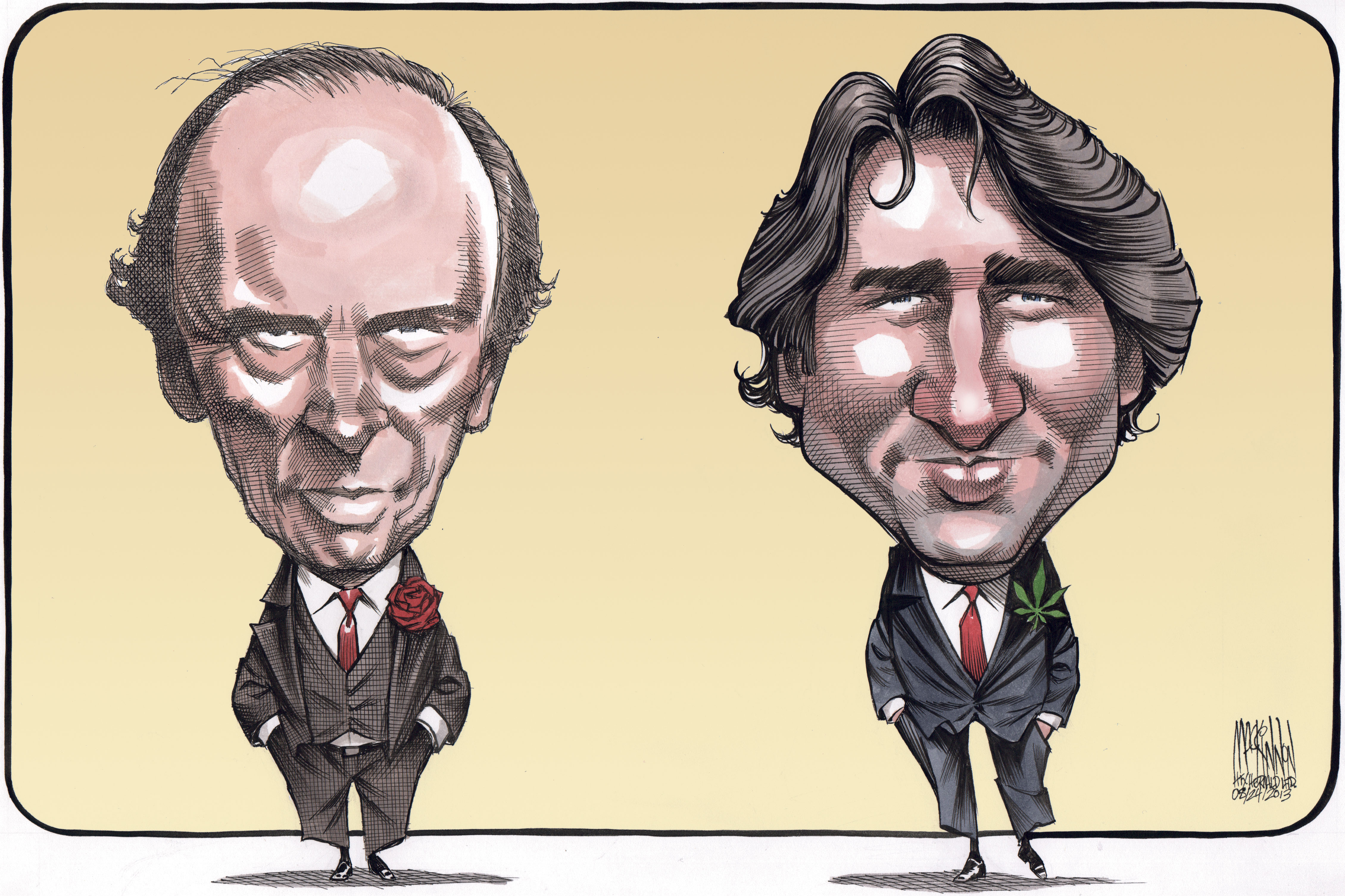
-
Article
Prison
Prison, as a term meaning a place in which people are kept in captivity, covers a variety of institutions in Canada. Jails, commonly called detention or remand centres, are used to incarcerate persons awaiting trial or those sentenced for short terms.
"https://thecanadianencyclopedia.ca/images/tce_placeholder.jpg?v=e9dca980c9bdb3aa11e832e7ea94f5d9" // resources/views/front/categories/view.blade.php
https://thecanadianencyclopedia.ca/images/tce_placeholder.jpg?v=e9dca980c9bdb3aa11e832e7ea94f5d9
-
Article
Prison Ships in Canada: A Little-Known Story
On 15 July 1940, an unusual vessel docked at the Port of Québec, and a crowd gathered to greet the new arrival. The small craft used for patrolling and transportation on the St. Lawrence River at Québec City, the Jeffy Jan II — rechristened HMC Harbour Craft 54 by the young Canadian Navy during the war — was sent to surveil the ship and its sensitive cargo and passengers. The vessel in question was the prison ship MS Sobieski.
"https://d3d0lqu00lnqvz.cloudfront.net/media/media/05a335d9-a323-47e8-8090-059e81d8b8a4.jpg" // resources/views/front/categories/view.blade.php
https://d3d0lqu00lnqvz.cloudfront.net/media/media/05a335d9-a323-47e8-8090-059e81d8b8a4.jpg
-
Article
Prisoner of War Camps in Canada
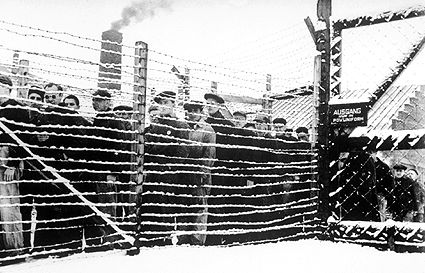
Canada operated prison camps for interned civilians during the First and Second World Wars, and for 34,000 combatant German prisoners of war (POWs) during the Second World War.
"https://d3d0lqu00lnqvz.cloudfront.net/media/media/cde937a6-33ac-4af0-87d7-4a9323820e13.jpg" // resources/views/front/categories/view.blade.php
https://d3d0lqu00lnqvz.cloudfront.net/media/media/cde937a6-33ac-4af0-87d7-4a9323820e13.jpg