
Browse "Politics & Law"
-
"https://thecanadianencyclopedia.ca/images/tce_placeholder.jpg?v=e9dca980c9bdb3aa11e832e7ea94f5d9" // resources/views/front/categories/view.blade.php
https://thecanadianencyclopedia.ca/images/tce_placeholder.jpg?v=e9dca980c9bdb3aa11e832e7ea94f5d9
-
Article
Military Service Act
The Military Service Act became law on 29 August 1917. It was a politically explosive and controversial law that bitterly divided the country along French-English lines. It made all male citizens aged 20 to 45 subject to conscription for military service, through the end of the First World War. As such, the Act had significant political consequences. It led to the creation of Prime Minister Borden’s Union Government and drove most of his French-Canadian supporters into opposition.
"https://d3d0lqu00lnqvz.cloudfront.net/media/media/1a7b61ee-ed48-4f36-bedd-c816ea64a819.jpg" // resources/views/front/categories/view.blade.php
https://d3d0lqu00lnqvz.cloudfront.net/media/media/1a7b61ee-ed48-4f36-bedd-c816ea64a819.jpg
-
Article
Militia Acts
Militia Acts provided manpower for defence. Until the 1850s, such Acts in Upper and Lower Canada, Nova Scotia and New Brunswick usually imposed compulsory service on males between 16 and 50 or 60, with annual or more frequent enrolment musters.
"https://thecanadianencyclopedia.ca/images/tce_placeholder.jpg?v=e9dca980c9bdb3aa11e832e7ea94f5d9" // resources/views/front/categories/view.blade.php
https://thecanadianencyclopedia.ca/images/tce_placeholder.jpg?v=e9dca980c9bdb3aa11e832e7ea94f5d9
-
Article
Miller and Cockriell Case
In 1977, J.H. Miller and V.J.R. Cockriell, charged with the murder of a policeman, argued the incompatibility of the penalty imposed by law with the Canadian Bill of Rights 1960.
"https://thecanadianencyclopedia.ca/images/tce_placeholder.jpg?v=e9dca980c9bdb3aa11e832e7ea94f5d9" // resources/views/front/categories/view.blade.php
https://thecanadianencyclopedia.ca/images/tce_placeholder.jpg?v=e9dca980c9bdb3aa11e832e7ea94f5d9
-
Article
'Mimkwamlis Potlatch (Memkumlis Raid)
On 25 December 1921, a Potlatch ceremony was held in the Kwakwa̱ka̱’wakw village of ‘Mimkwamlis (also spelled Memkumlis, and also known as Village Island). The Potlatch ceremony was illegal at the time. Officers of the federal government’s Department of Indian Affairs (see Federal Departments of Indigenous and Northern Affairs), as well as the Royal Canadian Mounted Police and, according to some sources, the British Columbia provincial police learned of this Potlatch. They arrested 45 people for participating in the Potlatch. Approximately half of the people were sent to prison for periods ranging from two to three months. Hundreds of precious Kwakwa̱ka̱’wakw ceremonial objects were confiscated. Some of these items were sold to collectors and wound up in museums without the consent of the Kwakwa̱ka̱’wakw people. The arrests related to the ‘Mimkwamlis Potlatch of 1921 were an example of police and government abuse of Indigenous Peoples. It is a further example of the attempted cultural genocide of Indigenous Peoples in Canada (see Genocide and Indigenous Peoples in Canada).
"https://d3d0lqu00lnqvz.cloudfront.net/MimkwamlisPotlatch/umista_cultural_centre_web.jpg" // resources/views/front/categories/view.blade.php
https://d3d0lqu00lnqvz.cloudfront.net/MimkwamlisPotlatch/umista_cultural_centre_web.jpg
-
Article
Mining Work Force
Mechanization and new mining methods have diminished the mining work force since the mid-1970s. Additionally, depleted resources have forced the closure or suspension of some mines. New mines have opened but the number of openings has not kept pace with closures.
"https://d3d0lqu00lnqvz.cloudfront.net/media/media/1dc9dee2-2b24-4fa6-81c8-d73a66749b30.jpg" // resources/views/front/categories/view.blade.php
https://d3d0lqu00lnqvz.cloudfront.net/media/media/1dc9dee2-2b24-4fa6-81c8-d73a66749b30.jpg
-
Article
Ministère de la Marine
The Ministère de la Marine is the section of the French government that administered Canada during its last 100 years as a French colony. The Ministère de la Marine — variously described as a ministry, department, or secretariat of state — administered France’s navy, colonies and seaborne trade.
"https://d3d0lqu00lnqvz.cloudfront.net/media/media/c006216k.jpg" // resources/views/front/categories/view.blade.php
https://d3d0lqu00lnqvz.cloudfront.net/media/media/c006216k.jpg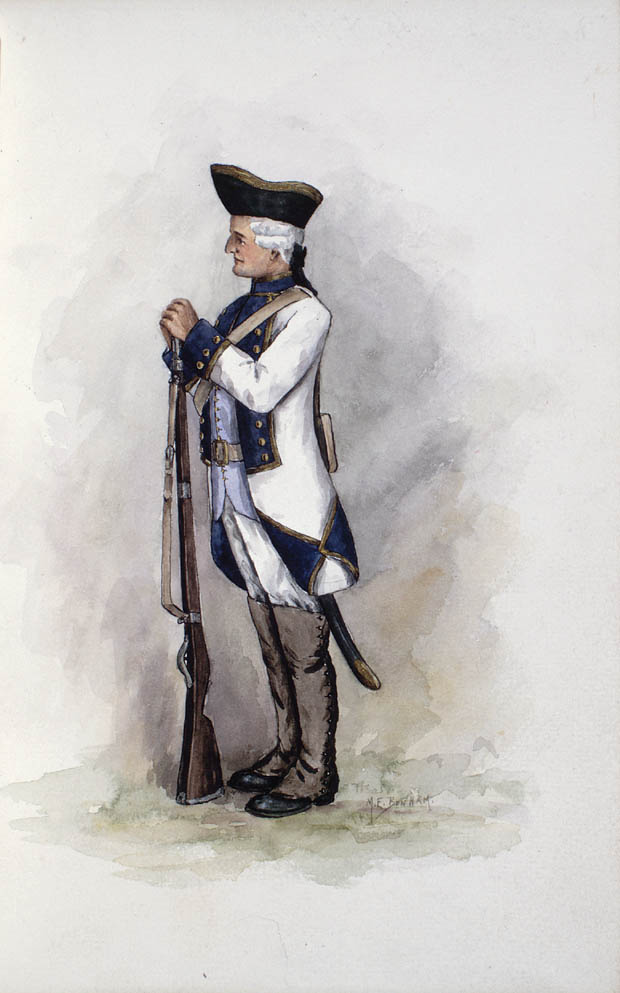
-
Article
Ministère des Affaires culturelles du Québec
Ministère des Affaires culturelles du Québec (MACQ). The Act creating the Quebec Ministry of Cultural Affairs to 'favour and promote the specific cultural character of Quebec in the fields of arts, letters, and heritage'.
"https://thecanadianencyclopedia.ca/images/tce_placeholder.jpg?v=e9dca980c9bdb3aa11e832e7ea94f5d9" // resources/views/front/categories/view.blade.php
https://thecanadianencyclopedia.ca/images/tce_placeholder.jpg?v=e9dca980c9bdb3aa11e832e7ea94f5d9
-
Article
Ministry of Overseas Military Forces
The Ministry of Overseas Military Forces was established in November 1916 to administer Canadian forces in the UK, especially in the training of reinforcements, and to act as the communications channel between the Militia Department, the British War Office, and the Canadian Corps in France.
"https://thecanadianencyclopedia.ca/images/tce_placeholder.jpg?v=e9dca980c9bdb3aa11e832e7ea94f5d9" // resources/views/front/categories/view.blade.php
https://thecanadianencyclopedia.ca/images/tce_placeholder.jpg?v=e9dca980c9bdb3aa11e832e7ea94f5d9
-
Article
Minority Governments in Canada
A minority government exists when the governing party does not hold a majority of seats in the House of Commons (or provincial legislature) but is still able to command the confidence of the House. Minority governments also exist at the provincial level and in Yukon, but not in Northwest Territories or Nunavut, which do not have political parties and are governed by consensus governments.
"https://d3d0lqu00lnqvz.cloudfront.net/media/media/12c94628-6ad2-455b-9ada-0a1e6df2849d.jpg" // resources/views/front/categories/view.blade.php
https://d3d0lqu00lnqvz.cloudfront.net/media/media/12c94628-6ad2-455b-9ada-0a1e6df2849d.jpg
-
Article
Miramichi Lumber Strike
The Miramichi Lumber Strike began 20 August 1937 when 1500 millworkers and longshoremen along the Miramichi River in northern New Brunswick struck 14 lumber firms for increased wages, shorter working hours and union recognition.
"https://thecanadianencyclopedia.ca/images/tce_placeholder.jpg?v=e9dca980c9bdb3aa11e832e7ea94f5d9" // resources/views/front/categories/view.blade.php
https://thecanadianencyclopedia.ca/images/tce_placeholder.jpg?v=e9dca980c9bdb3aa11e832e7ea94f5d9
-
Article
Missing and Murdered Indigenous Women and Girls in Canada
Missing and murdered Indigenous women and girls in Canada (MMIWG) refers to a human rights crisis that has only recently become a topic of discussion within national media. Indigenous women and communities, women’s groups and international organizations have long called for action into the high and disproportionate rates of violence and the appalling numbers of missing and murdered Indigenous women and girls in Canada. Prior to the launch of the national public inquiry on 8 December 2015, these calls were continually ignored by the federal government. Described by some as a hidden crisis, Dawn Lavell-Harvard, former president of the Native Women’s Association of Canada, refers to MMIWG as a national tragedy and a national shame. In 2015, the Truth and Reconciliation Commission of Canada supported the call for a national public inquiry into the disproportionate victimization of Indigenous women and girls. The National Inquiry’s Final Report was completed and presented to the public on 3 June 2019.
"https://d3d0lqu00lnqvz.cloudfront.net/media/media/2a243145-5d5c-42f2-a98f-bcda497ab7dc.jpg" // resources/views/front/categories/view.blade.php
https://d3d0lqu00lnqvz.cloudfront.net/media/media/2a243145-5d5c-42f2-a98f-bcda497ab7dc.jpg
-
Article
Monarchism
Monarchism is support for Canada’s system of government as a constitutional monarchy. Monarchism is distinct from royalism in that it is support for monarchy as a political institution, rather than for an individual monarch. Monarchism played a key role in the development of Canada and continues to be part of political and popular discourse.
"https://d3d0lqu00lnqvz.cloudfront.net/media/media/cbf87236-d18d-4705-be60-c00a0ec1378a.jpg" // resources/views/front/categories/view.blade.php
https://d3d0lqu00lnqvz.cloudfront.net/media/media/cbf87236-d18d-4705-be60-c00a0ec1378a.jpg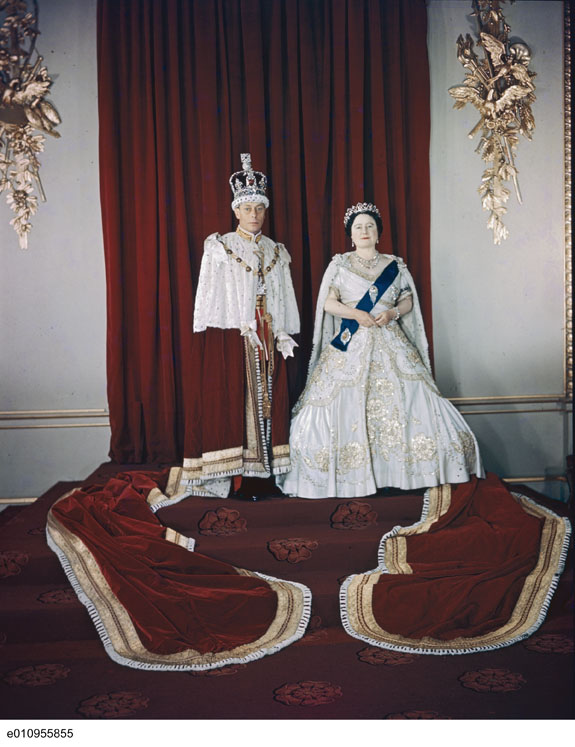
-
Article
Monetary Policy
Monetary policy refers to government measures taken to affect financial markets and credit conditions, for the purpose of influencing the behaviour of the economy. In Canada, monetary policy is the responsibility of the Bank of Canada, a federal crown corporation that implements its decisions through manipulation of the money supply.
"https://d3d0lqu00lnqvz.cloudfront.net/media/media/c68aaffd-b1f0-4293-8d16-016a2017e56e.jpg" // resources/views/front/categories/view.blade.php
https://d3d0lqu00lnqvz.cloudfront.net/media/media/c68aaffd-b1f0-4293-8d16-016a2017e56e.jpg
-
Article
Money in Canada
Money consists of anything that is generally accepted for the settlement of debts or the purchase of goods or services. The evolution of money as a system for regulating society’s economic transactions represented a significant advancement over earlier forms of exchange based on barter, in which goods and services are exchanged for other goods or services. Canadian money has its roots in the Indigenous wampum belts of the East, the early currencies of European settlers and the influence of the United States. Click here for definitions of key terms used in this article.
"https://d3d0lqu00lnqvz.cloudfront.net/media/media/f1733c26-ebb9-45c6-be6b-aecf8c7a9503.jpg" // resources/views/front/categories/view.blade.php
https://d3d0lqu00lnqvz.cloudfront.net/media/media/f1733c26-ebb9-45c6-be6b-aecf8c7a9503.jpg