
Browse "Politics & Law"
-
Macleans
Faint Hope: Background
This article was originally published in Maclean’s magazine on August 18, 1997. Partner content is not updated. Danny Homers calm, detached tone belies the fact that he is talking about the murder that put him behind bars for life. The prisoner, now 38, explains that he was a teenager living in Regina in January, 1977, when he killed Ira McDonald, a 23-year-old partner in crime.
"https://thecanadianencyclopedia.ca/images/tce_placeholder.jpg?v=e9dca980c9bdb3aa11e832e7ea94f5d9" // resources/views/front/categories/view.blade.php
https://thecanadianencyclopedia.ca/images/tce_placeholder.jpg?v=e9dca980c9bdb3aa11e832e7ea94f5d9
-
Article
Fake News (a.k.a. Disinformation) in Canada
Fake news is falsified information created with the intent of misleading people. It aims to shape public opinion by eliciting an emotional and biased response that is divorced from facts but in alignment with a particular ideology or perspective. Fake news can effectively weaponize information. It uses disinformation, misinformation or mal-information to demonize or damage a political foe, or to sow confusion and mistrust among the public. Fake news came to the fore of public consciousness during and immediately after the 2016 US presidential election, though its origins date back much further.
"https://d3d0lqu00lnqvz.cloudfront.net/media/new_article_images/FakeNews/640px-FAKE_NEWS.png" // resources/views/front/categories/view.blade.php
https://d3d0lqu00lnqvz.cloudfront.net/media/new_article_images/FakeNews/640px-FAKE_NEWS.png
-
Article
Canada Child Benefit (CCB)
A family or child allowance is a monthly government payment to families with children. The intent of the payment is to help cover the costs of child rearing. The Family Allowance, Canada's first universal welfare program, began in 1945. Benefits were awarded without regard to the family's income or assets, based on the idea that all children are worthy of public support. Since the 1980s, however, such payments have been increasingly targeted to low-income and middle-income families. The allowance was restructured and renamed the Canada Child Benefit (CCB) in 2016. Since then, the CCB has boosted Canada’s GDP by 2.1 per cent per year. This makes it one of the country’s most effective poverty-reduction programs. Along with the Canada Pension Plan and Employment Insurance, the CCB is one of the largest cash-transfer programs in the country. In the 2023–24 fiscal year, the CCB paid approximately $27 billion to Canadian households.
"https://thecanadianencyclopedia.ca/images/tce_placeholder.jpg?v=e9dca980c9bdb3aa11e832e7ea94f5d9" // resources/views/front/categories/view.blade.php
https://thecanadianencyclopedia.ca/images/tce_placeholder.jpg?v=e9dca980c9bdb3aa11e832e7ea94f5d9
-
Article
Family Compact
The term Family Compact is an epithet, or insulting nickname; it is used to describe the network of men who dominated the legislative, bureaucratic, business, religious and judicial centres of power in Upper Canada (present-day Ontario) from the early- to mid-1800s. Members of the Family Compact held largely conservative and loyalist views. They were against democratic reform and responsible government. By the mid-19th century, immigration, the union of Upper and Lower Canada, and the work of various democratic reformers had diminished the group’s power. The equivalent to the Family Compact in Lower Canada was the Château Clique.
"https://d3d0lqu00lnqvz.cloudfront.net/media/media/693e886b-aefa-4d54-b3e0-c1695d334bb0.jpg" // resources/views/front/categories/view.blade.php
https://d3d0lqu00lnqvz.cloudfront.net/media/media/693e886b-aefa-4d54-b3e0-c1695d334bb0.jpg
-
Article
Family Court
Family Court, the common name of courts established by provincial statutes to administer FAMILY LAW. Judges are appointed by the provincial government.
"https://thecanadianencyclopedia.ca/images/tce_placeholder.jpg?v=e9dca980c9bdb3aa11e832e7ea94f5d9" // resources/views/front/categories/view.blade.php
https://thecanadianencyclopedia.ca/images/tce_placeholder.jpg?v=e9dca980c9bdb3aa11e832e7ea94f5d9
-
Article
Family Law in Canada
Family law is critical to most Canadians as it governs relationships between spouses, and between parents and their children. In family law, marriage and divorce fall under federal jurisdiction but most other issues, including adoption and matrimonial property disputes, fall under provincial laws that vary widely. Traditional family structures have changed significantly over time, with increasing numbers of same-sex and common law relationships, and growing divorce rates. This has led to intense debates over the future of family law, court challenges and provincial reviews of legislation.
"https://thecanadianencyclopedia.ca/images/tce_placeholder.jpg?v=e9dca980c9bdb3aa11e832e7ea94f5d9" // resources/views/front/categories/view.blade.php
https://thecanadianencyclopedia.ca/images/tce_placeholder.jpg?v=e9dca980c9bdb3aa11e832e7ea94f5d9
-
Article
Family Violence
Since the 1970s, there has been an increased awareness that crimes of violence are not only perpetrated by strangers in public places. Research has uncovered a large amount of violent criminal behaviour that occurs between intimates in private locations, such as the home.
"https://thecanadianencyclopedia.ca/images/tce_placeholder.jpg?v=e9dca980c9bdb3aa11e832e7ea94f5d9" // resources/views/front/categories/view.blade.php
https://thecanadianencyclopedia.ca/images/tce_placeholder.jpg?v=e9dca980c9bdb3aa11e832e7ea94f5d9
-
Article
Famous Five
Alberta’s “Famous Five” were petitioners in the groundbreaking Persons Case. The case was brought before the Supreme Court of Canada in 1927. It was decided in 1929 by the Judicial Committee of the Privy Council, Canada’s highest appeals court at the time. The group was led by judge Emily Murphy. It also included Henrietta Edwards, Nellie McClung, Louise McKinney and Irene Parlby. Together, the five women had many years of active work in various campaigns for women’s rights dating back to the 1880s and 1890s. They enjoyed a national — and in the case of McClung, an international — reputation among reformers.
"https://d3d0lqu00lnqvz.cloudfront.net/media/media/65699b89-06c0-4518-aa06-4eea43f2ec74.jpg" // resources/views/front/categories/view.blade.php
https://d3d0lqu00lnqvz.cloudfront.net/media/media/65699b89-06c0-4518-aa06-4eea43f2ec74.jpg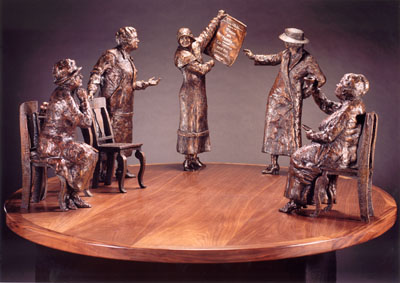
-
Article
Farm Law
In Canada more than 90% of farm businesses are family-owned operations; these operations involve about one million people.
"https://thecanadianencyclopedia.ca/images/tce_placeholder.jpg?v=e9dca980c9bdb3aa11e832e7ea94f5d9" // resources/views/front/categories/view.blade.php
https://thecanadianencyclopedia.ca/images/tce_placeholder.jpg?v=e9dca980c9bdb3aa11e832e7ea94f5d9
-
Article
Fascism
Fascism is a term often loosely used to describe military dictatorships and extreme right-wing governments and organizations (or individuals) known to be either violently anticommunist or violently anti-Semitic, or both.
"https://thecanadianencyclopedia.ca/images/tce_placeholder.jpg?v=e9dca980c9bdb3aa11e832e7ea94f5d9" // resources/views/front/categories/view.blade.php
https://thecanadianencyclopedia.ca/images/tce_placeholder.jpg?v=e9dca980c9bdb3aa11e832e7ea94f5d9
-
Macleans
Father Admits to Drowning Kids
This article was originally published in Maclean’s magazine on March 29, 1999. Partner content is not updated. As soon as she heard the news, Katharina (Tina) Marlatt felt sick, and suspicious. It was the day of the drowning deaths of her former boyfriend Thomas Dewald's two children, Christopher, 12, and Jennifer, 10. They died on Aug.
"https://thecanadianencyclopedia.ca/images/tce_placeholder.jpg?v=e9dca980c9bdb3aa11e832e7ea94f5d9" // resources/views/front/categories/view.blade.php
https://thecanadianencyclopedia.ca/images/tce_placeholder.jpg?v=e9dca980c9bdb3aa11e832e7ea94f5d9
-
Article
Federal Court of Canada
The power to establish courts in Canada is conferred on both provincial legislatures and Parliament.
"https://thecanadianencyclopedia.ca/images/tce_placeholder.jpg?v=e9dca980c9bdb3aa11e832e7ea94f5d9" // resources/views/front/categories/view.blade.php
https://thecanadianencyclopedia.ca/images/tce_placeholder.jpg?v=e9dca980c9bdb3aa11e832e7ea94f5d9
-
Article
Federal Government
The federal government is the national government of Canada, centred in Ottawa. The term can refer narrowly to the Canadian Cabinet, or more broadly to the Cabinet and the public service.
"https://d3d0lqu00lnqvz.cloudfront.net/media/media/7d7ec07b-0656-4413-a7d8-0d282847d873.jpg" // resources/views/front/categories/view.blade.php
https://d3d0lqu00lnqvz.cloudfront.net/media/media/7d7ec07b-0656-4413-a7d8-0d282847d873.jpg
-
Macleans
Federal Health Minister to Take on Internet Pharmacies
IT'S SUNNY AND -16º C, not too bad considering how cold it can get here in southern Manitoba. The only thing moving is the occasional passenger car or transport truck, billowing cotton balls of exhaust along Highway 3.This article was originally published in Maclean's Magazine on February 21, 2005
"https://thecanadianencyclopedia.ca/images/tce_placeholder.jpg?v=e9dca980c9bdb3aa11e832e7ea94f5d9" // resources/views/front/categories/view.blade.php
https://thecanadianencyclopedia.ca/images/tce_placeholder.jpg?v=e9dca980c9bdb3aa11e832e7ea94f5d9
-
Article
Federal Task Force on Agriculture
Agriculture, Federal Task Force on, established 1967 to advise the federal minister of agriculture on problems of Canadian agriculture and to recommend policies.
"https://thecanadianencyclopedia.ca/images/tce_placeholder.jpg?v=e9dca980c9bdb3aa11e832e7ea94f5d9" // resources/views/front/categories/view.blade.php
https://thecanadianencyclopedia.ca/images/tce_placeholder.jpg?v=e9dca980c9bdb3aa11e832e7ea94f5d9