
Browse "History"
-
Article
McKee's Purchase
McKee’s Purchase of 1790 (also known as the McKee Treaty and Treaty 2) was an early land agreement between Indigenous peoples and British authorities in Upper Canada (later Ontario). It is the southernmost Upper Canada treaty and consisted of a large strip of territory from the southwestern shore of Lake Erie north to the Thames River and east to a point southwest of modern-day London, Ontario. This land was made available for settlement by Loyalists who were displaced by the American Revolution.
"https://d3d0lqu00lnqvz.cloudfront.net/McKeesPurchaseMonument.jpg" // resources/views/front/categories/view.blade.php
https://d3d0lqu00lnqvz.cloudfront.net/McKeesPurchaseMonument.jpg
-
Macleans
McNamara's Apology
This article was originally published in Maclean’s magazine on April 24, 1995. Partner content is not updated.
"https://thecanadianencyclopedia.ca/images/tce_placeholder.jpg?v=e9dca980c9bdb3aa11e832e7ea94f5d9" // resources/views/front/categories/view.blade.php
https://thecanadianencyclopedia.ca/images/tce_placeholder.jpg?v=e9dca980c9bdb3aa11e832e7ea94f5d9
-
Article
Medal
This medal is awarded to members of the air force for bravery (courtesy Library and Archives Canada).Medal A medal is usually a small metal disc, ornamented in relief, struck or cast, and awarded for merit or issued to commemorate an event or person. Medals have essentially the same significance in Canada as elsewhere in the Western world; little noticed in everyday life, they are nevertheless highly esteemed. A distinction is often made between medals of...
"https://thecanadianencyclopedia.ca/images/tce_placeholder.jpg?v=e9dca980c9bdb3aa11e832e7ea94f5d9" // resources/views/front/categories/view.blade.php
https://thecanadianencyclopedia.ca/images/tce_placeholder.jpg?v=e9dca980c9bdb3aa11e832e7ea94f5d9
-
Article
Medicine Bundles
Medicine bundles (also called “sacred bundles”), wrapped collections of spiritually significant items, were the focus of most Indigenous spiritual rituals in the Plains region (see Plains Indigenous Peoples in Canada). A bundle might be a few feathers wrapped in skin or a multitude of objects such as animal skins, roots, or stone pipes inside a rawhide bag.
"https://d3d0lqu00lnqvz.cloudfront.net/MedicineBundles/Medicine_Bundle_image2.png" // resources/views/front/categories/view.blade.php
https://d3d0lqu00lnqvz.cloudfront.net/MedicineBundles/Medicine_Bundle_image2.png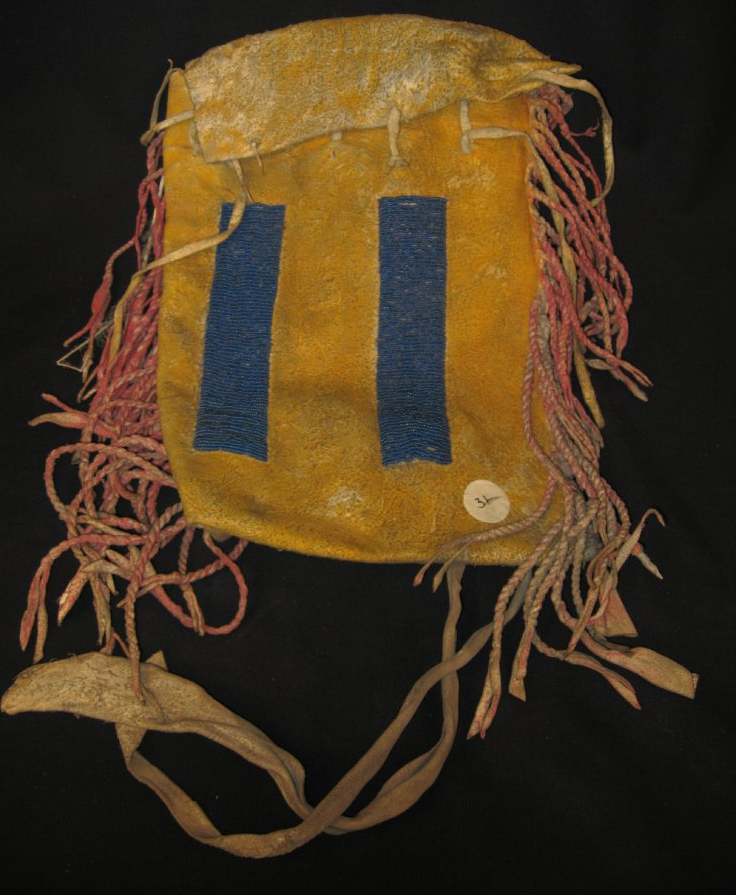
-
Article
Medieval, Renaissance, Baroque Instruments
In the late 1950s in Canada there was a renewal of interest in performing medieval, renaissance and early baroque music.
"https://thecanadianencyclopedia.ca/images/tce_placeholder.jpg?v=e9dca980c9bdb3aa11e832e7ea94f5d9" // resources/views/front/categories/view.blade.php
https://thecanadianencyclopedia.ca/images/tce_placeholder.jpg?v=e9dca980c9bdb3aa11e832e7ea94f5d9
-
Article
Meech Lake Accord: Document
Meech Lake Accord: Document1987 Constitutional AccordComplete Text June 3, 1987 WHEREAS first ministers, assembled in Ottawa, have arrived at a unanimous accord on constitutional amendments that would bring about the full and active participation of Quebec in Canada's constitutional evolution, would recognize the principle of equality of all provinces, would provide new arrangements to foster greater harmony and cooperation between the Government of Canada and the governments of the provinces and would require that annual...
"https://thecanadianencyclopedia.ca/images/tce_placeholder.jpg?v=e9dca980c9bdb3aa11e832e7ea94f5d9" // resources/views/front/categories/view.blade.php
https://thecanadianencyclopedia.ca/images/tce_placeholder.jpg?v=e9dca980c9bdb3aa11e832e7ea94f5d9
-
Article
Mémoires de l'Amérique septentrionale
Mémoires de l'Amérique septentrionale, a learned and entertaining natural history of Canada, was the journal kept by Louis-Armand de Lom d'Arce, baron de LAHONTAN, during his travels in New France, 1683-93.
"https://thecanadianencyclopedia.ca/images/tce_placeholder.jpg?v=e9dca980c9bdb3aa11e832e7ea94f5d9" // resources/views/front/categories/view.blade.php
https://thecanadianencyclopedia.ca/images/tce_placeholder.jpg?v=e9dca980c9bdb3aa11e832e7ea94f5d9
-
Article
Mer de l'Ouest
Mer de l'Ouest ("Western Sea"), originally the goal of exploration during the French regime, was the stuff of wishful thinking obligingly corroborated by Indians. Initially thought to be an inland sea somewhere west of the Great Lakes, it gradually blended in imagination with the Pacific.
"https://thecanadianencyclopedia.ca/images/tce_placeholder.jpg?v=e9dca980c9bdb3aa11e832e7ea94f5d9" // resources/views/front/categories/view.blade.php
https://thecanadianencyclopedia.ca/images/tce_placeholder.jpg?v=e9dca980c9bdb3aa11e832e7ea94f5d9
-
Article
Métis Experiences at Residential School
Although the first residential schools in Canada were established with the intention of assimilating First Nations children into Euro-Canadian culture, Métis and Inuit children were also institutionalized in such facilities. Métis children experienced similar day-to-day conditions to those of other students in residential schools, but they were often considered “outsiders” by their peers and administrators. This perception affected their experiences within these institutions in particular ways.
"https://d3d0lqu00lnqvz.cloudfront.net/MetisExperiences/Webp.net-resizeimage.jpg" // resources/views/front/categories/view.blade.php
https://d3d0lqu00lnqvz.cloudfront.net/MetisExperiences/Webp.net-resizeimage.jpg
-
Article
Métis Scrip in Canada
Scrip is any document used in place of legal tender, for example a certificate or voucher, where the bearer is entitled to certain rights. In 1870, the Canadian government devised a system of scrip — referred to as Métis scrip — that issued documents redeemable for land or money. Scrip was given to Métis people living in the West in exchange for their land rights. The scrip process was legally complex and disorganized; this made it difficult for Métis people to acquire land, yet simultaneously created room for fraud. In March 2013, the Supreme Court of Canada ruled that the federal government failed to provide the Métis with the land grant they were promised in the Manitoba Act of 1870. Negotiations between various levels of government and the Métis Nation concerning the reclamation of land rights continue.
"https://d3d0lqu00lnqvz.cloudfront.net/media/media/00019b96-4c2b-4fb8-9d1b-58ccf46ec3ae.jpg" // resources/views/front/categories/view.blade.php
https://d3d0lqu00lnqvz.cloudfront.net/media/media/00019b96-4c2b-4fb8-9d1b-58ccf46ec3ae.jpg
-
Article
Michilimackinac Island Treaty No.1 (1781)
In May 1781, the Anishinaabeg (Chippewa/Ojibwe) of the Straits of Mackinac region deeded Mackinac Island to the British (see also Upper Canada Land Surrenders). The treaty was recorded both in writing and in wampum. It utilized Anishinaabeg and British legal traditions to confirm the transfer of the island’s ownership to the British Crown. This agreement confirmed British use and occupancy of the island where a new fortification and village were under construction.
"https://d3d0lqu00lnqvz.cloudfront.net/FortMackinac.jpg" // resources/views/front/categories/view.blade.php
https://d3d0lqu00lnqvz.cloudfront.net/FortMackinac.jpg
-
Article
Middle Power
In international relations, the term middle power refers to a state that wields less influence on the world stage than a superpower. As the term suggests, middle powers fall in the middle of the scale measuring a country’s international influence. Where superpowers have great influence over other countries, middle powers have moderate influence over international events. Canada was considered to be a middle power during the postwar period — from 1945 until about 1960. Though Canada was not as powerful or prominent as the United Kingdom or the United States during this time, it was an international player that influenced events through moral leadership, peacekeeping and conflict mediation.
"https://d3d0lqu00lnqvz.cloudfront.net/media/media/a8f651d1-144a-49a7-af14-dc0c180d3168.jpg" // resources/views/front/categories/view.blade.php
https://d3d0lqu00lnqvz.cloudfront.net/media/media/a8f651d1-144a-49a7-af14-dc0c180d3168.jpg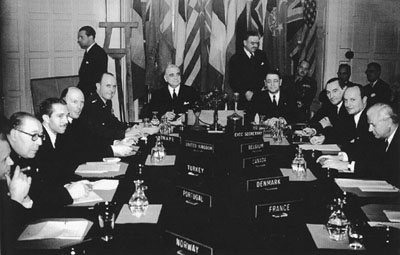
-
Article
Military Service Act
The Military Service Act became law on 29 August 1917. It was a politically explosive and controversial law that bitterly divided the country along French-English lines. It made all male citizens aged 20 to 45 subject to conscription for military service, through the end of the First World War. As such, the Act had significant political consequences. It led to the creation of Prime Minister Borden’s Union Government and drove most of his French-Canadian supporters into opposition.
"https://d3d0lqu00lnqvz.cloudfront.net/media/media/1a7b61ee-ed48-4f36-bedd-c816ea64a819.jpg" // resources/views/front/categories/view.blade.php
https://d3d0lqu00lnqvz.cloudfront.net/media/media/1a7b61ee-ed48-4f36-bedd-c816ea64a819.jpg
-
Article
Millenarianism
Millenarianism is the belief that a fundamental transformation of society is coming, one that will bring a golden age of peace and prosperity. Although millenarianism is a Judeo- Christian concept in origin, it has also been associated with other religious, political and social groups.
"https://d3d0lqu00lnqvz.cloudfront.net/media/media/69eb5724-3d71-4cca-857c-6656454c42d5.jpg" // resources/views/front/categories/view.blade.php
https://d3d0lqu00lnqvz.cloudfront.net/media/media/69eb5724-3d71-4cca-857c-6656454c42d5.jpg
-
Article
Ministers Island Historic Site
In 1890 SIR WILLIAM VAN HORNE purchased Minister's Island on PASSAMAQUODDY BAY for his summer resort. Van Horne built a most impressive sandstone house there, which he called Covenhoven.
"https://thecanadianencyclopedia.ca/images/tce_placeholder.jpg?v=e9dca980c9bdb3aa11e832e7ea94f5d9" // resources/views/front/categories/view.blade.php
https://thecanadianencyclopedia.ca/images/tce_placeholder.jpg?v=e9dca980c9bdb3aa11e832e7ea94f5d9