Browse "History"
-
Editorial
The Origin of the Name Canada
The following article is an editorial written by The Canadian Encyclopedia staff. Editorials are not usually updated.
"https://d3d0lqu00lnqvz.cloudfront.net/media/media/c8d795a7-4ea6-4c7e-aae4-9502d66e96b5.jpg" // resources/views/front/categories/view.blade.php
https://d3d0lqu00lnqvz.cloudfront.net/media/media/c8d795a7-4ea6-4c7e-aae4-9502d66e96b5.jpg
-
Article
Letters Patent, 1947
The Letters Patent Constituting the Office of Governor General and Commander-in-Chief of Canada, usually shortened to Letters Patent, 1947, was an edict issued by King George VI that expanded the role of the governor general, allowing him or her to exercise prerogatives of the sovereign. While Letters Patent delegated Crown prerogatives to the governor general, the sovereign remains Head of State.
"https://d3d0lqu00lnqvz.cloudfront.net/Letters_Patent_1947_page1.png" // resources/views/front/categories/view.blade.php
https://d3d0lqu00lnqvz.cloudfront.net/Letters_Patent_1947_page1.png
-
Macleans
Lewinsky Tells Her Story
Every Barbara Walters celebrity interview has a signature moment, the one where the interviewee's lower lip trembles and the tears start to flow. Devotees of the form were heartened to see that her televised session with Monica Lewinsky was no exception.This article was originally published in Maclean's Magazine on March 15, 1999
"https://thecanadianencyclopedia.ca/images/tce_placeholder.jpg?v=e9dca980c9bdb3aa11e832e7ea94f5d9" // resources/views/front/categories/view.blade.php
https://thecanadianencyclopedia.ca/images/tce_placeholder.jpg?v=e9dca980c9bdb3aa11e832e7ea94f5d9
-
Macleans
Lewinsky Testifies
Monica Beach, as the tiny little strand of concrete park across from Washington's E. Barrett Prettyman Courthouse has come to be known, was packed to overflowing in honor of its namesake.This article was originally published in Maclean's Magazine on August 17, 1998
"https://thecanadianencyclopedia.ca/images/tce_placeholder.jpg?v=e9dca980c9bdb3aa11e832e7ea94f5d9" // resources/views/front/categories/view.blade.php
https://thecanadianencyclopedia.ca/images/tce_placeholder.jpg?v=e9dca980c9bdb3aa11e832e7ea94f5d9
-
Article
Music at the Library and Archives Canada
Library and Archives Canada. Federal government department established in 2004; formerly National Library of Canada and Public (later National) Archives of Canada.
"https://thecanadianencyclopedia.ca/images/tce_placeholder.jpg?v=e9dca980c9bdb3aa11e832e7ea94f5d9" // resources/views/front/categories/view.blade.php
https://thecanadianencyclopedia.ca/images/tce_placeholder.jpg?v=e9dca980c9bdb3aa11e832e7ea94f5d9
-
Article
Literary History in English 1620-1867
Literary History in English 1620-1867The writing that critics identify as the earliest ENGLISH-LANGUAGE LITERATURE in Canada was produced by COLONIAL governors, soldiers, MISSIONARIES, settlers, European EXPLORERS and travellers, NEWSPAPER journalists, and community figures who in time began to consider the BRITISH NORTH AMERICAN colonies their home. Many were WOMEN. Few writers, to start, considered themselves "Canadian" (a term early reserved for the francophone settlers in QUEBEC). Most wrote for European readers (SeeFOREIGN WRITERS ON CANADA...
"https://thecanadianencyclopedia.ca/images/tce_placeholder.jpg?v=e9dca980c9bdb3aa11e832e7ea94f5d9" // resources/views/front/categories/view.blade.php
https://thecanadianencyclopedia.ca/images/tce_placeholder.jpg?v=e9dca980c9bdb3aa11e832e7ea94f5d9
-
Article
Literary History in English 1867-1914
With Confederation came immediate calls for Maritime separation but also a quickened interest in the growth of a national culture. Journalists and academic essayists earnestly disputed Canada's political destiny.
"https://thecanadianencyclopedia.ca/images/tce_placeholder.jpg?v=e9dca980c9bdb3aa11e832e7ea94f5d9" // resources/views/front/categories/view.blade.php
https://thecanadianencyclopedia.ca/images/tce_placeholder.jpg?v=e9dca980c9bdb3aa11e832e7ea94f5d9
-
Article
Literary History in English 1914-1940
The FIRST WORLD WAR featured variously in Canadian LITERATURE: as historical subject and setting, metaphor of personal conflict and national coming-of-age, test of loyalty, instance of officiousness, and prototype of political bias (SeeFIRST WORLD WAR IN CANADIAN LITERATURE).
"https://thecanadianencyclopedia.ca/images/tce_placeholder.jpg?v=e9dca980c9bdb3aa11e832e7ea94f5d9" // resources/views/front/categories/view.blade.php
https://thecanadianencyclopedia.ca/images/tce_placeholder.jpg?v=e9dca980c9bdb3aa11e832e7ea94f5d9
-
Article
Literary History in English 1940-1960
Literary History in English 1940-1960From the beginning of the SECOND WORLD WAR in 1939 to the early 1960s, Canada was negotiating its new-found international role, joining the UNITED NATIONS, developing the NORTH, and opening its borders more widely to IMMIGRANTS and REFUGEES--and to a tenth province, NEWFOUNDLAND AND LABRADOR, which in 1949 voted to join the Canadian CONFEDERATION. In the wake of fascism and the Holocaust, ANTI-SEMITISM in the country was slowly starting to wane,...
"https://thecanadianencyclopedia.ca/images/tce_placeholder.jpg?v=e9dca980c9bdb3aa11e832e7ea94f5d9" // resources/views/front/categories/view.blade.php
https://thecanadianencyclopedia.ca/images/tce_placeholder.jpg?v=e9dca980c9bdb3aa11e832e7ea94f5d9
-
Article
Literary History in English 1960-1980
The period between 1960 and 1980 was a definitive moment in Canadian literary history. Energized by the country’s centennial celebrations and widespread cultural nationalism, authors were excited by the prospect of Canadian literature as a means to help develop a national identity.
"https://thecanadianencyclopedia.ca/images/tce_placeholder.jpg?v=e9dca980c9bdb3aa11e832e7ea94f5d9" // resources/views/front/categories/view.blade.php
https://thecanadianencyclopedia.ca/images/tce_placeholder.jpg?v=e9dca980c9bdb3aa11e832e7ea94f5d9
-
Article
Literary History in English 1980-2000
The last two decades of the 20th century were marked by growing social and economic conservatism, a tendency towards fewer gambles in PUBLISHING ventures, and a greater reliance on computer TECHNOLOGY (e-mail, internet communications, electronic journals such as Frank DAVEY's Swift Current): A.K.
"https://thecanadianencyclopedia.ca/images/tce_placeholder.jpg?v=e9dca980c9bdb3aa11e832e7ea94f5d9" // resources/views/front/categories/view.blade.php
https://thecanadianencyclopedia.ca/images/tce_placeholder.jpg?v=e9dca980c9bdb3aa11e832e7ea94f5d9
-
Macleans
Littleton Massacre
At first they thought it was a prank, the kind of crazy thing that students just a month from graduation might pull.This article was originally published in Maclean's Magazine on May 3, 1999
"https://thecanadianencyclopedia.ca/images/tce_placeholder.jpg?v=e9dca980c9bdb3aa11e832e7ea94f5d9" // resources/views/front/categories/view.blade.php
https://thecanadianencyclopedia.ca/images/tce_placeholder.jpg?v=e9dca980c9bdb3aa11e832e7ea94f5d9
-
Article
Log Houses
Log Houses are a form of housing structure has been used in some forms by both Indigenous peoples and earlier settlers. While some Northwest Coast Indigenous peoples used log frames for their large plank houses before European settlers arrived, log houses have long been associated with pioneer settlement, past and present (see also Architectural History of Indigenous Peoples in Canada). Canada's forests provided ready building material.
"https://d3d0lqu00lnqvz.cloudfront.net/media/media/d722a2ab-c736-4842-b454-e665edd09d59.jpg" // resources/views/front/categories/view.blade.php
https://d3d0lqu00lnqvz.cloudfront.net/media/media/d722a2ab-c736-4842-b454-e665edd09d59.jpg
-
Article
London and Bristol Company
London and Bristol Company, est 1610, the first formal attempt to colonize NEWFOUNDLAND. A group of merchant "adventurers" from London and Bristol, Eng, obtained a royal charter giving them title to Newfoundland's east coast.
"https://thecanadianencyclopedia.ca/images/tce_placeholder.jpg?v=e9dca980c9bdb3aa11e832e7ea94f5d9" // resources/views/front/categories/view.blade.php
https://thecanadianencyclopedia.ca/images/tce_placeholder.jpg?v=e9dca980c9bdb3aa11e832e7ea94f5d9
-
Article
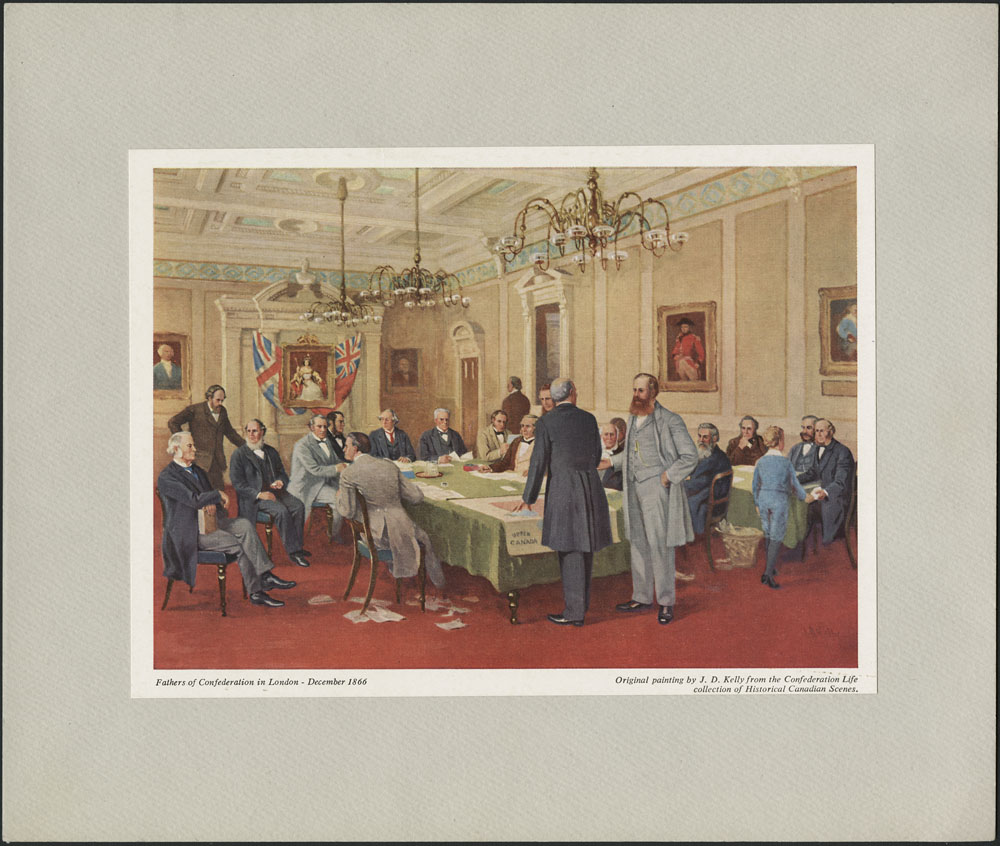
London Conference
From 4 December 1866 to March 1867, politicians from the Province of Canada, Nova Scotia and New Brunswick met with delegates of the British government in London. This was the last of three conferences — after the Charlottetown Conference and Quebec Conference in 1864 — that were held to determine the constitutional details of Confederation. The Quebec Resolutions — 72 points that had been agreed upon in Quebec City — were reviewed and amended. They formed the basis of the British North America Act (now the Constitution Act, 1867). It was passed by the British Parliament and received Queen Victoria’s Royal Assent on 29 March 1867.
"https://d3d0lqu00lnqvz.cloudfront.net/media/media/9a650dcd-e8ad-4685-8baf-c4bba9cae8e7.jpg" // resources/views/front/categories/view.blade.php
https://d3d0lqu00lnqvz.cloudfront.net/media/media/9a650dcd-e8ad-4685-8baf-c4bba9cae8e7.jpg