
Browse "Places"
-
Article
Mont Tremblant
Mont Tremblant, Quebec, 968 m, is located 140 km north of Montreal. It is one of the highest peaks in the Laurentian Highlands.
"https://d3d0lqu00lnqvz.cloudfront.net/media/media/081947b9-bef7-47f0-b7c2-f8dbb47f7f9a.jpg" // resources/views/front/categories/view.blade.php
https://d3d0lqu00lnqvz.cloudfront.net/media/media/081947b9-bef7-47f0-b7c2-f8dbb47f7f9a.jpg
-
Article
Montague
Montague, PEI, is a former town and now one of the seven communities that make up the town of Three Rivers, PEI. Montague, located around 46 km east of Charlottetown, is a picturesque community divided by the Montague River.
"https://d3d0lqu00lnqvz.cloudfront.net/montaguepei/Montagur-Waterfront.jpg" // resources/views/front/categories/view.blade.php
https://d3d0lqu00lnqvz.cloudfront.net/montaguepei/Montagur-Waterfront.jpg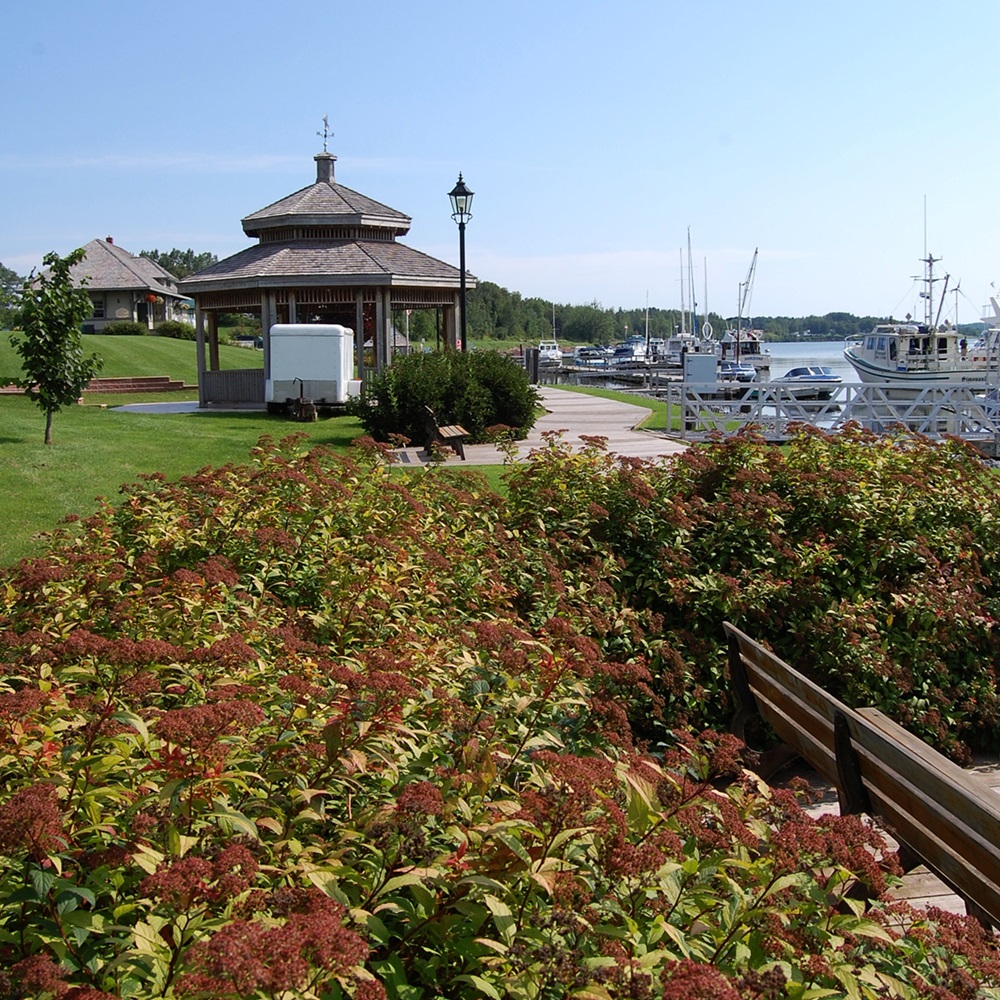
-
Article
Montgomery's Tavern
Montgomery’s Tavern was a focal point in the Rebellion of Upper Canada in 1837. Owner John Montgomery sympathized with the Reform movement but not the actual rebellion. His tavern served as the headquarters for William Lyon Mackenzie — culminating in a skirmish there between local rebels and government militia. The location in Toronto today, at Yonge Street and Montgomery Avenue, is a national historic site.
"https://d3d0lqu00lnqvz.cloudfront.net/media/media/ab6ffbc8-72e2-4fc1-9007-43a1b2c8948d.jpg" // resources/views/front/categories/view.blade.php
https://d3d0lqu00lnqvz.cloudfront.net/media/media/ab6ffbc8-72e2-4fc1-9007-43a1b2c8948d.jpg
-
Article
Montmagny
Jacques CARTIER passed Montmagny and its many offshore islands in 1535 and noted its beautiful surroundings. In 1646 a seigneury containing the area was granted to Huault, although permanent European habitation did not begin until the 1670s.
"https://d3d0lqu00lnqvz.cloudfront.net/media/media/6611985e-9eb7-4000-aa69-69a6aff45685.jpg" // resources/views/front/categories/view.blade.php
https://d3d0lqu00lnqvz.cloudfront.net/media/media/6611985e-9eb7-4000-aa69-69a6aff45685.jpg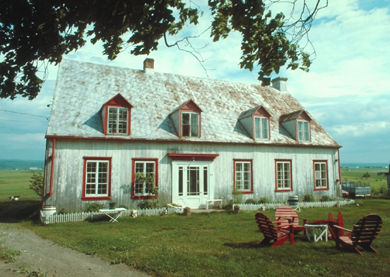
-
Article
Montmorency
The Montmorency Manoir, built in 1781 by Frederick HALDIMAND, governor general in chief of Canada, was inhabited 1791-94 by the duke of Kent, father of Queen Victoria. First known as the "Kent House," it suffered a devastating fire in 1993 but was rebuilt by the following year.
"https://thecanadianencyclopedia.ca/images/tce_placeholder.jpg?v=e9dca980c9bdb3aa11e832e7ea94f5d9" // resources/views/front/categories/view.blade.php
https://thecanadianencyclopedia.ca/images/tce_placeholder.jpg?v=e9dca980c9bdb3aa11e832e7ea94f5d9
-
Article
Montreal
Montreal, Quebec, incorporated as a city in 1832, population 1,762,949 (2021 census), 1,704,694 (2016 census). Montreal is Canada’s second largest city and is home to nearly a quarter of the province of Quebec’s population. It is the metropolis of the province and was the most populous city in Canada for a century and a half. It is located in southwestern Quebec on Île de Montreal at the confluence of the St. Lawrence and Ottawa rivers. Montreal is a major industrial centre, commercial and financial metropolis, railway and maritime bridgehead, and one of the centres of francophone culture in North America. It is one of the world's great cities and enjoys international acclaim.
"https://d3d0lqu00lnqvz.cloudfront.net/media/media/Downtown_MTL.jpg" // resources/views/front/categories/view.blade.php
https://d3d0lqu00lnqvz.cloudfront.net/media/media/Downtown_MTL.jpg
-
Collection
Montréal: 375 Years of History and Heritage
On 17 May 1642, a group of French settlers led by Paul de Chomedey de Maisonneuve and Jeanne Mance established the missionary colony of Ville-Marie on the Island of Montréal. Today, this modest settlement founded in the middle of the St. Lawrence River is Canada’s second largest city and home to nearly half of the province of Québec’s population. A centre of francophone culture in North America, Montréal also enjoys international renown. Through exhibits, images...
"https://d3d0lqu00lnqvz.cloudfront.net/media/media/6c00f298-5e17-4d87-8e49-c455a420812a.jpg" // resources/views/front/categories/view.blade.php
https://d3d0lqu00lnqvz.cloudfront.net/media/media/6c00f298-5e17-4d87-8e49-c455a420812a.jpg
-
Article
Montreal Arena/Aréna de Montréal
Montreal Arena/Aréna de Montréal. Covered amphitheatre, intended mainly for sporting events and horse-shows and erected in 1898 on Ste-Catherine St West at the corner of Wood Avenue.
"https://thecanadianencyclopedia.ca/images/tce_placeholder.jpg?v=e9dca980c9bdb3aa11e832e7ea94f5d9" // resources/views/front/categories/view.blade.php
https://thecanadianencyclopedia.ca/images/tce_placeholder.jpg?v=e9dca980c9bdb3aa11e832e7ea94f5d9
-
Article
Montreal Biosphere
The Montreal Biosphere is a museum dedicated to the environment operated by the City of Montreal. Located in Parc Jean-Drapeau on Saint Helen’s Island, the Biosphere is one of five museums in the city that focus on the natural world. The museum is housed inside a geodesic dome designed by the famed American architect Buckminster Fuller. The dome originally served as the American Pavilion during Expo 67. The Montreal Biosphere is the only museum in Canada exclusively devoted to educating the public about environmental issues.
"https://d3d0lqu00lnqvz.cloudfront.net/media/new_article_images/MontrealBiosphere/MontrealBiosphere.jpg" // resources/views/front/categories/view.blade.php
https://d3d0lqu00lnqvz.cloudfront.net/media/new_article_images/MontrealBiosphere/MontrealBiosphere.jpg
-
Article
Montréal-Est
Montréal-Est owes its existence to Joseph Versailles, an important Montréal broker. In 1909 he bought 6 km2 of land in order to create a quiet and peaceful residential community. Heavy industry developed around the port and the community evolved away from Versailles's original vision.
"https://thecanadianencyclopedia.ca/images/tce_placeholder.jpg?v=e9dca980c9bdb3aa11e832e7ea94f5d9" // resources/views/front/categories/view.blade.php
https://thecanadianencyclopedia.ca/images/tce_placeholder.jpg?v=e9dca980c9bdb3aa11e832e7ea94f5d9
-
Article
Montreal Metro
The Montreal metro opened on 14 October 1966. The second Canadian subway system after Toronto’s, which opened in 1954, the Montreal metro was the first subway in North America to run on rubber tires instead of metal wheels (see Toronto Subway). Extensions to the Montreal metro were built on Montreal Island over the two decades after it opened, and then to the city of Laval, on the island of Île Jésus, during the 2000s. The system runs entirely underground, and each station has a distinct architecture and design. The metro consists of four lines running a total of 71 km and serving 68 stations. The metro is managed by the Société de transport de Montréal (STM), the city’s transit agency.
"https://d3d0lqu00lnqvz.cloudfront.net/media/media/7cb43abc-85f5-4380-adb4-56f13bfebb41.jpg" // resources/views/front/categories/view.blade.php
https://d3d0lqu00lnqvz.cloudfront.net/media/media/7cb43abc-85f5-4380-adb4-56f13bfebb41.jpg
-
Article
Montreal Museum of Fine Arts
Canada’s oldest and one of its most important arts institutions, the Montreal Museum of Fine Arts (Musée des beaux-arts de Montréal) has been guided by a commitment to attract people from all walks of life. Established in 1847, originally under the name of Montreal Society of Artists, it became the Art Association of Montreal in 1860. In 1948-49, the association formed a new corporation under its present name. In 1972, it became a semipublic institution, largely funded by grants from different government levels.
"https://d3d0lqu00lnqvz.cloudfront.net/media/media/3aba2370-a77d-4c09-985f-f9173037b949.jpg" // resources/views/front/categories/view.blade.php
https://d3d0lqu00lnqvz.cloudfront.net/media/media/3aba2370-a77d-4c09-985f-f9173037b949.jpg
-
Article
Montréal-Nord
Montréal-Nord was created when it was detached from the parish municipality of Sault-aux-Récollets (1855). The area originally covered by Sault-aux-Récollets also included the Montréal districts of Ahuntsic and Saint-Michel, as well as the cities of Saint-Léonard and Anjou.
"https://thecanadianencyclopedia.ca/images/tce_placeholder.jpg?v=e9dca980c9bdb3aa11e832e7ea94f5d9" // resources/views/front/categories/view.blade.php
https://thecanadianencyclopedia.ca/images/tce_placeholder.jpg?v=e9dca980c9bdb3aa11e832e7ea94f5d9
-
Article
Montreal Olympic Stadium
Primary venue of the 1976 Summer Olympics. Montreal’s Olympic Stadium is a massive, monumental, multisport complex. It serves as the largest covered amphitheatre and sports venue in Quebec and is also the largest stadium in Canada. (See Sports Facilities.) It has a permanent seating capacity of 56,000. The stadium is integrated into the Montreal Tower (the world’s tallest inclined tower), the Olympic Pool and the former Velodrome — today, the Biodome. The stadium is often referred to as the Big O by Anglo-Montrealers. The Olympic Stadium sits at the centre of the Olympic Park complex. The complex is itself located in the middle of a sprawling collection of sports facilities, attractions, venues and museums in Montreal’s East End.
"https://d3d0lqu00lnqvz.cloudfront.net/media/media/36596ad8-19a5-4395-84f8-5466225bbdaf.jpg" // resources/views/front/categories/view.blade.php
https://d3d0lqu00lnqvz.cloudfront.net/media/media/36596ad8-19a5-4395-84f8-5466225bbdaf.jpg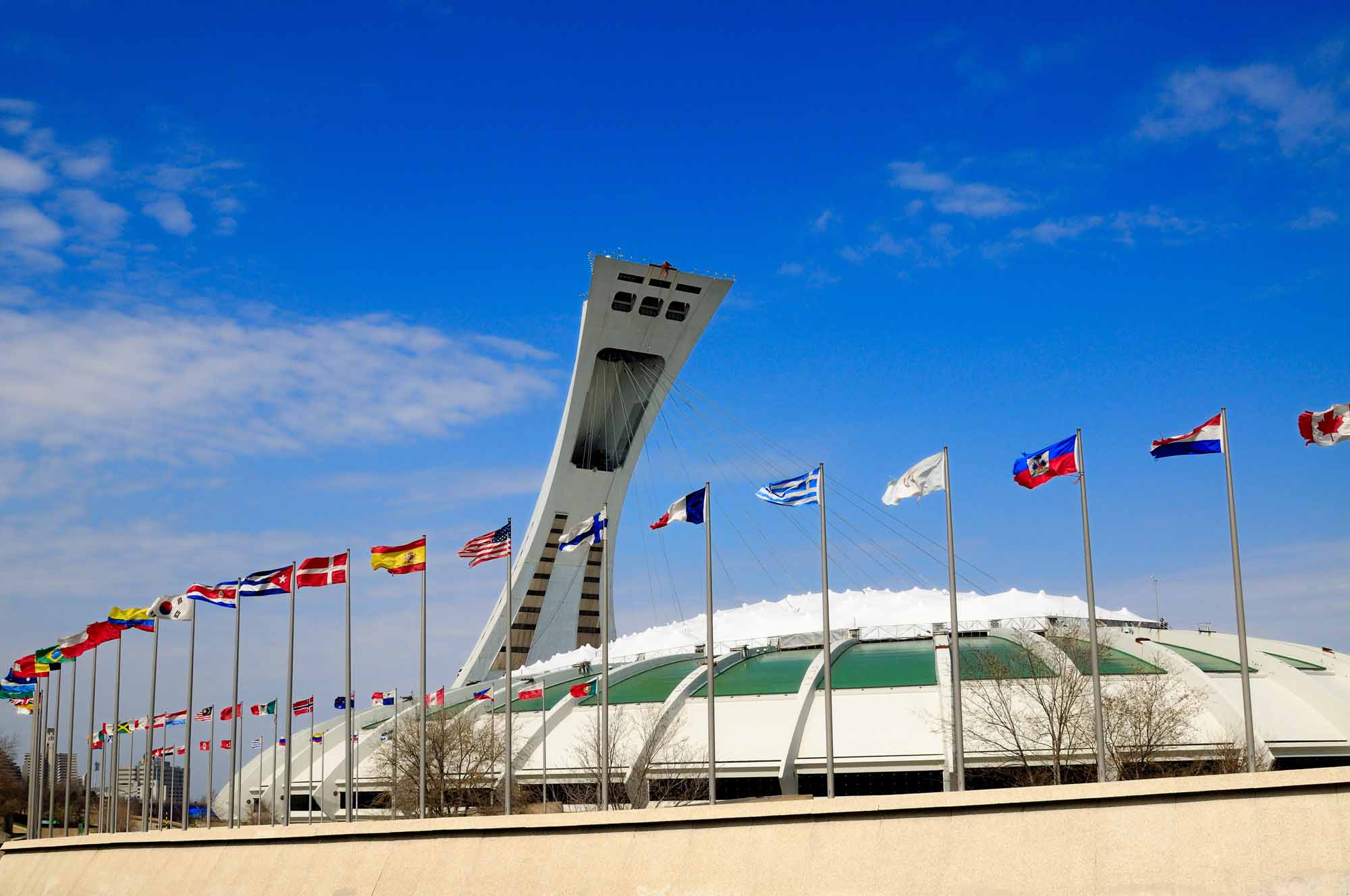
-
Article
Montréal Planetarium
Montréal’s Rio Tinto Alcan Planetarium is part of the Space for Life complex, which includes Montréal’s Biodome, Insectarium and Botanical Gardens. Space for Life is the largest natural science museum complex in Canada.
"https://d3d0lqu00lnqvz.cloudfront.net/media/media/ff14a3e3-5cf6-4523-84eb-f66716e9bb0c.JPG" // resources/views/front/categories/view.blade.php
https://d3d0lqu00lnqvz.cloudfront.net/media/media/ff14a3e3-5cf6-4523-84eb-f66716e9bb0c.JPG