
Browse "People"
-
Article
Inuit Art
The history of Inuit cultures and the art of the various regions and times can only be understood if the myth of a homogeneous Inuit culture is discarded altogether. Though it has not been possible to determine the exact origin(s) of the Inuit, nor of the various Inuit cultures, five distinct cultures have been established in the Canadian area: Pre-Dorset , Dorset , Thule, Historic and Contemporary.
"https://d3d0lqu00lnqvz.cloudfront.net/media/media/4d37de3c-41d6-48db-bf9f-070d0882d77d.jpg" // resources/views/front/categories/view.blade.php
https://d3d0lqu00lnqvz.cloudfront.net/media/media/4d37de3c-41d6-48db-bf9f-070d0882d77d.jpg
-
Article
Inuit Co-operatives
Beginning in the mid-1950s, Inuit were encouraged to move into the trading posts to be near schools and medical services.
"https://d3d0lqu00lnqvz.cloudfront.net/media/media/57a518c7-0e95-4505-b0ca-fd75cda6b879.jpg" // resources/views/front/categories/view.blade.php
https://d3d0lqu00lnqvz.cloudfront.net/media/media/57a518c7-0e95-4505-b0ca-fd75cda6b879.jpg
-
Macleans
Inuit Culture All the Rage in France
IN PARIS'S GRAND OLD Musée de l'Homme, near the Eiffel Tower, the flow of fascinated visitors these days is steady.This article was originally published in Maclean's Magazine on February 14, 2005
"https://thecanadianencyclopedia.ca/images/tce_placeholder.jpg?v=e9dca980c9bdb3aa11e832e7ea94f5d9" // resources/views/front/categories/view.blade.php
https://thecanadianencyclopedia.ca/images/tce_placeholder.jpg?v=e9dca980c9bdb3aa11e832e7ea94f5d9
-
Article
Inuit Disc Numbers
From 1941 to 1978, the Government of Canada issued personal identifying numbers to all Inuit, then referred to as Eskimos, in Canada’s Arctic. The Eskimo Identification system was implemented to identify and register individuals for administrative purposes, such as taking censuses. Each Inuk was given a small leather or pressed fibre disc with a number on it, referred to as their disc number. Ultimately, disc numbers were required for any government interaction, such as keeping track of hunting, trapping, medical services, education, housing, family allowance and getting food and supplies. The system was unique to the Inuit. No other Canadian was required to have a number to access basic services or monitor their actions.
"https://d3d0lqu00lnqvz.cloudfront.net/InuitDiscNumbersSINGLEUSE/Awareness_1upload.jpg" // resources/views/front/categories/view.blade.php
https://d3d0lqu00lnqvz.cloudfront.net/InuitDiscNumbersSINGLEUSE/Awareness_1upload.jpg
-
Article
Inuit Experiences at Residential School
Residential schools were government-sponsored religious schools created to assimilate Indigenous children into Euro-Canadian culture. Schools in the North were run by missionaries for nearly a century before the federal government began to open new, so-called modern institutions in the 1950s. This was less than a decade after a Special Joint Committee (see Indigenous Suffrage) found that the system was ineffectual. The committee’s recommendations led to the eventual closure of residential schools across the country.
"https://d3d0lqu00lnqvz.cloudfront.net/InuitResidentialSchool/Inuit-Residenital-School (Library and Archives Canada_PA-042133).jpg" // resources/views/front/categories/view.blade.php
https://d3d0lqu00lnqvz.cloudfront.net/InuitResidentialSchool/Inuit-Residenital-School (Library and Archives Canada_PA-042133).jpg.jpg)
-
Article
Inuit Traditional Stories
Inuit Traditional Stories are a repository of Inuit culture, passed down by Elders through generations to enrich and enlighten. Traditionally used in all aspects of daily life, Inuit Traditional Stories have undergone a resurgence in popularity as community groups aim to preserve traditional teachings as a method of cultural and political solidarity.
"https://d3d0lqu00lnqvz.cloudfront.net/media/media/5c7c7549-033e-4d6a-9abf-885528e19b0f.jpg" // resources/views/front/categories/view.blade.php
https://d3d0lqu00lnqvz.cloudfront.net/media/media/5c7c7549-033e-4d6a-9abf-885528e19b0f.jpg
-
Collection
Inuit
Inuit are one of three groupings of Indigenous peoples in Canada, the other two being Métis and First Nations. Inuit traditional territory includes land in the northern portions of the Northwest Territories, Nunavut, Quebec and Labrador — an area collectively known as Inuit Nunangat. This collection brings together resources on The Canadian Encyclopedia related to Inuit, including articles, timelines, education guides, quizzes and videos. For other collections related to Indigenous peoples, see Métis, First Nations ...
"https://d3d0lqu00lnqvz.cloudfront.net/media/homepage_features/Inuit2.jpg" // resources/views/front/categories/view.blade.php
https://d3d0lqu00lnqvz.cloudfront.net/media/homepage_features/Inuit2.jpg
-
Article
Inuit Printmaking
While carving is a viable enterprise in most Inuit communities, printmaking requires special skills and sophisticated equipment to compete in an international market.
"https://d3d0lqu00lnqvz.cloudfront.net/media/media/b8f059b1-3755-477f-a3c1-ba8420091091.jpg" // resources/views/front/categories/view.blade.php
https://d3d0lqu00lnqvz.cloudfront.net/media/media/b8f059b1-3755-477f-a3c1-ba8420091091.jpg
-
Article
Inuit Vocal Games
Inuit vocal games describe central Canadian Arctic practices that are both musical and ludic (spontaneous or playful). According to regional differences, these can be divided into several genres with different names.
"https://d3d0lqu00lnqvz.cloudfront.net/media/media/68cae00c-f728-459d-bb87-2162d08774fa.jpg" // resources/views/front/categories/view.blade.php
https://d3d0lqu00lnqvz.cloudfront.net/media/media/68cae00c-f728-459d-bb87-2162d08774fa.jpg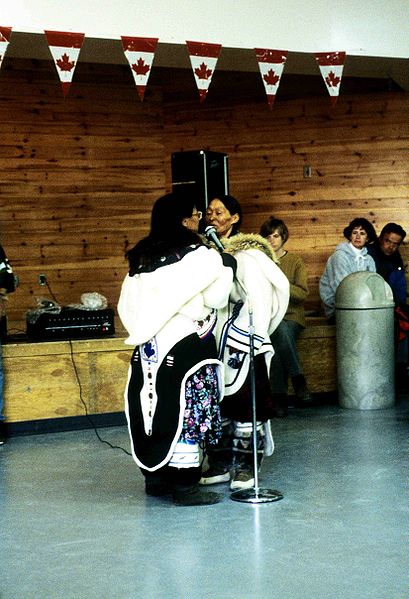
-
Article
Inuksuk (Inukshuk)
Inuksuk (also spelled inukshuk, plural inuksuit) is a figure made of piled stones or boulders constructed to communicate with humans throughout the Arctic. Traditionally constructed by the Inuit, inuksuit are integral to Inuit culture and are often intertwined with representations of Canada and the North. A red inuksuk is found on the flag of Nunavut. In Inuktitut, the term inuksuk means "to act in the capacity of a human." It is an extension of the word inuk meaning "a human being." Inuksuit have been found close to archaeological sites dating from 2400 to 1800 BCE in the Mingo Lake region of southwest Baffin Island. (See also Prehistory.) While stone figures resembling human forms are often referred to as inuksuk, such figures are actually known as inunnguaq.
"https://d3d0lqu00lnqvz.cloudfront.net/media/media/fda0c3a3-c613-4196-ba0a-690925ca6c04.jpg" // resources/views/front/categories/view.blade.php
https://d3d0lqu00lnqvz.cloudfront.net/media/media/fda0c3a3-c613-4196-ba0a-690925ca6c04.jpg
-
Article
Inuktitut
Inuktitut is an Indigenous language in North America, spoken in the Canadian Arctic. The 2021 census reported 40,320 people have knowledge of Inuktitut. Inuktitut is part of a larger Inuit language family, stretching from Alaska to Greenland. Inuktitut uses a writing system called syllabics, created originally for the Cree language, which represent combinations of consonants and vowels. The language is also written in the Roman alphabet, and this is the exclusive writing system used in Labrador and parts of Western Nunavut. Inuktitut is a polysynthetic language, meaning that words tend to be longer and structurally more complex than their English or French counterparts. (See also Indigenous Languages in Canada.)
"https://d3d0lqu00lnqvz.cloudfront.net/media/media/26c8ac6d-be78-4acc-9097-9854b0762516.jpg" // resources/views/front/categories/view.blade.php
https://d3d0lqu00lnqvz.cloudfront.net/media/media/26c8ac6d-be78-4acc-9097-9854b0762516.jpg
-
Article
Inuktitut Words for Snow and Ice
It is often said that the Inuit have dozens of words to refer to snow and ice. Anthropologist John Steckley, in his book White Lies about the Inuit (2007), notes that many often cite 52 as the number of different terms in Inuktitut. This belief in a high number of words for snow and ice has been sharply criticized by a large number of linguists and anthropologists.
"https://d3d0lqu00lnqvz.cloudfront.net/media/media/1c4db935-fcf6-4b0d-a8f4-7ab6c8a30a3c.jpg" // resources/views/front/categories/view.blade.php
https://d3d0lqu00lnqvz.cloudfront.net/media/media/1c4db935-fcf6-4b0d-a8f4-7ab6c8a30a3c.jpg
-
Collection
Invention and Innovation in Canada
This collection gathers together articles relating to invention and innovation in Canada. (photograph by Beth A. Robertson, courtesy Canadian Science and Technology Museum)
"https://d3d0lqu00lnqvz.cloudfront.net/media/new_article_images/RolandGalarneau/Convero-Braille.jpg" // resources/views/front/categories/view.blade.php
https://d3d0lqu00lnqvz.cloudfront.net/media/new_article_images/RolandGalarneau/Convero-Braille.jpg
-
Article
Inventors, Inventions and Innovations
Whether they remained in Canada or pursued careers abroad, Canadians have invented or innovated devices, products or processes in various fields, such as medicine, technology and agriculture. In some cases, the government and agencies, like the National Research Council Canada (NRC), have funded research and development. Economic investment and the promotion of science, technology, engineering and mathematics (STEM) skills have been identified as key factors for building Canada’s innovation future.
"https://d3d0lqu00lnqvz.cloudfront.net/inventorsandinnovations/Klien.jpg" // resources/views/front/categories/view.blade.php
https://d3d0lqu00lnqvz.cloudfront.net/inventorsandinnovations/Klien.jpg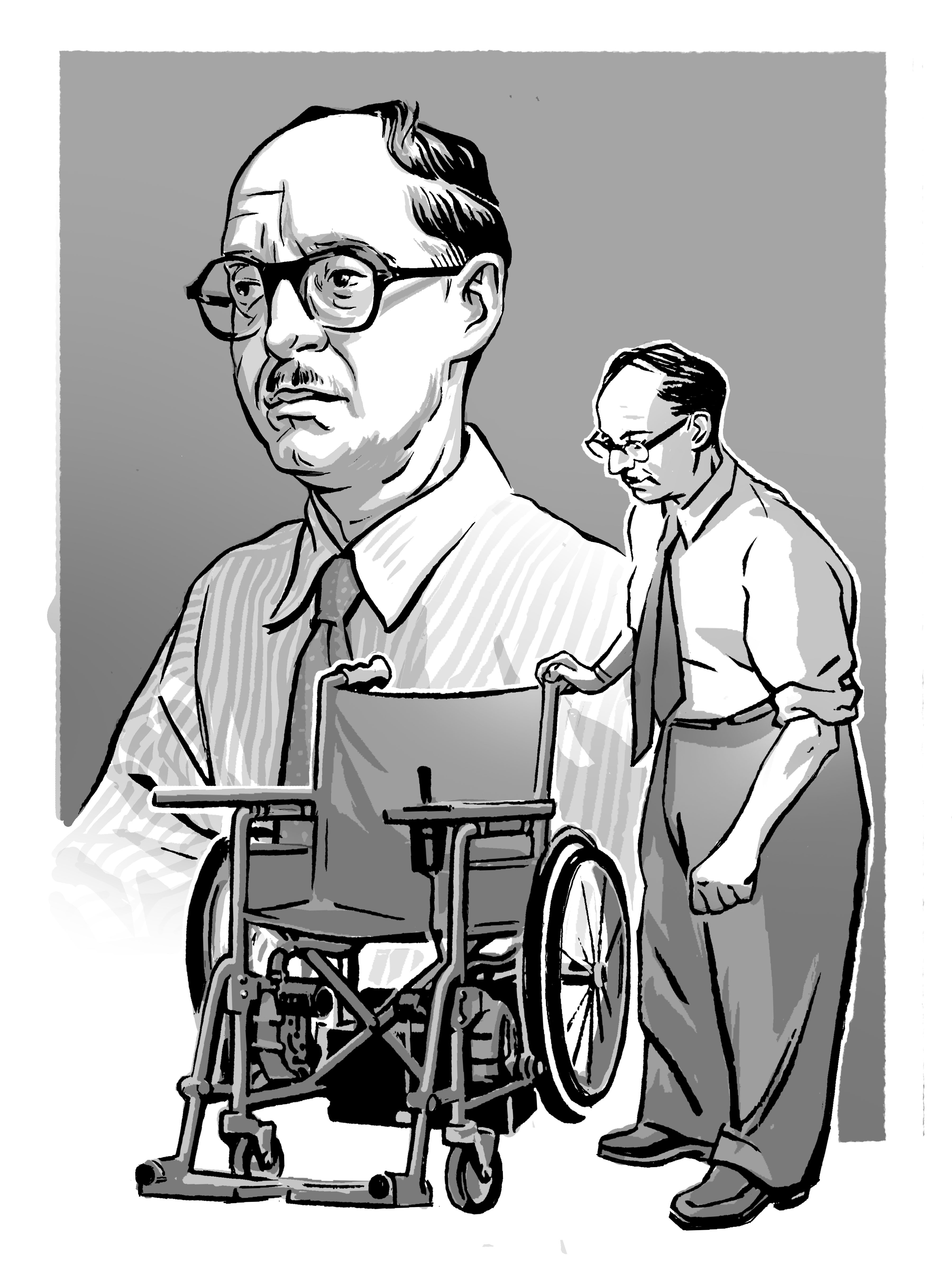
-
Article
Iona Campagnolo
Iona Campagnolo has also had a career as a broadcaster and activist. Beyond Canada, she frequently contributed to current affairs programs on PBS-TV and monitored elections and did human rights work in Africa, Asia and South America.
"https://d3d0lqu00lnqvz.cloudfront.net/media/media/52973536-a4e5-4ded-97e2-356f028a6bf6.jpg" // resources/views/front/categories/view.blade.php
https://d3d0lqu00lnqvz.cloudfront.net/media/media/52973536-a4e5-4ded-97e2-356f028a6bf6.jpg