
Browse "People"
-
Article
Hilda Ranscombe
Hilda Doris Ranscombe, hockey player (born 3 September 1913 in Doon [now part of Kitchener] ON; died 25 August 1998 in Cambridge ON). Hilda Ranscombe was a natural athlete who excelled at several sports but was especially skilled at ice hockey. She pioneered women’s hockey in Canada and led her team, the Preston Rivulettes, to 10 Ontario provincial championships, six Eastern Canadian championships and six national championships. In her day, she was regarded as the greatest female hockey player in the world. She was nominated twice for the Lou Marsh Trophy (now Northern Star Award) as Canada’s athlete of the year. She has been inducted into Canada’s Sports Hall of Fame and the World Women’s Hockey Hall of Fame.
"https://d3d0lqu00lnqvz.cloudfront.net/media/new_article_images/LadiesOntarioHockeyAssociation/Hilda_Ranscombe_with_hockey_stick.jpg" // resources/views/front/categories/view.blade.php
https://d3d0lqu00lnqvz.cloudfront.net/media/new_article_images/LadiesOntarioHockeyAssociation/Hilda_Ranscombe_with_hockey_stick.jpg
-
Article
Hilda Strike
Hilda Strike, (born at Montréal, 1 Sep 1910; died at Ottawa, 9 Mar 1989). Hilda Strike was an athlete in the 1932 SUMMER OLYMPICS in TRACK AND FIELD.
"https://d3d0lqu00lnqvz.cloudfront.net/media/new_article_images/SportsAwards/Strike on Podium.jpg" // resources/views/front/categories/view.blade.php
https://d3d0lqu00lnqvz.cloudfront.net/media/new_article_images/SportsAwards/Strike on Podium.jpg
-
Article
Hildegard Westerkamp
Hildegard Westerkamp. Audio artist, composer, teacher, b Osnabrück, West Germany, 8 Apr 1946, naturalized Canadian 1975; B MUS (British Columbia) 1972, MA (Simon Fraser) 1988.
"https://thecanadianencyclopedia.ca/images/tce_placeholder.jpg?v=e9dca980c9bdb3aa11e832e7ea94f5d9" // resources/views/front/categories/view.blade.php
https://thecanadianencyclopedia.ca/images/tce_placeholder.jpg?v=e9dca980c9bdb3aa11e832e7ea94f5d9
-
Article
Hippies in Canada
“Hippies” is a term used to describe young people who participated in the 1960s counterculture movement, which originated in the United States and spread throughout Canada in the second half of that decade. As a noun, “hippie” was a play on the adjective “hip,” which was used to describe young bohemians who lived in Greenwich Village in New York City, and in San Francisco, in the 1950s and early 1960s. Hippies were part of the “baby boom” generation, born immediately following the end of the Second World War (see Baby Boomers in Canada). This demographic wave was significant enough to transform Canadian society; by the mid-1960s more than half of Canada’s population of 20 million was under the age of 25.
"https://d3d0lqu00lnqvz.cloudfront.net/media/new_article_images/HippiesinCanada/VW_Van_Hippies_British_Columbia.jpg" // resources/views/front/categories/view.blade.php
https://d3d0lqu00lnqvz.cloudfront.net/media/new_article_images/HippiesinCanada/VW_Van_Hippies_British_Columbia.jpg
-
Article
Hiram Alfred (H.A.) Cody
Hiram Alfred (H.A.) Cody, clergyman, novelist (born at Codys, NB 3 Jul 1872; died at Saint John, NB 9 Feb 1948). Born in Codys, New Brunswick, a town named after his family, H.A. Cody moved to Windsor, Nova Scotia to study at KING'S COLLEGE.
"https://thecanadianencyclopedia.ca/images/tce_placeholder.jpg?v=e9dca980c9bdb3aa11e832e7ea94f5d9" // resources/views/front/categories/view.blade.php
https://thecanadianencyclopedia.ca/images/tce_placeholder.jpg?v=e9dca980c9bdb3aa11e832e7ea94f5d9
-
Article
Hiram Blanchard
Hiram Blanchard, lawyer, politician, premier of Nova Scotia (b at West River, NS 17 Jan 1820; d at Halifax 17 Dec 1874). Blanchard began his legal career at Port Hood, moving to Halifax only after election as Reform (Liberal) member for Inverness County in 1859.
"https://thecanadianencyclopedia.ca/images/tce_placeholder.jpg?v=e9dca980c9bdb3aa11e832e7ea94f5d9" // resources/views/front/categories/view.blade.php
https://thecanadianencyclopedia.ca/images/tce_placeholder.jpg?v=e9dca980c9bdb3aa11e832e7ea94f5d9
-
Article
Hiram Walker
Hiram Walker, distiller, businessman (b at East Douglas, Mass 4 July 1816; d at Detroit, Mich 12 Jan 1899). Though Walker lived in Canada for only 5 years (1859-64), he built a distillery, a new town and a major railway line.
"https://thecanadianencyclopedia.ca/images/tce_placeholder.jpg?v=e9dca980c9bdb3aa11e832e7ea94f5d9" // resources/views/front/categories/view.blade.php
https://thecanadianencyclopedia.ca/images/tce_placeholder.jpg?v=e9dca980c9bdb3aa11e832e7ea94f5d9
-
Article
Hiromi Goto
Hiromi Goto, writer (b. at Chiba-ken, Japan 13 Dec 1966). Hiromi Goto's family immigrated to Canada in 1969. They lived on the west coast of British Columbia for 8 years, before moving to Nanton, Alberta, where her father started a mushroom farm.
"https://thecanadianencyclopedia.ca/images/tce_placeholder.jpg?v=e9dca980c9bdb3aa11e832e7ea94f5d9" // resources/views/front/categories/view.blade.php
https://thecanadianencyclopedia.ca/images/tce_placeholder.jpg?v=e9dca980c9bdb3aa11e832e7ea94f5d9
-
Article
History of Acadia
Acadia’s history as a French-speaking colony stretches as far back as the early 17th century. The French settlers who colonized the land and coexisted alongside Indigenous peoples became called Acadians. Acadia was also the target of numerous wars between the French and the English. Ultimately, the colony fell under British rule. Many Acadians were subsequently deported away from Acadia. Over time, as a British colony and then as part of Canada, Acadians increasingly became a linguistic minority. Nonetheless, Acadians have strived to protect their language and identity throughout time.
"https://d3d0lqu00lnqvz.cloudfront.net/media/media/66c056b0-bee3-47a2-9680-5d5a50b5e7eb.jpg" // resources/views/front/categories/view.blade.php
https://d3d0lqu00lnqvz.cloudfront.net/media/media/66c056b0-bee3-47a2-9680-5d5a50b5e7eb.jpg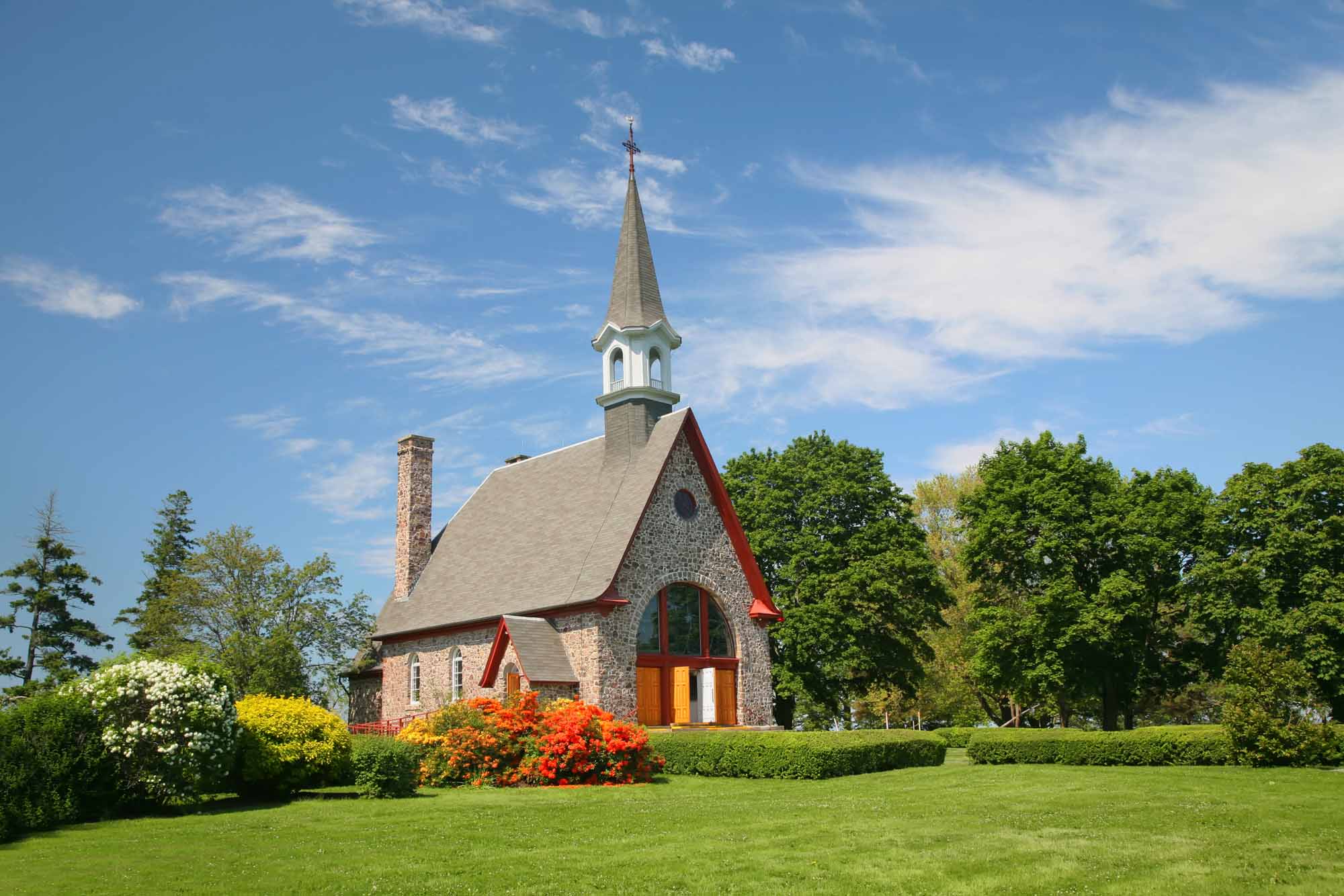
-
Article
History of Early Indigenous Peoples in Newfoundland and Labrador
According to Indigenous oral histories in Newfoundland and Labrador, Indigenous peoples have lived in this territory since time immemorial. According to archaeology, the history of early Indigenous peoples in Newfoundland and Labrador begins at least 9,000 years ago. Archaeological cultures are defined by archaeologists and do not necessarily align with how Indigenous peoples in the past and present identify themselves. Archaeologists organize early Indigenous peoples into three main groups based on common ancestry. They are the First Nations Archaeological Cultures, Paleo-Inuit Archaeological Cultures and Inuit Archaeological Cultures.
"https://d3d0lqu00lnqvz.cloudfront.net/Port-au-Choix_resized.jpg" // resources/views/front/categories/view.blade.php
https://d3d0lqu00lnqvz.cloudfront.net/Port-au-Choix_resized.jpg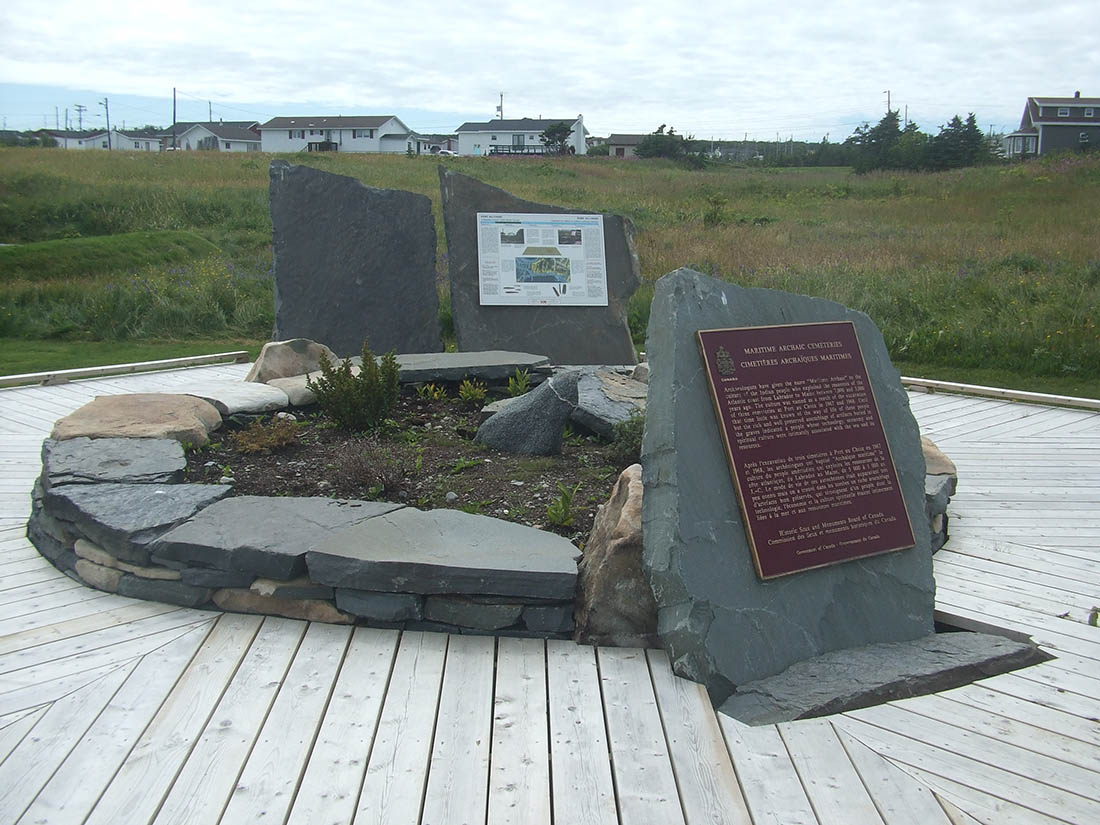
-
Timelines
History of Health and Healthcare in Canada
The World Health Organization (WHO) describes health as “a state of complete physical, mental and social well-being and not merely the absence of disease or infirmity.” The ways in which health has been understood and managed in Canada has changed overtime. This timeline overviews developments in health and healthcare in Canada.
"https://d3d0lqu00lnqvz.cloudfront.net/media/media/350b6e59-1083-4f86-b24c-c0a1608e2fa0.jpg" // resources/views/front/categories/view.blade.php
https://d3d0lqu00lnqvz.cloudfront.net/media/media/350b6e59-1083-4f86-b24c-c0a1608e2fa0.jpg
-
Article
History of Labour Migration to Canada
Canada’s economic development has relied upon the labour and economic contributions of thousands of immigrant and migrant workers. (See also Economic Immigration to Canada; Immigration to Canada.) These workers came from a multitude of countries and worked a variety of jobs. Many of these workers would also ultimately settle in Canada. This labour and settlement pattern, however, is changing due to Canada’s temporary labour migrant programs. (See also Canada’s Temporary Foreign Worker Programs.) Click here for definitions of key terms used in this article.
"https://thecanadianencyclopedia.ca/images/tce_placeholder.jpg?v=e9dca980c9bdb3aa11e832e7ea94f5d9" // resources/views/front/categories/view.blade.php
https://thecanadianencyclopedia.ca/images/tce_placeholder.jpg?v=e9dca980c9bdb3aa11e832e7ea94f5d9
-
Macleans
Hnatyshyn Recalls His Tenure as GG
Roméo LeBlanc, a close political ally of Prime Minister Jean Chrétien, moves into Rideau Hall this week as Canada's 25th Governor General, replacing Ramon Hnatyshyn.This article was originally published in Maclean's Magazine on February 13, 1995
"https://thecanadianencyclopedia.ca/images/tce_placeholder.jpg?v=e9dca980c9bdb3aa11e832e7ea94f5d9" // resources/views/front/categories/view.blade.php
https://thecanadianencyclopedia.ca/images/tce_placeholder.jpg?v=e9dca980c9bdb3aa11e832e7ea94f5d9
-
Macleans
Hockey Coach Guilty of Sexual Assault
This article was originally published in Maclean’s magazine on January 13, 1997. Partner content is not updated. For the victims, there was no joy last week when junior hockey coach Graham James was sentenced to 3 ½ years in a federal penitentiary for sexually assaulting two former players.
"https://thecanadianencyclopedia.ca/images/tce_placeholder.jpg?v=e9dca980c9bdb3aa11e832e7ea94f5d9" // resources/views/front/categories/view.blade.php
https://thecanadianencyclopedia.ca/images/tce_placeholder.jpg?v=e9dca980c9bdb3aa11e832e7ea94f5d9
-
Article
Holger Petersen
Holger Petersen, drummer, producer, broadcaster (born 23 November 1949 on Pellworm Island, West Germany), hon D LITT (Athabaska) 2002. Holger Petersen was a drummer in Edmonton groups such as Spiney Norman's Whoopee Band, Hot Cottage, etc.
"https://thecanadianencyclopedia.ca/images/tce_placeholder.jpg?v=e9dca980c9bdb3aa11e832e7ea94f5d9" // resources/views/front/categories/view.blade.php
https://thecanadianencyclopedia.ca/images/tce_placeholder.jpg?v=e9dca980c9bdb3aa11e832e7ea94f5d9