Browse "People"
-
Macleans
Filmon Under Fire
With his rimless glasses, buttoned-down appearance and unflappable manner, Manitoba Premier Gary Filmon bears an uncanny resemblance to Superman's alter ego, Clark Kent.This article was originally published in Maclean's Magazine on April 19, 1999
"https://thecanadianencyclopedia.ca/images/tce_placeholder.jpg?v=e9dca980c9bdb3aa11e832e7ea94f5d9" // resources/views/front/categories/view.blade.php
https://thecanadianencyclopedia.ca/images/tce_placeholder.jpg?v=e9dca980c9bdb3aa11e832e7ea94f5d9
-
Article
Finger Eleven
Finger Eleven is a rock band that formed in Burlington, Ont, in 1989 under the name Rainbow Butt Monkeys with Scott Anderson (vocals), James Black (guitar), Rick Jackett (guitar), Sean Anderson (bass) and Rob Gobberman (drums). Rich Beddoe replaced Gobberman in 1998.
"https://thecanadianencyclopedia.ca/images/tce_placeholder.jpg?v=e9dca980c9bdb3aa11e832e7ea94f5d9" // resources/views/front/categories/view.blade.php
https://thecanadianencyclopedia.ca/images/tce_placeholder.jpg?v=e9dca980c9bdb3aa11e832e7ea94f5d9
-
Article
Finn Wolfhard
Finn Michael Wolfhard, actor, writer, director, musician, model (born 23 December 2002 in Vancouver, BC). Finn Wolfhard is best known for playing Mike Wheeler in the popular Netflix series Stranger Things (2016–present). He is also known for his roles in the Stephen King adaptations It (2017) and It Chapter Two (2019) and director Jason Reitman’s Ghostbusters: Afterlife (2021). Wolfhard has become a central figure in the contemporary Gen-X/Millennial’s interest in 1980s pop culture nostalgia.
"https://d3d0lqu00lnqvz.cloudfront.net/Finn_Wolfhard_by_Gage_Skidmore_2.jpg" // resources/views/front/categories/view.blade.php
https://d3d0lqu00lnqvz.cloudfront.net/Finn_Wolfhard_by_Gage_Skidmore_2.jpg
-
Article
Finnish Canadians
Between 1835 and 1865, several hundred immigrants from Finland settled in Alaska (which was part of Russia at that time). Many moved down the coast to British Columbia (see Sointula). Some early Finnish immigrants to Ontario worked on the construction of the first Welland Canal, which was completed in 1829. The 2021 census reported 144,055 people of Finnish origin in Canada.
"https://d3d0lqu00lnqvz.cloudfront.net/media/new_article_images/FinnishCanadians/Finnish_immigrants_in_Rouyn,_Quebec,_Canada,_1926.png" // resources/views/front/categories/view.blade.php
https://d3d0lqu00lnqvz.cloudfront.net/media/new_article_images/FinnishCanadians/Finnish_immigrants_in_Rouyn,_Quebec,_Canada,_1926.png
-
Article
Finta Case
In its first decision relating to the Finta war crimes case (1993), the Supreme Court of Canada permitted 3 interested groups to intervene - the Human Rights League of B'nai B'rith Canada, the Canadian Jewish Congress and InterAmicus.
"https://thecanadianencyclopedia.ca/images/tce_placeholder.jpg?v=e9dca980c9bdb3aa11e832e7ea94f5d9" // resources/views/front/categories/view.blade.php
https://thecanadianencyclopedia.ca/images/tce_placeholder.jpg?v=e9dca980c9bdb3aa11e832e7ea94f5d9
-
Article
Fiona Reid
Fiona Reid, Al Waxman and Helene Winston, stars of the popular television program King of Kensington (publicity photo, public domain). Fiona Reid Fiona Reid, actress (born at Whitstable, Kent, Eng 1951). Fiona Reid is the daughter of a British military doctor; the family lived in Germany, Africa and the US before coming to Canada in 1964. She was educated at Toronto's Lawrence Park Collegiate and studied theatre at McGill University in Montréal (BA 1972) and...
"https://d3d0lqu00lnqvz.cloudfront.net/media/media/c3d5a936-ff2d-4ae9-93c3-313d4db0387e.jpg" // resources/views/front/categories/view.blade.php
https://d3d0lqu00lnqvz.cloudfront.net/media/media/c3d5a936-ff2d-4ae9-93c3-313d4db0387e.jpg
-
Article
First Nations in Canada
First Nation is one of three groupings of Indigenous people in Canada, the other two being Métis and Inuit. Unlike Métis and Inuit, most First Nations hold reserve lands. Members of a First Nation may live both on and off these reserves. While the term First Nation can describe a large ethnic grouping (e.g. the Cree Nation), in other cases it is synonymous with the term band. The term band was originally chosen by the federal government and used in the Indian Act. The word band describes smaller communities. Many First Nations prefer the term First Nation over band.
"https://d3d0lqu00lnqvz.cloudfront.net/media/media/4bdede30-06f1-4f71-9047-c7db15051829.jpg" // resources/views/front/categories/view.blade.php
https://d3d0lqu00lnqvz.cloudfront.net/media/media/4bdede30-06f1-4f71-9047-c7db15051829.jpg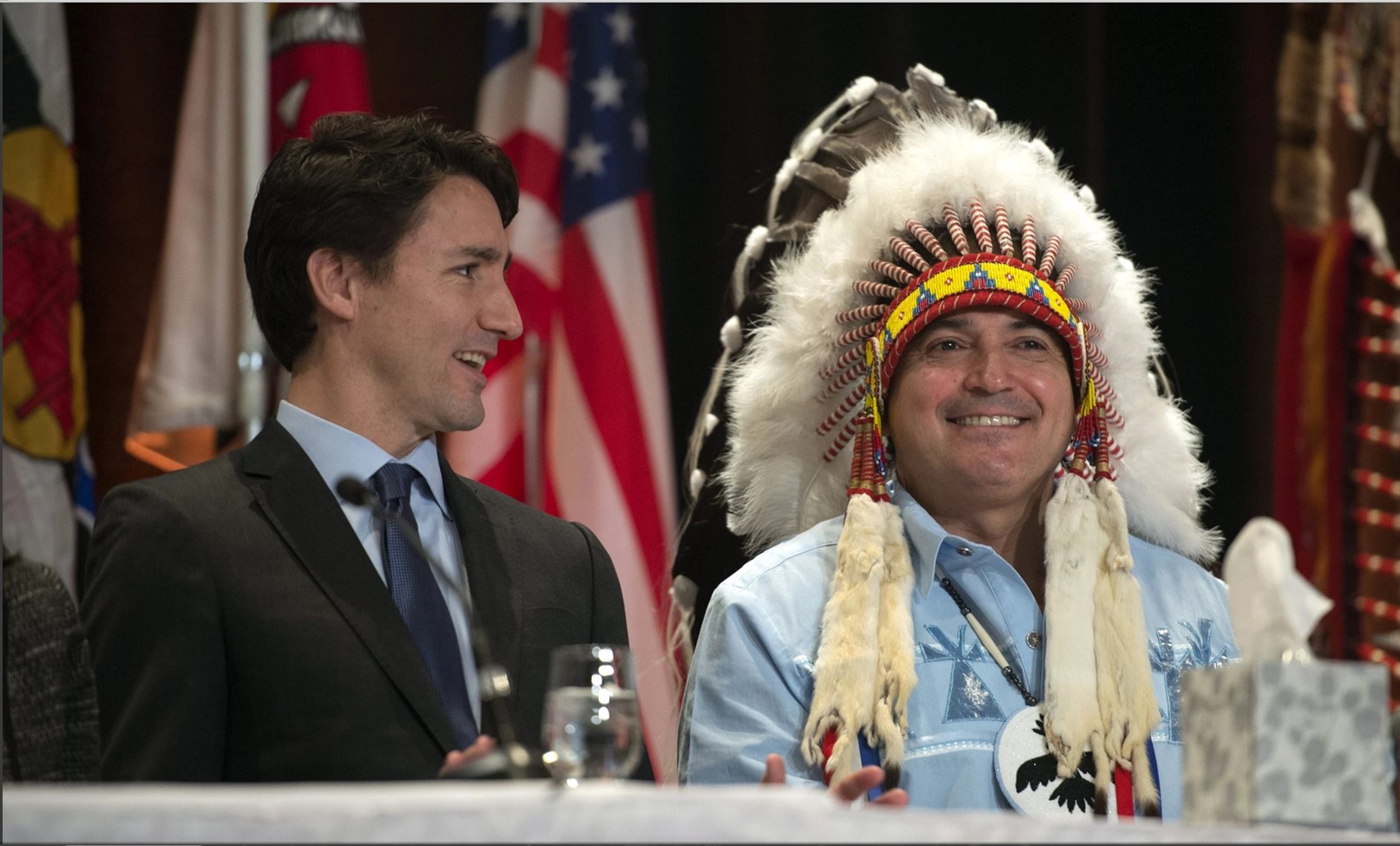
-
Timelines
Indigenous Peoples
Indigenous nations tell their own stories about the origins of the world and their place in it; all claim their ancestry dates to time immemorial. At the same time, there is considerable archeological debate about when humans first came to North America, though broad assumptions suggest waves of migration from northeastern Asia, by both land bridge and boat, between 30,000 and 13,500 years ago. Note: This timeline presents key events and developments in Indigenous history...
"https://d3d0lqu00lnqvz.cloudfront.net/Pitikwahanapiwiyi_3.png" // resources/views/front/categories/view.blade.php
https://d3d0lqu00lnqvz.cloudfront.net/Pitikwahanapiwiyi_3.png
-
Article
First Nations Bank of Canada
First Nations Bank of Canada (FNBC) is a Canadian chartered bank. Established in 1996 as a partnership between Saskatchewan Indian Equity Foundation (SIEF)—now Saskatchewan Indigenous Enterprise Foundation—and TD Bank, it is currently majority controlled by Indigenous shareholders. According to its mission statement, FNBC “exists to advance Indigenous prosperity and self-determination by delivering trusted, purpose-driven financial services, rooted in relationship, guided by culture and committed to long-term economic reconciliation.” (See also Reconciliation in Canada; Economic Conditions of Indigenous Peoples in Canada.)
"https://d3d0lqu00lnqvz.cloudfront.net/firstnationsbankofcanada/fnbcwebsite.jpg" // resources/views/front/categories/view.blade.php
https://d3d0lqu00lnqvz.cloudfront.net/firstnationsbankofcanada/fnbcwebsite.jpg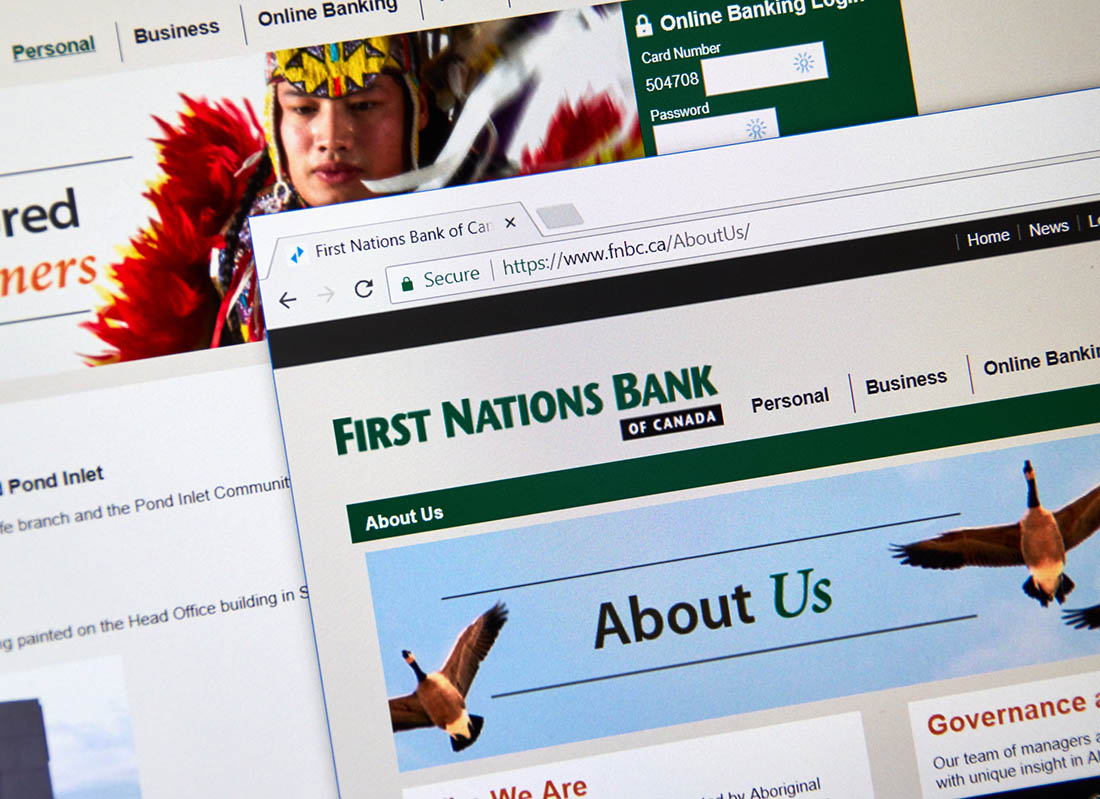
-
List
First Nations in Alberta
There are 46 First Nations in Alberta. First Nation is one of three groupings of Indigenous people in Canada, the other two being Métis and Inuit. Unlike Métis and Inuit, most First Nations hold reserve lands, and members of a First Nation may live both on and off these reserves (see also Reserves in Alberta). While the term First Nation can describe a large ethnic grouping (e.g. the Cree Nation), in other cases it is synonymous with the term band, a word originally chosen by the federal government and used in the Indian Act. The word band describes smaller communities, such as the ones listed below. Many First Nations prefer the term First Nation over band. In terms of larger ethnic groupings, First Nations in Alberta are part of the Blackfoot Confederacy (Siksikaitsitapi), Stoney, Tsuut’ina, Cree, Saulteaux, Nakota Sioux or Dene.
"https://d3d0lqu00lnqvz.cloudfront.net/media/new_article_images/ReservesInAlberta/2K4A0209.jpg" // resources/views/front/categories/view.blade.php
https://d3d0lqu00lnqvz.cloudfront.net/media/new_article_images/ReservesInAlberta/2K4A0209.jpg
-
List
First Nations in British Columbia
There are 203 First Nations in British Columbia. First Nation is one of three groupings of Indigenous people in Canada, the other two being Métis and Inuit. Unlike Métis and Inuit, First Nations may hold reserve lands, and members of a First Nation can live both on and off these reserves. While the term First Nation can describe a large ethnic grouping (e.g. the Dene Nation), in other cases it is synonymous with the term band, a word originally chosen by the federal government and used in the Indian Act. The word band describes smaller communities, such as the ones listed below. Many First Nations prefer the term First Nation over band. In terms of larger ethnic groupings, First Nations in British Columbia are part of the Coast Salish, Dakelh, Dene, Haida, Kaska Dena, Ktunaxa, Nisga’a, Nlaka’pamux, Okanagan, Secwepemc, Sekani, Stl’atl’imx, Sto:lo, Tahltan, Tlingit, Tsilhqot’in, Tsimshian and Wet’suwet’en.
"https://d3d0lqu00lnqvz.cloudfront.net/media/media/e3bcb984-16ff-4f24-ac3d-1794f2fa51f5.JPG" // resources/views/front/categories/view.blade.php
https://d3d0lqu00lnqvz.cloudfront.net/media/media/e3bcb984-16ff-4f24-ac3d-1794f2fa51f5.JPG
-
List
First Nations in Manitoba
There are 63 First Nations in Manitoba. First Nation is one of three groupings of Indigenous people in Canada, the other two being Métis and Inuit. Unlike Métis and Inuit, most First Nations hold reserve lands, and members of a First Nation may live both on and off these reserves (see also Reserves in Manitoba). While the term First Nation can describe a large ethnic grouping (e.g. the Cree Nation), in other cases it is synonymous with the term band, a word originally chosen by the federal government and used in the Indian Act. The word band describes smaller communities, such as the ones listed below. Many First Nations prefer the term First Nation over band. In terms of larger ethnic groupings, First Nations in Manitoba are part of the Ininew (Cree), Anishinaabe (Ojibwe), Oji-Cree, Dakota/Lakota (Sioux) or Dene. Manitoba is also a key part of the Métis Nation’s homeland and has a large Métis population.
"https://thecanadianencyclopedia.ca/images/tce_placeholder.jpg?v=e9dca980c9bdb3aa11e832e7ea94f5d9" // resources/views/front/categories/view.blade.php
https://thecanadianencyclopedia.ca/images/tce_placeholder.jpg?v=e9dca980c9bdb3aa11e832e7ea94f5d9
-
List
First Nations in New Brunswick
There are 15 First Nations in New Brunswick. First Nation is one of three groupings of Indigenous people in Canada, the other two being Métis and Inuit. Unlike Métis and Inuit, most First Nations hold reserve lands, and members of a First Nation may live both on and off these reserves. While the term First Nation can describe a large ethnic grouping (e.g. the Mi’kmaq Nation), in other cases it is synonymous with the term band, a word originally chosen by the federal government and used in the Indian Act. The word band describes smaller communities, such as the ones listed below. Many First Nations prefer the term First Nation over band. In terms of larger ethnic groupings, First Nations in New Brunswick are Mi’kmaq or Wolastoqiyik.
"https://d3d0lqu00lnqvz.cloudfront.net/media/new_article_images/ElsipogtogFN/ElsipogtogPowwow.jpg" // resources/views/front/categories/view.blade.php
https://d3d0lqu00lnqvz.cloudfront.net/media/new_article_images/ElsipogtogFN/ElsipogtogPowwow.jpg
-
List
First Nations in Newfoundland and Labrador
There are four First Nations in Newfoundland and Labrador. First Nation is one of three groupings of Indigenous people in Canada, the other two being Métis and Inuit. Unlike Métis and Inuit, most First Nations hold reserve lands, and members of a First Nation may live both on and off these reserves (see also Reserves in Newfoundland and Labrador). While the term First Nation can describe a large ethnic grouping (e.g. the Innu Nation), in other cases it is synonymous with the term band, a word originally chosen by the federal government and used in the Indian Act. The word band describes smaller communities, such as the ones listed below. Many First Nations prefer the term First Nation over band. In terms of larger ethnic groupings, First Nations in Newfoundland and Labrador are Innu and Mi’kmaq.
"https://d3d0lqu00lnqvz.cloudfront.net/media/new_article_images/ReservesNL/2015 11 Mushuau Innu Girl Natuashish Ossie Michelin.jpg" // resources/views/front/categories/view.blade.php
https://d3d0lqu00lnqvz.cloudfront.net/media/new_article_images/ReservesNL/2015 11 Mushuau Innu Girl Natuashish Ossie Michelin.jpg
-
List
First Nations in Nova Scotia
There are 13 First Nations in Nova Scotia. First Nation is one of three groupings of Indigenous people in Canada, the other two being Métis and Inuit. Unlike Métis and Inuit, most First Nations hold reserve lands, and members of a First Nation may live both on and off these reserves (see also Reserves in Nova Scotia). While the term First Nation can describe a large ethnic grouping (e.g. the Mi’kmaq Nation), in other cases it is synonymous with the term band, a word originally chosen by the federal government and used in the Indian Act. The word band describes smaller communities, such as the ones listed below. Many First Nations prefer the term First Nation over band. In terms of larger ethnic groupings, First Nations in Nova Scotia are Mi’kmaq.
"https://d3d0lqu00lnqvz.cloudfront.net/media/media/fe0c30e1-5319-4234-a9c0-815d2f4eb14f.jpg" // resources/views/front/categories/view.blade.php
https://d3d0lqu00lnqvz.cloudfront.net/media/media/fe0c30e1-5319-4234-a9c0-815d2f4eb14f.jpg