
Browse "Politics & Law"
-
Article
Ezekiel Hart
Ezekiel (Ezechiel) Hart, politician, entrepreneur, militia officer (born 15 May 1770 in Trois-Rivières, Province of Quebec, died 16 September 1843 in Trois-Rivières, Province of Canada). He holds the distinction of being the second Jew to be elected to a political office in the British Empire (see Imperialism). He was also the first in Canada. Despite his business acumen and good standing in the community, Hart was not permitted to take his seat in Lower Canada’s Legislative Assembly, owing to his Jewish faith. This spurred a public debate on Jewish participation in politics. Ultimately, this concluded with an act granting political rights to Jews in Lower Canada in 1832. (See also Anti-Semitism in Canada.)
"https://d3d0lqu00lnqvz.cloudfront.net/media/media/aa0f8664-1d69-4438-ac0c-5b9cfc227059.jpg" // resources/views/front/categories/view.blade.php
https://d3d0lqu00lnqvz.cloudfront.net/media/media/aa0f8664-1d69-4438-ac0c-5b9cfc227059.jpg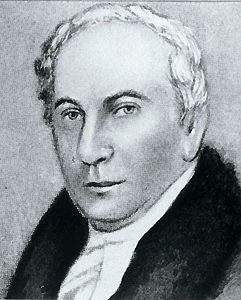
-
"https://thecanadianencyclopedia.ca/images/tce_placeholder.jpg?v=e9dca980c9bdb3aa11e832e7ea94f5d9" // resources/views/front/categories/view.blade.php
https://thecanadianencyclopedia.ca/images/tce_placeholder.jpg?v=e9dca980c9bdb3aa11e832e7ea94f5d9
-
Macleans
Fall From Grace
Inside the high-flying life of Sen. Pamela Wallin—and how it all came crashing down in a frenzy of backstabbing and bitterness. In Maclean’s second major profile of a senator caught in scandal, Anne Kingston reports.This article was originally published in Maclean's Magazine on September 23, 2013
"https://thecanadianencyclopedia.ca/images/tce_placeholder.jpg?v=e9dca980c9bdb3aa11e832e7ea94f5d9" // resources/views/front/categories/view.blade.php
https://thecanadianencyclopedia.ca/images/tce_placeholder.jpg?v=e9dca980c9bdb3aa11e832e7ea94f5d9
-
Article
Family Compact
The term Family Compact is an epithet, or insulting nickname; it is used to describe the network of men who dominated the legislative, bureaucratic, business, religious and judicial centres of power in Upper Canada (present-day Ontario) from the early- to mid-1800s. Members of the Family Compact held largely conservative and loyalist views. They were against democratic reform and responsible government. By the mid-19th century, immigration, the union of Upper and Lower Canada, and the work of various democratic reformers had diminished the group’s power. The equivalent to the Family Compact in Lower Canada was the Château Clique.
"https://d3d0lqu00lnqvz.cloudfront.net/media/media/693e886b-aefa-4d54-b3e0-c1695d334bb0.jpg" // resources/views/front/categories/view.blade.php
https://d3d0lqu00lnqvz.cloudfront.net/media/media/693e886b-aefa-4d54-b3e0-c1695d334bb0.jpg
-
Article
Famous Five
Alberta’s “Famous Five” were petitioners in the groundbreaking Persons Case. The case was brought before the Supreme Court of Canada in 1927. It was decided in 1929 by the Judicial Committee of the Privy Council, Canada’s highest appeals court at the time. The group was led by judge Emily Murphy. It also included Henrietta Edwards, Nellie McClung, Louise McKinney and Irene Parlby. Together, the five women had many years of active work in various campaigns for women’s rights dating back to the 1880s and 1890s. They enjoyed a national — and in the case of McClung, an international — reputation among reformers.
"https://d3d0lqu00lnqvz.cloudfront.net/media/media/65699b89-06c0-4518-aa06-4eea43f2ec74.jpg" // resources/views/front/categories/view.blade.php
https://d3d0lqu00lnqvz.cloudfront.net/media/media/65699b89-06c0-4518-aa06-4eea43f2ec74.jpg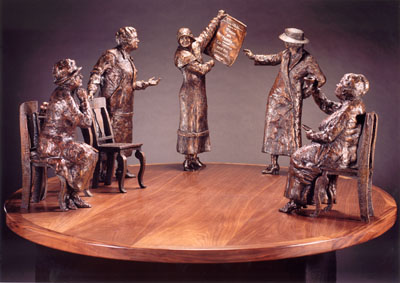
-
Article
Famous Five (Plain-Language Summary)
The “Famous Five” were the women behind the Persons Case. It was a constitutional ruling. It established the right of women to serve in the Senate. It ruled in 1929 that women were persons in the eyes of the law. The case was started by the Famous Five. They were a group of women activists. They were led by justice Emily Murphy. The other women were Henrietta Muir Edwards, Nellie McClung, Louise McKinney and Irene Parlby. The five had been working for women’s rights since the 1880s and 1890s. This article is a plain-language summary of the Famous Five. If you are interested in reading about this topic in more depth, please see our full-length entry: Famous Five.
"https://d3d0lqu00lnqvz.cloudfront.net/media/media/65699b89-06c0-4518-aa06-4eea43f2ec74.jpg" // resources/views/front/categories/view.blade.php
https://d3d0lqu00lnqvz.cloudfront.net/media/media/65699b89-06c0-4518-aa06-4eea43f2ec74.jpg
-
Article
Farquhar Oliver
Farquhar Robert Oliver, farmer, politician (b at Priceville, Ont 6 Mar 1904; d at Owen Sound, Ont 22 Jan 1989). First elected to the Ontario Legislature in 1926 as a member of the United Farmers, he was re-elected continuously until his retirement in 1967.
"https://thecanadianencyclopedia.ca/images/tce_placeholder.jpg?v=e9dca980c9bdb3aa11e832e7ea94f5d9" // resources/views/front/categories/view.blade.php
https://thecanadianencyclopedia.ca/images/tce_placeholder.jpg?v=e9dca980c9bdb3aa11e832e7ea94f5d9
-
Article
Fathers of Confederation
Thirty-six men are traditionally regarded as the Fathers of Confederation. They represented the British North American colonies at one or more of the conferences that led to Confederation and the creation of the Dominion of Canada. These meetings included the Charlottetown Conference (September 1864), the Quebec Conference (October 1864) and the London Conference (December 1866 to March 1867). Beyond the original 36 men, the subject of who should be included among the Fathers of Confederation has been a matter of some debate. The definition can be expanded to include those who were instrumental in the creation of Manitoba, bringing British Columbia and Newfoundland into Confederation, and the creation of Nunavut. (See also Fathers of Confederation: Table.)
"https://d3d0lqu00lnqvz.cloudfront.net/media/media/143f8587-f938-4cf1-bdc2-c441d02dc962.jpg" // resources/views/front/categories/view.blade.php
https://d3d0lqu00lnqvz.cloudfront.net/media/media/143f8587-f938-4cf1-bdc2-c441d02dc962.jpg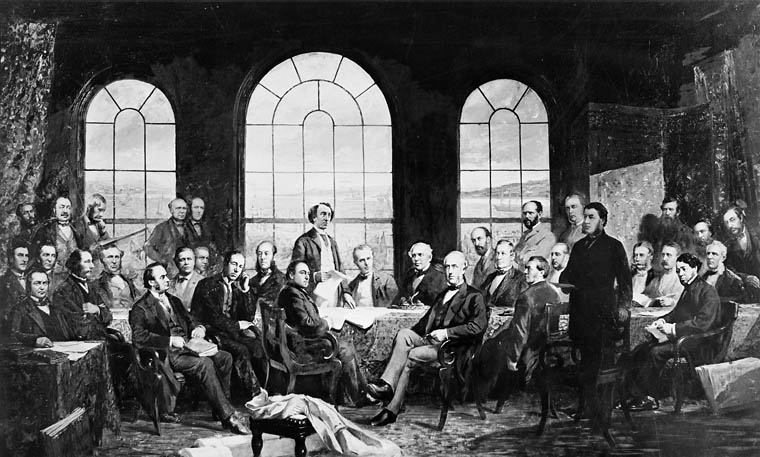
-
Table
Fathers of Confederation
The 36 men traditionally regarded as the Fathers of Confederation were those who represented British North American colonies at one or more of the conferences that lead to Confederation on 1 July 1867.
"https://d3d0lqu00lnqvz.cloudfront.net/media/media/f8f2bab3-d387-4165-9fbc-617c30019b95.jpg" // resources/views/front/categories/view.blade.php
https://d3d0lqu00lnqvz.cloudfront.net/media/media/f8f2bab3-d387-4165-9fbc-617c30019b95.jpg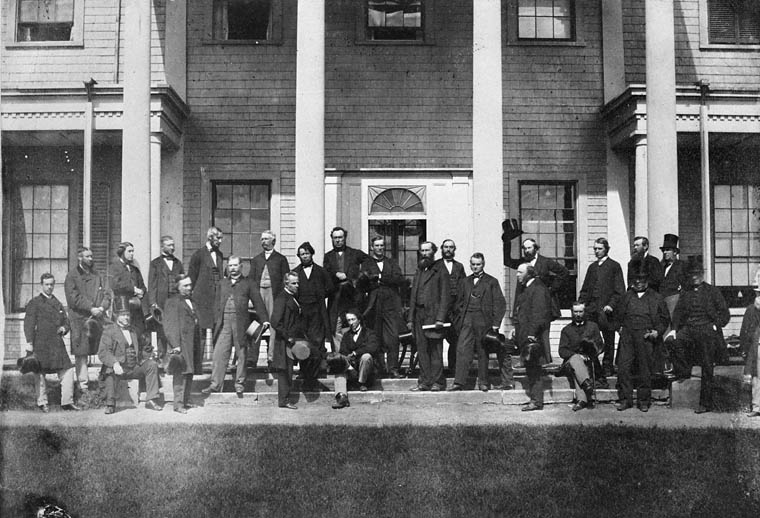
-
Macleans
Faulder Executed in Texas
Even when all his appeals had at long last run out and the life remaining to him was measured in just minutes, Stanley Faulder had little to say for himself. For 22 years, while he sat on death row in Huntsville, Tex.This article was originally published in Maclean's Magazine on July 1, 1999
"https://thecanadianencyclopedia.ca/images/tce_placeholder.jpg?v=e9dca980c9bdb3aa11e832e7ea94f5d9" // resources/views/front/categories/view.blade.php
https://thecanadianencyclopedia.ca/images/tce_placeholder.jpg?v=e9dca980c9bdb3aa11e832e7ea94f5d9
-
Macleans
Faulder Gets Stay of Execution
The local undertakers were standing by ready to claim the body. And Stanley Faulders grave had already been dug in a cemetery filled with unmarked crosses and plain white headstones in an unfenced field in Huntsville, Tex. On Thursday, the day the 61-year-old auto mechanic from Jasper, Alta.This article was originally published in Maclean's Magazine on December 21, 1998
"https://thecanadianencyclopedia.ca/images/tce_placeholder.jpg?v=e9dca980c9bdb3aa11e832e7ea94f5d9" // resources/views/front/categories/view.blade.php
https://thecanadianencyclopedia.ca/images/tce_placeholder.jpg?v=e9dca980c9bdb3aa11e832e7ea94f5d9
-
Article
Félix-Gabriel Marchand
Félix-Gabriel Marchand, lawyer, journalist, playwright, premier of Québec 1897-1900 (b at St-Jean, LC 9 Jan 1832; d at Québec City 25 Sept 1900).
"https://thecanadianencyclopedia.ca/images/tce_placeholder.jpg?v=e9dca980c9bdb3aa11e832e7ea94f5d9" // resources/views/front/categories/view.blade.php
https://thecanadianencyclopedia.ca/images/tce_placeholder.jpg?v=e9dca980c9bdb3aa11e832e7ea94f5d9
-
Article
Feo Monck
Frances Elizabeth Owen “Feo” Monck, author (born 1 August 1835 in Charleville, Enniskerry, County Wicklow, Ireland; died 31 July 1919). Feo Monck’s brother-in-law was governor general Viscount Monck, and her husband, Richard Monck, was military secretary to the governor general from 1864 to 1869. When Lady Monck was absent, she acted as the hostess for viceregal social occasions, including the ball held during the Quebec Conference of 1864. She recorded her experiences in the book, My Canadian Leaves: An Account of a Visit to Canada in 1864–1865.
"https://d3d0lqu00lnqvz.cloudfront.net/media/media/143f8587-f938-4cf1-bdc2-c441d02dc962.jpg" // resources/views/front/categories/view.blade.php
https://d3d0lqu00lnqvz.cloudfront.net/media/media/143f8587-f938-4cf1-bdc2-c441d02dc962.jpg
-
Macleans
Filmon Re-elected
Maybe Manitoba was always immune to the trend. Or perhaps the wave of anti-status quo, throw-the-bums-out sentiment that has swept North America - obliterating the federal Conservatives in the 1993 election and congressional Democrats in the United States last fall - is finally beginning to ebb.This article was originally published in Maclean's Magazine on May 8, 1995
"https://thecanadianencyclopedia.ca/images/tce_placeholder.jpg?v=e9dca980c9bdb3aa11e832e7ea94f5d9" // resources/views/front/categories/view.blade.php
https://thecanadianencyclopedia.ca/images/tce_placeholder.jpg?v=e9dca980c9bdb3aa11e832e7ea94f5d9
-
Macleans
Filmon Under Fire
With his rimless glasses, buttoned-down appearance and unflappable manner, Manitoba Premier Gary Filmon bears an uncanny resemblance to Superman's alter ego, Clark Kent.This article was originally published in Maclean's Magazine on April 19, 1999
"https://thecanadianencyclopedia.ca/images/tce_placeholder.jpg?v=e9dca980c9bdb3aa11e832e7ea94f5d9" // resources/views/front/categories/view.blade.php
https://thecanadianencyclopedia.ca/images/tce_placeholder.jpg?v=e9dca980c9bdb3aa11e832e7ea94f5d9