Share on Facebook
 Share on X
 Share by Email
 Share on Google Classroom
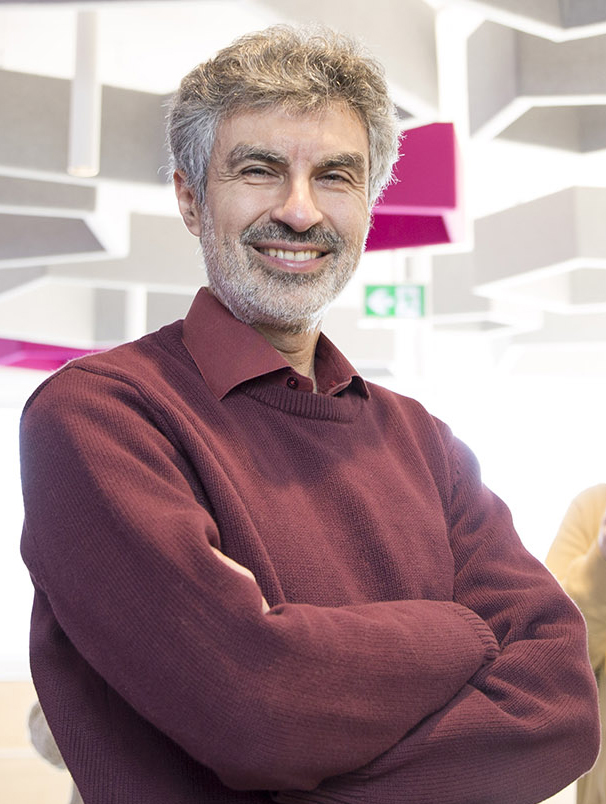
Yoshua Bengio, OC, O.Q., FRSC, MSR, computer scientist, entrepreneur, researcher, professor (born 5 March 1964 in Paris, France). He developed a passion for technology as a child and dove into the fascinating world of artificial intelligence (AI) as early as his post-secondary studies. He is a researcher who has developed several scientific research, implementation and marketing units focused on artificial intelligence. Since 2023, he has made it a point of honour to guide the development of AI so that it is responsible, sustainable and serves the interests of humanity.
Early Life and Family
Yoshua Bengio's parents are Jews of Moroccan origin. In 1977, when Bengio was 12 years old, his family moved across the Atlantic to Montreal. (See also: Jewish Canadians; Moroccan Canadians.)
As teenagers, Bengio and his younger brother, Samy Bengio, were captivated by the computer revolution marked by the rise of personal computers now sold to the general public. They saved the money they earned as newspaper delivery boys to buy an Apple II computer and an Atari 800 gaming console. They also honed their passion for computer programming by designing visual effects software for their parents' art installations.
Education
Yoshua Bengio began his studies at McGill University where he obtained a bachelor's degree in computer engineering in 1986, followed by a master's degree in computer science in 1988, and a PhD in the same field in 1991. With a government grant in his pocket, he followed the scientific trajectory influenced by the work of his mentor, the "godfather of AI,"Geoffrey E. Hinton.
As such, he devoted his doctoral thesis to deep learning, analyzing artificial neural networks, or how the nervous system and the human brain function, to mimic these using AI algorithms.
Bengio cemented his scientific expertise by working on statistical learning and sequential data as part of a one-year postdoctoral fellowship under the supervision of Michael I. Jordan, a professor in the Department of Brain and Cognitive Sciences at the prestigious Massachusetts Institute of Technology (MIT), in Boston, USA.
The following year, in 1993, Bengio deepened his thinking and explored learning and vision algorithms at AT&T Bell Laboratories (now called Bell Labs) in Holmdel, New Jersey. That same year, he joined the Université de Montréal’s Department of Computer Science and Operations Research at the Faculty of Arts and Sciences as an assistant professor. He was promoted to associate professor in 1997 and full professor in 2002.
The Development of AI
Between the 1980s and 1990s, AI went through a slump, known as the "AI winter", characterized by a lack of investment and indifference to research in the field. This did not prevent Yoshua Bengio from co-founding the Adaptive Systems Computer Laboratory in 1993, with colleagues and his brother. By 2017, AI was on the rise and the team grew to become the Quebec Institute of Artificial Intelligence, better known by the acronym Mila (formerly the Montreal Institute for Learning Algorithms).
Mila
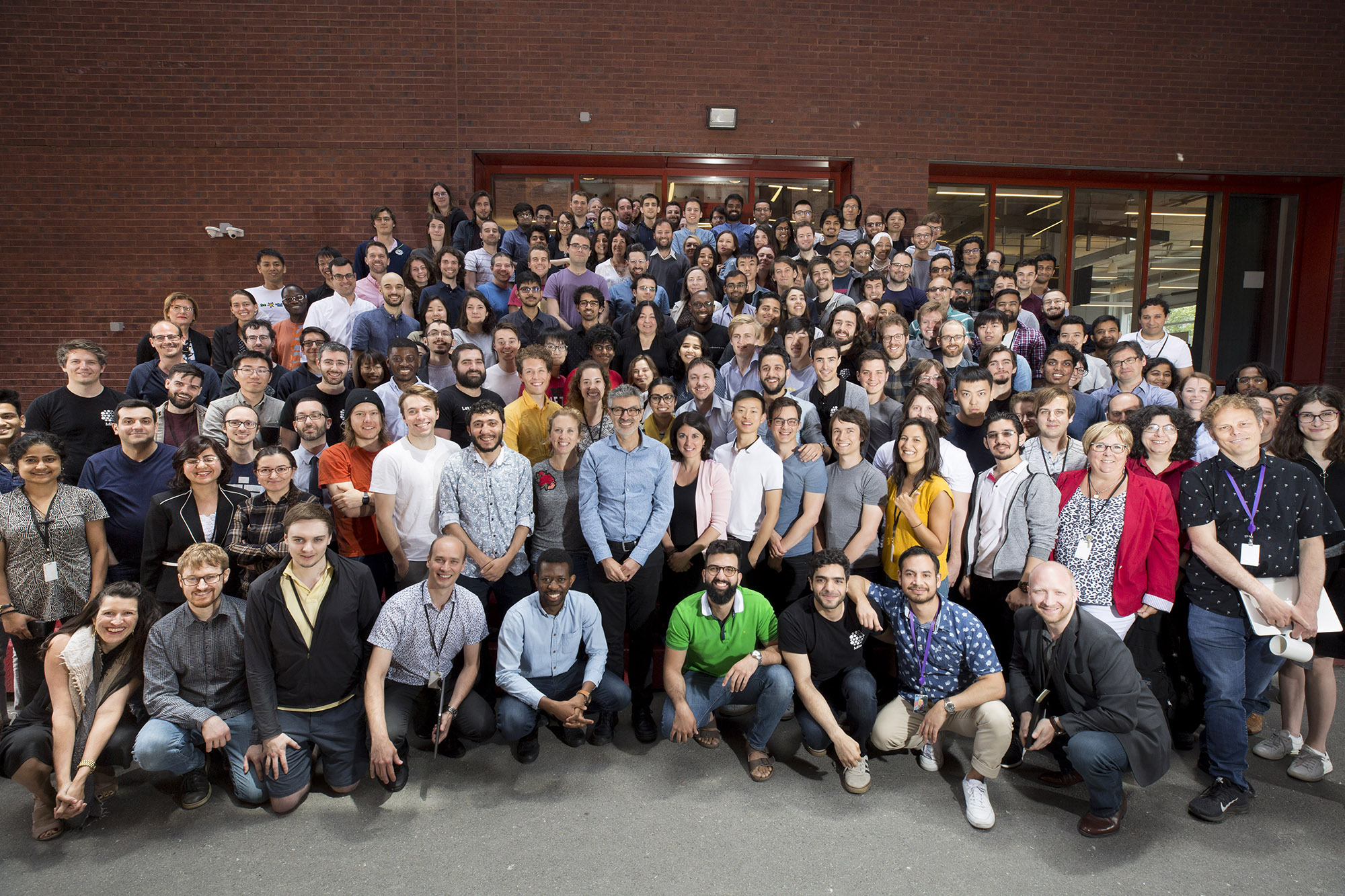
The institute is an interuniversity scientific research center focused on machine learning, bringing together the Université de Montréal, McGill University, Polytechnique Montréal and HEC Montréal. By 2025, nearly 200 academic researchers and 1,200 scientific and student researchers had contributed their expertise to Mila. The focus is on "ethical and responsible use" of AI in multidisciplinary fields such as health, ecology, energy, finance, robotics, social sciences.
From 2024 to 2025, more than 700 scientific articles were published thanks to the financial support of several million dollars since its inception. Donors include the federal and provincial governments, as well as private funds from companies such as Microsoft, Google DeepMind and Thomson Reuters.
Yoshua Bengio served as Scientific Director until the spring of 2025. He is still part of the management, but as a scientific advisor. The Mila’s Scientific Director is now Hugo Larochelle, computer scientist and professor at the Université de Montréal.
The institute has more than 50 Canada CIFAR AI Chairs, a global research organization made up of researchers from some 40 countries. Bengio joined CIFAR in 2019. He is the Advisory Committee Chair and the Canada CIFAR AI Chair.
IVADO
The Institute for Data Valorization (IVADO) is a consortium of artificial intelligence research centres, of which Mila is a member. Yoshua Bengio is the scientific director of this institution established in 2016, led by the Université de Montréal. IVADO does not train scientists. Its focus is primarily economic. It acts as a liaison, it bridges the gap with the non-scientific world and, through its experts, deploys AI in key industrial, government and public sectors.
Government Partnerships
Yoshua Bengio has contributed to the development of ethical principles and the technological oversight of AI contained in The Montreal Declaration for the Responsible Development of Artificial Intelligence, led by the Université de Montréal since the declaration’s inception in 2017.
In 2019, the Canadian government created an Advisory Council on Artificial Intelligence. This expert panel of researchers, academics and business leaders, co-chaired by Bengio, advises the government on economic investments to protect the interests and rights of Canadians.
The Risks of AI
Since 2023, Yoshua Bengio has adopted an alarmist view of AI; more broadly, he fears the emergence of potentially unregulated and harmful AI designed by private and lucrative technology companies like ChatGPT. In the same year, he became a member of the UN Scientific Advisory Board for breakthroughs in science and technology and contributed to the International AI Safety Report (in 2025 and 2026).
Faced with the risks posed by generative AI, he founded LoiZéro in 2025, a start-up focused on "non-profit research on AI safety" with a global reach. As co-chair and scientific director, he develops AI that is intentionally safe, governed by a ‘safeguard,’ which is not designed to imitate, replace or obey humans, but to assist and help people in conducting certain tasks. Its objective is to prevent machines from being able to act and think independently, or worse, from becoming uncontrollable.
Awards and Distinctions
- Urgel-Archambault Award from ACFAS (2009)
- Officer of the Order of Canada (2017)
- Fellow of the Royal Society of Canada (2017)
- Marie-Victorin Award from the Government of Quebec (2017)
- Turing Award from the Association for Computing Machinery (2018)
- Killam Prize from the Natural Sciences Research Council (2019)
- Fellow of the Royal Society (2020)
- Gerhard Herzberg Canada Gold Medal for Science and Engineering (2023)
- Officer of the National Order of Québec (2025)