Share on Facebook
 Share on X
 Share by Email
 Share on Google Classroom
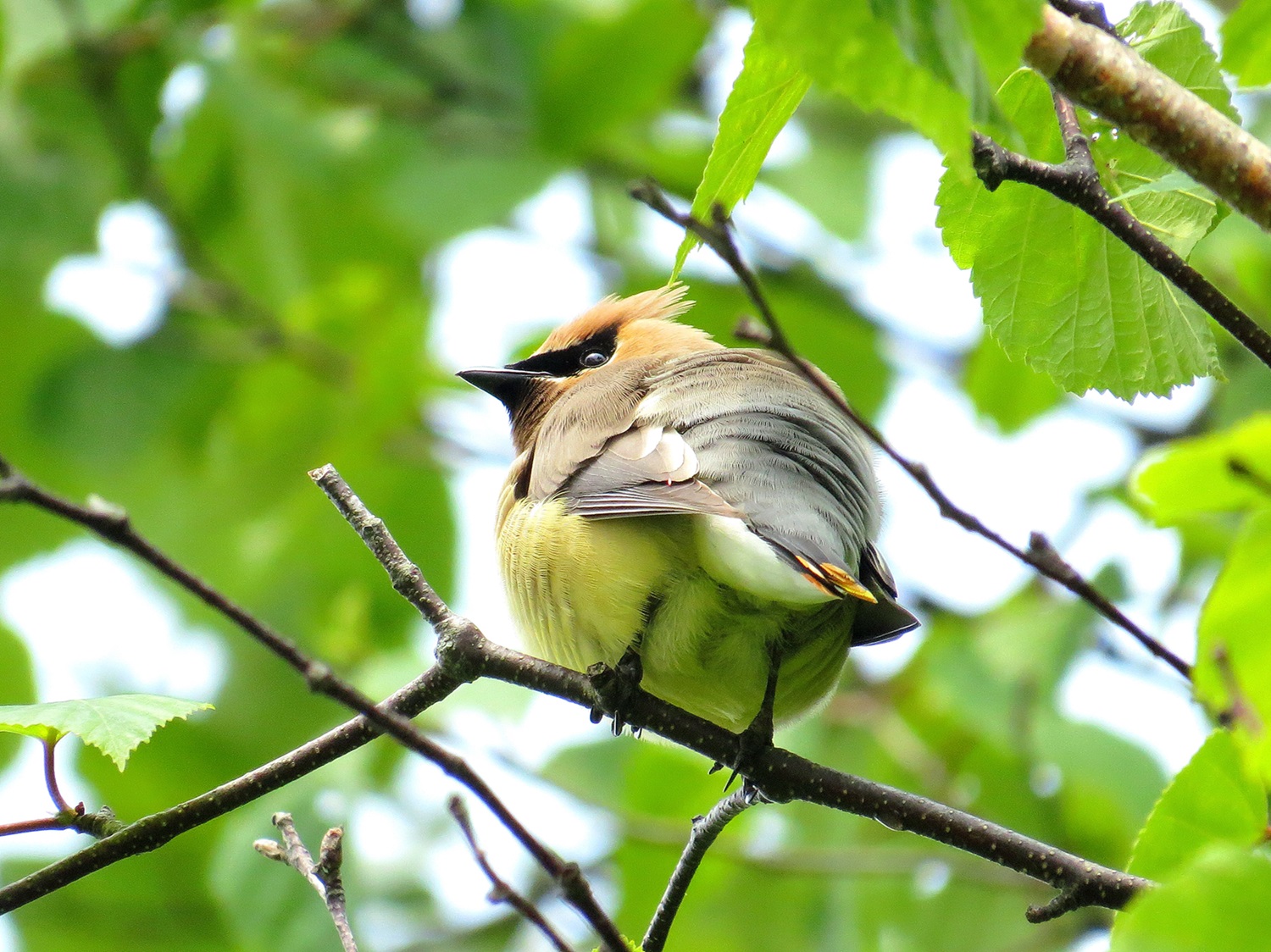
Waxwing (Bombycillidae) is a family of birds comprising eight species, including the true waxwings, the palmchat (Dulus dominicus) of Hispaniola and the silky-flycatchers of the southwestern US and Central America. The cedar waxwing (Bombycilla cedrorum) and the bohemian waxwing (B. garrulus) are native to Canada.
Range
True waxwings (three species) inhabit subarctic and temperate regions of the Northern Hemisphere and are migratory. In Canada, two species occur: the cedar waxwing (Bombycilla cedrorum) and the bohemian waxwing (B. garrulus).

Description
Waxwings are small passerines (perching birds), 15–19 cm long, that have very soft plumage dominated by rich fawn or soft grey coloration, with shadings of chestnut. Waxwings have a black throat and a band across the eyes. The secondary wing feathers often have waxy red tips, from which the name is derived. Wings and tail are greyish. The bill is short, thick, slightly notched and hooked. The crest is prominent.

Diet
Waxwings are gregarious, particularly during the nonbreeding season. They eat insects which they may catch in flight, but, in season, feed primarily on berries, fruits and flowers.
Nesting
Waxwings build a bulky nest consisting of an open cup of twigs, moss and grass lined with hair, down or feathers. Clutches of 3–7 ash grey or bluish eggs, marked with dark brown, are incubated mainly by the female. The young are fed by both parents.