Share on Facebook
 Share on X
 Share by Email
 Share on Google Classroom
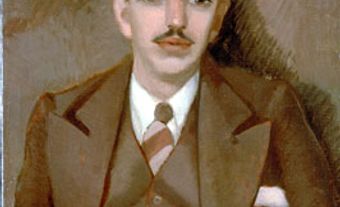
Joseph Auguste Julien Philippe Paul-Marie Lapointe, poet, writer, journalist (born 22 September 1929 in St-Félicien, QC; died 16 August 2011 in Montreal, QC). Lapointe’s unique synthesis of a surrealist heritage and a profoundly North American outlook, along with the richly imaginative nature of his writing, make him one of Quebec's greatest poets and among those with the widest influence and audience.
Career Highlights
After studies in Chicoutimi and at the École des beaux-arts in Montréal, Paul-Marie Lapointe published Le Vierge incendié (1948), a piercing and violently surrealistic collection, just when Paul-Émile Borduas and his friends put out their Refus global manifesto. He then was silent for 12 years while pursuing a career in journalism. He was with L'Événement Journal (1950–54), La Presse (1954–60), was information officer with the short-lived Nouveau Journal (1963), and then was editor-in-chief of Le Magazine Maclean (1963–68), before joining Radio-Canada where he became programming director for radio.
Publications
Paul-Marie Lapointe published Choix de poèmes: Arbres (1960) and Pour les âmes (1964), which were republished in 1971 along with Le Vierge incendié in his retrospective Le Réel absolu (Governor General's Award). His poetry was relatively unaffected by the 1960s nationalism, but is imbued with rebellion and sensuality, is close to nature, and is shot through with a keen awareness of Western history. His works have been translated for various anthologies and foreign magazines and in 1976 he won the prize of the International Poetry Forum in the United States. Other collections, including Tableaux de l'amoureuse (1974) and Écritures (1980), have joined this exclusively poetic body of work.