Share on Facebook
 Share on X
 Share by Email
 Share on Google Classroom
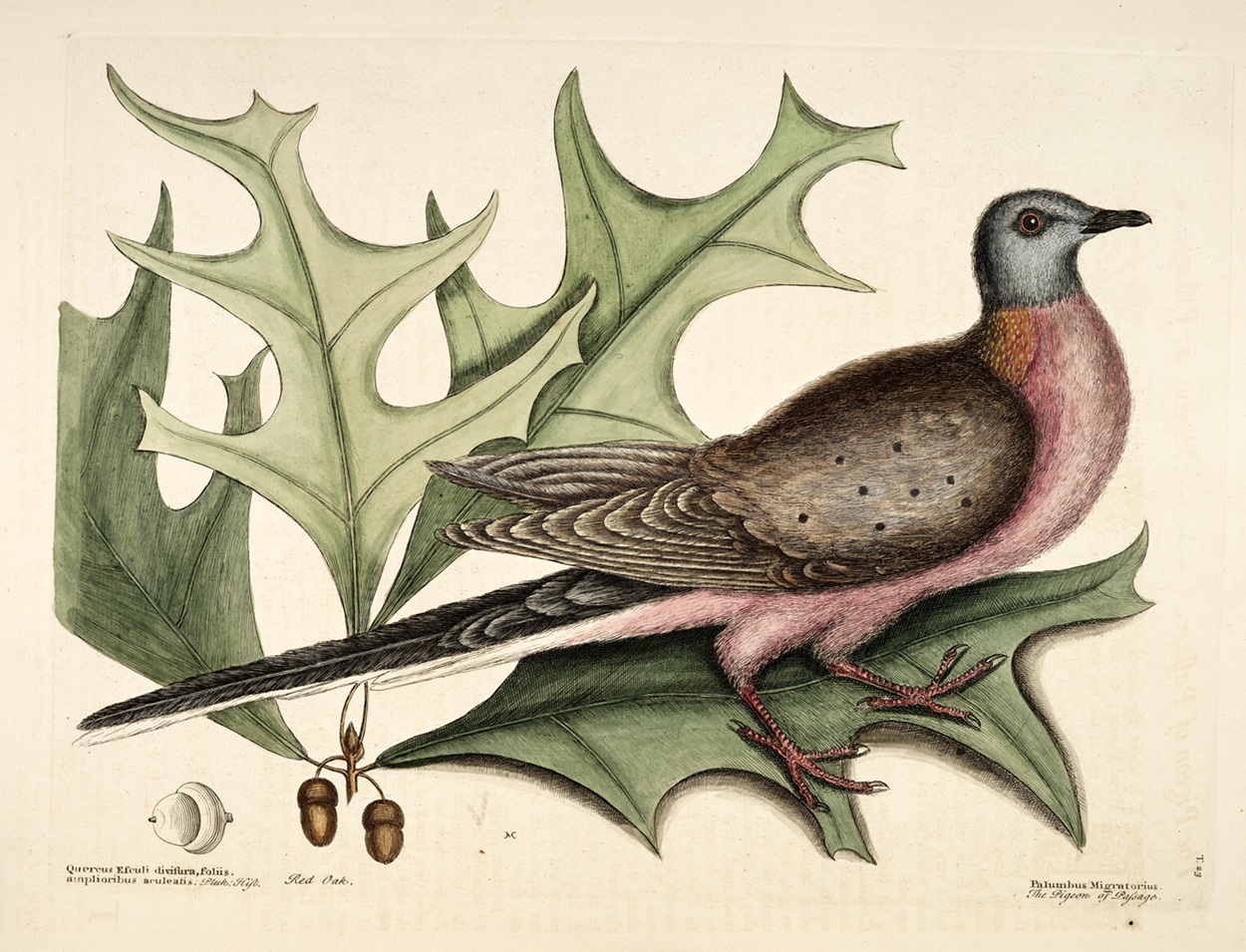
The passenger pigeon (Ectopistes migratorius) is extinct. Also known as the wild pigeon, this largish, long-tailed species (family Columbidae) was once abundant, nesting in vast, densely populated colonies and migrating in flocks that, at times, darkened the sky for hours or even days.
Historical Distribution
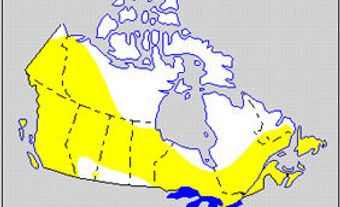
In Canada, the passenger pigeon was a summer resident, nesting from the Maritimes through southern Quebec, Ontario, Manitoba, central-eastern Saskatchewan and probably parts of Alberta. It was last recorded in Canada on 18 May 1902 at Penetanguishene, Ontario. Specimens were last taken in 1898 at Lake Winnipegosis, Manitoba, and in 1899 at Scotch Lake, New Brunswick.
Extinction
The passenger pigeon tended to concentrate in great numbers, which proved disastrous because it facilitated mass slaughter by European settlers. The species was gunned, netted and clubbed into oblivion. Its decline from the uncountable numbers that were one of the natural wonders of the continent became precipitous between 1871 and 1880. Because only one egg per clutch was being laid, the passenger pigeon's reproductive potential was inadequate to maintain the sadly decreased and scattered populations that remained late in the 19th century. The last known specimen taken in the wild was at Sargento, Ohio, on 24 March 1900. The last survivor, named Martha, died on 1 September 1914 in a zoo in Cincinnati, Ohio.