Share on Facebook
 Share on X
 Share by Email
 Share on Google Classroom
Established in Quebec City by Jean-Claude Panet (1719–78) in 1740, and in Montreal by his brother, Pierre-Méru Panet (1731–1804) in 1746, for generations the Panet family has made a remarkable contribution to Canadian legal, political, religious and above all, military life.
Jean-Claude Panet (Quebec City)
First Generation
Shortly after his arrival in Canada Jean-Claude Panet, a private in the Troupes de la Marine, became a royal notary, and later one of the first two Catholic judges of the Court of Common Pleas under the British regime.
Second Generation
Jean-Claude Panet’s son, Bernard Claude Panet (1753–1833), became bishop of Quebec City in 1825.
Another son, Jean-Antoine Panet (1751–1815), a notary and seigneur of Bourg-Louis, became the first speaker of the Legislative Assembly of Lower Canada (1791–94; 1797–1814), member of the Legislative Council (1815), judge of the Court of Common Pleas (1794–97) and a militia officer who participated in the defeat of American arms (1775–76).
Third Generation
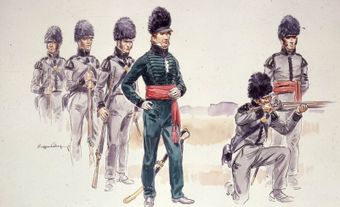
Jean-Claude Panet's grandson, Elzéar-Alexandre Panet's son, Philippe Panet (1791–1855), was also a lawyer, member of the Legislative Assembly (1816–20; 1830–32) and the Executive Council (1831), judge of the King's Bench and a captain of the Canadian Voltigeurs, who fought the Americans during the War of 1812.
Elzéar-Alexandre Panet’s second son, Louis Panet (1794–1884), was a notary, member of the Special Council of Lower Canada (1837–41), member of the Legislative Council (1852–67), member of the Legislative Council of Quebec (1867–84), a senator (1871–74) and lieutenant-colonel of the 1st Battalion of the Quebec Militia (1857–69).
Fourth Generation
Philippe Panet's son, Charles-Eugène Panet (1829–98), a lawyer, senator (1875) and lieutenant-colonel of the 9th Voltigeurs de Québec (1869–80), was deputy minister of Militia (1875–98).
Fifth Generation
Six of Charles-Eugène Panet’s seven sons through three marriages also held high military rank: Colonel Antoine Chartier de Lobinière Panet (1865–1926); Brigadier-General Alphonse-Eugène Panet (1867–1950); Major-General Henri-Alexandre Panet (1869–1951); Colonel Charles Louis Panet (1870–1955); Colonel Arthur Hubert Panet (1877–1944); and Major-General Edouard de Bellefeuille Panet (1881–1977), a distinguished military tradition which continues into the seventh generation, and which has established the Panets reputation as “Canada's Foremost Military Family.”
Pierre-Méru Panet (Montreal)
First Generation
Pierre-Méru Panet's Montreal branch of the Panet family followed a similar pattern. Pierre-Méru Panet himself became a royal notary, judge of the Court of Common Pleas (1778–84), a member of the Executive Council in 1791 and a militia officer who fought the Americans (1775–76).
Second Generation
Pierre-Méru Panet’s son, Pierre-Louis Panet (1761–1812), was also a notary, member of the Legislative Assembly (1792), member of the Executive Council (1801) and a judge of the King's Bench (1795–1812).
A second son, Bonaventure Panet (1765–1846), was a member of the first Legislative Assembly of Lower Canada and fought in the War of 1812.
Third Generation
Pierre-Louis Panet's son, also called Pierre-Louis (1800–70), became a judge of the Court of the King's Bench.
Maternal Lines
Other Panet descendants through the maternal line in the Taschereau, de Bellefeuille, MacDonald, de Lobinière and Harwood families, reinforce the Panet's distinguished record in Canadian public life.