Share on Facebook
 Share on X
 Share by Email
 Share on Google Classroom
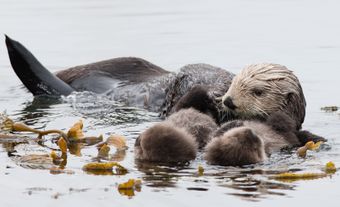
The river otter (Lutra canadensis) occurs throughout North America except in desert and arid tundra regions. In Canada, it is scarce, except along the BC coast, where it is abundant and often wrongly identified as a sea otter.

Description
The otter is a large weasel, males reaching 1.3 m in length and weighing 8 kg; females are slightly smaller. Its colour is dark brown, with a paler belly. It is amphibious, its streamlined body and tail, short legs, webbed feet and dense waterproof fur equipping it to hunt in water. The otter's food is 90 per cent fish, but crustaceans, amphibians, mammals and nesting birds are also important.
Reproduction and Development
The otter has a lengthy mating period in late winter and spring; gestation including a lengthy period of delayed implantation, lasts 9½–12½ months. Young (1–4) are born in a nest under a rock pile or in a burrow or similar shelter.
Relationship with Humans
The pelage is dense and protected by long guard hairs with an underfur of several fine hairs per follicle. It is valued as a beautiful and durable fur; several thousand otters are trapped each year. Where not harassed, otters tame easily. They are abundant even in such busy harbours as Vancouver. (See also Fur trapping.)