Share on Facebook
 Share on X
 Share by Email
 Share on Google Classroom
The MS St. Louis was the name of a German ship. Jewish passengers tried to leave Europe on it. They didn’t want to be unfairly attacked by the Nazis. In June 1939, Canada refused to let them enter the country. The ship returned to Europe. Later, 254 passengers died in the Holocaust.
This article is a plain-language summary of MS St. Louis. If you are interested in reading about this topic more in depth, please see our full-length entry, MS St. Louis.
Background
In 1933, Adolf Hitler became the leader of Germany. His Nazi party was extremely anti-Jewish.
Jews then began to suffer a lot. They experienced much more discrimination after Hitler took power. They could not work in the government. They could not be lawyers. They could not be teachers. In 1935, they could no longer vote. And, they began to experience much more violence.
In 1938, the situation got worse. An event called Kristallnacht happened. This means the “night of broken glass” in German. People destroyed Jewish businesses. They also burned down synagogues. Many Jews died. And, about 30,000 Jewish men were arrested and imprisoned.
Voyage to the Americas
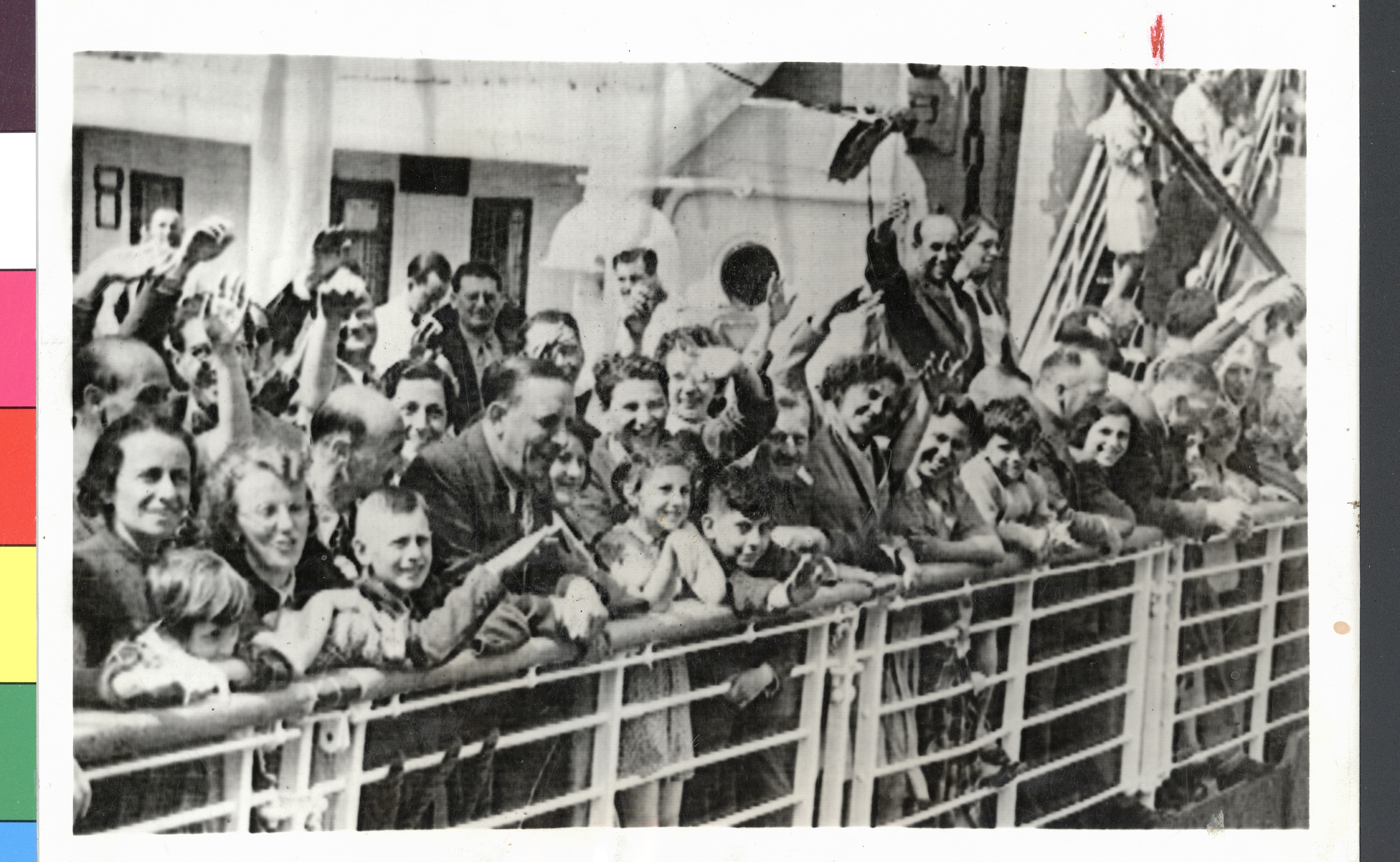
After Kristallnacht, hundreds of thousands of Jews wanted to leave Germany. In May 1939, hundreds of Jews boarded the MS St. Louis. They too hoped to escape Germany.
The total number of passengers on the MS St. Louis was 937. Most were German Jews. The original destination of the MS St. Louis was Cuba. Many of the passengers had the authorization to land there. Many also had the papers needed to enter the United States. Unfortunately, only 28 passengers were allowed to get off the ship in Cuba.
One reason for this was anti-Jewish sentiment. The Jews were discriminated against in much of the world. (See Antisemitism in Canada.) Another reason was that immigration polices had recently changed in Cuba.
The captain of the MS St. Louis did not want to go back to Germany. His name was Gustav Shröder. He worried about what could happen to his passengers if they returned. He tried to make the Cuban government allow the Jews to leave the ship. Cuba refused.
The captain eventually gave up on Cuba. He decided to go to the United States. He hoped that the American government would allow his passengers safe entry. Some Americans wrote to President Franklin D. Roosevelt. They hoped that they could persuade him to allow the passengers to seek refuge in the United States. He refused. After this, the captain began to sail back to Europe. There seemed to be no other place to go.
The MS St. Louis and Canada
Some important Canadians, including many church leaders, wrote to Prime Minister William Lyon Mackenzie King. They asked him to allow the passengers to come to Canada.
Mackenzie King asked his colleagues to decide. One of them was Ernest Lapointe. He was the minister of justice. The other person was Frederick Blair. He was the head of immigration. They both refused to let the MS St. Louis passengers into Canada.
The MS St. Louis sailed back to Europe. Passengers went to Belgium, France, the Netherlands and the United Kingdom. In 1940, the Nazis took over these countries, except for the United Kingdom. As a result, 254 passengers died in the Holocaust.
Why Did Canada Refuse?
As with much of the world, anti-Jewish sentiment was strong in Canada. Many Canadians did not want Jews to immigrate to Canada. The same was true for letting in many other ethnic groups. There was a lot of racism against some minorities. These included Asian, Roma and Black peoples. Canada was also going through hard economic times. The government did not want more immigrants. (See Great Depression in Canada (Plain-Language Summary).)
Throughout the 1930s until 1945, Canada only accepted about 5,000 Jewish refugees. Of all the developed nations, Canada allowed in the smallest number of refugees.
In 2000, members of the Canadian clergy apologized to the survivors. In 2011, a monument to the passengers was unveiled in Halifax, Nova Scotia. And, in 2018, Prime Minister Justin Trudeau made a formal apology. He apologized on behalf of the Canadian government. Recognizing the wrongs committed in the past is the first step toward healing the wounds of the past.