Share on Facebook
 Share on X
 Share by Email
 Share on Google Classroom
Robert Bysouth enlisted with the Loyal Edmonton Regiment in July 1951, but was transferred over to 1st Battalion, Princess Patricia’s Canadian Light Infantry as a replacement in 1952. He went over to Korea with the battalion. Following the battalion’s return to Canada, Mr. Bysouth remained in Korea and served with 3rd Battalion, Princess Patricia’s Canadian Light Infantry until after the armistice in 1953.
Please be advised that Memory Project primary sources may deal with personal testimony that reflect the speaker’s recollections and interpretations of events. Individual testimony does not necessarily reflect the views of the Memory Project and Historica Canada.


Transcript
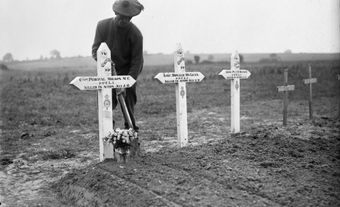
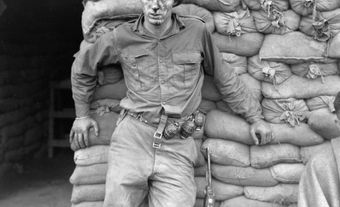
We took training behind the lines before we went in putting up barbed wire fences, like all the blitzkrieg wiring party. And we practiced putting up concertina wire [a type of barbed wire, also known as razor wire], you put screw pickets into the ground, you have to screw them in because if you were pounding them in, these were invented back in World War I, by the way, so it wouldn’t make noise and attract attention of the enemy. On this one particular occasion, it was getting cold and there was some snow on the ground and it was kind of freezing and we had to pack all the equipment, the stakes and the barbed wire and, and all the materials we need, along with our own weapons, to a designated spot to put up the wire fences. We got down into the valley floor, there was usually a valley between our side and the enemy’s side. We went down into the valley and put up our fence. And then we were approaching the spot where the fence was to be put up and then there was an explosion and a yellow flash up head. And I’m thinking, “Minefield.” But I was very close behind, I was third in line going down into this field and the one fellow, he must have tripped the mine, because it went right up behind him and it split his head wide open and I can always remember his cap, how it was split from back to front and his brains were showing and he was killed instantly [Cpl Francis Austin Mullin]. The other fellow was seriously wounded, he was unconscious right off the bat. But when he came to, he was suffering terribly because he was shot through with these steel balls, they would be hot from the explosion. I was surprised, I was wondering what I should do next and I was surprised to see the long confident strides of a young fellow coming from behind, I think, “Well, here’s a brave guy.” He came up and this particular fellow who was dead, he had a chrome plated pistol, a Colt 45, automatic, he took that and he appeared to be taking other things like maybe his wallet. And then he went back to where his section was. And that kind of sent me back a bit. And anyway, I went forward to see if I could comfort the wounded guy and by now, he was screaming so bad, I thought he could be heard for miles. And I wondered, you know, if, if the enemy would hear this and open up on us with shelling or machine gunfire. But so far, everything was quiet. But after that, I knelt over and I tried to comfort him and tell him he’d be evacuated and he’d be okay but I could smell the blood and smoke coming out of the wounds in his chest. He didn’t last, he finally just succumbed [Pte Jacob Wensel Batsch].