Share on Facebook
 Share on X
 Share by Email
 Share on Google Classroom
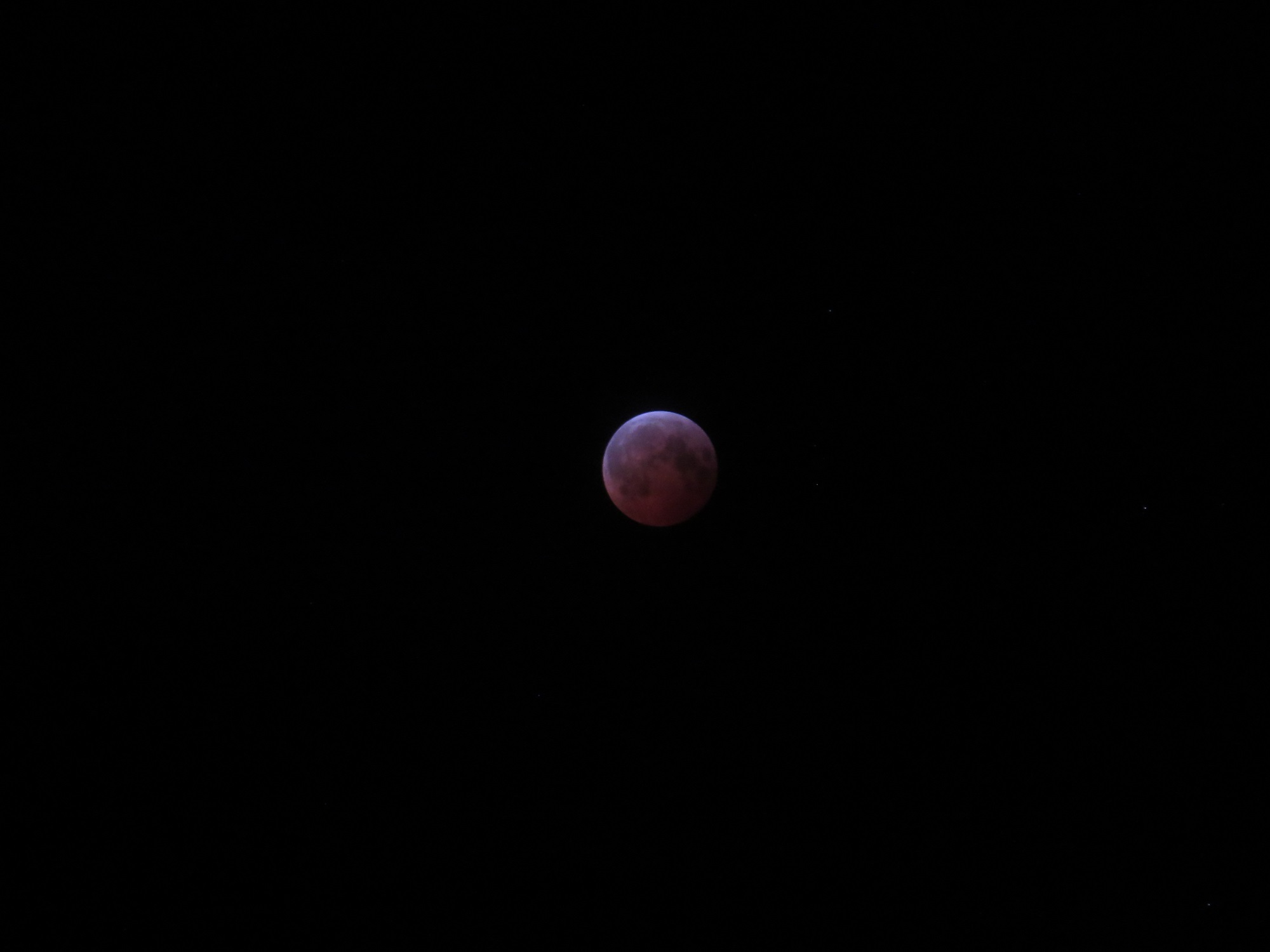
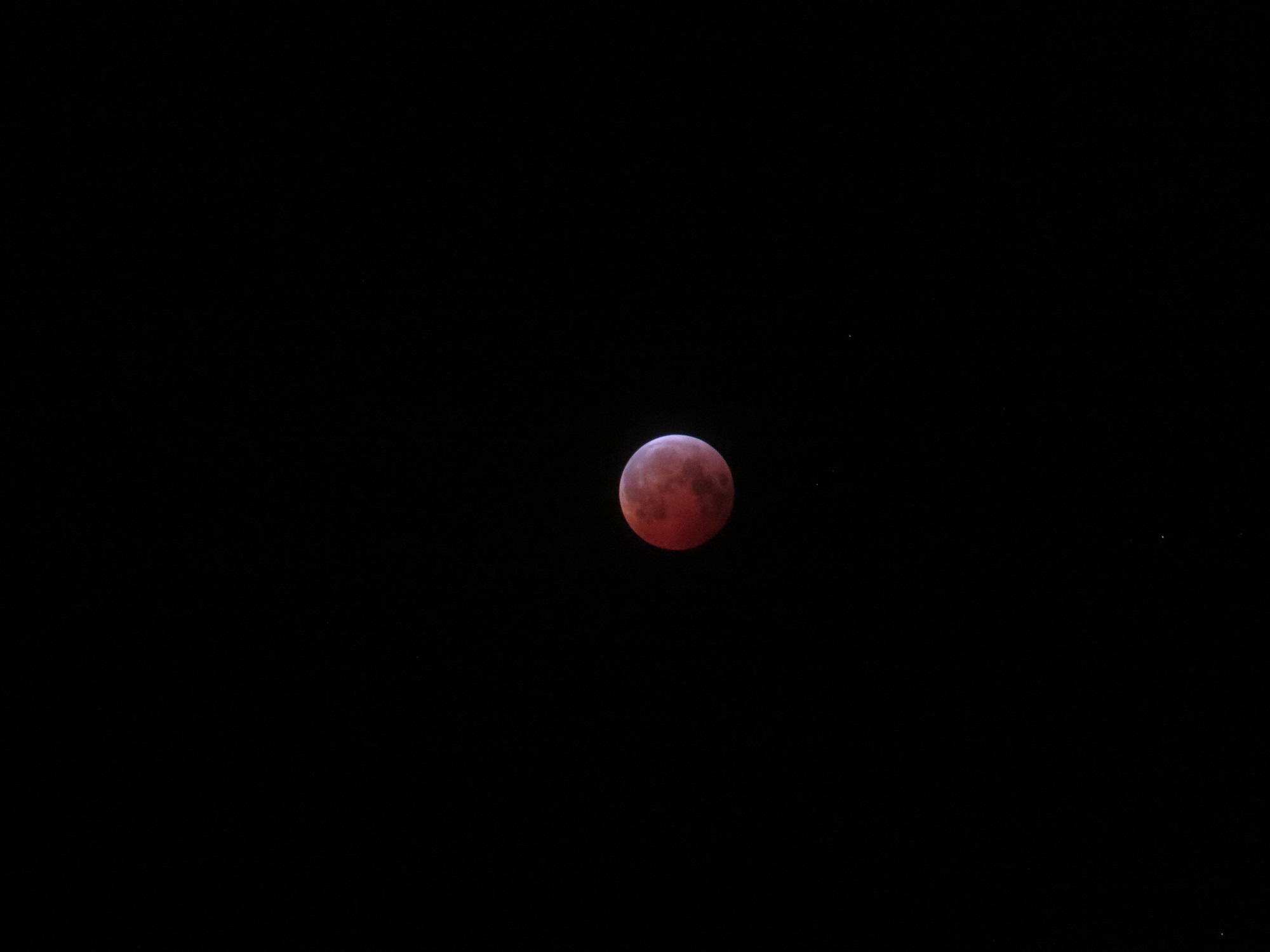
The moon is a natural satellite of Earth, with a mean diameter of 3,476 km and a mass of 7.28 x 10²² kg (1.23 per cent of Earth's mass). Three moons of Jupiter and one of Saturn are larger; the dwarf planet Pluto is smaller. The moon's mean distance from Earth is 384,500 km, and its orbit takes 29.5306 days from one New Moon to the next. The moon shines only by reflected sunlight, appearing as a crescent when it is within 90° of the sun. Except near New Moon, it is second only to the sun in brightness. Tidal effects of Earth have forced the moon's rotation to match its orbital period; hence, one side of the moon always faces Earth, and only 59 per cent of its surface is visible. Because it is so close, the moon's influence exceeds the sun's as the cause of tides on Earth. The moon has been important in religion and art since the earliest records of human culture and has served as the basis for the lunar calendar.

Description
The dark grey lunar surface reflects only 7 per cent of the sunlight it receives (comparable to the reflectivity of black soil). The moon is dominated by thousands of craters, ranging from microscopic pits to gigantic Clavius, with a diameter of 230 km. Water appears to be absent from the moon, and the maria (lunar seas) are large lava-flooded craters. Maria and almost all small craters are now known to have been formed by the impact of meteorites (or comets), and the mountain chains surrounding some maria are parts of the craters' rim structures. Other surface features include rilles, long cracks or valleys which are typically 100 km long, 1–3 km wide and several hundred metres deep. Rilles are interpreted as tension cracks resulting from the cooling of surface layers. Crater chains consist of small craters (normally along a rille) caused by the venting of gas from the interior.
For most people, the highlight of the space program was the Apollo 11 astronauts' landing on the moon on 20 July 1969. The landing followed a series of unmanned missions by the US and the USSR, which provided close-ups of the moon's surface, including pictures of the far side, which is also covered with craters but is deficient in maria. Six American landings and several Soviet probes returned lunar soil and rocks for intensive study. The landings confirmed the absence of both a lunar atmosphere and a magnetic field; chemical studies of the rocks showed that the moon contains less metal than Earth and is deficient in volatile material. The rock formations range in age from 3.1 to 4.42 billion years, which accords with current estimates of the age of the solar system (nearly 4.6 billion years, see Geological History of Canada). The maria were flooded 3.1–3.8 billion years ago, filling pre-existing impact basins with younger rocks. Records from seismic instruments left on the moon indicate a small core with an outer fluid layer, surrounded by a mantle and crust.

Origin
Historically, there are three main theories of the moon's origin: it was split off from Earth, shortly after Earth's formation (fission theory); it resulted from the capture by Earth of one or more bodies that had formed elsewhere in the solar system; Earth and moon were assembled in the same region as a double planet. A new theory has emerged nearly two decades after the return of lunar samples. Known as the large impactor hypothesis, it suggests that the moon formed early in solar system history as the result of a collision between the Earth and another object of mass at least one-tenth of Earth's. In this theory, the moon is composed mainly of material from the impactor, heated by the collision, and the theory appears to explain dynamical peculiarities of the Earth-moon system as well as chemical anomalies revealed by the study of moon rocks.

Canadian Research
Although lunar research has not been a major activity of Canadian scientists, several important contributions have occurred. An extensive program of impact-crater studies initiated by C.S. Beals at the Dominion Observatory, Ottawa, involved analysis of both lunar and terrestrial craters. In his later years, Beals studied the relative ages of some lava surfaces by counting the frequencies of small craters on photographs obtained from lunar orbit. Geological studies of moon rocks were conducted in government laboratories in Ottawa, and the evidence for ancient lunar magnetic fields was found by David W. Strangway (who worked at UBC) while working in the US. Lunar craters are normally named after deceased scientists, and 10 Canadians are among those honoured in this fashion: Oswald T. Avery, Sir Frederick Banting, C.S. Beals, C.A. Chant, Reginald Alworth Daly, J.S. Foster, F.S. Hogg, Andrew McKellar, R.M. Petrie and J.S. Plaskett.
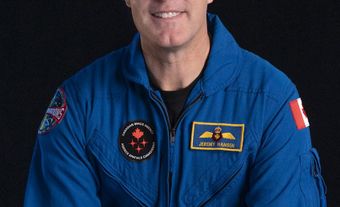
Artemis II, a planned lunar spaceflight mission under NASA’s Artemis program, will also feature a Canadian Space Agency astronaut, Jeremy Hansen. This would make Jeremy Hansen the first Canadian to reach the vicinity of the moon. This mission is planned for April 2026.