Share on Facebook
 Share on X
 Share by Email
 Share on Google Classroom
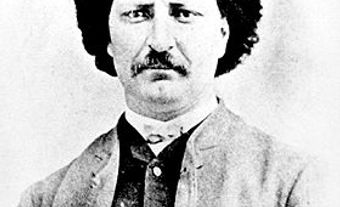
Maxime-Pierre-Théodore Lépine, Métis resistance leader, farmer, businessperson, politician, (born circa 1837 in St. Boniface, MB; died 16 September 1897 in St. Louis, SK). Maxime Lépine was a member of the provisional governments during the Red River and North-West resistances. He also served as a member of the Legislative Assembly of Manitoba.
Early Life and Career
Maxime Lépine was born to a Métis family around 1837 in St. Boniface, in what is now Manitoba. Lépine managed a company that used Red River carts to transport goods in the region as well as south to the United States. He married Josephte Lavallée around 1857. They had six children who reached adulthood.
Red River Resistance
In 1869, the Canadian government dispatched surveyors as its first step in taking control of the Red River territory (see Red River Colony). In December, Louis Riel organized a provisional government to demand respect for French and Métis rights. Maxime Lépine was a close friend of Riel and later became his brother-in-law. Lépine and his brother Ambroise Didyme became members of the Red River Métis provisional government. In 1871, Lépine was among those who evolved Riel’s Métis National Committee into the Union St. Alexandre to advocate for French and Métis rights.
The Red River Resistance led to Manitoba becoming a province. With a $5,000 reward for his capture, Riel went into hiding and fled the area. In 1873, Riel was elected to represent Provencher in the House of Commons. Lépine acted as one of Riel’s two bodyguards on his way to Ottawa.
From 1874 to 1878, Lépine was a member of Manitoba’s legislature, representing the riding of St. François Xavier East.
North-West Resistance
In 1882, Maxime Lépine and his family joined many other Métis who left Manitoba to escape the influx of English Protestants to Manitoba. He settled in the predominantly French Métis community of St. Louis de Langevin, on the South Saskatchewan River. He established a farm and began a ferry business.
In November 1883, Lépine and 29 others signed a petition to the Canadian government protesting the transfer of land in the area to the Ottawa-based Prince Albert Colonization Company (see also Colonization Companies). When it was clear that the Canadian government would not recognize Métis rights in Saskatchewan, Lépine and his brother were among those who persuaded Louis Riel to end his exile in the United States and take up their cause.
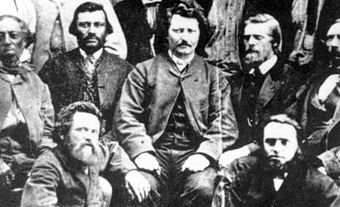
In March 1885, Lépine became a member of the Exovedate, or governing council, that Riel established. It demanded that the Canadian government recognize Métis rights. Lépine was often at Riel’s side in negotiations to unite the community to support their cause. When the Canadian government dispatched troops to take control of the area, Lépine and two of his sons were among the Métis who confronted them at the battles of Coulée des Tourond (Fish Creek) in April and Batoche in May (see also North-West Resistance).
With the defeat of the Métis resistance, Lépine was among the leaders arrested. He was found guilty of high treason and sentenced to seven years in prison. He was released after about seven months in prison.
Lépine returned to his farm in St. Louis de Langevin. He served for a short time as an Indian agent in Battleford, Saskatchewan. He died, impoverished, in September 1897.