Share on Facebook
 Share on X
 Share by Email
 Share on Google Classroom
Guylaine Tremblay, actress (born 9 October 1960 in Petite-Rivière-Saint-François, QC). A favourite of the small screen thanks to her title role in the series Annie et ses hommes, the actress who was previously Caro in La Petite Vie has acted a lot in the theatre (more than 40 shows), where she is now seen less frequently, due to being offered appealing roles in cinema.
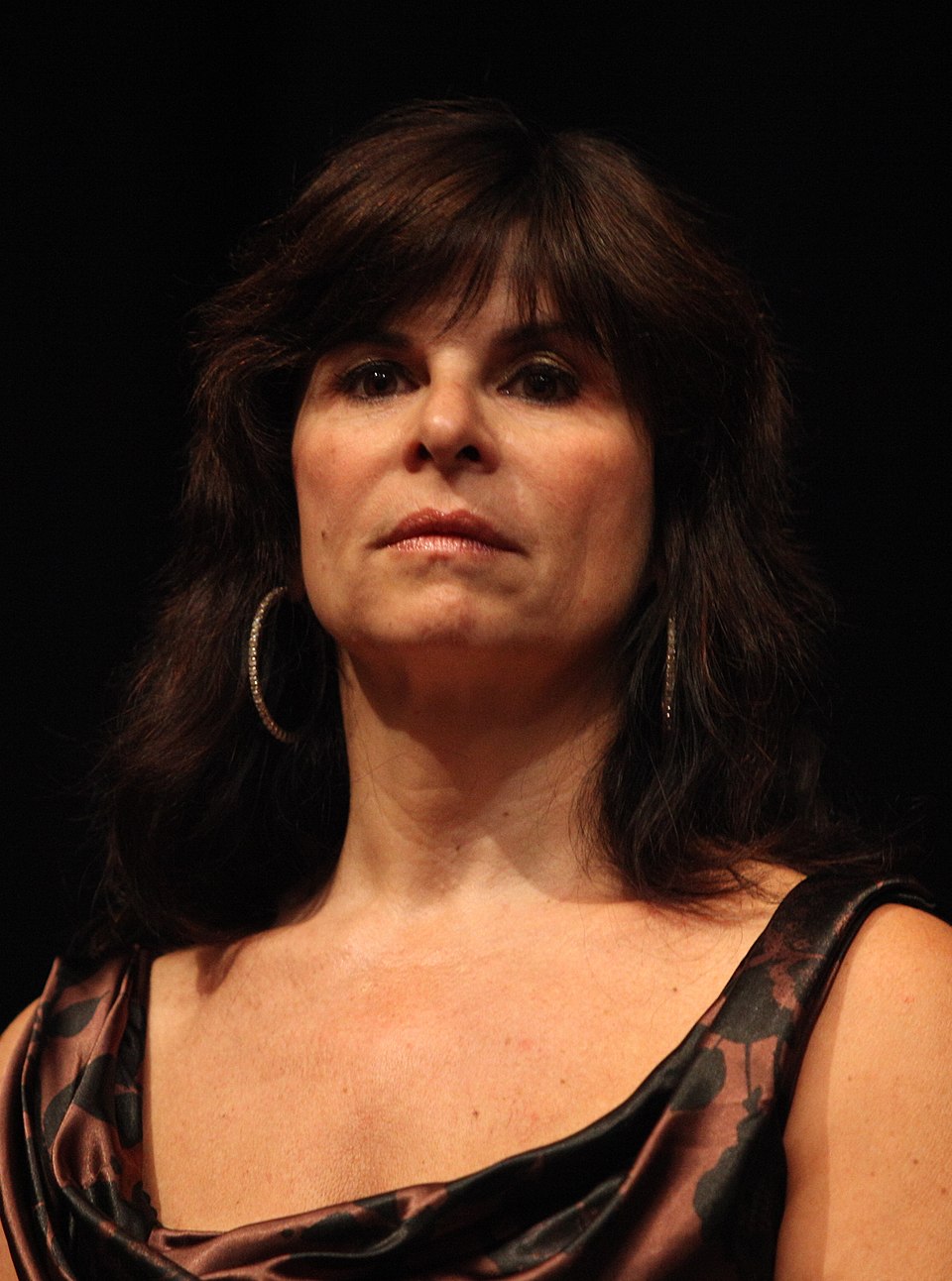
Early Years
After graduating from the Conservatoire dramatique de Québec in 1984, Guylaine Tremblay took to the stage at the Théâtre de la Bordée in Louis Saïa's Monogamy. It was a promising start, since he entrusted her with the role of Luce in his play Les Voisins in 1988, a role she went on to reprise fourteen years later at the Théâtre Jean-Duceppe, directed by Denis Bouchard. Before pursuing her career in Montreal, Tremblay worked in all the theatres in Quebec City: at the Théâtre Repère, the Niveau Parking, the Bois-de-Coulonge, the Trident, with Michel Nadeau, Robert Lepage, Jacques Lessard, winning three acting awards.
In the Theatre
Since Marie Laberge (Aurélie ma soeur, Trident, 1988), Guylaine Tremblay has lent her deep voice and intense presence to Quebec playwrights: she has appeared in works by Michel Tremblay (Albertine, en cinq temps, Espace GO, 1995), Serge Boucher (24 Poses (portraits), Théâtre d'Aujourd'hui, 1999), Jean-François Caron (Saganash, Théâtre d'Aujourd'hui / Théâtre de Chatillon, 1995) and Robert Gravel (Durocher le milliardaire, NTE, 1991). Co-founder of the Groupement Forestier du Théâtre with Alexis Martin, Daniel Brière and Gary Boudreault in 1995, she played the down-to-earth Guylaine in Matroni et moi by Alexis Martin, the company's first production.
While she is clearly at ease with realism, Tremblay energetically portrays characters from classic comedies, such as Lisette in Marivaux's The Game of Love and Chance (Trident, 1989, directed by Jacques Lessard), Mariane in Molière's The Miser (Trident, 1989, directed by Jean-Pierre Ronfard), Brigida in Goloni's La Trilogie de la villégiature (Théâtre du Nouveau-Monde, 1991, directed by Guillermo de Andrea), not to mention an indescribable Toinette in The Imaginary Invalid (Théâtre du Rideau Vert, 1996, directed by de Andrea). Tremblay also played (1987–1993) in and coached (2001–2002) with the Ligue nationale d'improvisation.
In the Cinema
Guylaine Tremblay reprised her role in Matroni et moi with the same success in the cinema adaptation directed by Jean-Philippe Duval (1999). Certain directors have guided her to an introspective acting style: Catherine Martin in Mariages (2001) and, in a less serious role, Claude Meunier in his comedy-drama Le Grand Départ (2008). But it was Bernard Émond who, after the beautiful character of Angela in 20H17 rue Darling (2003), offered her what remains to this day her greatest role on the big screen in Contre toute espérance, where she played a powerfully moving performance as the combative Réjeanne, whose husband (Guy Jodoin) suffers a stroke. This role earned her the Jutra Award (now the Iris Award) for Best Actress in 2008.
On Television
As a television star, Guylaine Tremblay won several Gémeaux and MétroStar awards (now the Artis Award) over the years for her role in Annie et ses hommes (2002–2009), where her character as a loving wife and mother won over the viewers. She also received awards for Emma and La Petite Vie, as well as for Albertine, en cinq temps and 24 Poses (portraits), television adaptations of plays she performed in the theatre.