Share on Facebook
 Share on X
 Share by Email
 Share on Google Classroom
The Globe and Mail is a daily newspaper. It was founded in Toronto in 1936 when two influential and historically important dailies, The Globe and The Mail and Empire were merged. (See also Newspapers in Canada: 1800s-1900s.) As of 2026, the Globe and Mail’s website claims that its digital and print editions reach a combined audience of 6 million readers per week.
The Globe
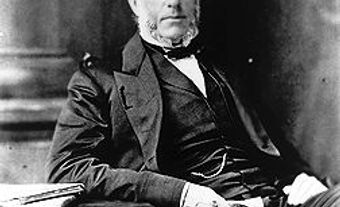
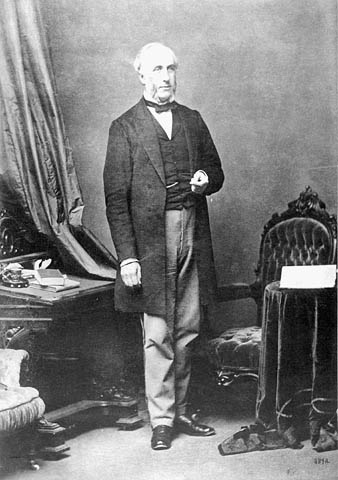
George Brown launched the Globe in 1844 with the support of a group of Reform Liberals. (See also Reform Movement in Upper Canada.) Although at first a party journal, the Globe quickly became required reading for the educated and business community in Toronto and the surrounding countryside through a shrewd mixture of news, features, forceful editorials and technological innovation. (See also Newspapers in Canada: 1800s-1900s.)
Did you know?
One element that has remained constant since the paper’s founding as the Globe is its use of the quote “The subject who is truly loyal to the Chief Magistrate will neither advise nor submit to arbitrary measures.” It is attributed to Junius, the pseudonym of a still-unidentified 18th century British writer who criticized the British government. George Brown felt the quote aligned with his beliefs about legitimate government. Originally printed in the masthead on the front page, it later migrated to its current use on the editorial page. (See also George Brown of the Globe.)
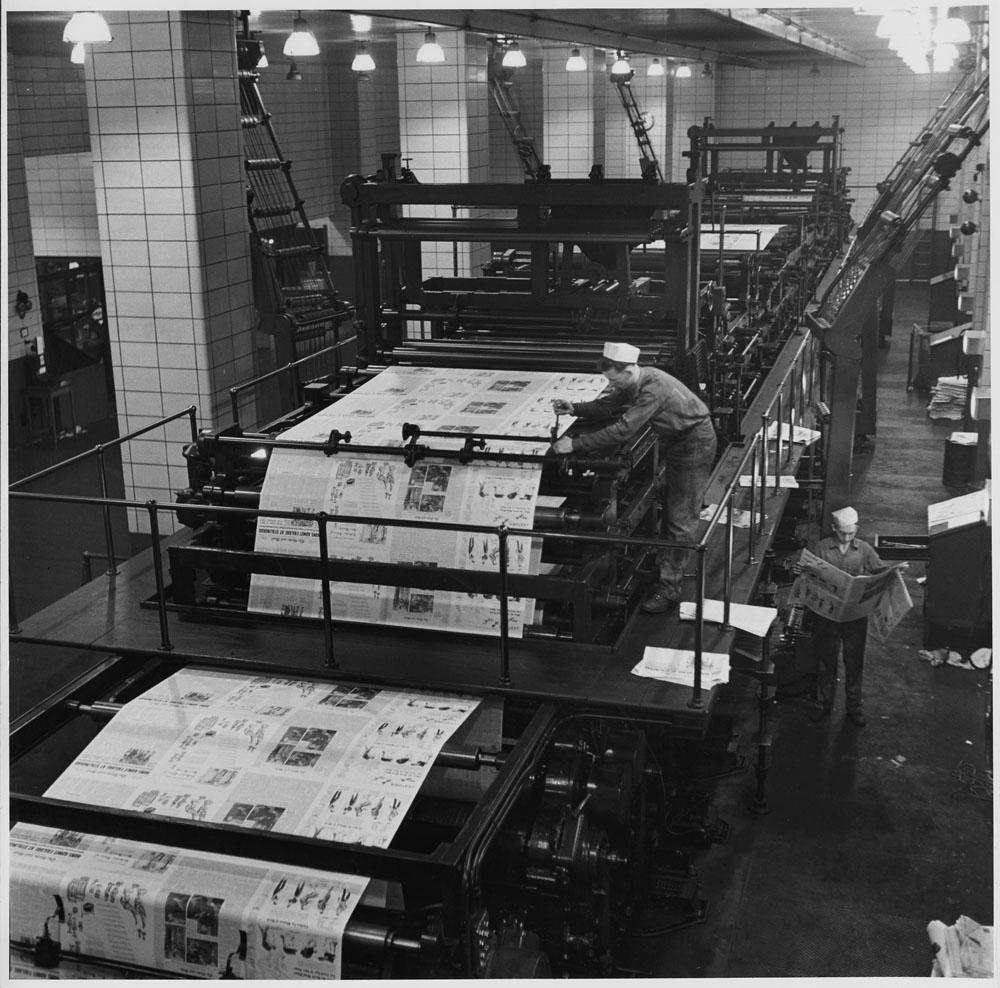
By 1853, the four-page paper had become a daily with a weekly edition for out-of-town subscribers; in 1876, Brown commissioned early-morning trains to Hamilton and later London, and absorbed mailing costs for the daily Globe.
As new presses and cheap paper enabled the journal to expand in size, the first women's section was added in 1882 and, within a decade, drawings and photoengravings. By 1900, the Globe was established as a quality paper attractive to advertisers, with a combined circulation for all editions of 69,545. Just after the turn of the century, it added the words "Canada's National Newspaper" to its masthead and began its pursuit of readers across the country.
Within two years of Brown’s death, Robert Jaffray purchased the paper and ran it until his death in 1914. He was succeeded by his son, William Gladstone Jaffray, whose reportedly prudish nature was reflected in his refusal to run ads for products ranging from alcohol to female underwear. His crusade to ban the publication of horse racing results in Canadian newspapers and Prime Minister William Lyon Mackenzie King’s failure to pass such a bill was among the factors in their deteriorating relationship during the 1920s. The 1925 federal election marked the first time the Globe did not endorse the Liberals.
The Mail and Empire
After several Toronto-based newspapers failed to meet the Conservative Party’s desire for an organ to match the power and influence of the Globe, The Mail was launched in 1872. When it developed a streak of political independence in its editorial outlook, Conservative officials launched a new paper, The Empire. The two papers merged in 1895, becoming The Mail and Empire. By 1900, the paper boasted a circulation of 61,720. (See also Newspapers in Canada: 1800s-1900s.)
Merger
In 1936, mining executive William Henry Wright and financial investor George McCullagh purchased both the Globe and Mail and Empire and merged them with the 23 November edition, consolidating Toronto’s morning newspaper market. Despite having a lower circulation than the Mail and Empire, it was the Globe’s heritage that immediately dominated the new paper in terms of style and contributors. McCullagh assumed the role of publisher.
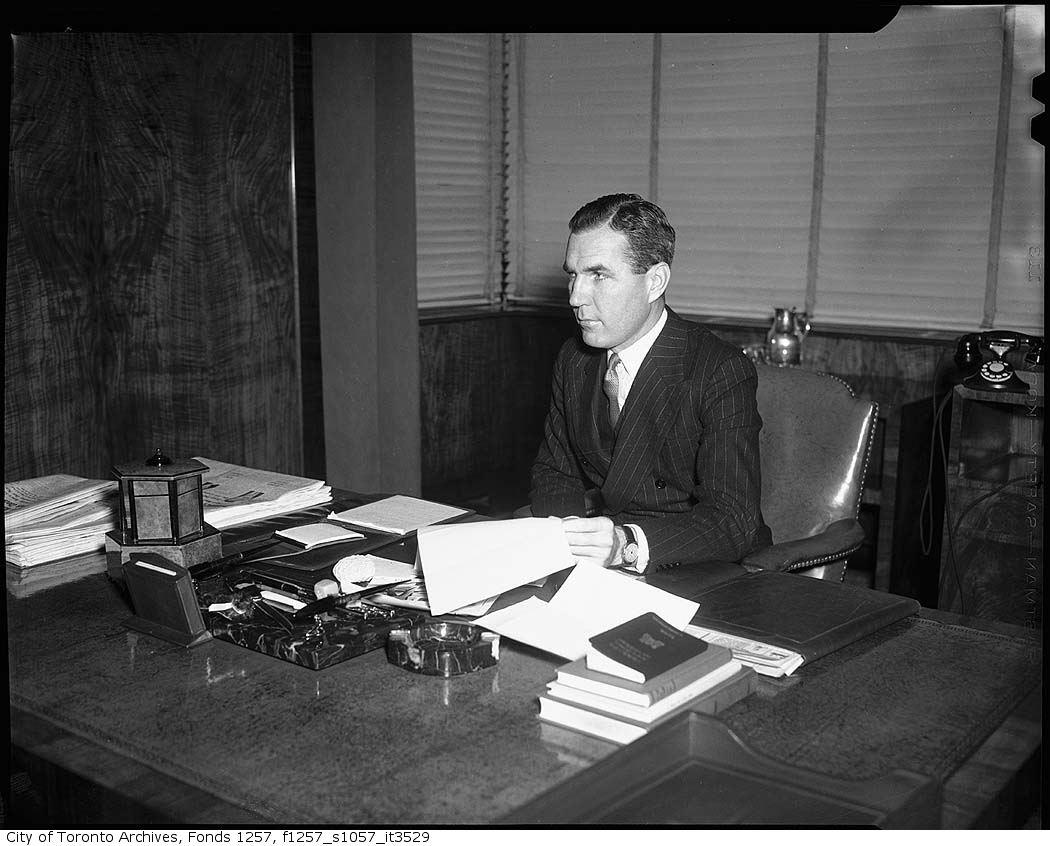
While the new paper initially maintained a Liberal bias, McCullagh’s drift rightward was soon evident. In 1939, McCullagh used the paper to promote the Leadership League, an organization he devised to run Canada via a nonpartisan government run primarily by businessmen, a crusade which failed due to lack of financial support and his personal health issues.
By the 1940s, the paper regularly supported the Conservatives at the national and provincial levels, leaving the Toronto Daily Star to be the main Liberal voice among Toronto’s daily newspapers (see Toronto Star).
The Modern Era
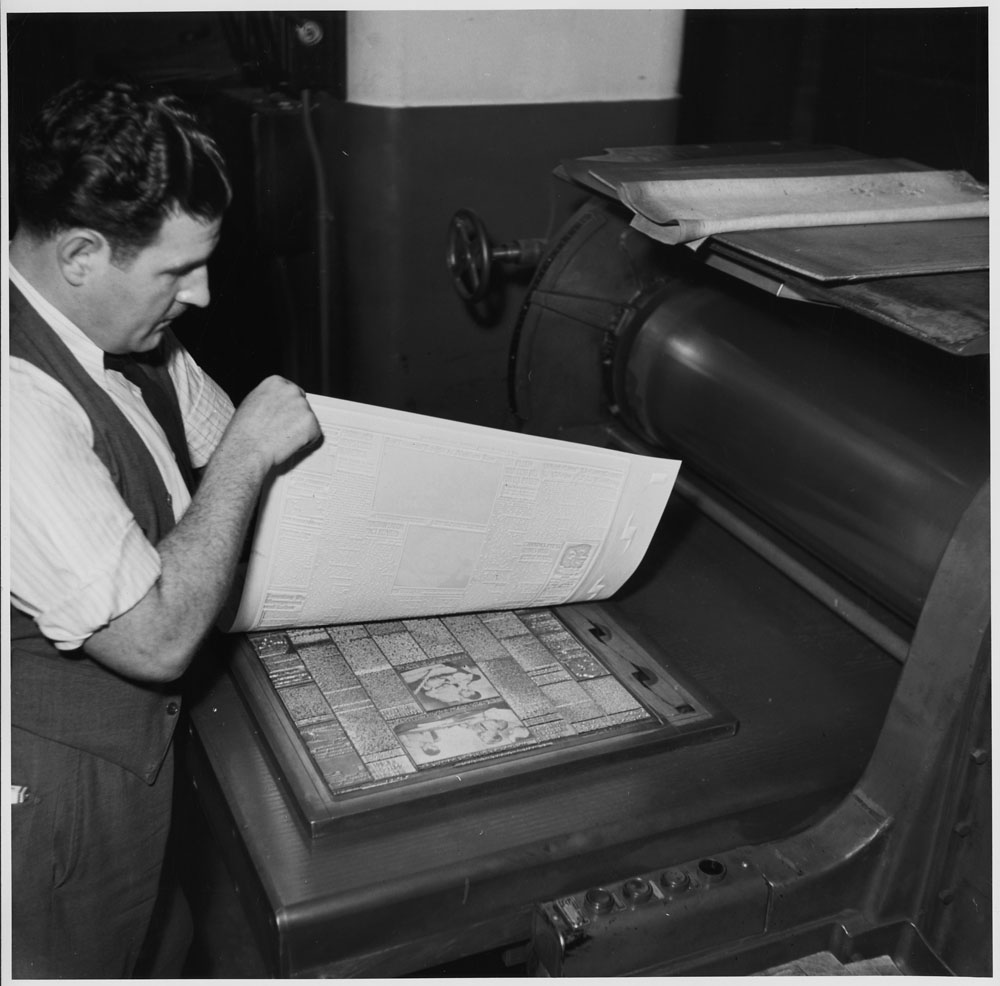
Following the deaths of William Henry Wright in 1951 and George McCullagh in 1952, the Globe and Mail was purchased by R. Howard Webster in 1955. He would remain the paper’s chairman when it became the flagship of the FP Publications newspaper chain in 1965, where it maintained its editorial independence.
In 1962, the Report on Business section launched, initially appearing twice a week before expanding into a daily feature of the paper. It grew out of editor-in-chief Oakley Dalgleish’s belief there was room in Canada for a business publication based on the principles of daily journalism. Once a month, Report on Business magazine is published as an insert with the paper.
In 1980, a brief bidding war emerged for the paper involving Webster and a group headed by Conrad Black. A last-minute bid by Ken Thomson led to the paper being sold to Thomson Corp.
During the 1980s, it began being printed in separate editions across the country, reinforcing its billing as “Canada’s National Newspaper.” The paper’s website globeandmail.com launched in 2000.
The Globe and Mail has become a journal of record as well as of the business, political and cultural communities, and has been viewed as a "writer's newspaper" on the strength of its columnists and contributors.
Key editors-in-chief have included Oakley Dalgleish, James L. Cooper, Howard Webster, William Thorsell, Edward Greenspon, John Stackhouse and David Walmsley.
21st Century
In 2001, a decision by the Competition Bureau cleared the way for Bell Canada Enterprises Inc. to take a majority ownership position in the Globe, making it part of its Bell Globemedia division, which also includes the CTV network and various internet ventures (see Media Convergence). In 2005, Bell Canada Enterprises Inc. reduced its stake in Bell Globemedia to 20 percent. As of 2026, it is primarily owned by the Thomson family through its Woodbridge investment arm.
The print edition of the paper began printing in full colour in October 2010.
Though still billing itself as “Canada’s National Newspaper,” distribution of the print edition was gradually phased out in the Maritimes (Newfoundland in 2013, New Brunswick, Nova Scotia and Prince Edward Island in 2017). It maintains foreign bureaus in London, Rome, Johannesburg, Hong Kong and Washington.