Share on Facebook
 Share on X
 Share by Email
 Share on Google Classroom
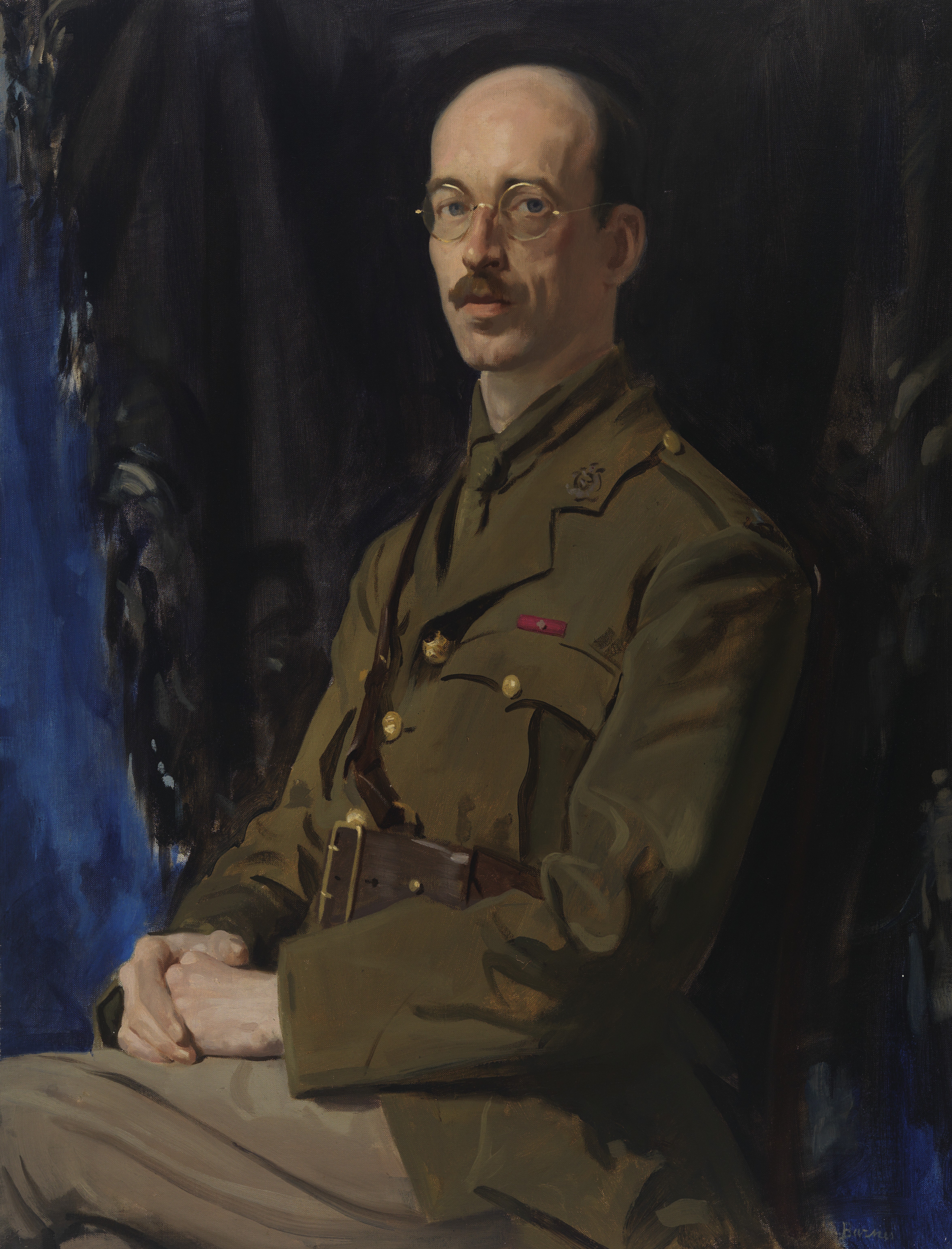
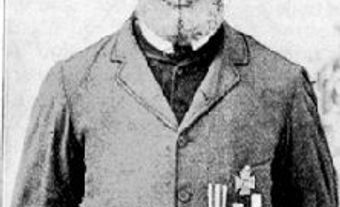
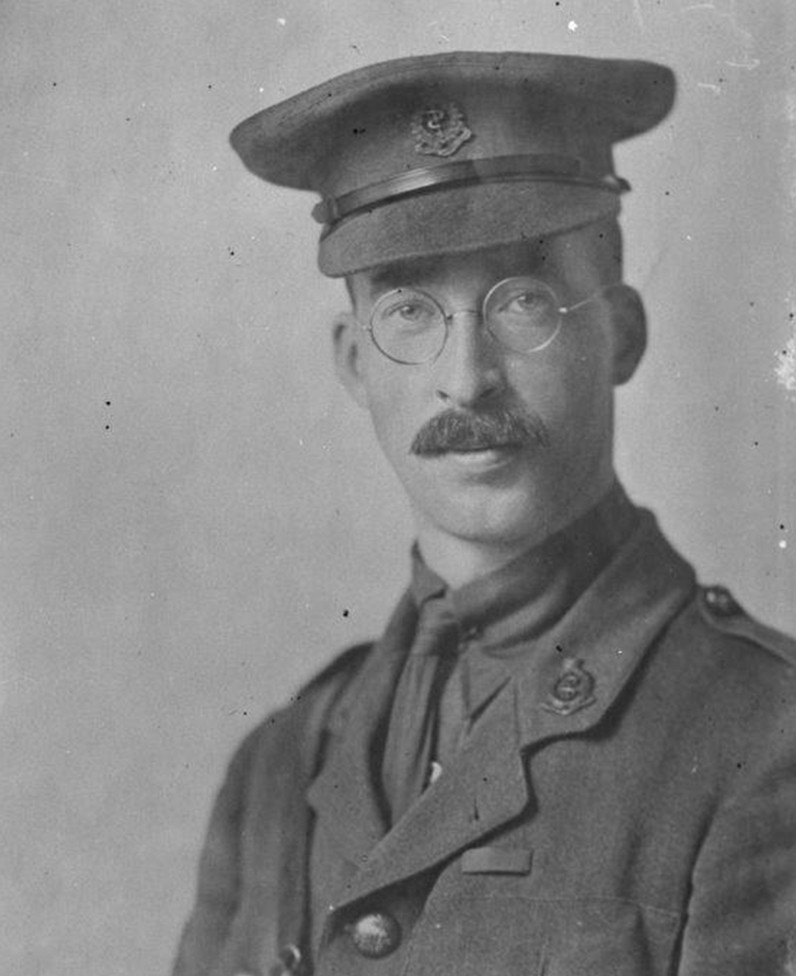
Francis (“Frank”) Alexander Caron Scrimger, VC, surgeon, author, professor, army officer (born 8 February 1880 in Montreal, QC; died 13 February 1937 in Montreal). After graduating as a physician in 1905, Scrimger worked in a Montreal hospital. He went overseas in 1914 and was present during the German gas attack at the Second Battle of Ypres in April 1915. Scrimger supervised the evacuation of the wounded under fire, for which he was awarded the Victoria Cross (VC). He returned to Canada after the war and continued his medical practice, becoming a respected surgeon and researcher.
Early Life and Education
Francis Scrimger was the second of five children of the Reverend John and Charlotte Catherine (née Gairdner) Scrimger. His father had been a Presbyterian church pastor and college lecturer until 1904, when he became Principal of Montreal’s Presbyterian College.
Scrimger was educated at the Montreal High School and received a Bachelor of Arts with first-class honours from Montreal’s McGill University in 1901. An experience during summer employment in Manitoba convinced him to study medicine instead of law, which was his father’s choice.
Surgeon
In 1905, Francis Scrimger graduated from McGill as a physician. He spent the next four years at Montreal’s Royal Victoria Hospital (RVH), where he specialized in surgery. Scrimger also completed a year of postgraduate studies in Europe.
When he returned to Montreal in 1910, Scrimger continued his surgical work at both McGill and the RVH. He established a private practice and published the first of his many academic papers.
In 1912, Scrimger joined the Canadian Army Medical Corps as a lieutenant. Two years later, he was promoted to captain and appointed medical officer (MO) of the Montreal Heavy Brigade, Canadian Garrison Artillery. In August 1914, Scrimger joined the Canadian Expeditionary Force as a captain. He was appointed MO of the 14th (Royal Montreal Regiment) Battalion in September.
First World War
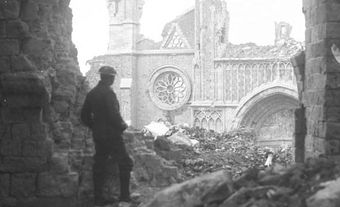
In October, Francis Scrimger arrived in Britain with the First Canadian Contingent. During a particularly harsh winter on Salisbury Plain, he was hospitalized in No. 1 General Hospital in January 1915. Scrimger deployed to France in April and was sent to Belgium’s Ypres Salient, in charge of the advanced dressing station (ADS) of 2nd Field Ambulance. The ADS was in a farm complex, some three km north of Ypres.
Gas Attack
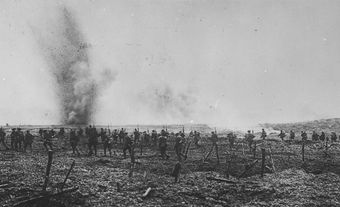
On 22 April, the Germans used chlorine gas against the Allied lines in the Salient. French colonial troops broke in terror, streaming past Francis Scrimger’s location. Shortly afterwards, Scrimger and bacteriologist Lieutenant-Colonel George Nasmith noticed a yellowish-green cloud drifting towards them, which they believed was chlorine (Nasmith obtained a sample for testing, becoming the first to correctly identify the gas).
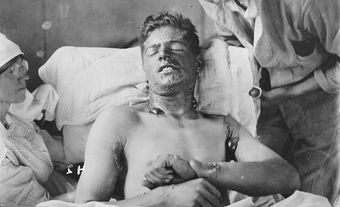
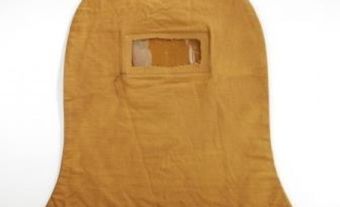
Scrimger immediately ordered soldiers to “urinate on your pocket handkerchief [and] tie it over your mouth,” as a makeshift gas mask. His distasteful directive was quickly passed along the line verbally. It helped, as ammonia in the urine neutralized the chlorine gas. (See also Canada and the Second Battle of Ypres, Canada and Gas Warfare and Hypo Helmet.)
VC Action
Francis Scrimger’s dressing station was co-located with 3rd Brigade Headquarters and a small arms ammunition dump. On 25 April, when German shells began to fall on the complex, the headquarters staff quickly abandoned it.
Scrimger remained behind to supervise the evacuation of the wounded. One of the most severely injured was Captain Harold McDonald, whose head and upper body were filled with artillery splinters. This officer could not swim across the moat around the farm or walk along the only road out of the complex because it was constantly under fire.
Scrimger half-dragged, half-carried McDonald out of a blazing stable and down the road. When enemy artillery fire made it too dangerous to proceed, he protected his patient with his own body. For his heroism, Scrimger received the VC from King George V on 21 July 1915 at Buckingham Palace.
General Hospitals
In September 1915, Francis Scrimger was admitted to hospital for treatment of boils but returned to his battalion in October. On 31 December 1915, he was posted to No. 1 Canadian General Hospital in Étaples, France. During surgery on 29 January 1916, his left middle finger was accidentally cut; it subsequently became infected and Scrimger was evacuated to Britain for treatment in March. Before antibiotics, wounds like this could often be fatal. Scrimger recovered, but his finger had to be amputated in May.
Scrimger returned to duty in July, when he began work in a Canadian hospital in Britain. Scrimger was appointed temporary major in December and returned to France in March 1917. He was assigned to No. 3 Canadian Casualty Clearing Station (CCS) at Remy Siding in Belgium, where he met Nursing Sister Ellen Carpenter.
German Spring Offensives
In March 1918, during the German Spring Offensives, Francis Scrimger led a team, which included Ellen Carpenter, to reinforce a British CCS at Roye, near Amiens. When the British received an order to evacuate, Scrimger’s team and another MO remained behind to care for about 50 wounded soldiers.
The team got their patients to some retreating artillery troops, who carried the wounded to safety. Scrimger and his team returned to the CCS and recovered some of their equipment, which they carried away on wheeled stretchers for more than 30 km.
Scrimger and Carpenter were married on 5 September 1918, while on leave in London. They later had one son and three daughters. In October, Scrimger was appointed acting lieutenant-colonel, and took command of No. 3 Canadian General Hospital in Boulogne-sur-Mer.
Postwar Career
Francis Scrimger returned to Montreal in spring 1919 and continued to work at RVH and in private practice. In 1921, he became staff lecturer in clinical surgery at McGill. Over the next few years, Scrimger moved through a series of ever more responsible medical appointments and published widely, but his demanding schedule took a toll on his health. He recovered from a heart attack in 1934 but suffered a fatal one in 1937.
Memory
In February 1918, Mount Scrimger, a 2,765m peak in the Rocky Mountains on the British Columbia- Alberta border, was named in his honour. His grandson donated Scrimger’s VC and other medals to the Canadian War Museum in October 2005.