Share on Facebook
 Share on X
 Share by Email
 Share on Google Classroom
A duel is a formal armed combat between two people in the presence of witnesses, to settle differences or a point of honour. Duels were recorded in New France as early as 1646. The last known duel in what is now Canada occurred in 1873 in St. John’s, Newfoundland. People fought duels in a variety of places: in locked rooms, in open fields or across tables. Most incidents ended without injury, but there were some fatal encounters. At least nine people died in New France, two in Lower Canada, five in Upper Canada, two in Nova Scotia, two in New Brunswick and one in Newfoundland. Authorities considered duelling a crime, and to kill in a duel was tantamount to murder (see also Homicide). However, the laws were irregularly enforced.
Historical Background
Duelling originated in Italy during the Renaissance. Some sources trace its origins to judicial duels, a form of medieval trial by combat. People duelled throughout Europe and its colonies, despite many official attempts to discourage it. Duels were heavily tied to the concept of honour, and often fought to defend one’s honour or the honour of a woman.
An unofficial code regulated duels and laid out how they should be conducted. Several of these codes evolved over time and across different regions. By the British period, the 1777 code duello was adopted in Clonmel, Ireland. The code became the standard for how people conducted duels in Canada.
Duelling was primarily practiced by the aristocracy, as well as the upper middle class, military officers and soldiers. Class played an important part in duelling, as only someone considered a gentleman could be challenged to a duel. While there were instances of women duelling in Europe, it was traditionally a masculine pursuit. There have been no recorded duels between women on Canadian soil.
Motivations for Duelling
Causes of duels varied and were often trivial. In one unusual case around 1797, two British lieutenants allegedly fought over whose regimental mess served the best spruce beer. In 1800 at York (now Toronto), Major John Small shot and killed John White, Attorney General of Upper Canada, after the latter spread gossip that Small’s wife was the former mistress of an English lord. A quarrel over card game winnings led to a fatal duel in St. John’s, Newfoundland, in March 1826. Sharp political disputes in Lower Canada resulted in a spate of challenges and meetings between 1834-37. In 1838, John Prince, a magistrate and militia officer, ordered the execution of five Patriote prisoners after a raid known as the Battle of Windsor. When an anonymous group criticized his actions in a letter to the newspaper, Prince tracked down one of the authors and challenged him to a duel. (See also Rebellions of 1837–38).
Duelling in New France
Duels in the French regime were fought exclusively with swords. Most duels occurred between military officers or soldiers. Duelling had been prevalent in France, and duellists were often pardoned until the time of Louis XIV, who enacted no fewer than ten edicts against duels. The practice nevertheless remained common, and enforcement of these edicts was inconsistent. People fought duels spontaneously, and it is sometimes difficult to distinguish between a duel and a brawl in the historical record.
The punishment for duelling was meted out on both the survivors and the dead. Duellists were hanged, their bodies desecrated and their property forfeit. (See also Capital Punishment in Canada.) In one case, since a man who had lost a duel had already been buried, an effigy of his corpse was dragged through the streets. His opponent had fled the colony, so authorities hanged an effigy of him as well.
While the punishment for duelling was severe, it was not administered equally, with well-connected duellists often escaping consequences. Some duellists were quietly moved to other colonies or military regiments, some fled to escape prosecution, and some were pardoned. During the Seven Years’ War, the Marquis de Montcalm tolerated and even encouraged duelling among his officers. In 1759, when one officer petitioned him to resolve an interpersonal issue, he was reportedly shocked that the officer hadn’t challenged the other man to a duel rather than coming to him.
Duelling During the British Period
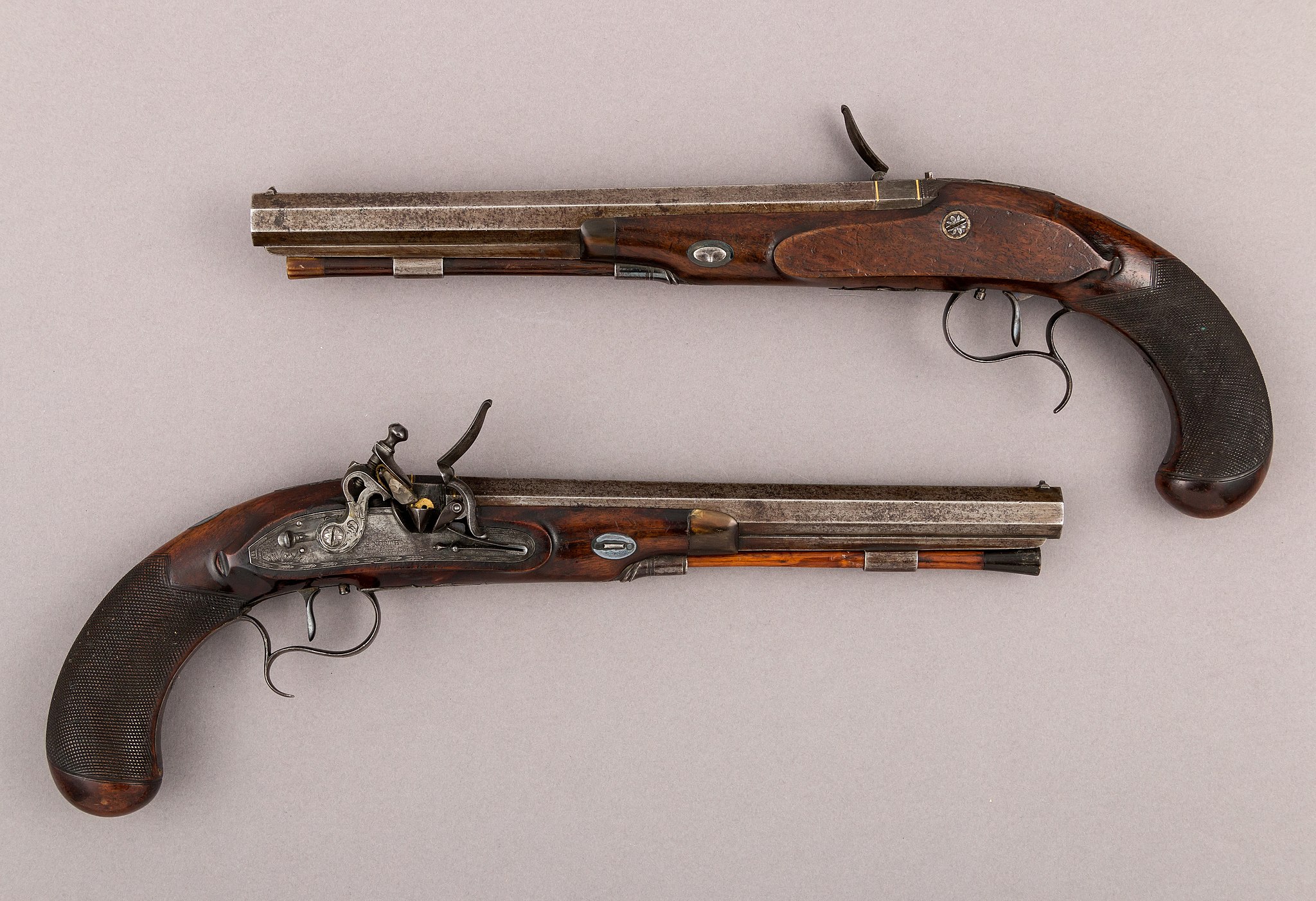
After the Conquest of New France, in the early 1760s, almost all duels were fought with pistols, likely because upper-class men gradually abandoned carrying swords. Duelling became practiced in non-military professions, including among doctors and members of parliament. Ironically, it was especially common among lawyers. While specially made duelling pistols were available, most duels were likely fought with whatever weapons were on hand.
The offended party would send a letter, known as a cartel, to the offending party to demand satisfaction (a term for challenging someone to a duel). If the offending party did not apologize, a duel would be arranged. Each duellist would name a friend or colleague as his second, who would often conduct messages on his behalf. Seconds would attempt to negotiate a nonviolent resolution to the conflict. Failing that, they would arrange the details of the duel, secure the pistols, check that they were in working order, and load them. Duels were often also attended by a doctor.
Several famous Canadians fought duels: James Douglas duelled at Île-à-la-Crosse, Saskatchewan in 1821 during a fur trade dispute; Joseph Howe fought in 1840 to prove his courage and gain the opportunity to decline further challenges; George-Étienne Cartier duelled in 1848 to refute accusations of cowardice 11 years earlier at the Battle of St-Denis; and in 1849 John A. Macdonald had to be prevented from fighting a political opponent.
Between 1761 and 1888, only one person was ever convicted and punished for duelling. Duelling was widespread in the legal profession, and judges’ or prosecutors’ remarks to juries were often tinged with bias against conviction, emphasizing prior acquittals. Juries regularly refused to convict duellists if they felt that the encounters had somehow been conducted fairly and honourably. Authorities did sometimes intervene to prevent duels from occurring, imposing fines or bonds and demanding the parties keep the peace. Duellists occasionally evaded authorities by choosing a location over the border, in the United States, for their battles.
The End of Duelling
An 1833 duel between John Wilson and Robert Lyon of Perth, Upper Canada was once cited as “The Last Fatal Duel” in Canada, including in a Stompin’ Tom Connors song by that name. Wilson shot and killed Lyon, who had called him a liar and assaulted him. Wilson and his second were charged with murder, but were acquitted. However, a later fatal duel took place in 1838, in Verdun, Lower Canada (now Quebec), when lawyer Robert Sweeney shot and killed Major Henry Warde, who had by some accounts sent a love letter to Sweeney’s wife.
Duelling slowly fell out of favour in Canada and Britain during the 19th century, though in Europe duels were occasionally fought well into the 20th century. In 1844, Queen Victoria quelled the practice among military officers by changing the Articles of War so that that any soldier caught duelling would be court-martialled and dismissed. Over the years, duelling came to be seen as a farce. In the latter half of the 19th century, duels were relatively bloodless. There were instances of men firing into the air, seconds mysteriously being unable to find working pistols, or challenges that simply went unmet. In an 1873 confrontation in Newfoundland, the seconds loaded the pistols with blanks. This was the last known duel in what is now Canada.
The last challenge reported in Canada occurred in 1948. The Consul General of the Dominican Republic demanded satisfaction from the Argentine Ambassador after the Ambassador’s wife allegedly made disparaging racial comments about his country, but the proposed duel never took place. In 2018, the Criminal Code of Canada was reformed to remove duelling as a specific offence. Existing laws on injury or murder would still apply to anyone who tried to revive this archaic practice.