Share on Facebook
 Share on X
 Share by Email
 Share on Google Classroom
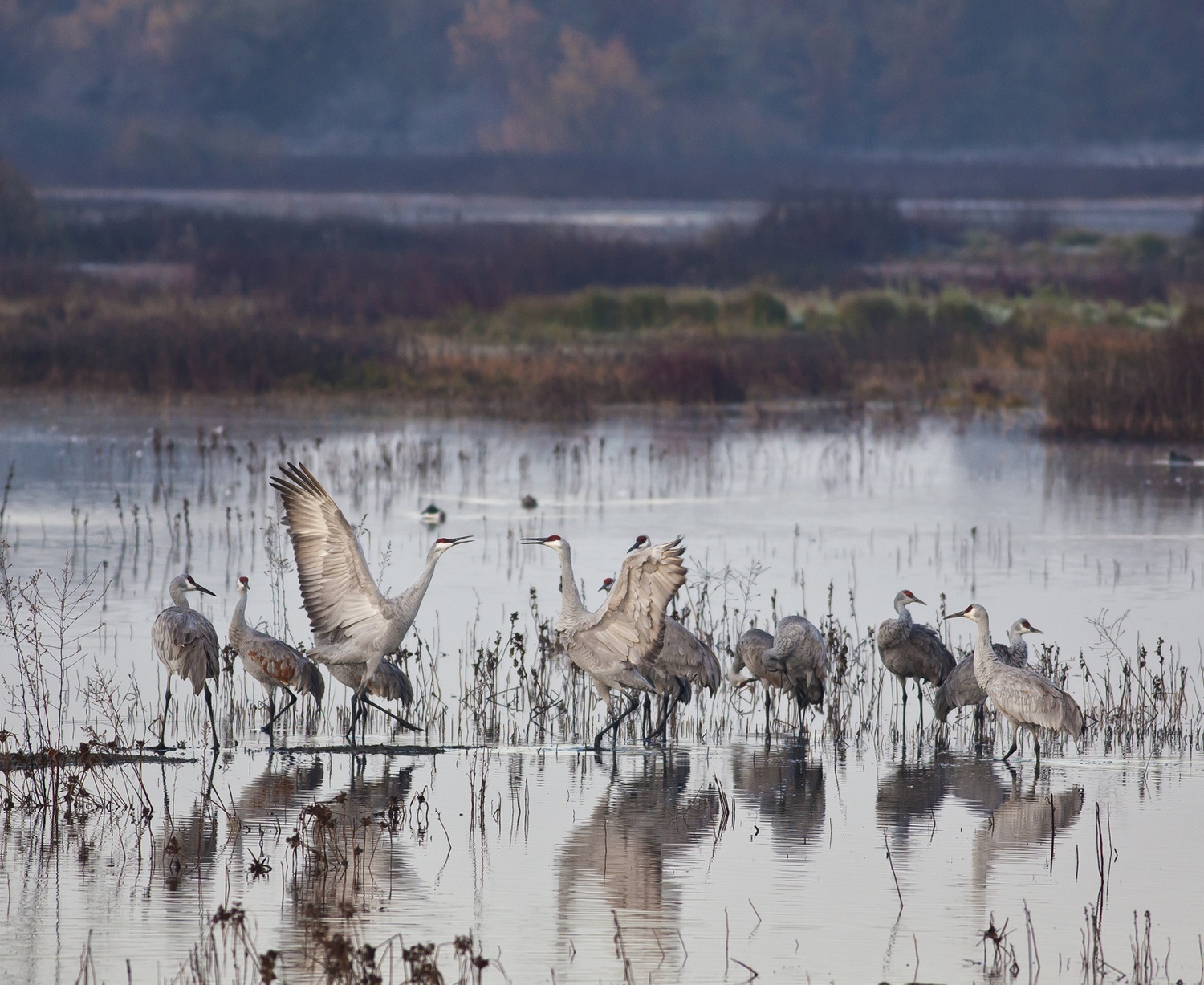
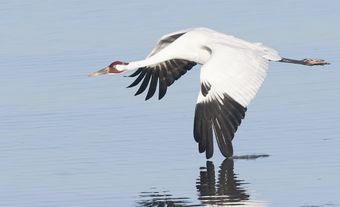
The crane (Gruidae) is a family of large, long-necked birds with sturdy bills and long, powerful legs. Of the 15 species found worldwide, at least 5 have become rare, partly due to the loss of nesting habitat. Cranes nest in marshes, bogs, sedge meadows and upland tundra. In Canada, two species occur: the sandhill crane (Grus canadensis) is common, although one subspecies, the greater sandhill crane, is considered threatened in BC; the whooping crane (G. americana) is endangered. The sandhill crane nests as far north as Banks and Devon islands.


Reproduction
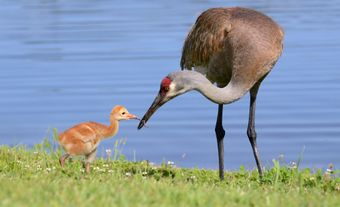
Nests are large mounds of dry plant material. Usually, two brown or buff eggs with dark brown or purplish spots and blotches are laid, and they hatch after about 30 days. Parents share incubation. Cranes may live for up to 20 years.
Migration
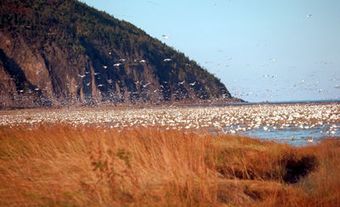
During migration, sandhill cranes favour uplands and agricultural areas and may be seen in spectacular concentrations in south-central Saskatchewan, where they feed in grainfields. Large numbers winter in the southern US and Mexico. Limited hunting is allowed in parts of Saskatchewan and in several US states.