Share on Facebook
 Share on X
 Share by Email
 Share on Google Classroom
The Commission of Conservation was founded in 1909 and dissolved in 1921. The Commission of Conservation was established to provide Canadian governments with the most up-to-date scientific advice on the conservation of human and natural resources.
Background
The Commission of Conservation was established 1909. The wastefulness of the common methods of resource exploitation was widely admitted, and the conservation movement was beginning to offer alternative approaches, particularly in the United States where the first national commission was struck in 1908. Canada was urged to follow suit, as a step towards a continental conservation policy.
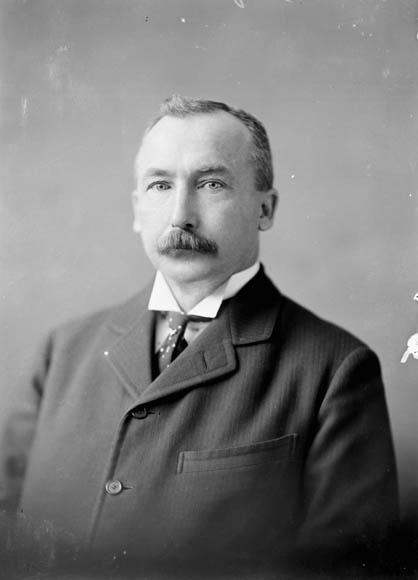
This plea won the support of two leading Canadian conservationists, Clifford Sifton and Prime Minister Wilfrid Laurier, by whose government the Canadian commission was created.
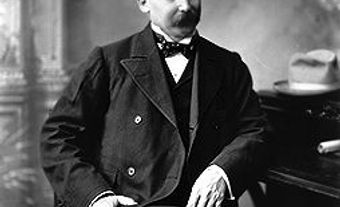
Clifford Sifton served as the commission's chairman until 1918 and was always its guiding spirit. To Sifton, conservation meant that resources should be used in ways that would generate the greatest benefit for all Canadians. The public interest demanded wise management, but wise management in turn demanded the best understanding of the resource base (see Resource Management). The commission was expected to provide this knowledge.
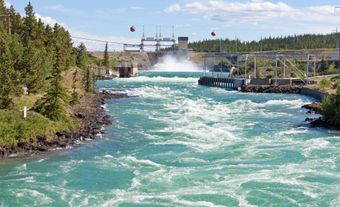
The members of the commission included three federal Cabinet ministers, the nine provincial ministers with responsibility for natural resources, and twenty members at large, including a professor from every province with a university. The commission was further organized into working committees which directed a diverse array of research in seven topical fields: agricultural land, water and water power, fisheries, game and fur-bearing animals, forests, minerals, and public health. (See also Agriculture in Canada.)
Legacy
The results were published in some 200 books, reports and scientific papers that constituted the first large-scale survey of Canadian resources and resource problems. (See also Water-Powers of Canada, 1911.) Achievements in public policy were not as great. Governments were slow to accept the commission's advice, and, as other agencies of the federal government became more active in resource management, the Commission of Conservation came to seem redundant. It was dissolved in 1921.