Share on Facebook
 Share on X
 Share by Email
 Share on Google Classroom
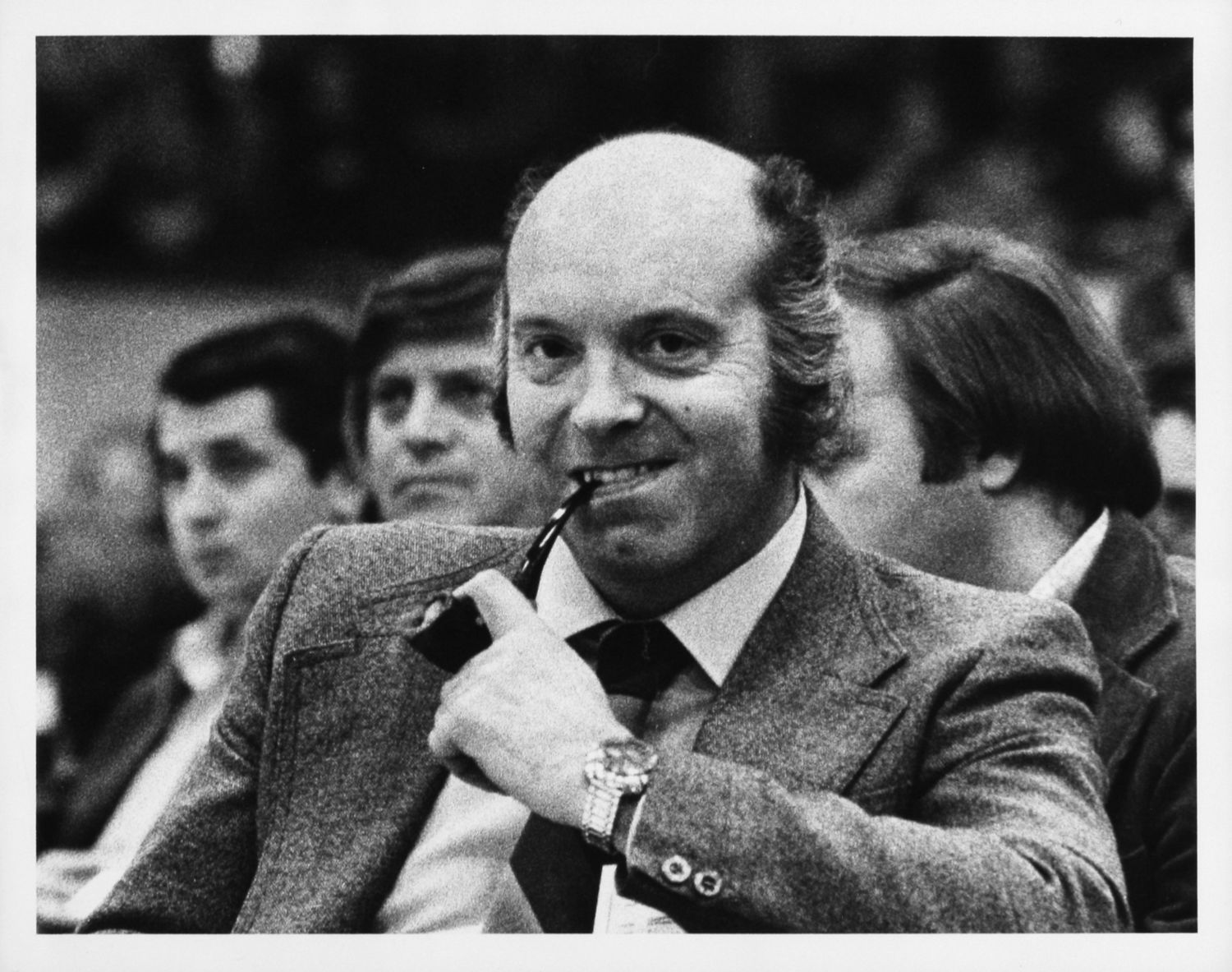
Claude Morin, professor, government official, politician (born 16 May 1929 in Montmorency, QC; died 5 May 2026 in Quebec City). Claude Morin was one of the most influential advisers in Jean Lesage’s administration and one of the primary thinkers behind the Quiet Revolution. He was also the principal strategist of the 1980 referendum on sovereignty-association held by René Lévesque’s provincial government.
Architect of the Quiet Revolution
Claude Morin held a master’s degree in Economics from Université Laval (1954) and a master’s degree in Social Welfare from Columbia University in New York (1956). A Université Laval professor between 1956 and 1963 at the Social Science Faculty, where he taught Economics, he became one of the most influential advisers in Jean Lesage’s administration after 1960. Considered one of the primary thinkers behind the Quiet Revolution, he held the positions of economic adviser (1960–63), deputy minister of federal-provincial affairs (1963–67) and deputy minister of intergovernmental affairs (1967–71).
Disappointed by the Robert Bourassa’s government, he resigned in 1971 and became a professor at the École nationale d’administration publique (ENAP), Université du Québec. In 1972, he joined the Parti Québécois. He was defeated in the riding of Louis-Hébert in 1973 but elected in 1976.
Minister in the René Lévesque Government
As minister of intergovernmental affairs for the René Lévesque government (November 1976 to January 1982), Claude Morin was a principal architect of the electoral strategy that brought the party to power, as well as its strategy for the referendum on sovereignty-association (1980) and its constitutional negotiations with the federal government (1976–81). He formulated the “étapisme” ideology, which holds that Quebec sovereignty must be subject to a popular vote (referendum) and not simply carried out following the election of a separatist party.
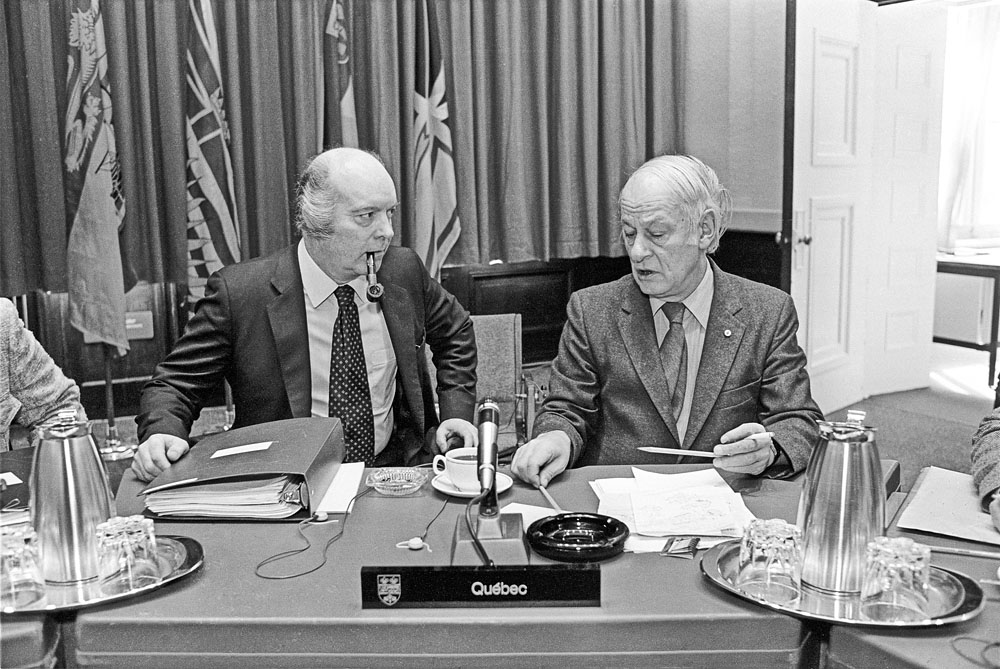
He resigned in January 1982 over a difference of opinion with René Lévesque concerning the direction the PQ was taking on sovereignty-association, returning to his academic career at ENAP. In 1991, he published his political memoirs, Mes Premiers ministres. This title refers to the different premiers he worked with during his career: Jean Lesage, Daniel Johnson Sr, Jean-Jacques Bertrand, Robert Bourassa and René Lévesque.
Controversy
In 1992, revelations that for several years during the 1970s Claude Morin had been a paid informant of the Royal Canadian Mounted Police (RCMP) under the code name “French Minuet” proved damaging to his reputation. Morin could not deny spying for the RCMP but claimed that he did so only to discover what the RCMP was investigating and that he only turned over useless information.
He published a political autobiography, Les choses comme elles étaient, in 1994 and retired from the ENAP in 1996. Since then, he has published many essays on Quebec and Canadian politics. His papers are available at the Centre d’archives de Québec of the Bibliothèque et Archives nationales du Québec.
Publications
- Le pouvoir québécois… en négociation (Boréal, 1972)
- Le combat québécois (Boréal, 1973)
- Quebec Versus Ottawa: The Struggle for Self-Government, 1960-72 (University of Toronto Press, 1976)
- L’art de l’impossible: la diplomatie québécoise depuis 1960 (Boréal, 1987)
- Lendemains piégés: du référendum à la nuit des longs couteaux (Boréal, 1988)
- Mes Premiers ministres (Boréal, 1991)
- Les choses comme elles étaient: autobiographie politique (Boréal, 1994)
- La dérive d’Ottawa: catalogue commenté des stratégies, tactiques et manœuvres fédérales (Boréal, 1998)
- Les prophètes désarmés? Que faire si un référendum gagnant sur la souveraineté n’était pas possible? (Boréal, 2001)
- L’Affaire Morin: légendes, sottises et calomnies (Boréal, 2006)
- Je le dis comme je le pense (Boréal, 2014)