Share on Facebook
 Share on X
 Share by Email
 Share on Google Classroom
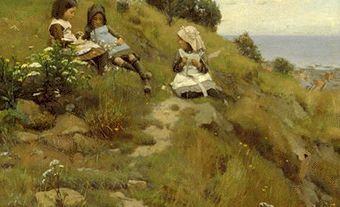
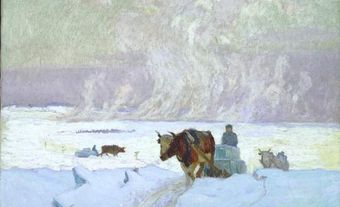
Clarence Gagnon, engraver, painter (born 8 November 1881 in Montreal, QC; died 5 January 1942 in Montreal). Clarence Gagnon is best known for his landscape paintings of rural Quebec.
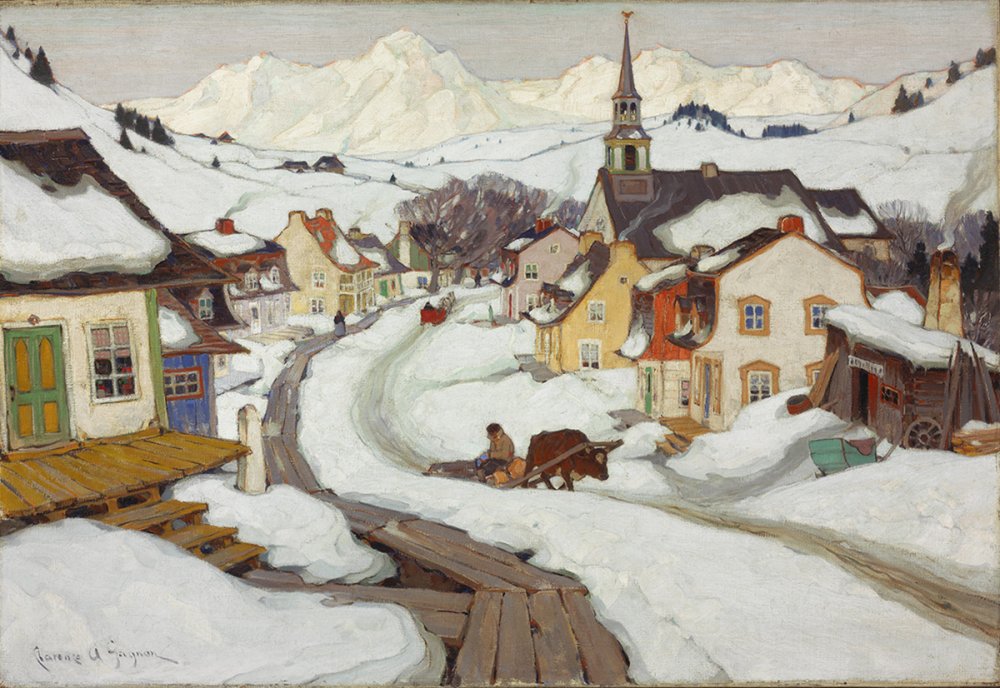
After studying at the École normale du Plateau in Montreal, Clarence Gagnon received his artistic training from the painter William Brymner at the Art Association of Montreal 1897–1900. The generosity of art patron James Morgan allowed him to go to Paris and study in the studio of painter Jean-Paul Laurens.
Gagnon distinguished himself early in his career by the quality of his engravings. He won a gold medal at the St Louis Exhibition in 1904 and an honourable mention the following year at the Salon des artistes français in Paris.
Returning to Canada in 1909, he divided his time between Montreal and Baie-St-Paul. He became a member of the Royal Society of Canada and later he was elected associate of the Royal Canadian Academy of Arts. In 1923, he received the Trevor Prize of the Salmagundi Club of New York. He illustrated Le Grand Silence blanc (1929) and the deluxe edition of Louis Hémon's Maria Chapdelaine (1933). Upon his return from a second stay in France from 1922–36, the Université de Montréal awarded him an honorary doctorate.
Shortly after his death in 1942, the Musée du Québec, the Montreal Museum of Fine Arts, the Art Gallery of Toronto and the National Gallery of Canada organized a major retrospective of his work. In 1970, Hugues de Jouvancourt devoted a book to him, and in 1974, Canada Post featured his work on a stamp. In 1988, René Boissay published a remarkable book with Éditions Marcel Broquet and subsequently made an important film on the life and work of the artist. In 1992, the new Centre d'exposition de Baie Saint-Paul opened its doors with an imposing retrospective of his work.