Share on Facebook
 Share on X
 Share by Email
 Share on Google Classroom
The War in Afghanistan (2001–14) was Canada’s longest war. It was Canada’s first major combat mission since the Korean War. The war started after the 9/11 attacks. The goal was to fight al-Qaeda and the Taliban in Afghanistan. The Taliban lost power but continued to fight. More than 40,000 Canadian troops served in Afghanistan; 165 Canadians were killed. Many veterans suffered from post-traumatic stress disorder (PTSD).
This article is a plain-language summary of the War in Afghanistan. If you are interested in reading about this topic in more depth, please see our full-length entry, Canada and the War in Afghanistan.
Background: 9/11 Attacks
On 11 September 2001, al-Qaeda terrorists hijacked four airplanes and attacked targets in New York and Washington, DC. They killed almost 3,000 people, including 24 Canadians. The al-Qaeda network was based in Afghanistan. It was protected by the country’s Taliban government.
Invasion of Afghanistan
In October 2011, Canada joined an international mission led by the US. Its goal was to invade Afghanistan, capture al-Qaeda members and destroy their training camps. It would also remove the Taliban from power.
In late 2001, US-led forces invaded Afghanistan. A small group of Canadian special forces were involved. The coalition forces removed the Taliban government. Then they searched the country for Taliban and al-Qaeda fighters.
Canada’s Role
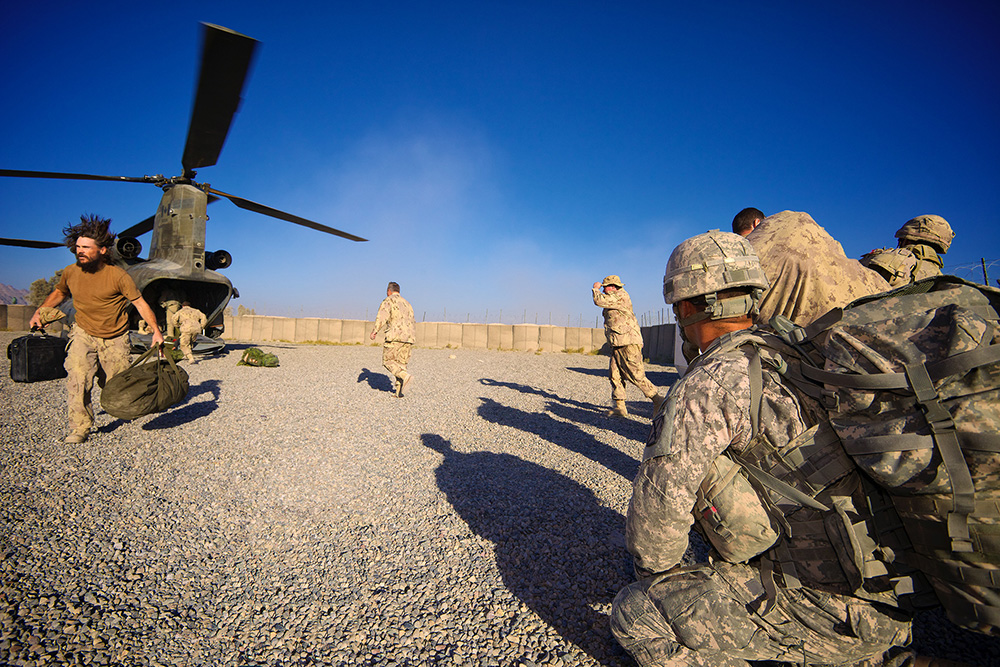
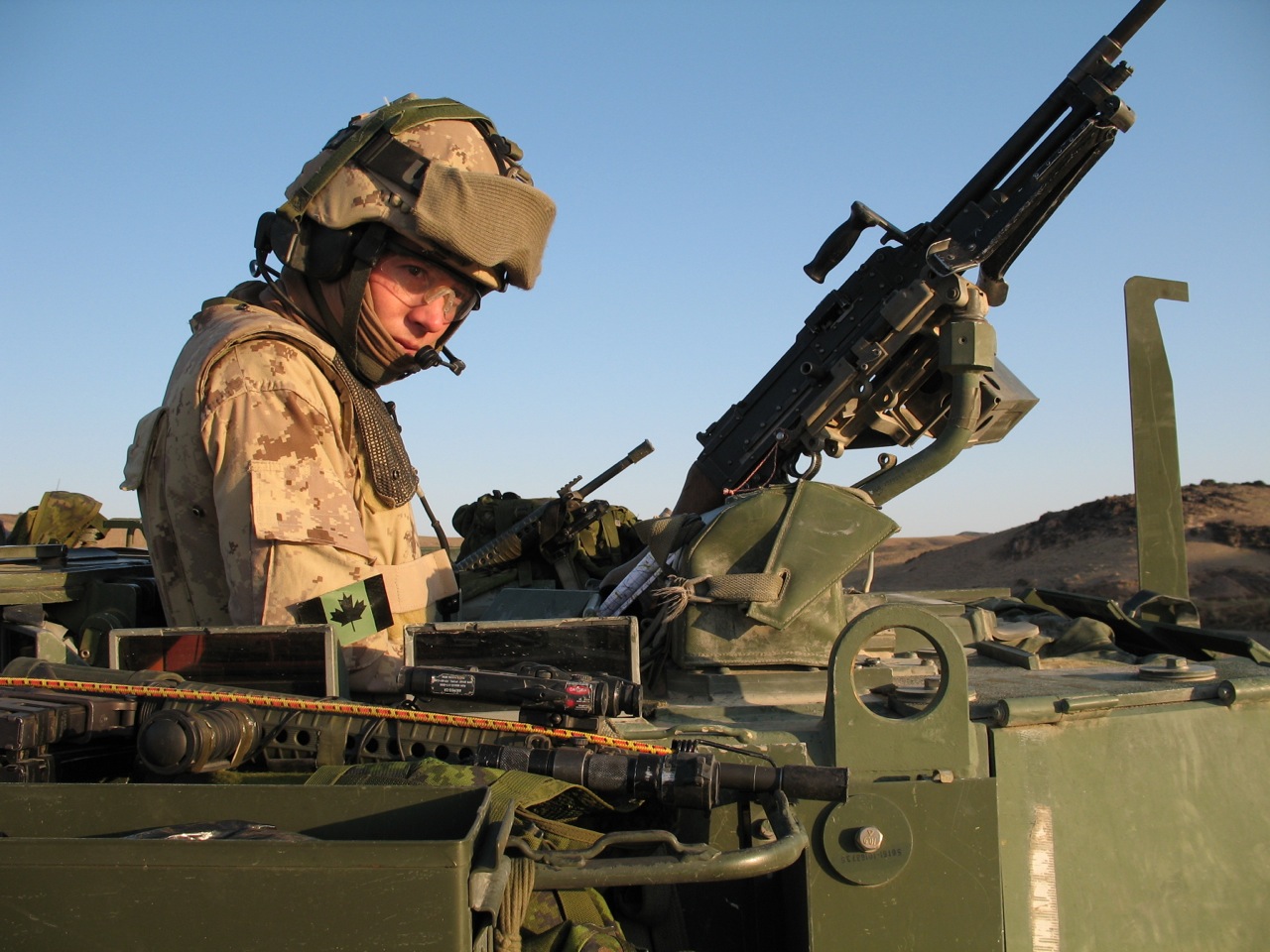
In February 2002, Canadian troops were sent to Kandahar. Their mission was to fight rebels and protect Afghanistan’s new government. From 2003 to 2005, the Canadian army group was based in Kabul, the capital city. Its job was to provide security for the new Afghan government. Canadian soldiers patrolled the area and disarmed rebels.
In 2006, Canadian troops moved to the city of Kandahar. They were responsible for security in Kandahar province until 2011. This was very dangerous because there were many Taliban rebels. Canadian forces won some battles, but the Taliban kept returning. By 2011, the rebels were stronger than before. One of the main problems was Pakistan, which supported the Taliban. Pakistan provided training and bases for the Taliban and al-Qaeda.
Reconstruction
Canada, the US and other countries also tried to rebuild Afghanistan. The country was very poor and lacked basic things like roads and electricity. Many people couldn’t read. Most children didn’t attend school. Warlords controlled large areas and many local officials were corrupt.
From 2001 to 2014, Canada spent $2.2 billion on aid in Afghanistan. The money paid for food, education and basic services. Canada ran health programs and helped rebuild schools, roads and dams. Canadians also ran the Provincial Reconstruction Team (PRT) in Kandahar. The PRT trained police and provided support for the local government.
Canada’s Mission Ends
In 2011, the US became responsible for security in Kandahar. Most Canadian troops and equipment were sent home. A few Canadians were stationed in Kabul, where they trained Afghan security forces. In March 2014, the Kabul mission ended.
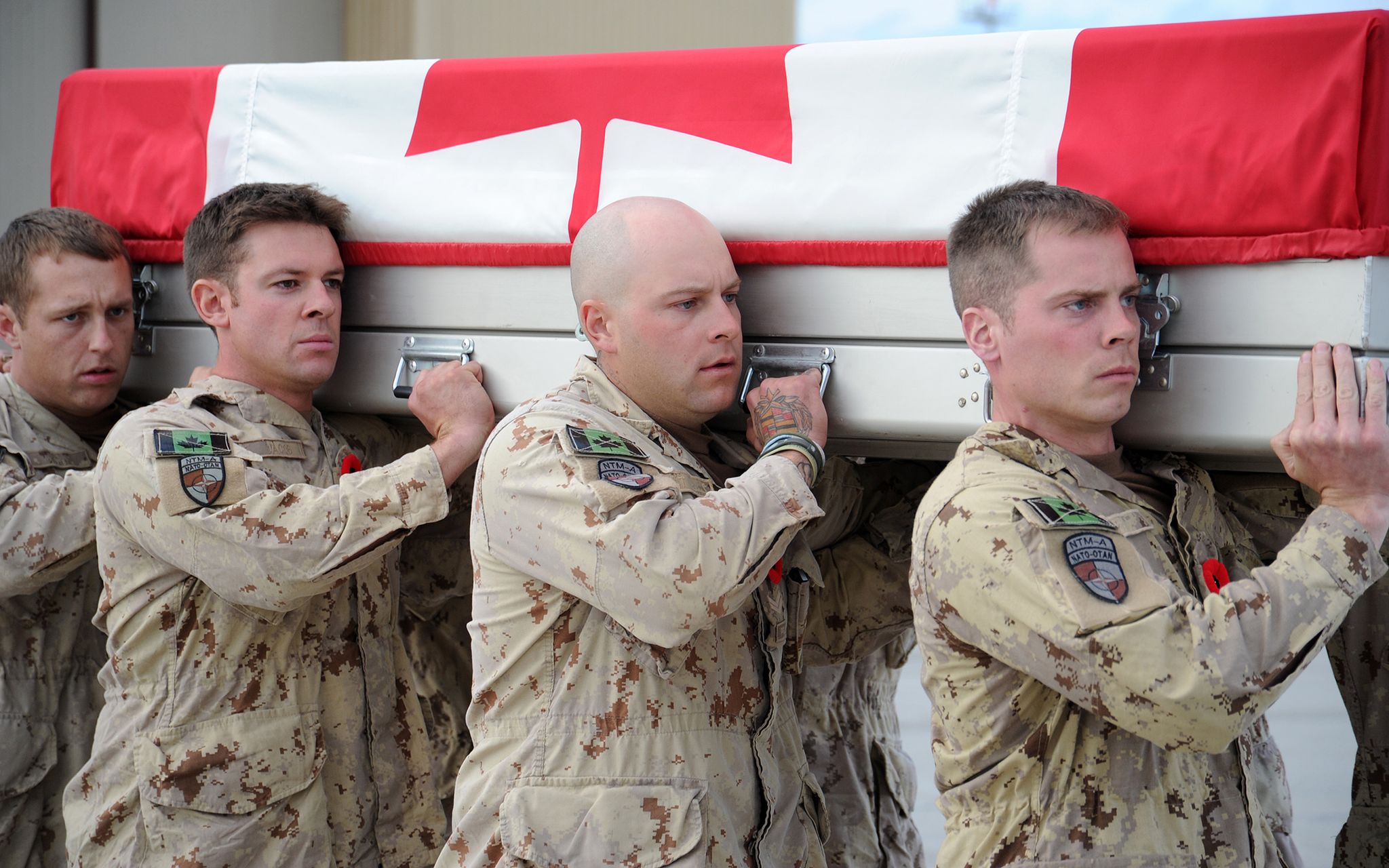
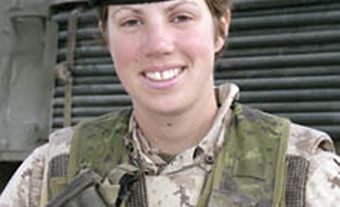
In total, 158 Canadian soldiers died during the war. Most of them were killed in Kandahar. One of them was Nichola Goddard, the first Canadian female soldier killed in combat. Seven Canadian civilians were also killed. More than 2,000 soldiers were wounded or injured. Many veterans had post-traumatic stress disorder.