Share on Facebook
 Share on X
 Share by Email
 Share on Google Classroom
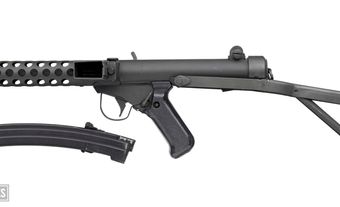
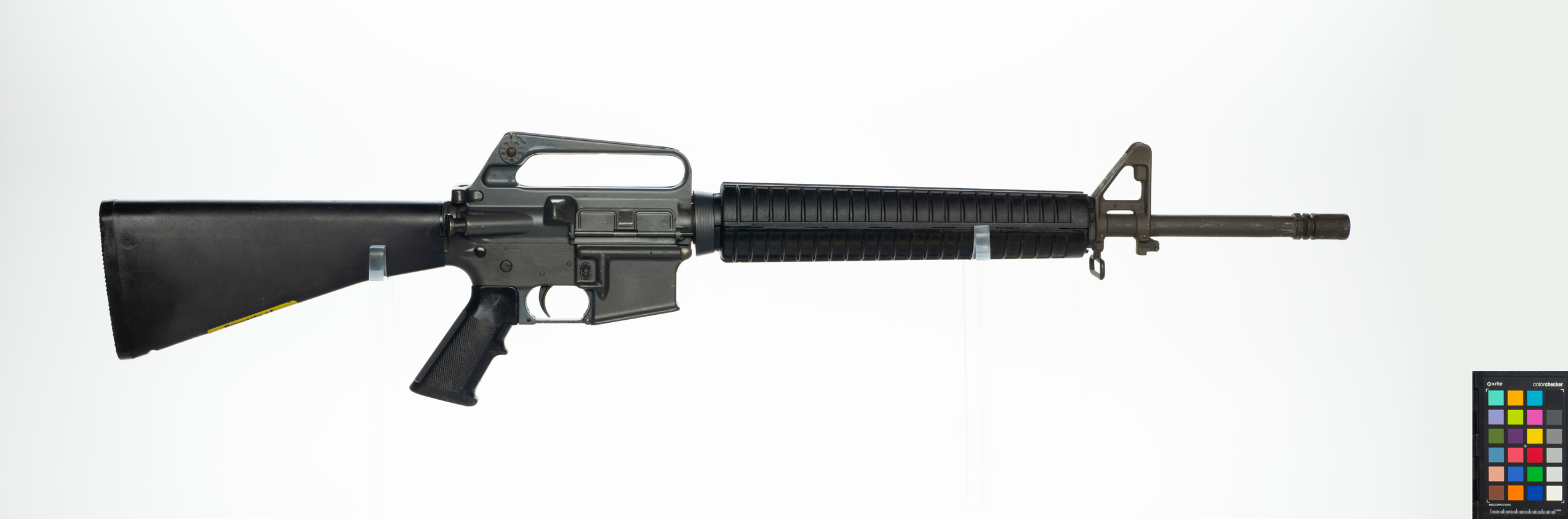
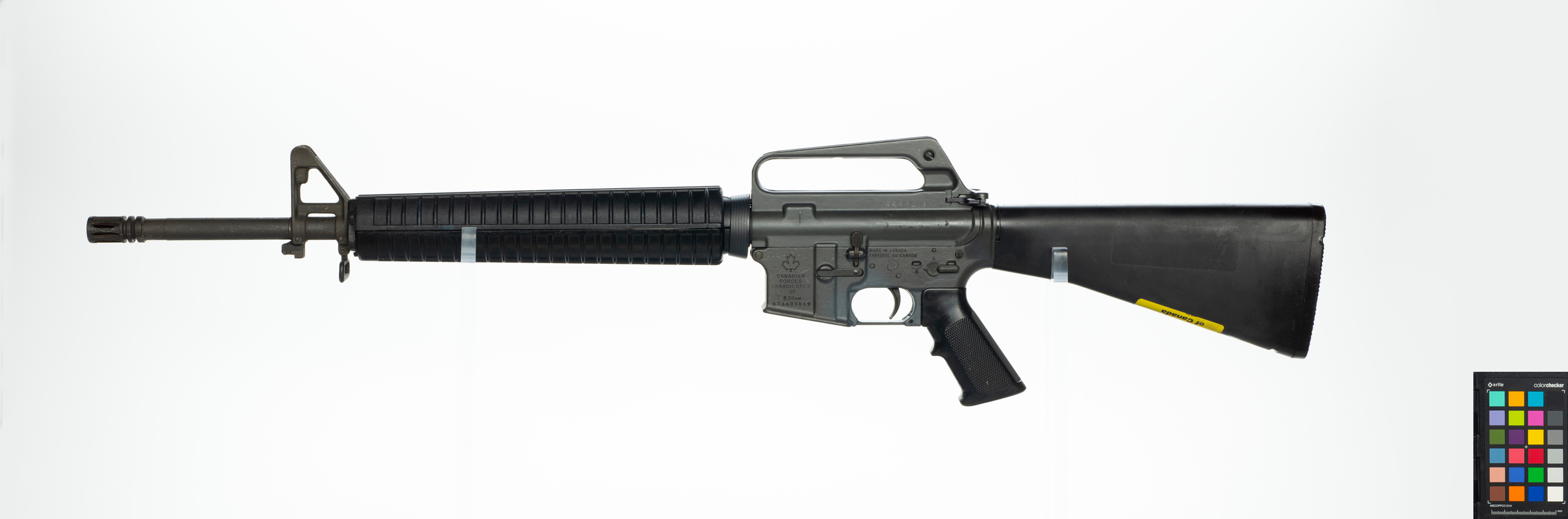
The C7 automatic rifle and C8 carbine automatic rifle are 5.56 mm-calibre assault rifles. In 1982, the Department of National Defence contracted Diemaco (later, Colt Canada) to produce the C7 and C8. Canada adopted these two rifles to replace the FN C1 rifle and C1 submachine gun. Canadian forces used the C7 and C8 for over 35 years. Many other countries have adopted the C7 or C8, including NATO allies such as the Netherlands, the United Kingdom, Denmark and Norway. Some Canadian police services have also adopted semi-automatic C8 carbines. In March 2026, Canada announced it would adopt the Canadian Modular Assault Rifle to replace older C7 and C8 rifles.
Historical Context and Adoption
In 1980, NATO adopted a new small arms cartridge: the 5.56x45 mm. Since the 1950s, most NATO service rifles and machine guns used the larger and more powerful 7.62x51 mm cartridge. (See: FN C1 Rifle; C6 General Purpose Machine Gun.) However, the concept of a smaller calibre like 5.56x45 mm was increasingly gaining traction. Compared to 7.62x51 mm, the smaller and less powerful 5.56x45 mm was easier to shoot, had less recoil and could be carried in greater quantities.


In the early 1980s, Canada began a program to update its small arms. This included the FN C1 rifle, which has been in service since the 1950s.
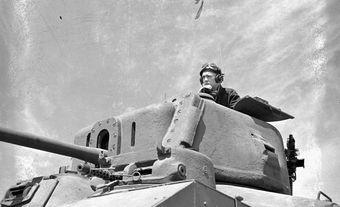
By June 1982, Canadian forces tested the Belgian FN FNC rifle against the American Colt AR-15 rifle in field trials. Infantry soldiers tried the rifle-length versions, whereas tank crewmen used the shorter carbine versions.
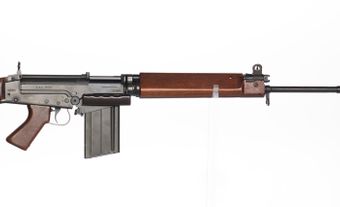
Results showed that both firearms outperformed the older FN C1 in terms of shooting performance, weight, ease of maintenance and reliability. However, the AR-15 was lighter, more reliable and easier to maintain than the FNC. Soldiers also found that the AR-15 snagged less on winter clothing. As a result, Canada adopted the Colt AR-15 in rifle form as the C7 and as a carbine as the C8. Meanwhile, the Belgian Minimi light machine gun, which easily outperformed the older C2, was adopted as the C9.
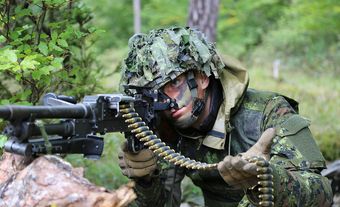
Canadian infantry sections equipped with the C7 and C9 would thus be fully standardized on the new 5.56x45 mm NATO cartridge.
In 1982, the Canadian government awarded the contract to Diemaco (later Colt Canada), a firearm manufacturer in Kitchener, Ontario. Diemaco produced the C7 and C8 under a license from Colt.
Mechanical Overview
The C7 and C8 are based on the American AR-15 rifle design. Both can fire semi-automatically or fully automatically. The fully automatic cyclic rate is 700-750 to 900-950 rounds per minute.
Did you know?
Unlike the related American M16A2, the C7 does not feature a three-round burst fire mode. Instead, a fully automatic fire mode was preferred.
The AR-15’s gas system cycles the firearm by funneling gas back from each shot. The gas flows back from near the end of the barrel through a tube to then cycle the bolt. This operation allows the rifle to eject the empty cartridge case and to feed a new one from the magazine.
The C7 and C8 use 30-round detachable magazines. They can also accept bayonets.
Early C7 and C8 rifles had integrated iron sights. The rear sight featured two apertures to aim through: a smaller and tighter aperture, and a large one for low light and close ranges. The C7 was to be sighted in at 300 m, whereas the C8 was zeroed at 250 m.
The early C7 rifle with the fixed buttstock had an overall length of 1 m with its 51 cm (20 inches) long barrel. It weighed 3.34 kg unloaded. In contrast, the old FN C1 was 1.14 m long and weighed 4.22 kg.
The shorter C8 carbine with its adjustable-position buttstock varied between 76 cm and 84 cm in length. The early C8 also had a lighter and shorter barrel that was 37 cm (14.5 inches) in length. The carbine weighed 2.68 kg unloaded and without accessories.
Service History, Improvements and Upgraded Versions
Within a few years, Canada adopted a new upper “flat top” receiver with a Weaver rail. The upper receiver is the top part of the rifle where the rear sight and barrel are connected to. The new receiver design no longer featured a carry handle with an integrated rear sight. Instead, this innovation allowed the newly designated C7A1 rifle and later C8 carbines to mount detachable optical sights. The rail still allowed users to mount backup iron sights.
In 1986, the Canadian Armed Forces adopted the ELCAN OS3.4x, a 3.4 times magnification optic, as the C79. At the time, most armed forces didn’t issue optical sights on infantry rifles.
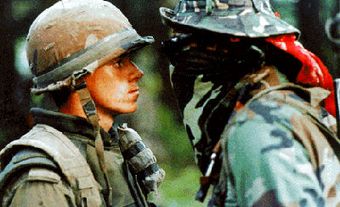
In the 1990s, Canadian soldiers deployed with the C7 during the Kanesatake Resistance (1990), the Persian Gulf War (1990–91) and peacekeeping operations in the Balkans ― including the Battle of the Medak Pocket (1993).
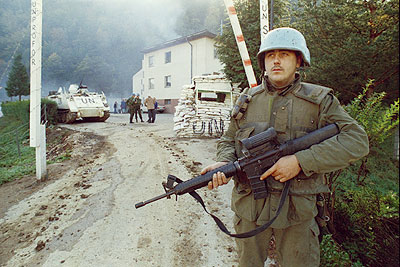
Around that time, some of the limitations of the C7 were coming to light. The rifle with its fixed buttstock was long and cumbersome in confined spaces. The rifle was also difficult to accessorize. Moreover, the C79 optic was proving to be unreliable in holding zero.
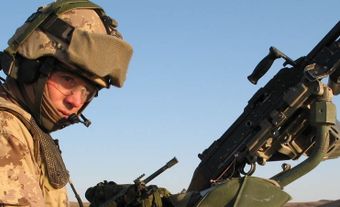
During the War in Afghanistan, Canadian soldiers deployed with the C7 and C8. Despite having access to superior fire support and technological capabilities over the Taliban, Canadian infantry soldiers still fought in intense firefights. (See Canada and Operation Medusa.)
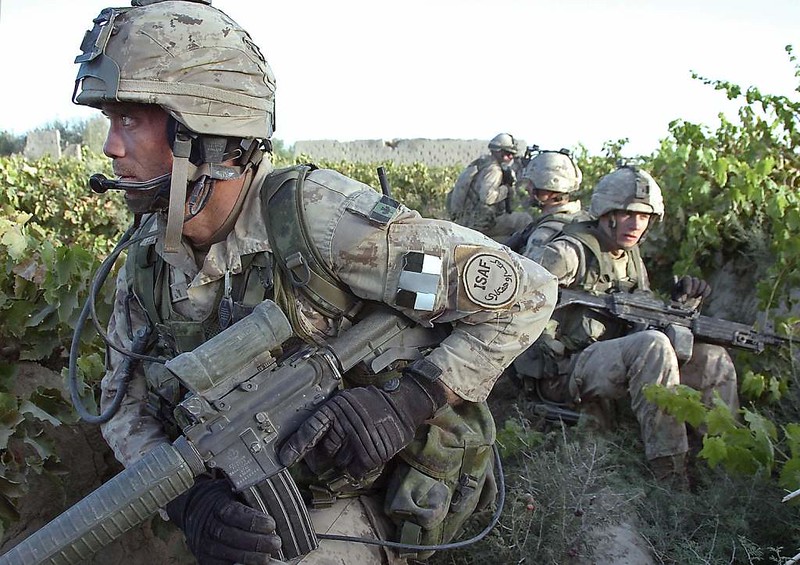
The war likely led to several advances in small arms technology. The use of non-magnified holographic sights made by EOTech became increasingly common alongside the C79. C7 rifles with M203 grenade launchers also became more visible.
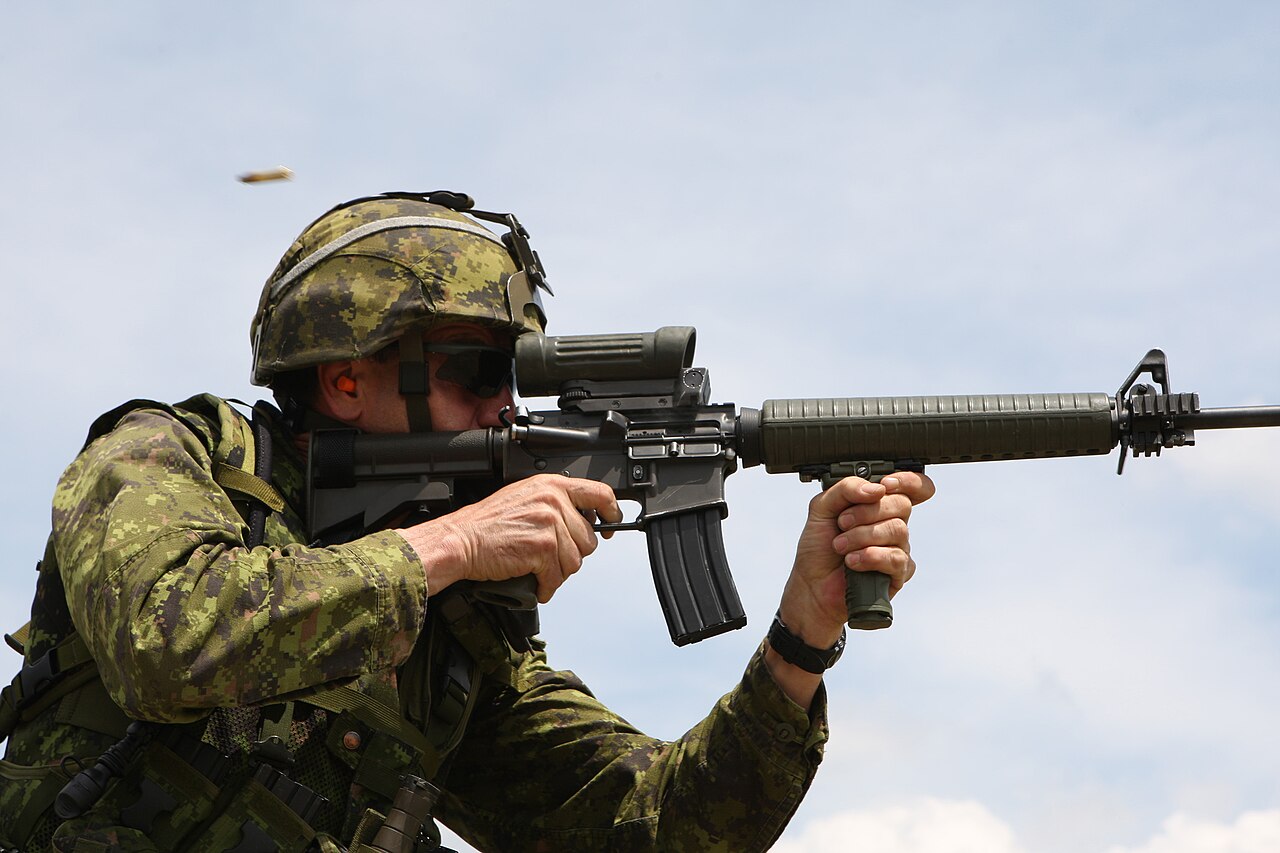
In the early 2000s, the Canadian Army started a mid-life upgrade for the C7, which led to the C7A2. Like the C8, it featured an adjustable buttstock which allowed the rifle to be shortened to 91.5 cm. This change accommodated different body sizes and the wearing of ballistic armour. An updated C79A2 optic replaced the older C79, whose mount had issues maintaining zero. The TRI-AD rail system was added under the front sight to attach laser aiming devices. Rifles could also be issued with a Cadex vertical grip. Additionally, the new standard improved the rifle’s layout for left-handed shooters, with changes made to the fire selector, magazine release button and charging handle. The C7A2 notably features a green-coloured handguard, pistol grip and buttstock.
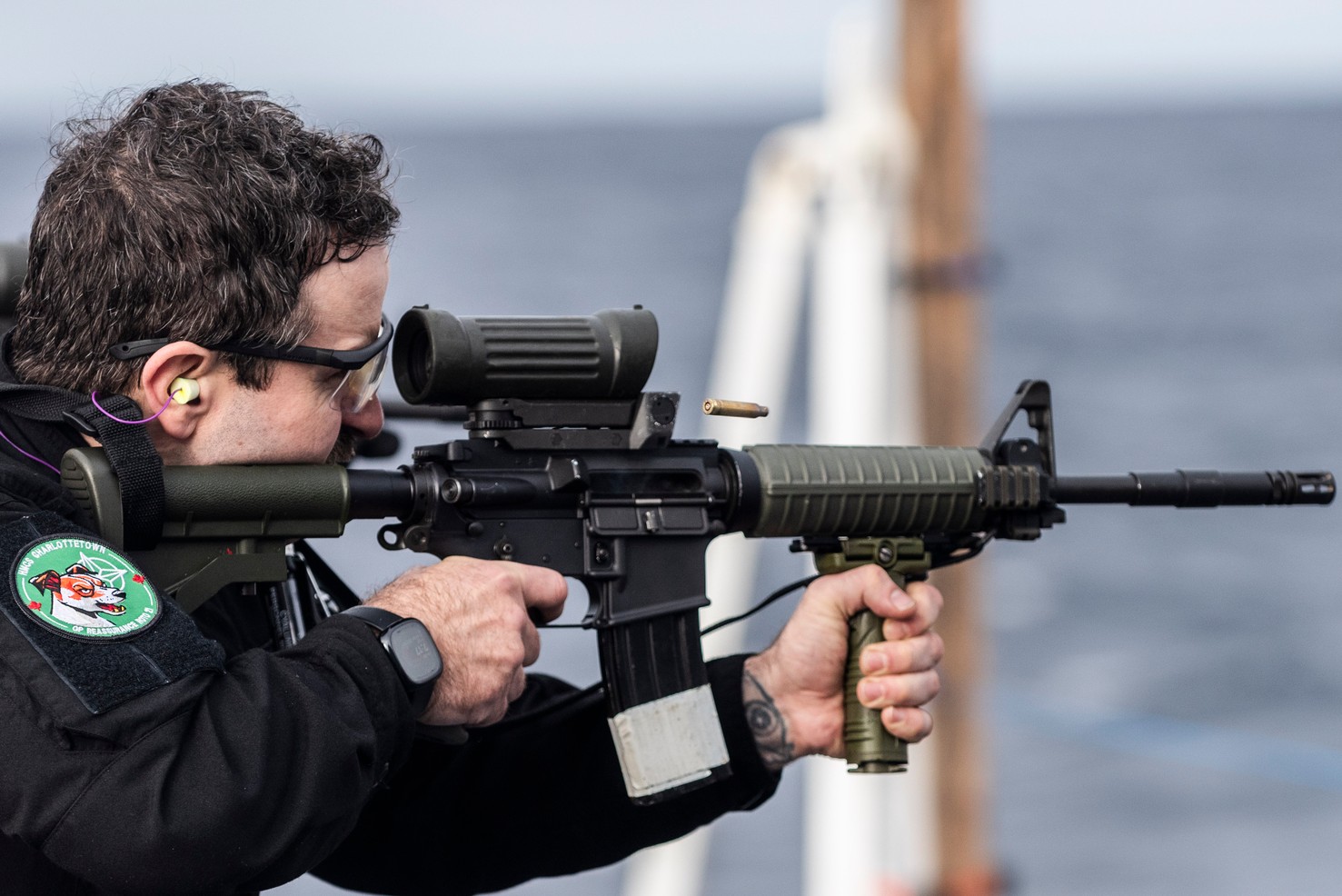
The C8 was also improved over time. Originally, the C8 had a lightweight barrel. Later models received heavier barrels for sustained firing. The current in-service C8A3 features many of the same upgrades as on the C7A2.
By 2026, the C7 and C8 rifle family had been successfully in service for over 35 years. The rifles were increasingly obsolescent as newer optics and rifle platforms with superior features emerged. In March 2026, Canada announced that older C7 and C8 rifles would be replaced by the new Canadian Modular Assault Rifle (CMAR). The CMAR is an updated 5.56 mm-calibre AR-15 rifle capable of easily accepting modern accessories such as a suppressor. Under a contract with Colt Canada, up to 65,402 new rifles will be delivered.
Other Users
NATO allies looking for a customizable and dependable AR-15 rifle platform have adopted the C7 and C8 in various forms. Both the Netherlands and Denmark use the C7 and C8 as their service rifles. The C8 also has an established service history with British and Norwegian special forces.
Many Canadian police services, including the RCMP, have adopted semi-automatic versions of the C8. The phenomenon prompted some debate regarding police militarization and the threats faced by law enforcement.
Colt Canada sold semi-automatic models of the C7 and C8 to the Canadian civilian market. However, this practice stopped after AR-15 rifles became prohibited firearms in 2020. (See Gun Control in Canada.)