Share on Facebook
 Share on X
 Share by Email
 Share on Google Classroom
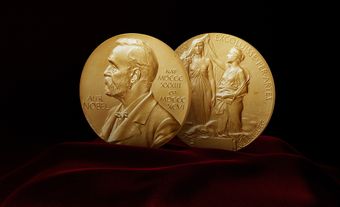
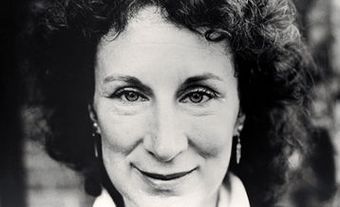
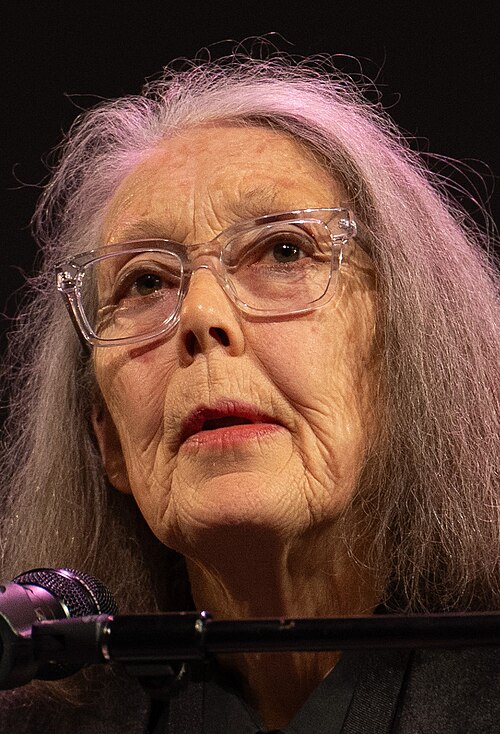
Anne Carson, CM, poet, essayist, classical scholar and professor (born 21 June 1950 in Toronto, ON). A two-time winner of the prestigious Griffin Poetry Prize, Anne Carson is an internationally acclaimed poet, essayist and translator from Ancient Greek. She has also received MacArthur and Guggenheim Fellowships, a Governor General’s Literary Award for English-language poetry and the Lannan Literary Award, among many other prizes. She has taught at several universities, including McGill University, the University of Michigan, New York University and Princeton University. In 2026, she received the Nobel Prize in Literature “for her bold and inventive oeuvre that, in playful dialogue with the classical tradition, has created new forms for contemporary literature.”
Education
Anne Carson’s career as a writer has been influenced and shaped by her study of classics at the University of Toronto, where she completed her BA (1974), MA (1975) and PhD (1981), and at the University of St Andrews, Scotland, where she received a diploma in classics in 1976. Since graduating, she has taught classics at various institutions across the United States and Canada, including Emory University, California College of the Arts, Princeton University, and McGill University. She is currently a Professor of Classics and Comparative Literature at the University of Michigan.
Early Career
Carson’s first publication, Eros the Bittersweet: an Essay (1986), was followed by a number of books in the 1990s that attracted general acclaim: Short Talks (1992), Goddesses and Wise Women (1992), Plainwater: essays and poetry (1995), Glass, Irony & God (1995), Autobiography of Red: A Novel in Verse (1998), and Economy of the Unlost (1999), a book of criticism. Men in the Off Hours (2000) secured her reputation as a poet. It was shortlisted for the T.S. Eliot Poetry Prize in Britain, nominated for a Governor General’s Award, and won the Griffin Poetry Prize. As with many of her books, Men in the Off Hours encompasses a range of literary forms, including poetry, prose and “shooting scripts” for television dramas.
The collection opens with reflections on Thucydides’ History and Virginia Woolf’s story “The Mark on the Wall.” Carson observes that, “how people tell time is an intimate and local fact about them.” How she herself plays with conventional expectations about time is equally revealing, one of these being the series of epitaphs that are interspersed throughout the collection and that signpost different civilizations: one for “Zion,” another for “Annunciation,” another for “Europe,” and yet another for “Oedipus’s Nap.” She suggests that one’s decisions about what serves as the beginning, middle and end of an account — the historical and personal chronologies that one develops — reveal one’s perspective and offer insights into a culture.
Men in the Off Hours, a book of shorter poems which incorporate “epitaphs, love poems, verse-essays, commemorative prose, ‘shooting scripts’ for purported TV dramas and poems addressed to paintings,” noted Publishers Weekly writer Stephen Burt, was met with great acclaim. Reviewing the collection for Salon, Kate Moses described it as a meditation on time, noting too that it “encompasses all of that picnic that time spreads behind itself: life and sex and love and death.
Later Career
Informed by her classical scholarship and literary background, Anne Carson’s poetry is richly dense and allusive. It references figures from ancient Greek literature and mythology such as Helen of Troy, Hektor and Geryon, as well as writers such as Virginia Woolf, Gertrude Stein and Emily Brontë. Stylistically, Carson’s work has been recognized because of its unique fusion of various poetic forms and free verse with prose, especially the essay. Love, and all its attendant enticements, satisfactions, trials, complexities, and disappointments, as well as issues related to the spiritual and the divine, are the most consistent themes of Carson’s poetry. The sheer breadth of her subjects is stunning.
In The Beauty of the Husband (2001), possibly her most famous work, Carson delineates the sufferings of a wife whose attentions revolve around her philandering husband. “The Glass Essay” in Glass, Irony & God offers one of the more poignant literary depictions of an abandoned lover. There, the narrator’s anguished, and eventually successful, attempts to recover from a failed relationship are finely interwoven with the enigmatic life of Emily Brontë. How does one overcome loss or grief? What is the nature of love? These questions and others, though seemingly mundane, are adeptly and playfully broached by Carson in her witty yet reflective body of work.
Carson’s impressive literary production has flourished since the turn of the millenium. Her work has continued to encompass both poetry and translation. Decreation: Poetry, Essays, Opera (2005) showcases her experimentation as well as her consistent interest in the complexities and varieties of human longing and loving — romantic, spiritual and filial. The title highlights what Carson explores in the collection: “a program for getting the self out of the way” of God. Her subsequent collection, Nox (2010), a reference to the Roman goddess of night, is a poetic tribute to her brother, Michael, who died unexpectedly in Copenhagen in 2000. At turns analytical, at others lyrical, the book is an elegy for him, what Carson describes as his epitaph. As such, it is a compilation of memories and memorabilia related to her brother, including pasted-in photographs, poems, paintings, and one of his own letters. Significantly, she begins with a reference to Roman poet Catullus’s “Poem 101,” which mourns the loss of his own brother. Like Catullus, she also contemplates the process by which one mourns, a process that for Carson began much earlier: she and her brother were estranged well before his death.
Nox was followed by Red Doc> (2013), a sequel to The Autobiography of Red. In the mythological account, “Geryoneis,” Herakles is compelled to slay the red-winged Geryon to steal his cattle. In Carson’s retelling, Geryon suffers from his unrequited love for Herakles. If The Autobiography of Red is about Geryon’s coming of age and romantic disillusionment, Red Doc> explores his arrival into manhood and the aftermath of his relationship with Herakles, a troubled war veteran renamed Sad But Great. Geryon travels with Sad and a mutual friend and artist, Ida, across an extensive landscape to visit his dying mother.
Translation
Anne Carson has been equally prolific as a translator. Private study of ancient Greek in high school provided the foundation for a year of learning Greek metrics and Greek textual criticism at the University of St Andrews in Scotland. As a professor of classics, she often translates Greek literature into English or calls upon it in her own literary production. In 2006, she translated four plays by Euripides as Grief Lessons, and then, in 2009, An Oresteia, encompassing Aeschylus’ Agamemnon, Sophocles’ Electra, and Euripides’ Orestes.
Selected Honours and Awards
- Lannan Literary Award (1996)
- Pushcart Prize (1997)
- Rockefeller Bellagio Center Fellowship, Rockefeller Foundation (1997)
- Guggenheim Fellowship (1998)
- International Honorary Member, American Academy of Arts and Sciences (1999)
- MacArthur Fellowship (2000)
- Griffin Poetry Prize (Men in the Off Hours, 2001)
- T. S. Eliot Prize (The Beauty of the Husband, 2001)
- Member, Order of Canada (2005)
- Anna-Maria Kellen Fellowship, American Academy in Berlin (2007)
- PEN Award for Poetry in Translation (An Oresteia: Agamemnon by Aiskhylos; Elektra by Sophokles; Orestes by Euripides - 2010)
- Cove Park Muriel Spark Fellowship, Creative Scotland (2011)
- Foreign Honorary Member, American Academy of Arts and Letters (2011)
- Criticos Prize (Antigonick), Criticos-Fotinelli Foundation and the London Hellenic Society (2012)
- Queen Elizabeth II Diamond Jubilee Medal (2012)
- Griffin Poetry Prize (Red Doc>, 2014)
- Blue Metropolis International Literary Grand Prize for lifetime achievement, Blue Metropolis Literary Festival & Foundation (2016)
- Inga Maren Otto Fellowship, Watermill Center (2018)
- Manuel Acuña International Poetry Prize (2019)
- Princess of Asturias Award for Literature, Princess of Asturias Foundation (2020)
- Governor General’s Literary Award for English-language poetry (Norma Jeane Baker of Troy, 2020)
- PEN/Nabokov Award for Achievement in International Literature, PEN America (2021)
- International Writer, Royal Society of Literature (2022)
- Vigdís Prize, University of Iceland (2023)
- Honorary President, Classical Association (2023–24)
- Hadada Prize for lifetime achievement, Paris Review (2025)
- Zbigniew Herbert International Literary Award, National Library of Poland (2025)
- Nobel Prize in Literature, Nobel Foundation (2026)
Honorary Degrees
- Doctor of Letters, University of Toronto (2012)
- Doctor of Letters, University of St Andrews (2014)
Selected Books
- Eros the Bittersweet (1986)
- Glass, Irony, and God (1992)
- Short Talks (1992)
- Goddesses & Wise Women: the literature of feminist spirituality 1980-1992 (1992)
- Plainwater (1995)
- Autobiography of Red: A Novel in Verse (1998)
- Economy of the Unlost: Reading Simonides of Ceos with Paul Celan (1999)
- Men in the Off Hours (2000)
- Electra (translation) (2001)
- The Beauty of the Husband: A Fictional Essay in 29 Tangos (2001)
- If Not, Winter: Fragments of Sappho (2002)
- Decreation: Poetry, Essays, Opera (2005)
- Grief Lessons: Four Plays by Euripides (2006)
- An Oresteia (2009)
- Nox (2010)
- Antigonick (2012)
- Red Doc> (2013)
- Nay Rather (2013)
- The Albertine Workout (2014)
- Float (2016)
- Norma Jeane Baker of Troy (2019)
- The Trojan Women: A Comic (2021)
- H of H Playbook (2021)
- Wrong Norma (2024)