Share on Facebook
 Share on X
 Share by Email
 Share on Google Classroom
Emanuel Jaques was a 12-year-old Portuguese immigrant shoeshine boy who was sexually assaulted and brutally murdered in downtown Toronto in July 1977. Three men took part in the assault and murder, which occurred in an apartment above an erotic massage parlour on Yonge Street near Dundas. The murder shocked Toronto and led to an intense crackdown on the area’s businesses and sex workers. It also revived interest in the death penalty. Due to the fact that all three murderers were gay and two were pedophiles, the case sparked an anti-2SLGBTQ+ backlash. It forced the city to confront its self-mythologized image as “the city that works” and “Toronto the Good.” It also galvanized Toronto’s sizable Portuguese community, leading to a surge in solidarity and political activism.
Warning: This article contains sensitive material that may not be suitable for all audiences.
Emanuel Jaques
Emanuel Jaques was born in the Azores on 8 October 1964. He was one of seven siblings. His father, Valdemiro, like many Portuguese Canadians, immigrated to Canada in the early 1970s. He established himself in Toronto in 1972 and took up work as a cleaner. He brought his family to join him in 1974. They settled on Shuter Street in the working-class Regent Park neighbourhood.
To help his family financially, Emanuel, along with his brother Luciano and their mutual friend Shane McLean, shined shoes around Yonge and Dundas streets (now called Sankofa Square). Though Emanuel’s parents were initially reluctant, they relented because of his enthusiasm to “do his part” and because he would be accompanied by his brother and friend.
Events of 28–29 July 1977
According to author and journalist Robert J. Hoshowsky, the three shoeshine boys were approached by Saul David Betesh around 5:30 p.m. on 28 July 1977. Betesh was a sex worker and construction worker to the children who was wearing overalls and carrying work boots in a bag. He paid the children $4 (far more than usual) for shining both his boots and shoes.
Betesh claimed to be from out of town. He told the boys he was proficient in kung fu and demonstrated some chops and kicks to impress them. He then offered them $35 per hour to help him move “photographic equipment,” saying that they might earn up to $400. McLean later said that Betesh made all three boys feel uneasy. Although Emanuel was excited at the prospect of making so much money, the two other boys felt they should ask their mothers for permission first. They left Emanuel with Betesh, walked around the corner to a pay phone and called their mothers. Both McLean’s mother and Maria Jaques refused and told them to come home. The boys went back for Emanuel but discovered that he had walked off with Betesh, disappearing into the crowd. The boys went to find a police officer but none were around.
Betesh took Jaques to an apartment above Charlie’s Angels, an erotic massage parlour located at 245 Yonge Street. It was there that Betesh, along with his roommates, Robert Wayne Kribs and Josef Woods, tied Jaques up and sexually assaulted him over a 12-hour period. Kribs then held Jaques by his legs while Betesh held Jaques’ head under water in the kitchen sink and drowned him. A fourth man, Werner Gruener, also a roommate, is believed to have held the door open to Betesh when he was bringing Jaques inside.

Aftermath
Several days later, Betesh reported Jaques’ murder by calling prominent Toronto 2SLGBTQ+ activist George Hislop. Betesh confessed to the murder and revealed the location of the body. Hislop arranged for a lawyer to meet Betesh and told Betesh to turn himself in to the police. Jaques’ body was found by police in a garbage bag under some debris on the roof of the building where he was murdered at 6:30 a.m. on Monday, 1 August 1977. Betesh also told police that Kribs, Woods and Gruener were travelling by train to Vancouver. They were apprehended in Sioux Lookout, Ontario, northwest of Thunder Bay.
Betesh, who was reported to have had behavioural issues and a violent temper, was determined to be primarily responsible for Jaques’ death. He and Kribs, who was also said to have had an explosive and unpredictable temper, were both found guilty of first-degree murder. It was also determined that both men were pedophiles. Josef Woods was found guilty of second-degree murder. He died in hospital in 2003 after serving 25 years in prison. Gruener was found to have not participated in the assault, rape or murder of Jaques and was acquitted.
Suspects in the murder of Emanuel Jacques are arrested
Handcuffed suspects (from left: Joseph Wood, 26; Albert Wayne Kribs, 41; and Werner Greuner, 28) in the murder of 12-year-old shoeshine boy Emanuel Jaques are arrested in Sioux Lookout, Ontario, 4 August 1977.
(photo by Boris Spremo, courtesy Toronto Star via Getty Images)
Police Response and Media Coverage
Newspaper and media coverage of the case — typically as sensational and lurid as the case itself — was widely reported. Once the details became public knowledge, there were calls to reinstate the death penalty. (It had been abolished by the government of Pierre Trudeau the year before.)
Recent discussions of the impact of the case have noted that while the specific details of Jaques’ torture, rape and murder were widely published and arguably exploited by the news media, very little was published about Jaques himself. Media reports frequently emphasized that the murderers were homosexual pedophiles and that the crime took place in a part of Toronto commonly called the “Sin Strip,” where gay massage parlours, adult cinemas, bookstores and sex work were common.
Gay men and sex workers were subsequently scapegoated for Jaques’ death. Police raids on gay massage parlours and strip clubs began almost immediately and occurred almost daily. (These actions eventually culminated in the Toronto bathhouse raids of 1981, the largest mass arrest in Canada since the October Crisis.)
In addition to police raids, city officials also used health and fire inspections to disrupt and close businesses. As the Globe and Mail reported in 2017, “Yonge was already synonymous with vice, but now it became associated with homosexuality, pedophilia and murder.” Ed Jackson, a historian and former editor of the gay newspaper the Body Politic, has said that, “There was a sense that Yonge Street itself had made the bad thing happen.”
Impact on the 2SLGBTQ+ Community
The media coverage of the Jaques case had a profoundly negative impact on the city’s 2SLGBTQ+ community. The murder caused something of a moral panic in Toronto. Homophobic attacks increased, as did police raids on 2SLGBTQ+ community hubs in the city. Many strip clubs, theatres and erotic massage parlours were closed. This forced many of Toronto’s sex workers out onto the streets, which in turn made them more vulnerable.
The scapegoating of Toronto’s 2SLGBTQ+ community may have set back equal rights by a decade. George Hislop, who at the time was president of the Community Homophile Association of Toronto (an early gay rights organization), told the Globe and Mail in August 1977 that he was concerned the effort to gain equal rights would be negatively affected by the media coverage of the case. At the time, the Ontario Human Rights Commission had recently recommended including sexual orientation in the province’s human rights and discrimination legislation. This ultimately did not occur until 1986.

Impact on Toronto and its Portuguese Community
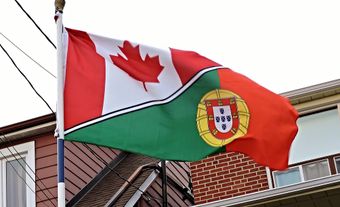
The murder of Jaques also led Toronto’s sizable Portuguese community — the majority of whom were from the Azores — to galvanize and mobilize. Four thousand people attended Jaques’ funeral, while 15,000 attended a demonstration on 8 August 1977 that began at Nathan Phillips Square before marching to Queen’s Park. The demonstrators called for a police crackdown on the city’s sex industry and for the return of capital punishment.
The Portuguese community, which had already started to become a political force in Toronto, continued to make its presence known. City councillors began visiting and reaching out to the community. Five Portuguese Canadian candidates appeared on the ballot in the next municipal election.
Other ethnic communities also supported Toronto’s Portuguese community in a demonstration of inter-ethnic solidarity as Toronto — historically a very white and Protestant city — began to embrace its multicultural character. As Gilberto Fernandes, the director of the Portuguese Canadian History Project, told CBC News in 2017, Jaques’ murder resonated so strongly because it “was a betrayal of the immigrant dream…. Here you have a 12-year-old boy dying, being murdered by the very city of opportunity, the so-called city that works, the so-called Toronto the Good…. Emanuel Jaques then became everyone's child — this could happen to every one of us.”
Protest in memory of Emanuel Jaques
About 15,000 demonstrators gather in Nathan Phillips Square in memory of Emanuel Jaques before marching on Queen’s Park, 7 August 1977.
(photo by Dave Norris, Toronto Star via Getty Images)