
Browse "Types of Law"
-
Article
Hate Propaganda
In Canada, the public promotion of hate against identifiable groups and the advocacy of genocide is, under certain conditions, a criminal offence, punishable by up to 2 years' imprisonment.
"https://thecanadianencyclopedia.ca/images/tce_placeholder.jpg?v=e9dca980c9bdb3aa11e832e7ea94f5d9" // resources/views/front/categories/view.blade.php
https://thecanadianencyclopedia.ca/images/tce_placeholder.jpg?v=e9dca980c9bdb3aa11e832e7ea94f5d9
-
Article
History of Marriage and Divorce
Traditional Christian concepts of marriage dominated Canadian society since the founding of the country. Since the end of the Second World War, however, these customs and norms have changed considerably.
"https://d3d0lqu00lnqvz.cloudfront.net/media/media/f32d2e04-cb15-4747-89d7-c3ef5aa7b97b.jpg" // resources/views/front/categories/view.blade.php
https://d3d0lqu00lnqvz.cloudfront.net/media/media/f32d2e04-cb15-4747-89d7-c3ef5aa7b97b.jpg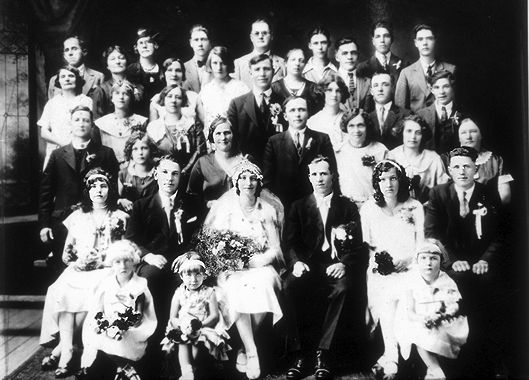
-
Article
Homicide
International homicide statistics are generally unreliable and always outdated, but Canada usually ranks at the lower end among similar nations. In 1996, for example, Canada's rate of 2.1 per 100 000 population ranked above Japan (1.0), Sweden (1.1) and England (1.
"https://d3d0lqu00lnqvz.cloudfront.net/media/media/055b5f07-0c44-4a84-ae20-4f68f53150e5.jpg" // resources/views/front/categories/view.blade.php
https://d3d0lqu00lnqvz.cloudfront.net/media/media/055b5f07-0c44-4a84-ae20-4f68f53150e5.jpg
-
Article
Human Rights
Human rights are rights that we all have by virtue of our shared humanity. Depending on the nature of the right, both individuals and groups can assert human rights. Human rights as we understand them today are a relatively modern concept. All human rights are indivisible, interrelated and interdependent. None has automatic precedence over any other. The realization of human rights is a constant struggle on the part of people who suffer injustices and who seek redress. Human rights are an important part of the social fabric of Canadian society. Canadians have also played a role in the evolution of human rights on the international stage.
"https://d3d0lqu00lnqvz.cloudfront.net/media/media/cecf9ede-d0ed-487d-a002-e8f44a491add.jpg" // resources/views/front/categories/view.blade.php
https://d3d0lqu00lnqvz.cloudfront.net/media/media/cecf9ede-d0ed-487d-a002-e8f44a491add.jpg
-
Article
Impaired Driving
Impaired driving, also known as drunken driving, driving while impaired (DWI) and driving under the influence (DUI), has been a serious social problem as far back as the beginning of this century, when social scientists took note of the often deadly combination of alcohol and motor vehicles.
"https://thecanadianencyclopedia.ca/images/tce_placeholder.jpg?v=e9dca980c9bdb3aa11e832e7ea94f5d9" // resources/views/front/categories/view.blade.php
https://thecanadianencyclopedia.ca/images/tce_placeholder.jpg?v=e9dca980c9bdb3aa11e832e7ea94f5d9
-
Article
Intellectual Property
This term is used to describe rights which protect the results of intellectual and creative activity: items such as a new product, a book or painting, or a marketing slogan.
"https://thecanadianencyclopedia.ca/images/tce_placeholder.jpg?v=e9dca980c9bdb3aa11e832e7ea94f5d9" // resources/views/front/categories/view.blade.php
https://thecanadianencyclopedia.ca/images/tce_placeholder.jpg?v=e9dca980c9bdb3aa11e832e7ea94f5d9
-
Article
International Law
International law is the body of rules that governs the conduct of STATES and other international associations, such as the UN, although in the human rights area international law, in some instances, may be directly applicable to individuals as well as to states.
"https://d3d0lqu00lnqvz.cloudfront.net/media/media/50aaa656-14dd-487f-949d-3bfe5facf6d3.jpg" // resources/views/front/categories/view.blade.php
https://d3d0lqu00lnqvz.cloudfront.net/media/media/50aaa656-14dd-487f-949d-3bfe5facf6d3.jpg
-
Article
Internment in Canada
Internment is the forcible confinement or detention of a person during wartime. Large-scale internment operations were carried out by the Canadian government during the First World War and the Second World War. In both cases, the War Measures Act was invoked. This gave the government the authority to deny people’s civil liberties, notably habeas corpus (the right to a fair trial before detention). People were held in camps across the country. More than 8,500 people were interned during the First World War and as many as 24,000 during the Second World War — including some 21,000–22,000 Japanese Canadians.
"https://d3d0lqu00lnqvz.cloudfront.net/media/media/2913948d-0dc6-4142-807e-5206fce81700.jpg" // resources/views/front/categories/view.blade.php
https://d3d0lqu00lnqvz.cloudfront.net/media/media/2913948d-0dc6-4142-807e-5206fce81700.jpg
-
Article
Internment of Japanese Canadians
The forcible expulsion and confinement of Japanese Canadians during the Second World War is one of the most tragic sets of events in Canada’s history. Some 21,000–22,000 Japanese Canadians were taken from their homes on Canada’s West Coast, without any charge or due process. Beginning 24 February 1942, they were exiled to remote areas of British Columbia and elsewhere. The federal government stripped them of their property and pressured many of them to accept mass deportation after the war. Those who remained were not allowed to return to the West Coast until 1 April 1949. In 1988, the federal government officially apologized for its treatment of Japanese Canadians. A redress payment of $21,000 was made to each survivor, and more than $12 million was allocated to a community fund and human rights projects. This article is the full-length text on Japanese Internment in Canada. For a plain-language summary, see Internment of Japanese Canadians (Plain-Language Summary).
"https://d3d0lqu00lnqvz.cloudfront.net/media/media/0bec6156-0467-4a97-909f-da599383381d.jpg" // resources/views/front/categories/view.blade.php
https://d3d0lqu00lnqvz.cloudfront.net/media/media/0bec6156-0467-4a97-909f-da599383381d.jpg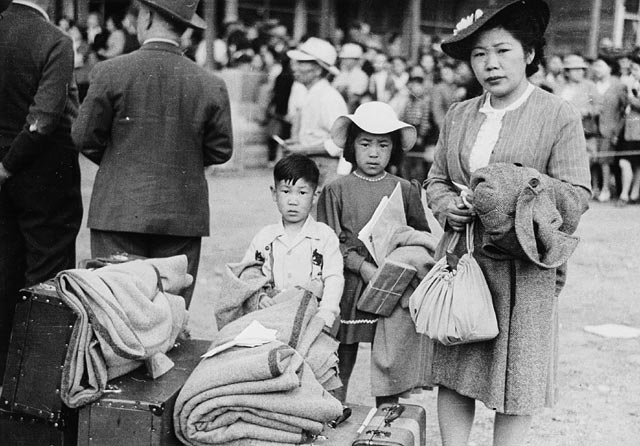
-
Article
Labour Law
Labour law governs collective bargaining and industrial relations among employers, their unionized employees and trade unions. In Canada a distinction is commonly made between labour law narrowly defined in this way and employment law, the law of individual employment relationships, comprising the common law of master and servant and supervening statutory enactments governing the workplace. In England, labour law describes both, and of course a close relationship exists between them. In most provinces these matters are covered in separate statutes, but the Canada Labour Code is Parliament's major enactment governing the workplace for industries within federal jurisdiction, and regulates labour standards and occupational health and safety.
"https://d3d0lqu00lnqvz.cloudfront.net/labourhistoryquiz.jpg" // resources/views/front/categories/view.blade.php
https://d3d0lqu00lnqvz.cloudfront.net/labourhistoryquiz.jpg
-
Article
Landlord and Tenant Law
Landlord and tenant law, governed by provincial statutes and judge-made law, varies considerably from province to province. Essentially, a landlord and tenant relationship is contractual (see CONTRACT LAW).
"https://thecanadianencyclopedia.ca/images/tce_placeholder.jpg?v=e9dca980c9bdb3aa11e832e7ea94f5d9" // resources/views/front/categories/view.blade.php
https://thecanadianencyclopedia.ca/images/tce_placeholder.jpg?v=e9dca980c9bdb3aa11e832e7ea94f5d9
-
Macleans
Language Law Decision in Quebec
It began with equal French and English lettering on a store sign, escalated with a $75 fine under Quebec's language laws - and ended with a court victory for Gwen Simpson and Wally Hoffmann.This article was originally published in Maclean's Magazine on November 1, 1999
"https://thecanadianencyclopedia.ca/images/tce_placeholder.jpg?v=e9dca980c9bdb3aa11e832e7ea94f5d9" // resources/views/front/categories/view.blade.php
https://thecanadianencyclopedia.ca/images/tce_placeholder.jpg?v=e9dca980c9bdb3aa11e832e7ea94f5d9
-
Article
Law of Evidence
Law of evidence, the body of regulations governing the proof of the existence of a fact before a court. It falls under federal and provincial legislation. In matters governed by the former, provisions of the Canada Evidence Act must be applied. Common law must also be applied.
"https://thecanadianencyclopedia.ca/images/tce_placeholder.jpg?v=e9dca980c9bdb3aa11e832e7ea94f5d9" // resources/views/front/categories/view.blade.php
https://thecanadianencyclopedia.ca/images/tce_placeholder.jpg?v=e9dca980c9bdb3aa11e832e7ea94f5d9
-
Article
Law of Fiduciary Obligation
In Canadian law, fiduciary obligation refers to a relationship in which one party (the fiduciary) is responsible for looking after the best interests of another party (the beneficiary). The courts have determined that a fiduciary obligation exists where the fiduciary can exercise some discretion or power, and they do so in a way that affects the interests of the beneficiary. In these relationships, the beneficiary is in a position of vulnerability at the hands of the fiduciary.
"https://thecanadianencyclopedia.ca/images/tce_placeholder.jpg?v=e9dca980c9bdb3aa11e832e7ea94f5d9" // resources/views/front/categories/view.blade.php
https://thecanadianencyclopedia.ca/images/tce_placeholder.jpg?v=e9dca980c9bdb3aa11e832e7ea94f5d9
-
Article
Law of the Sea
Law of the Sea, for about 300 years, was to a large extent determined by principles of customary law. Coastal states claimed sovereignty over a narrow belt of territorial sea; on the rest of the seas (the "high seas"), the basic principle of freedom of the seas reigned.
"https://thecanadianencyclopedia.ca/images/tce_placeholder.jpg?v=e9dca980c9bdb3aa11e832e7ea94f5d9" // resources/views/front/categories/view.blade.php
https://thecanadianencyclopedia.ca/images/tce_placeholder.jpg?v=e9dca980c9bdb3aa11e832e7ea94f5d9