
Browse "History"
-
Article
Inuit Experiences at Residential School
Residential schools were government-sponsored religious schools created to assimilate Indigenous children into Euro-Canadian culture. Schools in the North were run by missionaries for nearly a century before the federal government began to open new, so-called modern institutions in the 1950s. This was less than a decade after a Special Joint Committee (see Indigenous Suffrage) found that the system was ineffectual. The committee’s recommendations led to the eventual closure of residential schools across the country.
"https://d3d0lqu00lnqvz.cloudfront.net/InuitResidentialSchool/Inuit-Residenital-School (Library and Archives Canada_PA-042133).jpg" // resources/views/front/categories/view.blade.php
https://d3d0lqu00lnqvz.cloudfront.net/InuitResidentialSchool/Inuit-Residenital-School (Library and Archives Canada_PA-042133).jpg.jpg)
-
Article
Inuit High Arctic Relocations in Canada
In 1953 and 1955, the Royal Canadian Mounted Police, acting as representatives of the Department of Resources and Development, moved approximately 92 Inuit from Inukjuak, formerly called Port Harrison, in Northern Quebec, and Mittimatalik (Pond Inlet), in what is now Nunavut, to settle two locations on the High Arctic islands. It has been argued that the Government of Canada ordered the relocations to establish Canadian sovereignty in the Arctic, and proposed to Inuit the move, promising improved living conditions. The Inuit were assured plentiful wildlife, but soon discovered that they had been misled, and endured hardships. The effects have lingered for generations. The Inuit High Arctic relocations are often referred to as a “dark chapter” in Canadian history, and an example of how the federal government forced changes that fundamentally affected (and continue to affect) Inuit lives.
"https://d3d0lqu00lnqvz.cloudfront.net/media/media/72b158ab-21db-4572-9fec-db8a9548c9cf.jpg" // resources/views/front/categories/view.blade.php
https://d3d0lqu00lnqvz.cloudfront.net/media/media/72b158ab-21db-4572-9fec-db8a9548c9cf.jpg
-
Article
Ipperwash Crisis
The Ipperwash Crisis took place in 1995 on land in and around Ontario’s Ipperwash Provincial Park, which was claimed by the Kettle and Stony Point First Nation. The underlying cause of the crisis was the appropriation of the Stoney Point Reserve in 1942 by the federal government for use as a military camp. After repeated requests for the land to be returned, members of the Stony Point First Nation occupied the camp in 1993 and in 1995. On 4 September 1995 protesters also occupied Ipperwash Provincial Park nearby. Tension between the protesters and the OPP increased, resulting in a confrontation on 6 September 1995 during which Dudley George, an Ojibwa protestor, was killed.
"https://d3d0lqu00lnqvz.cloudfront.net/media/media/bcf04d96-a331-4532-bed5-98ee62f4034e.jpg" // resources/views/front/categories/view.blade.php
https://d3d0lqu00lnqvz.cloudfront.net/media/media/bcf04d96-a331-4532-bed5-98ee62f4034e.jpg
-
Article
Iroquois Wars
The Iroquois Wars, also known as the Beaver Wars and the French and Iroquois Wars, were a series of 17th-century conflicts involving the Haudenosaunee Confederacy (also known as the Iroquois or Five Nations, then including the Mohawk, Oneida, Onondaga, Cayuga and Seneca), numerous other First Nations, and French colonial forces. The origins of the wars lay in the competitive fur trade. In about 1640, the Haudenosaunee began a campaign to increase their territorial holdings and access to animals like beaver and deer. Hostilities continued until 1701, when the Haudenosaunee agreed to a peace treaty with the French. The wars represent the intense struggle for control over resources in the early colonial period and resulted in the permanent dispersal or destruction of several First Nations in the Eastern Woodlands.
"https://d3d0lqu00lnqvz.cloudfront.net/media/media/596cf750-11c8-4462-a70d-9aa0a300bd42.jpg" // resources/views/front/categories/view.blade.php
https://d3d0lqu00lnqvz.cloudfront.net/media/media/596cf750-11c8-4462-a70d-9aa0a300bd42.jpg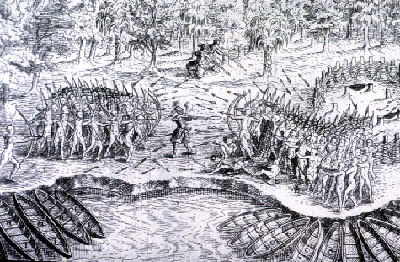
-
Article
Canada and the Italian Campaign
Canada’s longest Second World War army campaign was in Italy. Canadian forces served in the heat, snow and mud of the grinding, nearly two-year Allied battle across Sicily and up the Italian peninsula—prying the country from Germany's grip, at a cost of more than 26,000 Canadian casualties.
"https://d3d0lqu00lnqvz.cloudfront.net/media/media/b953ce91-4743-48e3-a180-ffe7c2816954.jpg" // resources/views/front/categories/view.blade.php
https://d3d0lqu00lnqvz.cloudfront.net/media/media/b953ce91-4743-48e3-a180-ffe7c2816954.jpg
-
Editorial
Japanese Canadian Internment: Prisoners in their own Country
Beginning in early 1942, the Canadian government detained and dispossessed more than 90 per cent of Japanese Canadians, some 21,000 people, living in British Columbia. They were detained under the War Measures Act and were interned for the rest of the Second World War. Their homes and businesses were sold by the government to pay for their detention. In 1988, Prime Minister Brian Mulroney apologized on behalf of the Canadian government for the wrongs it committed against Japanese Canadians. The government also made symbolic redress payments and repealed the War Measures Act.
"https://d3d0lqu00lnqvz.cloudfront.net/media/media/c61c85b5-d92f-44a0-8602-7e2c38458873.jpg" // resources/views/front/categories/view.blade.php
https://d3d0lqu00lnqvz.cloudfront.net/media/media/c61c85b5-d92f-44a0-8602-7e2c38458873.jpg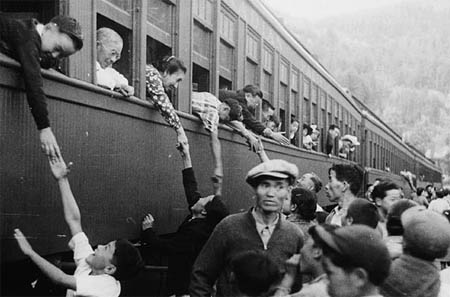
-
Article
John Collins' Purchase
John Collins’ Purchase of 1785 is one of the oldest land agreements between Indigenous peoples and British authorities in Upper Canada (later Ontario). It concerned the use of lands extending from the northwestern end of Lake Simcoe to Matchedash Bay, an inlet off Georgian Bay in Lake Huron. The purpose was to provide the British with a protected inland water route between Lake Ontario and Lake Huron, away from potential American interference. This passage was necessary for trade and the resupply of British western outposts. John Collins’ Purchase is one of many agreements made during the late 18th and early 19th centuries, known as the Upper Canada Land Surrenders.
"https://d3d0lqu00lnqvz.cloudfront.net/UCLS/345446e9-d0d1-4626-9702-e214ca87a8a7.jpg" // resources/views/front/categories/view.blade.php
https://d3d0lqu00lnqvz.cloudfront.net/UCLS/345446e9-d0d1-4626-9702-e214ca87a8a7.jpg
-
Article
Johnson-Butler Purchase
The Johnson-Butler Purchase of 1787–88 (also known as the “Gunshot Treaty,” referring to the distance a person could hear a gunshot from the lake’s edge) is one of the earliest land agreements between representatives of the Crown and the Indigenous peoples of Upper Canada (later Ontario). It resulted in a large tract of territory along the central north shore of Lake Ontario being opened for settlement. These lands became part of the Williams Treaties of 1923. (See also Upper Canada Land Surrenders and Treaties with Indigenous Peoples in Canada.)
"https://d3d0lqu00lnqvz.cloudfront.net/UCLS/345446e9-d0d1-4626-9702-e214ca87a8a7.jpg" // resources/views/front/categories/view.blade.php
https://d3d0lqu00lnqvz.cloudfront.net/UCLS/345446e9-d0d1-4626-9702-e214ca87a8a7.jpg
-
Article
Judicial Committee of the Privy Council
The Judicial Committee of the Privy Council is a board of the British Privy Council. It was formed in 1833. In 1844, it was given jurisdiction over all of Britain’s colonial courts. People who had been judges in high courts in Britain served on the Judicial Committee, along with a sprinkling of judges from the Commonwealth. Their decisions were often criticized for favouring provincial powers over federal authority, especially in fields such as trade and commerce. The Judicial Committee served as the court of final appeal for Canada until 1949, when that role was given to the Supreme Court of Canada.
"https://d3d0lqu00lnqvz.cloudfront.net/media/media/7ac02b0f-118b-4ccb-b6dc-81f218b68954.jpg" // resources/views/front/categories/view.blade.php
https://d3d0lqu00lnqvz.cloudfront.net/media/media/7ac02b0f-118b-4ccb-b6dc-81f218b68954.jpg
-
Macleans
Kennedy Jr. Buried at Sea
This article was originally published in Maclean’s magazine on August 2, 1999. Partner content is not updated. As they waited last week for the inevitable confirmation that the most famous son of their fabled political dynasty was in fact gone, Americans were drawn to places with a special connection to the Kennedy family.
"https://thecanadianencyclopedia.ca/images/tce_placeholder.jpg?v=e9dca980c9bdb3aa11e832e7ea94f5d9" // resources/views/front/categories/view.blade.php
https://thecanadianencyclopedia.ca/images/tce_placeholder.jpg?v=e9dca980c9bdb3aa11e832e7ea94f5d9
-
Macleans
Kennedy Profiles in Tragedy
For Rory Elizabeth Katherine Kennedy, Saturday, July 17, was going to be a glorious day. In Hyannisport, Mass.This article was originally published in Maclean's Magazine on July 26, 1999
"https://thecanadianencyclopedia.ca/images/tce_placeholder.jpg?v=e9dca980c9bdb3aa11e832e7ea94f5d9" // resources/views/front/categories/view.blade.php
https://thecanadianencyclopedia.ca/images/tce_placeholder.jpg?v=e9dca980c9bdb3aa11e832e7ea94f5d9
-
Macleans
Kennedy Tragedy
It was another Kennedy family reunion at the storied Hyannisport, Mass., island compound where they have shared so much joy and sorrow.This article was originally published in Maclean's Magazine on July 26, 1999
"https://thecanadianencyclopedia.ca/images/tce_placeholder.jpg?v=e9dca980c9bdb3aa11e832e7ea94f5d9" // resources/views/front/categories/view.blade.php
https://thecanadianencyclopedia.ca/images/tce_placeholder.jpg?v=e9dca980c9bdb3aa11e832e7ea94f5d9
-
Article
King George's Sound Company
King George's Sound Company (Richard Cadman Etches and Co), founded 1785 in London, England, to trade for furs on the Northwest Coast.
"https://thecanadianencyclopedia.ca/images/tce_placeholder.jpg?v=e9dca980c9bdb3aa11e832e7ea94f5d9" // resources/views/front/categories/view.blade.php
https://thecanadianencyclopedia.ca/images/tce_placeholder.jpg?v=e9dca980c9bdb3aa11e832e7ea94f5d9
-
Article
King's Posts
King's Posts, a name applied during the French regime to fur trade and fishing posts in the King's Domain.
"https://thecanadianencyclopedia.ca/images/tce_placeholder.jpg?v=e9dca980c9bdb3aa11e832e7ea94f5d9" // resources/views/front/categories/view.blade.php
https://thecanadianencyclopedia.ca/images/tce_placeholder.jpg?v=e9dca980c9bdb3aa11e832e7ea94f5d9
-
Article
King's Presents
The practice of offering regular gifts to Indigenous trading partners and allies, begun by Governor Montmagny in 1648, was, by the end of the 17th century institutionalized as the "Présents du Roy" at the annual meeting with the governor-general of New France at Montréal.
"https://thecanadianencyclopedia.ca/images/tce_placeholder.jpg?v=e9dca980c9bdb3aa11e832e7ea94f5d9" // resources/views/front/categories/view.blade.php
https://thecanadianencyclopedia.ca/images/tce_placeholder.jpg?v=e9dca980c9bdb3aa11e832e7ea94f5d9