
Browse "History/Historical Figures"
-
Article
Ursulines in Canada
The Ursulines are a Roman Catholic female religious order devoted to girls’ education. The order has been in Canada since Ursuline nun Marie de l’Incarnation arrived in New France in 1639. Although initially focused on education and missionary work with Indigenous girls, the Ursulines gradually shifted their vocation toward educating French Canadian girls. With geographic and membership expansion from the 18th to the 20th century, the Ursulines established themselves as a major force in girls’ education, especially in Quebec. The Ursulines opened the first monastery in New France and the first school for girls in North America (see Ursuline Monastery).
"https://d3d0lqu00lnqvz.cloudfront.net/media/new_article_images/c010520k.jpg" // resources/views/front/categories/view.blade.php
https://d3d0lqu00lnqvz.cloudfront.net/media/new_article_images/c010520k.jpg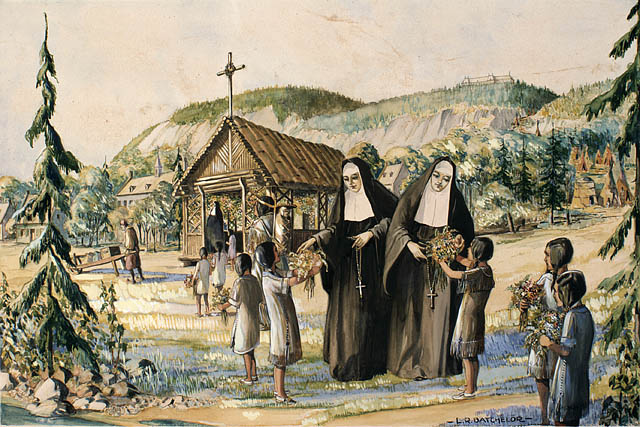
-
Article
Vancouver Feature: Gassy Jack Lands on the Burrard Shore
The following article is a feature from our Vancouver Feature series. Past features are not updated. When Capt. Jack Deighton and his family pulled their canoe onto the south shore of the Burrrard Inlet in 1867, Jack was on one more search for riches. He had been a sailor on British and American ships, rushed for gold in California and the Cariboo, piloted boats on the Fraser River and ran a tavern in New Westminster. He was broke again, but he wasted no time in starting a new business and building the settlement that would become Vancouver.
"https://d3d0lqu00lnqvz.cloudfront.net/media/media/d42db575-2f13-49ab-96f0-7fc7e79eb690.jpg" // resources/views/front/categories/view.blade.php
https://d3d0lqu00lnqvz.cloudfront.net/media/media/d42db575-2f13-49ab-96f0-7fc7e79eb690.jpg
-
Editorial
Vancouver Feature: Japanese-Canadians Held at Hastings Park
The following article is a feature from our Vancouver Feature series. Past features are not updated. For a century the Pacific National Exhibition has entertained families each summer with a mix of hair-raising Midway rides, live music and agricultural exhibits. But in 1942 the fun fair was a prison camp for thousands of displaced Japanese-Canadians
"https://d3d0lqu00lnqvz.cloudfront.net/media/media/0bec6156-0467-4a97-909f-da599383381d.jpg" // resources/views/front/categories/view.blade.php
https://d3d0lqu00lnqvz.cloudfront.net/media/media/0bec6156-0467-4a97-909f-da599383381d.jpg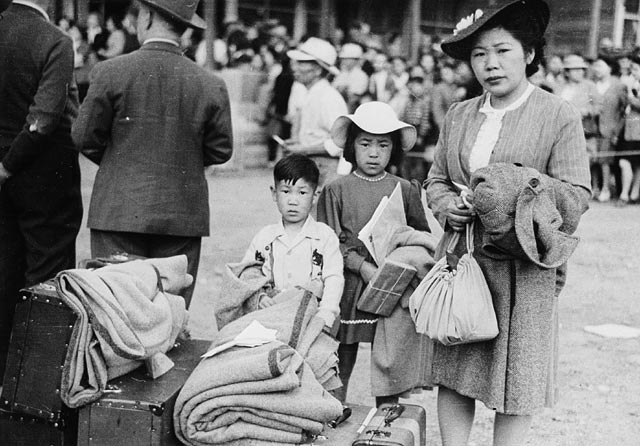
-
Article
Queen Victoria
Victoria, queen of the United Kingdom of Great Britain and Ireland and Empress of India (born 24 May 1819 at Kensington Palace, London; died 22 January 1901 at Osborne House, Isle of Wight). Queen Victoria succeeded to the throne at age 18, following the death of her uncle, William IV, in 1837. She was an ardent imperialist and took an intense interest in her colonial subjects. Queen Victoria favoured Confederation and acted as a unifying influence for Canada’s provinces. While the Queen never visited Canada, five of her nine children spent time in Canada, where her name has been given to numerous public buildings, streets, communities and physical features.
"https://d3d0lqu00lnqvz.cloudfront.net/media/media/df5c8ead-ea1c-4fb8-a956-b618aa0ad884.jpg" // resources/views/front/categories/view.blade.php
https://d3d0lqu00lnqvz.cloudfront.net/media/media/df5c8ead-ea1c-4fb8-a956-b618aa0ad884.jpg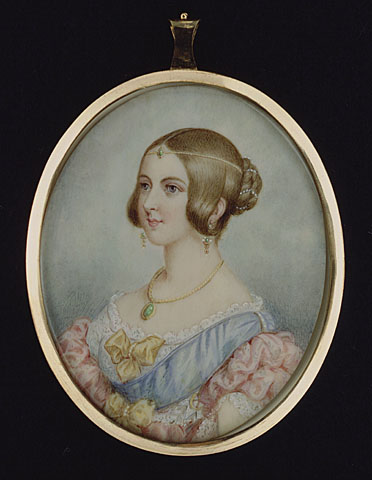
-
Article
Vitus Jonassen Bering
Vitus Jonassen Bering, explorer (b at Horsens, Denmark 1681; d on Bering Island 8 Dec 1741). An officer in the Russian navy, Bering was appointed in 1725 by Peter the Great to explore the Siberian coast.
"https://thecanadianencyclopedia.ca/images/tce_placeholder.jpg?v=e9dca980c9bdb3aa11e832e7ea94f5d9" // resources/views/front/categories/view.blade.php
https://thecanadianencyclopedia.ca/images/tce_placeholder.jpg?v=e9dca980c9bdb3aa11e832e7ea94f5d9
-
Article
Voyageurs
Voyageurs were independent contractors, workers or minor partners in companies involved in the fur trade. They were licensed to transport goods to trading posts and were usually forbidden to do any trading of their own. The fur trade changed over the years, as did the groups of men working in it. In the 17th century, voyageurs were often coureurs des bois — unlicensed traders responsible for delivering trade goods from suppliers to Indigenous peoples. The implementation of the trading licence system in 1681 set voyageurs apart from coureurs des bois, who were then considered outlaws of sorts. Today, the word voyageur, like the term coureur des bois, evokes the romantic image of men canoeing across the continent in search of furs. Their life was full of perilous adventure, gruelling work and cheerful camaraderie.
"https://d3d0lqu00lnqvz.cloudfront.net/media/media/50d0c290-345d-4655-b501-3cfa471dfdb7.jpg" // resources/views/front/categories/view.blade.php
https://d3d0lqu00lnqvz.cloudfront.net/media/media/50d0c290-345d-4655-b501-3cfa471dfdb7.jpg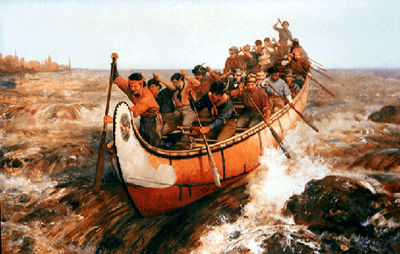
-
Macleans
Walesa Defeated
The vote was close, nail-bitingly close. Last week, Polish voters narrowly elected a smooth-faced, smooth-talking former Communist to the presidency of Poland, ousting Nobel Peace Prize winner Lech Walesa and ending an era in Polish politics.This article was originally published in Maclean's Magazine on December 4, 1995
"https://thecanadianencyclopedia.ca/images/tce_placeholder.jpg?v=e9dca980c9bdb3aa11e832e7ea94f5d9" // resources/views/front/categories/view.blade.php
https://thecanadianencyclopedia.ca/images/tce_placeholder.jpg?v=e9dca980c9bdb3aa11e832e7ea94f5d9
-
Article
Walter Patterson
Walter Patterson, army officer, landowner, first British governor of St. John’s Island [Prince Edward Island] (born c. 1735 near Rathmelton, County Donegal, Ireland; died 6 September 1798 in London, England). Patterson served with the British army in North America during the Seven Years’ War. In 1770, he was sworn in as the first British governor of St. John’s Island (renamed Prince Edward Island in 1799). His time as governor was marked by land speculation and political uproar.
"https://d3d0lqu00lnqvz.cloudfront.net/media/WalterPatterson.jpg" // resources/views/front/categories/view.blade.php
https://d3d0lqu00lnqvz.cloudfront.net/media/WalterPatterson.jpg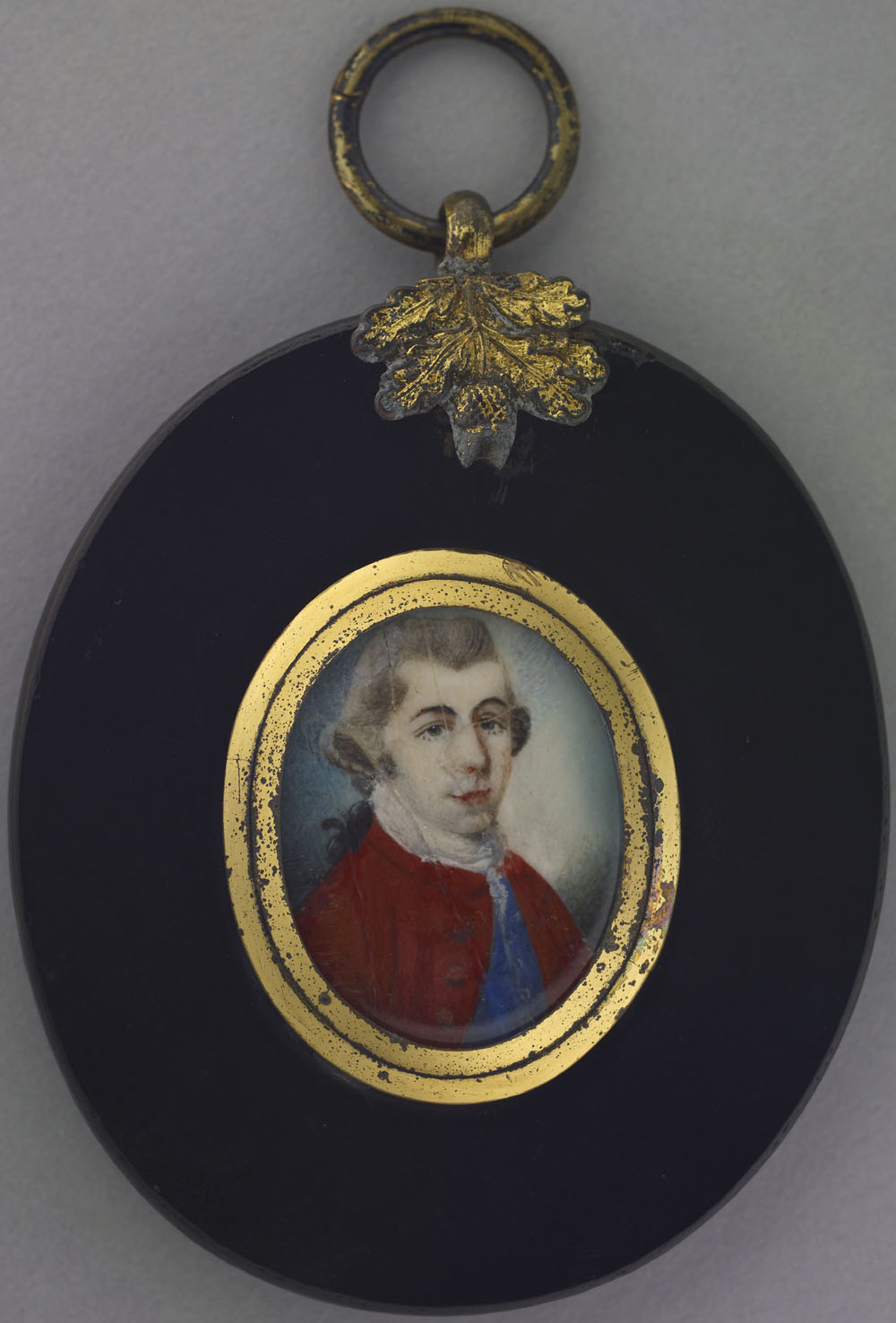
-
Article
Canadian War Art Programs
Since the First World War, there have been four major initiatives to allow Canadian artists to document Canadian Armed Forces at war. Canada’s first official war art program, the Canadian War Memorials Fund (1916–19), was one of the first government-sponsored programs of its kind. It was followed by the Canadian War Art Program (1943–46) during the Second World War. The Canadian Armed Forces Civilian Artists Program (1968–95) and the Canadian Forces Artists Program (2001–present) were established to send civilian artists to combat and peacekeeping zones. Notable Canadian war artists have included A.Y. Jackson, F.H. Varley, Lawren Harris, Alex Colville, Molly Lamb Bobak and Mary Riter Hamilton.
"https://d3d0lqu00lnqvz.cloudfront.net/media/media/4bad248a-8c22-4488-9cc9-172fcd16be88.jpg" // resources/views/front/categories/view.blade.php
https://d3d0lqu00lnqvz.cloudfront.net/media/media/4bad248a-8c22-4488-9cc9-172fcd16be88.jpg
-
Article
War Brides
The term “war brides” refers to women who married Canadian servicemen overseas and then immigrated to Canada after the world wars to join their husbands. The term became popular during the Second World War but is now also used to describe women who had similar experiences in the First World War. There are no official figures for war brides and their children during the First World War. In the Second World War, approximately 48,000 women married Canadian servicemen overseas. By 31 March 1948, the Canadian government had transported about 43,500 war brides and 21,000 children to Canada.
"https://d3d0lqu00lnqvz.cloudfront.net/media/new_article_images/WarBrides/War Bride.jpg" // resources/views/front/categories/view.blade.php
https://d3d0lqu00lnqvz.cloudfront.net/media/new_article_images/WarBrides/War Bride.jpg
-
Editorial
Arrival of the War Brides and their Children in Canada
The following article is an editorial written by The Canadian Encyclopedia staff. Editorials are not usually updated. Between 1942 and 1947, the Canadian government brought 47,783 "war brides” and their 21,950 children to Canada. Most of these women were from Great Britain, where Canadian forces had been based during the Second World War. Although the voyage and transition were difficult for many war brides, most persevered and grew to love their adopted homeland.
"https://d3d0lqu00lnqvz.cloudfront.net/media/media/398e8ba8-53e8-4f87-b127-b5020c4969b1.jpg" // resources/views/front/categories/view.blade.php
https://d3d0lqu00lnqvz.cloudfront.net/media/media/398e8ba8-53e8-4f87-b127-b5020c4969b1.jpg
-
Article
Wickananish
Wickananish, or Wikinanish, meaning "having no one in front of him in the canoe," Nuu-chah-nulth (Nootka) chief (fl 1788-93). Wickananish was the leading chief at Clayoquot Sound, on the West coast of Vancouver Island, during the period of initial European contact.
"https://thecanadianencyclopedia.ca/images/tce_placeholder.jpg?v=e9dca980c9bdb3aa11e832e7ea94f5d9" // resources/views/front/categories/view.blade.php
https://thecanadianencyclopedia.ca/images/tce_placeholder.jpg?v=e9dca980c9bdb3aa11e832e7ea94f5d9
-
Article
William Alexander, Earl of Stirling
William Alexander, Earl of Stirling, poet, courtier, colonizer (b at Menstrie, Scot c 1577; d at London, Eng 1640). Although he never visited North America, he is remembered for his nationalistic foresight, and for providing Nova Scotia with its name, flag and coat of arms.
"https://thecanadianencyclopedia.ca/images/tce_placeholder.jpg?v=e9dca980c9bdb3aa11e832e7ea94f5d9" // resources/views/front/categories/view.blade.php
https://thecanadianencyclopedia.ca/images/tce_placeholder.jpg?v=e9dca980c9bdb3aa11e832e7ea94f5d9
-
Article
William Baffin
William Baffin, explorer (born c. 1584, probably in London, England; died 23 January 1621 or 1622 in the Persian Gulf). One of the most proficient navigators of his time, he was chief pilot with Captain James Hall on his ill-fated voyage to Greenland in 1612. He was pilot on two expeditions to the Spitsbergen region in 1613 and 1614, and made his next voyage under Robert Bylot aboard the Discovery in 1615 in search of the Northwest Passage. They examined the Hudson Strait and western Southampton Island; when in sight of land later named Baffin Island by W.E. Parry, they turned back because of ice conditions. On this voyage Baffin obtained a longitude by observing stars concealed by the moon, the first known instance of such a measurement by an English navigator at sea.
"https://thecanadianencyclopedia.ca/images/tce_placeholder.jpg?v=e9dca980c9bdb3aa11e832e7ea94f5d9" // resources/views/front/categories/view.blade.php
https://thecanadianencyclopedia.ca/images/tce_placeholder.jpg?v=e9dca980c9bdb3aa11e832e7ea94f5d9
-
Article
William Cormack
William Eppes (Epps) Cormack, merchant, explorer, naturalist (b at St John's 5 May 1796; d at New Westminster, BC 30 Apr 1868).
"https://thecanadianencyclopedia.ca/images/tce_placeholder.jpg?v=e9dca980c9bdb3aa11e832e7ea94f5d9" // resources/views/front/categories/view.blade.php
https://thecanadianencyclopedia.ca/images/tce_placeholder.jpg?v=e9dca980c9bdb3aa11e832e7ea94f5d9