
Browse "History/Historical Figures"
-
Article
Sir Herbert Samuel Holt
Sir Herbert Samuel Holt, capitalist (b at Geashill, King's County, Ire 12 Feb 1856; d at Montréal 28 Sept 1941). Holt immigrated to Canada in 1873 and worked as an engineer and contractor on railway construction projects, including the mountain section of the main line of the CPR.
"https://thecanadianencyclopedia.ca/images/tce_placeholder.jpg?v=e9dca980c9bdb3aa11e832e7ea94f5d9" // resources/views/front/categories/view.blade.php
https://thecanadianencyclopedia.ca/images/tce_placeholder.jpg?v=e9dca980c9bdb3aa11e832e7ea94f5d9
-
Article
Sir Hugh John Macdonald
In 1896 he joined the short-lived Tupper government as minister of the interior. After the courts overturned his election, he became leader of the Manitoba Conservatives and led them to victory in 1899.
"https://d3d0lqu00lnqvz.cloudfront.net/media/media/94d87327-f64f-4844-986f-2bdf8c024a16.jpg" // resources/views/front/categories/view.blade.php
https://d3d0lqu00lnqvz.cloudfront.net/media/media/94d87327-f64f-4844-986f-2bdf8c024a16.jpg
-
Article
Sir Humphrey Gilbert
His first attempt, in 1578, was frustrated by poor organization, desertion and storms.
"https://d3d0lqu00lnqvz.cloudfront.net/media/media/3dba2c3d-19d5-4563-ab19-30bc1172350d.jpg" // resources/views/front/categories/view.blade.php
https://d3d0lqu00lnqvz.cloudfront.net/media/media/3dba2c3d-19d5-4563-ab19-30bc1172350d.jpg
-
Editorial
Sir Humphrey Gilbert: Elizabethan Explorer
The following article is an editorial written by The Canadian Encyclopedia staff. Editorials are not usually updated.
"https://d3d0lqu00lnqvz.cloudfront.net/media/media/fd3f646a-84ae-476c-9535-803c115c3e43.jpg" // resources/views/front/categories/view.blade.php
https://d3d0lqu00lnqvz.cloudfront.net/media/media/fd3f646a-84ae-476c-9535-803c115c3e43.jpg
-
Article
Sir Isaac Brock
Sir Isaac Brock, military commander, administrator of Upper Canada (born 6 October 1769 in St Peter Port, Guernsey, England; died 13 October 1812 in Queenston Heights, Upper Canada). Major-General Sir Isaac Brock is best known for defending Upper Canada against American forces during the War of 1812. He is, in part, credited with defeating the Americans at Fort Mackinac and Detroit. He died in the Battle of Queenston Heights, but has been immortalized as a great hero of Upper Canada.
"https://d3d0lqu00lnqvz.cloudfront.net/media/media/147949b9-e65f-4301-b6c3-fda7f686285f.jpg" // resources/views/front/categories/view.blade.php
https://d3d0lqu00lnqvz.cloudfront.net/media/media/147949b9-e65f-4301-b6c3-fda7f686285f.jpg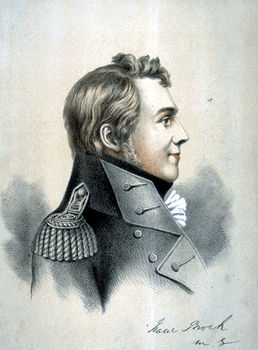
-
Article
Sir James Clark Ross
Sir James Clark Ross, naval officer, polar discoverer (born 15 April 1800 in London, England; died 13 April 1862 in Aylesbury, England).
"https://d3d0lqu00lnqvz.cloudfront.net/media/media/53c26b08-3e98-4cb1-b146-fc3654a0854a.jpg" // resources/views/front/categories/view.blade.php
https://d3d0lqu00lnqvz.cloudfront.net/media/media/53c26b08-3e98-4cb1-b146-fc3654a0854a.jpg
-
Article
Sir John Abbott
John Joseph Caldwell Abbott, PC, QC, KCMG, lawyer, professor, businessman, politician and prime minister (born 12 March 1821 in St. Andrews East, Lower Canada [now Saint-André-d’Argenteuil, QC]; died 30 October 1893 in Montreal). Abbott was a leading authority on commercial law, a strong advocate of English Quebec’s business elite and an influential figure in many corporate and social organizations. He was the first Canadian-born prime minister, as well as the first to hold the position from the Senate rather than the House of Commons. He served as prime minister from 16 June 1891 to 24 November 1892.
"https://d3d0lqu00lnqvz.cloudfront.net/media/new_article_images/JohnAbbott/John Abbott portrait.jpg" // resources/views/front/categories/view.blade.php
https://d3d0lqu00lnqvz.cloudfront.net/media/new_article_images/JohnAbbott/John Abbott portrait.jpg
-
Article
Sir John A. Macdonald
Sir John Alexander Macdonald, prime minister of Canada 1867–73 and 1878–91, lawyer, businessman, politician (born 10 or 11 January 1815 in Glasgow, Scotland; died 6 June 1891 in Ottawa, ON). John A. Macdonald was Canada’s first and second-longest serving prime minister (19 years). He set wide-ranging policies that continue to influence the country today. Macdonald helped unite the British North American colonies in Confederation and was a key figure in the writing of the British North America Act — the foundation of Canada’s Constitution. He oversaw the construction of the Canadian Pacific Railway (CPR) and the addition of Manitoba, the North-West Territories, British Columbia and Prince Edward Island to Confederation. However, his legacy also includes the creation of the residential school system for Indigenous children, the policies that contributed to the starvation of Plains Indigenous peoples, and the “head tax” on Chinese immigrants.
"https://d3d0lqu00lnqvz.cloudfront.net/media/Twitter_Cards/Sir John A 1.jpg" // resources/views/front/categories/view.blade.php
https://d3d0lqu00lnqvz.cloudfront.net/media/Twitter_Cards/Sir John A 1.jpg
-
Article
Sir Wilfrid Laurier
Sir Wilfrid Laurier, PC, prime minister of Canada 1896–1911, politician, lawyer, journalist (born 20 November 1841 in St-Lin, Canada East; died 17 February 1919 in Ottawa, ON). Sir Wilfrid Laurier was the dominant political figure of his era. He was leader of the Liberal Party from 1887 to 1919 and Prime Minister of Canada from 1896 to 1911. A skilful and pragmatic politician with a charismatic personality, he unceasingly sought compromise. Above all, he was a fervent promoter of national unity at a time of radical change and worsening cultural conflict. Laurier also promoted the development and expansion of the country. He encouraged immigration to Western Canada; supported the construction of transcontinental railways; and oversaw the addition of Alberta and Saskatchewan to Confederation.
"https://d3d0lqu00lnqvz.cloudfront.net/Laurier 3.png" // resources/views/front/categories/view.blade.php
https://d3d0lqu00lnqvz.cloudfront.net/Laurier 3.png
-
Article
Sitting Bull
Sitting Bull (Tatanka Iyotake in the Lakota language, meaning literally “Buffalo Bull Who Sits Down”), Hunkpapa Lakota Sioux chief (born in 1831; died 15 December 1890 at Standing Rock, South Dakota). Sitting Bull led the Dakota (Sioux) resistance against US incursion into traditional territory. After the most famous battle at Little Big Horn, in which General George Custer’s forces were completely annihilated, Sitting Bull left the United States for the Cypress Hills in Saskatchewan. Sitting Bull symbolized the conflict between settlers and Indigenous culture over lifestyles, land and resources.
"https://d3d0lqu00lnqvz.cloudfront.net/media/media/489163d3-1f7a-4bc5-9623-49010f3ab5da.jpg" // resources/views/front/categories/view.blade.php
https://d3d0lqu00lnqvz.cloudfront.net/media/media/489163d3-1f7a-4bc5-9623-49010f3ab5da.jpg
-
Article
Goldwin Smith
In 1866 Smith resigned to nurse his ailing father. After his father's death, Smith moved to the US to teach at Cornell. He settled in Toronto in 1871 to be near relatives.
"https://d3d0lqu00lnqvz.cloudfront.net/media/media/4beb98e9-a63b-4aa6-ae17-eafede38eb6a.jpg" // resources/views/front/categories/view.blade.php
https://d3d0lqu00lnqvz.cloudfront.net/media/media/4beb98e9-a63b-4aa6-ae17-eafede38eb6a.jpg
-
Article
Stanley Bréhaut Ryerson
Stanley Bréhaut Ryerson, historian, COMMUNIST PARTY OF CANADA leader (born 12 March 1911 in Toronto, ON; died 25 April 1998 in Montréal, QC). After attending Upper Canada College and University of Toronto he studied at the Sorbonne, Paris (1931-34), where he encountered European communist politics.
"https://thecanadianencyclopedia.ca/images/tce_placeholder.jpg?v=e9dca980c9bdb3aa11e832e7ea94f5d9" // resources/views/front/categories/view.blade.php
https://thecanadianencyclopedia.ca/images/tce_placeholder.jpg?v=e9dca980c9bdb3aa11e832e7ea94f5d9
-
Article
Sylvia Stark
Sylvia Estes Stark, pioneer (born 1839 in Clay County, Missouri, US; died 7 November 1944 in Fruitvale, Salt Spring Island, British Columbia). Born into enslavement, Sylvia Stark was one of more than 600 Black Americans who emigrated to British Columbia in 1858 at the invitation of Governor James Douglas. She was one of the original settlers on Salt Spring Island.
"https://d3d0lqu00lnqvz.cloudfront.net/media/new_article_images/SylviaStark/SylviaStark.jpg" // resources/views/front/categories/view.blade.php
https://d3d0lqu00lnqvz.cloudfront.net/media/new_article_images/SylviaStark/SylviaStark.jpg
-
Article
Taber Child
In 1961, fragments of a human infant skull from were recovered from the banks of the Oldman River near Taber, Alberta.
"https://thecanadianencyclopedia.ca/images/tce_placeholder.jpg?v=e9dca980c9bdb3aa11e832e7ea94f5d9" // resources/views/front/categories/view.blade.php
https://thecanadianencyclopedia.ca/images/tce_placeholder.jpg?v=e9dca980c9bdb3aa11e832e7ea94f5d9
-
Article
Ted King
Theodore “Ted” Stanley King, civil rights activist, real estate broker, accountant, railway porter (born 14 July 1925 in Calgary; died 7 July 2001 in Surrey, BC). Ted King was the president of the Alberta Association for the Advancement of Coloured People from 1958 to 1961, where he advocated for the rights of Black Canadians. In 1959, King launched a legal challenge against a Calgary motel’s discriminatory policy, decades before human rights protections existed throughout Canada. The case made it to the Alberta Supreme Court. Though it was not successful, King’s case exposed legal loopholes innkeepers exploited in order to deny lodging to Black patrons.
"https://d3d0lqu00lnqvz.cloudfront.net/!feature-img-thumbnails/ted-king-tw.jpg" // resources/views/front/categories/view.blade.php
https://d3d0lqu00lnqvz.cloudfront.net/!feature-img-thumbnails/ted-king-tw.jpg