
Browse "History/Historical Figures"
-
Article
François de Laval
François de Laval, first bishop of Québec (born François-Xavier de Montmorency-Laval de Montigny on 30 April 1623 in Montigny-sur-Avre, France; died 6 May 1708 in Québec).
"https://d3d0lqu00lnqvz.cloudfront.net/media/media/8b6b148e-044b-4ca9-a70a-2080d5773590.jpg" // resources/views/front/categories/view.blade.php
https://d3d0lqu00lnqvz.cloudfront.net/media/media/8b6b148e-044b-4ca9-a70a-2080d5773590.jpg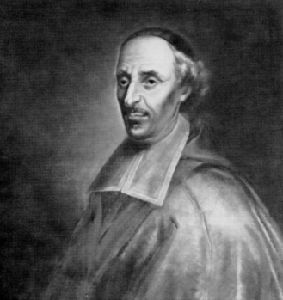
-
Article
François Dollier de Casson
François Dollier de Casson, explorer, superior of the Sulpicians in New France (1670-74, 1678-1701), seigneur of Montréal, vicar general, historian (b in the château of Casson-sur-l'Erdre in Lower Brittany 1636; d at Montréal 27 Sept 1701).
"https://thecanadianencyclopedia.ca/images/tce_placeholder.jpg?v=e9dca980c9bdb3aa11e832e7ea94f5d9" // resources/views/front/categories/view.blade.php
https://thecanadianencyclopedia.ca/images/tce_placeholder.jpg?v=e9dca980c9bdb3aa11e832e7ea94f5d9
-
Article
François-Gaston de Lévis
François-Gaston, Duc de Lévis, French army officer (born 20 August 1719 near Limoux, France; died 26 November 1787 in Arras, France). Born into an impoverished branch of the French nobility, he rose through the military hierarchy thanks to his family connections, his sangfroid and his bravery on the battlefield. Deployed to New France during the Seven Years’ War, he was named second-in-command to Marquis Louis-Joseph de Montcalm. On 28 April 1760, he won the Battle of Ste-Foy against the British garrison in Quebec City commanded by James Murray.
"https://d3d0lqu00lnqvz.cloudfront.net/media/media/06c07fed-02d1-4cf3-b67c-5372797344ff.jpg" // resources/views/front/categories/view.blade.php
https://d3d0lqu00lnqvz.cloudfront.net/media/media/06c07fed-02d1-4cf3-b67c-5372797344ff.jpg
-
Article
François-Xavier-Antoine Labelle
An ardent supporter of building the CPR in 1872, he was sent as an envoy to Europe by the Canadian government in 1885 and the Québec government in 1890. In 1888 Premier Honoré MERCIER appointed him deputy minister of agriculture and colonization.
"https://thecanadianencyclopedia.ca/images/tce_placeholder.jpg?v=e9dca980c9bdb3aa11e832e7ea94f5d9" // resources/views/front/categories/view.blade.php
https://thecanadianencyclopedia.ca/images/tce_placeholder.jpg?v=e9dca980c9bdb3aa11e832e7ea94f5d9
-
Article
Françoise-Marie de Saint-Étienne de La Tour
Françoise-Marie de Saint-Étienne de La Tour, née Jacquelin, Acadian heroine (b in France 1602; d at Ft La Tour [NB] 1645). Civil war raged in Acadia in 1640 when she married Charles de Saint-Étienne de LA TOUR, one of 2 claimants to the colony's governorship.
"https://d3d0lqu00lnqvz.cloudfront.net/media/media/4fc6b68c-735c-4311-b452-cbbdfebe9ce7.jpg" // resources/views/front/categories/view.blade.php
https://d3d0lqu00lnqvz.cloudfront.net/media/media/4fc6b68c-735c-4311-b452-cbbdfebe9ce7.jpg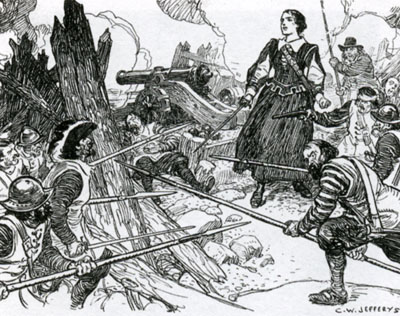
-
Article
Franklin Search
The disappearance in 1845 of Sir John Franklin and his crew in the Canadian Arctic set off the greatest rescue operation in the history of exploration. More than 30 expeditions over two decades would search by land and sea for clues as to his fate, in the process charting vast areas of the Canadian Arctic and mapping the complete route of the Northwest Passage. The search for clues continued into the 20th and 21st centuries. On 9 September 2014, it was announced that one of the expedition ships, later identified as the HMS Erebus, had been found off King William Island. On 12 September 2016, a team from the Arctic Research Foundation announced that they had located the Terror in Nunavut's Terror Bay, north of where the Erebus was found.
"https://d3d0lqu00lnqvz.cloudfront.net/media/media/61cafc88-db89-4bf1-a339-8d82f7bc6007.jpg" // resources/views/front/categories/view.blade.php
https://d3d0lqu00lnqvz.cloudfront.net/media/media/61cafc88-db89-4bf1-a339-8d82f7bc6007.jpg
-
Article
Frederic Baraga
Frederic Baraga, Catholic missionary priest (b at Mala Vas, present-day Republic of Slovenia, 29 Jun 1797; d at Marquette, Mich 19 Jan 1868). He came to the US in 1830 and dedicated his life to serving the OTTAWA and CHIPEWYAN.
"https://thecanadianencyclopedia.ca/images/tce_placeholder.jpg?v=e9dca980c9bdb3aa11e832e7ea94f5d9" // resources/views/front/categories/view.blade.php
https://thecanadianencyclopedia.ca/images/tce_placeholder.jpg?v=e9dca980c9bdb3aa11e832e7ea94f5d9
-
Article
Lord Stanley
Frederick Arthur Stanley, Baron Stanley of Preston, 16th Earl of Derby, governor general of Canada from 1888 to 1893 (born 15 January 1841 in London, United Kingdom; died 14 June 1908 in Holwood, United Kingdom).In 1892, Stanley donated the Stanley Cup, the oldest professional sports championship trophy in North America, which is awarded to the winning team of the National Hockey League (NHL) each year.
"https://d3d0lqu00lnqvz.cloudfront.net/media/media/cdaa0893-b3a6-4cd2-af78-863c3b7e4eb0.jpg" // resources/views/front/categories/view.blade.php
https://d3d0lqu00lnqvz.cloudfront.net/media/media/cdaa0893-b3a6-4cd2-af78-863c3b7e4eb0.jpg
-
Article
Frederick Philipse Robinson
Frederick Philipse Robinson, British army officer, military figure in the WAR OF 1812 (b Sept 1763, New York, US; d Sussex, England, 1 Jan 1852). Frederick Robinson was born in the British Province of New York.
"https://thecanadianencyclopedia.ca/images/tce_placeholder.jpg?v=e9dca980c9bdb3aa11e832e7ea94f5d9" // resources/views/front/categories/view.blade.php
https://thecanadianencyclopedia.ca/images/tce_placeholder.jpg?v=e9dca980c9bdb3aa11e832e7ea94f5d9
-
Article
Lord Dufferin
Frederick Temple Hamilton-Temple-Blackwood, 1st Marquess of Dufferin and Ava, governor general of Canada from 1872 to 1878 (born 21 June 1826 in Florence, Italy; died 12 February 1902 in Bangor, Northern Ireland, United Kingdom). Dufferin and his wife, Lady Dufferin, were the first viceregal couple since Confederation to become prominent figures in Canadian society, touring all provinces and meeting with Canadians from a wide variety of regions and social backgrounds. Dufferin set key precedents for future governors general with his extensive travel and granting of academic and athletic honours to Canadians.
"https://d3d0lqu00lnqvz.cloudfront.net/media/media/7fcd8d3f-5076-47d3-95cd-8b8eaf04c4ab.jpg" // resources/views/front/categories/view.blade.php
https://d3d0lqu00lnqvz.cloudfront.net/media/media/7fcd8d3f-5076-47d3-95cd-8b8eaf04c4ab.jpg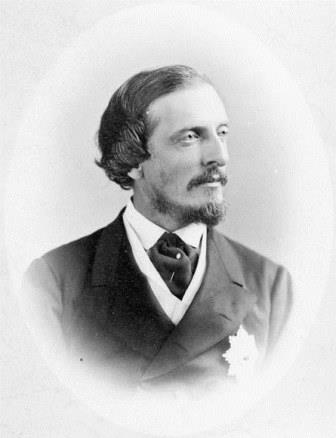
-
Article
French Canada and the Monarchy
French Canadian attitudes toward monarchical government and members of the French and, later, British royal families have changed over time. King Louis XIV of France made New France a crown colony and supported its expansion and economic development. King George III of Great Britain granted royal assent to the Quebec Act in 1774, which guaranteed freedom of worship and French Canadian property rights. Early royal tours of Quebec were well received by the public. There was republican sentiment expressed during the Lower Canada Rebellion of 1837, however, and support for the monarchy in Quebec declined sharply following the Quiet Revolution of the 1960s. Today, polling data indicates that a majority of people in Quebec support the abolition of the monarchy in Canada.
"https://d3d0lqu00lnqvz.cloudfront.net/FrenchCanadaMonarchy/QueenExpo67.jpg" // resources/views/front/categories/view.blade.php
https://d3d0lqu00lnqvz.cloudfront.net/FrenchCanadaMonarchy/QueenExpo67.jpg
-
Collection
Fur Trade in Canada
The fur trade was a vast commercial enterprise across the wild, forested expanse of what is now Canada. It was at its peak for nearly 250 years, from the early 17th to the mid-19th centuries. It was sustained primarily by the trapping of beavers to satisfy the European demand for felt hats. The intensely competitive trade opened the continent to exploration and settlement. It financed missionary work, established social, economic and colonial relationships between Europeans...
"https://d3d0lqu00lnqvz.cloudfront.net/media/media/e4ec1e55-01c2-4b77-a220-f05a84fd4c9c.jpg" // resources/views/front/categories/view.blade.php
https://d3d0lqu00lnqvz.cloudfront.net/media/media/e4ec1e55-01c2-4b77-a220-f05a84fd4c9c.jpg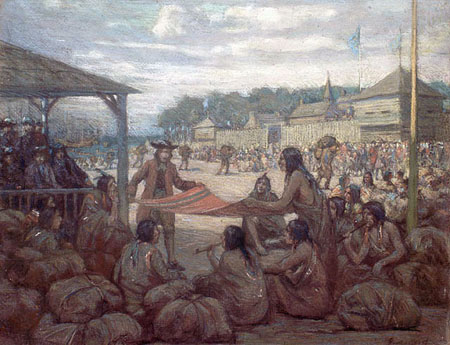
-
Article
Geographic Distribution of the Dorset Culture
Around 2,800 years ago (ca. 800 BCE), the Palaeo-Inuit groups living in the Eastern North American Arctic began to drastically change. These later Palaeo-Inuit groups are collectively called the “Dorset” by archaeologists. They had many differences from their Pre-Dorset ancestors. The Dorset people would persist in the Arctic until roughly 600-700 years ago (ca. 1300-1400 CE). After this point, they disappeared. This happened only a few centuries after the arrival of early Inuit (Thule) groups. They were genetically and culturally distinct from the Dorset. Archaeologists separate this roughly 2,000-year period of Dorset existence into three different periods or traditions. These periods are the Early Dorset (ca. 800 BCE to 1 CE), Middle Dorset (ca. 1 to 500 CE) and Late Dorset (ca. 500 to 1400 CE). There is ongoing debate regarding the differences and similarities between these time periods. However, changes in terms of technology, domestic architecture, mobility and geographic range did occur (see also Dorset Culture).
"https://d3d0lqu00lnqvz.cloudfront.net/DorsetCulture/Figure2EarlyDorsetGeographicLocation_updated.jpg" // resources/views/front/categories/view.blade.php
https://d3d0lqu00lnqvz.cloudfront.net/DorsetCulture/Figure2EarlyDorsetGeographicLocation_updated.jpg
-
Article
George Albertus Cox
George Albertus Cox, financier, senator, philanthropist (b at Colborne, Upper Canada 7 May 1840; d at Toronto 16 Jan 1914).
"https://thecanadianencyclopedia.ca/images/tce_placeholder.jpg?v=e9dca980c9bdb3aa11e832e7ea94f5d9" // resources/views/front/categories/view.blade.php
https://thecanadianencyclopedia.ca/images/tce_placeholder.jpg?v=e9dca980c9bdb3aa11e832e7ea94f5d9
-
Article
George Anthony Walkem
Associated with Amor DE COSMOS in the Confederation League before BC joined CONFEDERATION, George Walkem became attorney general in De Cosmos's Cabinet and succeeded him as premier on 11 Feb 1874.
"https://d3d0lqu00lnqvz.cloudfront.net/media/media/9b976a8f-cb13-40e4-b530-5a728534a8a9.jpg" // resources/views/front/categories/view.blade.php
https://d3d0lqu00lnqvz.cloudfront.net/media/media/9b976a8f-cb13-40e4-b530-5a728534a8a9.jpg