
Browse "Communities & Sociology"
-
Editorial
Editorial: The Arrival of Black Loyalists in Nova Scotia
The following article is an editorial written by The Canadian Encyclopedia staff. Editorials are not usually updated. “Freedom and a Farm.” The promise was exciting to the thousands of African Americans, most seeking to escape enslavement, who fought in British regiments during the American Revolutionary War (1775–83). Following the war, they joined tens of thousands of Loyalists — American refugees who had sided with the British. Between 80,000 and 100,000 Loyalists eventually fled the United States. About half came to British North America. The main waves arrived in 1783 and 1784. The territory that now includes the Maritime provinces became home to more than 30,000 Loyalists. Most of coastal Nova Scotia received Loyalist settlers, as did Cape Breton and Prince Edward Island (then called St. John’s Island).
"https://d3d0lqu00lnqvz.cloudfront.net/media/media/be13527b-b76d-408a-afca-30acbd4f7bfc.png" // resources/views/front/categories/view.blade.php
https://d3d0lqu00lnqvz.cloudfront.net/media/media/be13527b-b76d-408a-afca-30acbd4f7bfc.png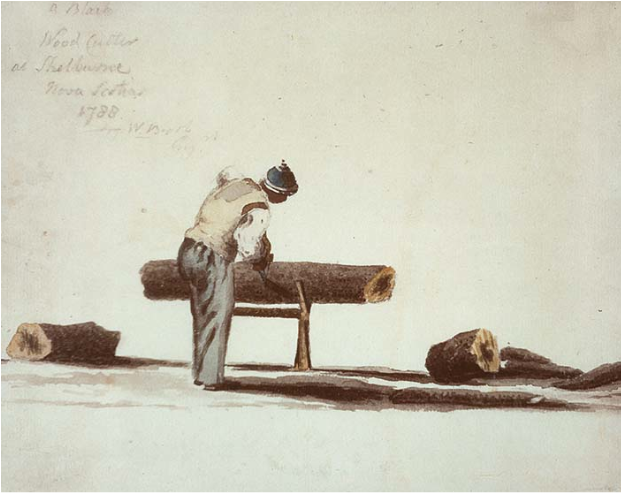
-
Article
Black Pioneers of the American Revolution
The Black Pioneers was a provincial (i.e., locally recruited) unit of the British army during the American Revolutionary War. It was the only Black unit on the provincial establishment. Most members of the company were formerly enslaved persons who had fled their Patriot (rebel) owners in response to British promises of freedom. Although some Black soldiers fought in combat during the war, the Pioneers provided construction and engineering support to the British army. After the war, they were among thousands of Black Loyalists who were transported to Nova Scotia.
"https://d3d0lqu00lnqvz.cloudfront.net/media/media/be13527b-b76d-408a-afca-30acbd4f7bfc.png" // resources/views/front/categories/view.blade.php
https://d3d0lqu00lnqvz.cloudfront.net/media/media/be13527b-b76d-408a-afca-30acbd4f7bfc.png
-
Article
Black Volunteers in the Canadian Expeditionary Force
During the First World War, up to 1,300 Black men volunteered for service in the Canadian Expeditionary Force (CEF). While the men of No. 2 Construction Battalion are the best-known example of Black participation in the war, another 300 to 500 enlisted in other units of the CEF. Of these, about 100 served on the front lines. Black soldiers participated in all major battles of the CEF, from its arrival in France until the Armistice. (See also Black Canadians and Conscription in the First World War.)
"https://d3d0lqu00lnqvz.cloudfront.net/media/media/d2114b98-ef0d-4e98-aa49-892b095d77cc.jpg" // resources/views/front/categories/view.blade.php
https://d3d0lqu00lnqvz.cloudfront.net/media/media/d2114b98-ef0d-4e98-aa49-892b095d77cc.jpg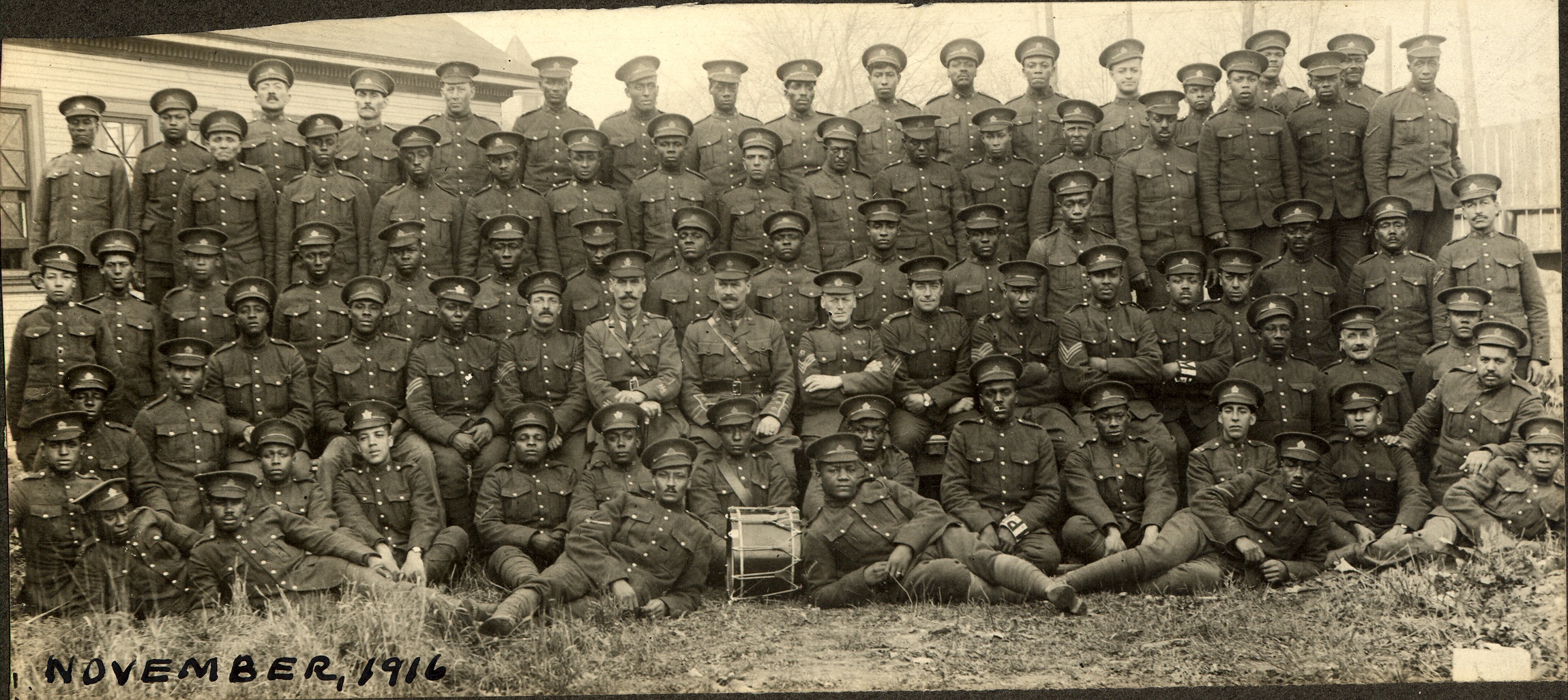
-
Article
George Morton and the Fight to Fight: Black Volunteers in the First World War
Archivist Barbara M. Wilson explores the significance of a letter sent to Sir Sam Hughes by George Morton, a letter carrier, barber and civil rights advocate from Hamilton, Ontario. In his letter, dated 7 September 1915, Morton asked the minister of militia and defence why members of the Black community were being turned away when trying to enlist for service with the Canadian Expeditionary Force during the First World War. (See also Black Volunteers in the Canadian Expeditionary Force.)
"https://d3d0lqu00lnqvz.cloudfront.net/media/media/1110b60d-adfe-4989-b17d-45c0d12d2438.jpg" // resources/views/front/categories/view.blade.php
https://d3d0lqu00lnqvz.cloudfront.net/media/media/1110b60d-adfe-4989-b17d-45c0d12d2438.jpg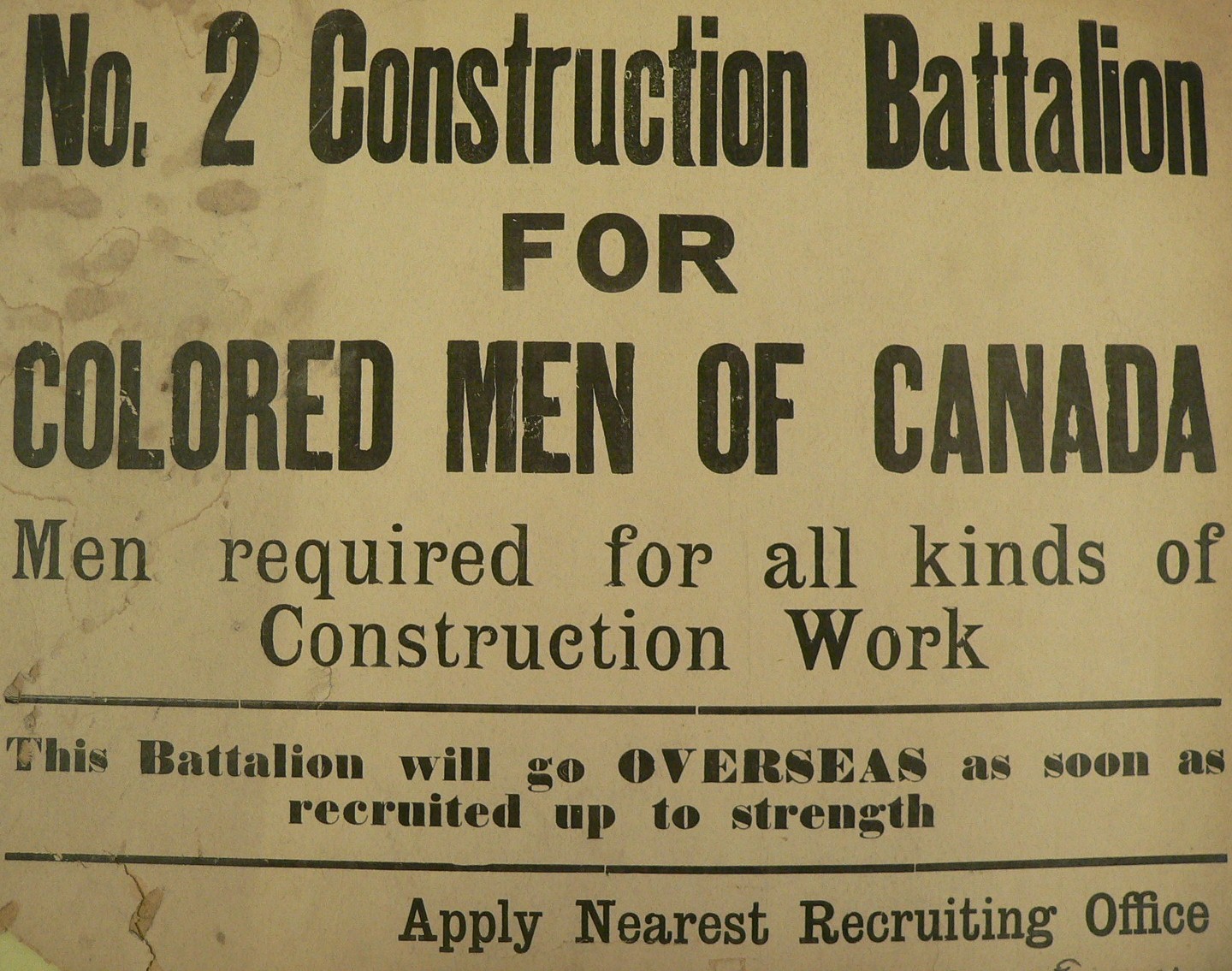
-
Article
Black Voting Rights in Canada
The history of Black Canadian voting rights is marked by contrasting shifts. Enslaved during the period 1600–1834, Black persons could not vote. Emancipated, they were entitled to the rights, freedoms and privileges enjoyed by British subjects, including the franchise; however, racial discrimination did at times impede Black Canadians’ right to vote. The rights and freedoms of Black women were further restricted by virtue of their sex. Black communities in Canada represent an array of experiences, below are some that relate to the right to vote.
"https://d3d0lqu00lnqvz.cloudfront.net/media/media/ae60e6b1-2ed8-471b-8da9-2b0d76e9d8fd.jpg" // resources/views/front/categories/view.blade.php
https://d3d0lqu00lnqvz.cloudfront.net/media/media/ae60e6b1-2ed8-471b-8da9-2b0d76e9d8fd.jpg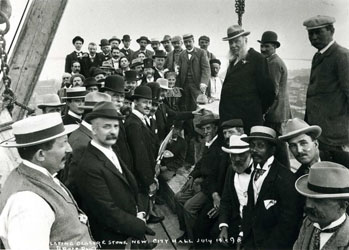
-
Editorial
Editorial: Black Women in the Arts
The following article is part of an exhibit. Past exhibits are not updated. Driven to overcome histories of prejudice and marginalization, as women and as people of African descent, Black women are among Canada’s most innovative artists. With their fingers on the pulse of this multi-tasking, multi-disciplinary, 21st-century culture, the 15 dynamic artists featured in this exhibit — a mix of poets, playwrights, filmmakers, musicians and visual artists — refuse to be limited to one medium or style. Award-winning poet Dionne Brand is also a novelist, filmmaker and influential professor, while Lillian Allen thrives as a dub poet, declaiming her verses to reggae accompaniment. trey anthony is a comedian as well as a ground-breaking playwright and screenwriter. All of these women and the many others below are also, in one way or another, passionate activists and committed advocates who are deeply involved in their communities.
"https://d3d0lqu00lnqvz.cloudfront.net/media/media/ee1f817b-7ddb-4e03-9a02-e51f833c78da.jpg" // resources/views/front/categories/view.blade.php
https://d3d0lqu00lnqvz.cloudfront.net/media/media/ee1f817b-7ddb-4e03-9a02-e51f833c78da.jpg
-
Article
Siksika (Blackfoot)
The Siksika, also known as the Blackfoot (or Blackfeet in the United States), are one of the three nations that make up the Blackfoot Confederacy (the other two are the Piikani and Kainai). In the Blackfoot language, Siksika means “Blackfoot.” As of February 2026, the Siksika Nation registered population was 8,056, with 4,349 living on Siksika Nation's reserve in Alberta.
"https://d3d0lqu00lnqvz.cloudfront.net/media/media/48719197-b6cd-42c6-ae22-4978290d2f26.jpg" // resources/views/front/categories/view.blade.php
https://d3d0lqu00lnqvz.cloudfront.net/media/media/48719197-b6cd-42c6-ae22-4978290d2f26.jpg
-
Article
History of Kainai Nation (Blood Tribe)
The Kainai, also known as the Blood or Kainaiwa, are one of three nations comprising the Blackfoot Confederacy. (The other two include the Siksika and Piikani.) The Kainai have a land base of 1,342.9 km², bordered on all sides by the Oldman, St. Mary and Belly rivers in Alberta. This entry provides a historical overview of the Kainai people; for more information about their reserve, society and culture, and modern community, please see Kainai Nation (Blood Tribe).
"https://d3d0lqu00lnqvz.cloudfront.net/media/media/f049f627-d2f7-4eaf-9c4f-db03980b55aa.jpg" // resources/views/front/categories/view.blade.php
https://d3d0lqu00lnqvz.cloudfront.net/media/media/f049f627-d2f7-4eaf-9c4f-db03980b55aa.jpg
-
Article
Brent Carver
Brent Christopher Carver, actor (born 17 November 1951 in Cranbrook, BC; died 4 August 2020 in Cranbrook). Brent Carver was one of Canada’s most versatile and soulful actors. He tackled the classics at the Stratford Festival (1980–87) and gave critically acclaimed performances in musical theatre, cabaret and film. The New York Times described him as “sensitive, soft-spoken yet nakedly emotional.” His performance in the 1993 Broadway production of Kiss of the Spider Woman earned him a Tony Award. Associated with Robin Phillips, who directed him both at Stratford and at Theatre London (1983–84), Carver also worked closely with John Neville at Edmonton's Citadel Theatre. Carver received the Governor General’s Performing Arts Award for Lifetime Artistic Achievement in 2014.
"https://thecanadianencyclopedia.ca/images/tce_placeholder.jpg?v=e9dca980c9bdb3aa11e832e7ea94f5d9" // resources/views/front/categories/view.blade.php
https://thecanadianencyclopedia.ca/images/tce_placeholder.jpg?v=e9dca980c9bdb3aa11e832e7ea94f5d9
-
Article
Brethren in Christ
Brethren in Christ (identified as "Tunkers" in Canada in the 19th century) were a group of Christians who shared the Anabaptist belief in adult baptism.
"https://thecanadianencyclopedia.ca/images/tce_placeholder.jpg?v=e9dca980c9bdb3aa11e832e7ea94f5d9" // resources/views/front/categories/view.blade.php
https://thecanadianencyclopedia.ca/images/tce_placeholder.jpg?v=e9dca980c9bdb3aa11e832e7ea94f5d9
-
Article
British-Inuit Peace Treaty
The British-Inuit Peace Treaty was signed at Chateau Bay, Labrador, on 21 August 1765, between Newfoundland Governor Hugh Palliser and representatives of the Inuit of central and southern Labrador. The British had suggested the treaty to resolve tensions between the Inuit and the British, support British interests and provide the Inuit with the protection of the British and certain other benefits. (See also Treaties with Indigenous Peoples in Canada and Indigenous-British Relations Pre-Confederation.)
"https://d3d0lqu00lnqvz.cloudfront.net/BritishInuitPeaceTreaty/ChateauBay.jpg" // resources/views/front/categories/view.blade.php
https://d3d0lqu00lnqvz.cloudfront.net/BritishInuitPeaceTreaty/ChateauBay.jpg
-
Article
Brother XII (Edward Arthur Wilson)
Brother XII (Brother Twelve) was one of Canada’s most notorious cult leaders. A mystic figure who dreamed of transforming humanity, he left behind a failed utopia and deep mystery.
"https://d3d0lqu00lnqvz.cloudfront.net/media/new_article_images/BrotherXIIEdwardArthurWilson/85745nanaimoBrotherxii.jpg" // resources/views/front/categories/view.blade.php
https://d3d0lqu00lnqvz.cloudfront.net/media/new_article_images/BrotherXIIEdwardArthurWilson/85745nanaimoBrotherxii.jpg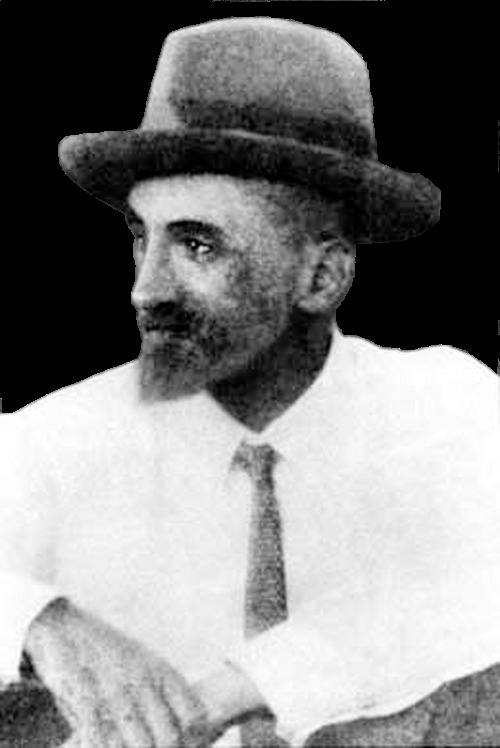
-
Article
Brothers of the Christian Schools
The Institute of the Brothers of the Christian Schools is a Catholic religious order founded by Jean-Baptiste de La Salle in France in 1680. In Canada, members are generally referred to as Christian Brothers or De La Salle Brothers. They are not to be confused with the Congregation of Christian Brothers who were founded by Edmund Rice in Ireland in 1802 and whose members in Canada were also called Christian Brothers or Irish Christian Brothers. The Brothers of the Christian Schools were a major force in Catholic education in Canada, especially in Quebec. They first arrived in Montreal in 1837, then experienced numeric growth, geographic expansion and a solid reputation over the next 125 years. The Brothers underwent a significant exodus and decline in vocations with the dramatic religious and social changes spawned by the Second Vatican Council and the Quiet Revolution.
"https://d3d0lqu00lnqvz.cloudfront.net/media/media/18d34584-e308-4351-8631-f217b0a1fd6c.jpg" // resources/views/front/categories/view.blade.php
https://d3d0lqu00lnqvz.cloudfront.net/media/media/18d34584-e308-4351-8631-f217b0a1fd6c.jpg
-
Article
Bruno Roy
Bruno Roy, writer, novelist, essayist, poet, teacher, orphan, activist (born 16 February 1943, in Montreal, QC; died in Montreal on 6 January 2010). A prolific writer, Roy is also recognized as spokesman and president of the Duplessis Orphans Committee. (See also Duplessis Orphans.)
"https://d3d0lqu00lnqvz.cloudfront.net/TCE_placeholder.png" // resources/views/front/categories/view.blade.php
https://d3d0lqu00lnqvz.cloudfront.net/TCE_placeholder.png
-
Article
Byelorussian Canadians
Byelorussian Canadians (Byelarussians, Belarusians) originate from Belarus and are considered an eastern Slavic people. In 2016, 20,710 Canadians reported themselves as being mainly or partly Byelorussian.
"https://thecanadianencyclopedia.ca/images/tce_placeholder.jpg?v=e9dca980c9bdb3aa11e832e7ea94f5d9" // resources/views/front/categories/view.blade.php
https://thecanadianencyclopedia.ca/images/tce_placeholder.jpg?v=e9dca980c9bdb3aa11e832e7ea94f5d9