Share on Facebook
 Share on X
 Share by Email
 Share on Google Classroom
John Herbert Chapman, FRSC, physicist, space scientist, administrator (born 28 August 1921 in London, ON; died 28 September 1979 in Vancouver, BC). John H. Chapman is regarded by several sources as “the father of the Canadian Space Program.”
Education
John H. Chapman studied radio physics at the University of Western Ontario (see Physics). He received his MSc and PhD in physics from McGill University. His dissertation, “The Fading of Radio Echoes from the Ionosphere,” was published in 1951.
Career
In Ottawa, John H. Chapman was scientist, superintendent and deputy chief superintendent in the Defence Research Telecommunications Establishment (1949-68) and then assistant deputy minister for research (1968-74) and for the space program (1974-79) in the Department of Communications.
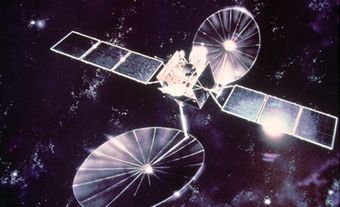
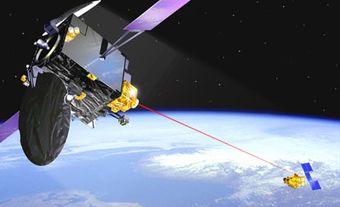
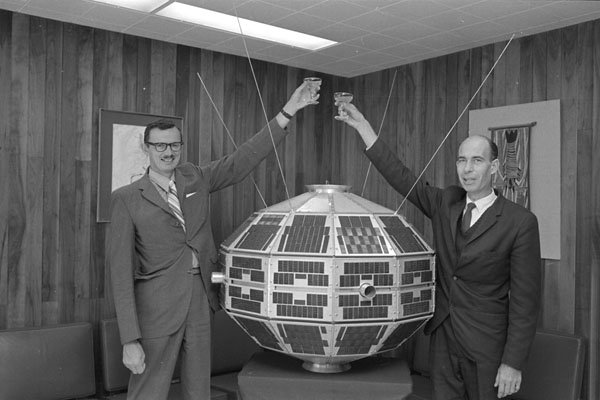
From 1958 to 1971, Chapman played a key role in initiating and directing the spectacularly successful Alouette/ISIS scientific Earth Satellite program (see Space Technology; Satellite). With the launch of Alouette 1 in September 1962 Canada became the third country to design and build an Earth satellite. In 1966 he was appointed chairman of a government study group to examine the upper atmosphere and space programs in Canada. The resulting report was a landmark contribution to space policies and plans in Canada and led to the redirection of Canada's space program from scientific to applications satellites. (See also Canadian Space Agency.) The formation of Telesat in 1969 and the launching of its first satellite (Anik A-1) in November 1972 made Canada the first country to have a domestic geostationary communications satellite system. He was also the prime mover behind Canada's co-operative program with NASA and the European Space Agency to design, build and demonstrate the Hermes Communications Technology Satellite. Launched in 1976, the Hermes was a forerunner of the direct-to-home TV broadcast satellite. (See also Satellite Communications.)
Legacy
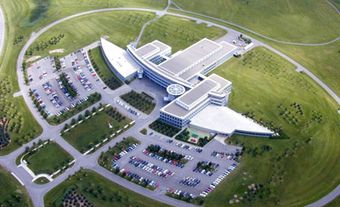
John H. Chapman was a tireless advocate of the Canadian space industry and of the use of space technology to serve the needs of the Canadian people. In recognition of his pioneering work, the Canadian Space Agency’s headquarters in Longueil, Quebec was named the John H. Chapman Space Centre. Similarly, asteroid (14163) was named “Johnchapman.”
In 2000, the John H. Chapman Award of Excellence was established. Presented by the Canadian Space Agency, the award recognizes individuals and their efforts to advance the Canadian Space Program.
Honours and Awards
John Herbert Chapman was a fellow of the Royal Society of Canada. In addition to this honour, he was the recipient of the following awards:
- Engineering Medal, Association of Professional Engineers of Ontario (1966)
- John Howard Dellinger Medal, International Union of Radio Science (1966)
- McCurdy Award, Canadian Aeronautics and Space Institute (1967)