Share on Facebook
 Share on X
 Share by Email
 Share on Google Classroom
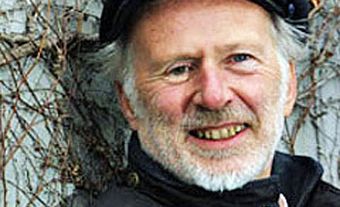
István Anhalt, OC, FRSC, composer, teacher, author (born 12 April 1919 in Budapest, Hungary; died 24 February 2012 in Kingston, ON). István Anhalt was one of the leading figures of electroacoustic music in Canada; he notably established McGill University’s Electronic Music Studio in Montreal. Anhalt was made an Officer of the Order of Canada in 2003, and a Fellow of the Royal Society of Canada in 2007. He won a Juno Award in 2004 for his composition “The Tents of Abraham”.

Education and Early Years
István Anhalt audited classes with Zoltán Kodály (see Kodály method) in 1936 and studied with him at the Royal Hungarian Academy of Music (1937–41). In 1942 he was conscripted into a forced-labour unit of the Hungarian Army. He escaped two years later and spent the final months of the war in hiding. A brief period as a répétiteur at the Hungarian National Opera in 1945 was followed by studies in Paris from 1946 to 1949 at the Conservatoire with Louis Fourestier (conducting), and privately with Nadia Boulanger (composition) and Soulima Stravinsky (piano).
Career in Canada
A recipient of one of 30 Lady Davis Fellowships that had been set up to bring stateless intellectuals to Canada, István Anhalt was able to emigrate there in 1949, becoming a naturalized Canadian in 1955. Upon his arrival in Canada, Anhalt immediately joined the music faculty at McGill University (see Music at McGill University). He developed an outstanding program for the study of composition and acted as chairman of the Theoretical Music Department from 1963 to 1969.
In the 1950s Anhalt’s growing interest in the new field of electronic music led him to work during the summers at the Electronic Music Laboratory of the National Research Council in Ottawa (1959–61), as well as at the Columbia-Princeton Centre in New York and the Bell Telephone Laboratories in Murray Hill, New Jersey, in 1961. The 1959 concert he organized at McGill (of electronic music and musique concrète by himself, John Bowsher, Hugh Le Caine, and Stockhausen) was probably the first such concert in Canada. He also established McGill's Electronic Music Studio and directed it from 1964 to 1971.
In 1969 Anhalt was Slee Visiting Professor at the State University of New York in Buffalo and in April 1972 he returned to Budapest to lecture on contemporary composition for voice at the Academy of Music. He was head of the Music Department at Queen's University (1971–81) (see Music at Queen's University), and retired in 1984 with the title professor emeritus.
As a teacher and an administrator at McGill and Queen's University, Anhalt greatly influenced the education of many Canadian musicians and guided such composers as William Benjamin, John Fodi, Clifford Ford, Keith Hamel, Hugh Hartwell, John Hawkins, Alan Heard, Jack Sirulnikoff, and Alexander Tilley, and such scholars as Gail Dixon, Robin Elliott, and Christopher Lewis.
Works
Six Songs from Na Conxy Pan
Composed in Budapest and Paris, Six Songs from Na Conxy Pan are the earliest works acknowledged by István Anhalt. Reflections of the broad musical orientation of Anhalt’s Budapest education are evident in the freely atonal pieces first written after his move to Canada; the Trio (1953), for example, reveals a classical clarity of form, a romantic richness of texture, and the rhythmic influence of Bartók and Stravinsky.
The Bell-Man and Fantasia
The choral style of the late Renaissance can be heard in the texture and linear/harmonic motion of The Bell-Man (1954). Beginning with Fantasia (1954) for piano, he turned to the application of serialism which brought to his music a measure of structuralist orientation and objectivity, but this in no way precluded the expressive element in his musical thinking; the intuitive and deeply felt response is never absent from Anhalt's music. The systematic approach to pitch combined with his interest in extending the possibilities of textures and masses of sound led to his interest in electronic music, and after the composition of four entirely electronic pieces, he moved to the integration of traditional instrumental and vocal sounds with electronic elements. Changing densities and combinations of textures and sonorities are a major formal feature of Anhalt's music.
Symphony and Symphony of Modules
Anhalt's first large-scale instrumental piece was the Symphony, the premiere of which he conducted in Montreal in November 1959 at a concert organized to commemorate the 200th anniversary of the establishment of the first Jewish community in Canada. The long one-movement work is a set of variations in 13 sections and exemplifies Anhalt's interest in a formal plan that is at once evolutionary and clearly articulated. The pitch material of the Symphony centres on a four-note group which remains constant and appears throughout the work both melodically and harmonically, while the remaining eight-pitch-class group appears in diverse ways. The interplay of these two groups, one variable and the other invariable, was regarded by the composer as “complementation,” an idea that is present in much of Anhalt's music. The effect of the music is broadly romantic with a lyricism and intensity reminiscent of the manner, but not the sound, of the music of Alban Berg.
A second large-scale work, the Symphony of Modules (completed 1967), requires a large orchestra with augmented percussion and two tapes, and includes controlled improvisatory sections as well as a fully notated score. The constructive basis of the piece is the relationships of large sound masses, the "modules" of the title.
Simulacrum, SparkskrapS and Sonance•Resonance (Welche Töne?)
Twenty years elapsed before Anhalt returned to purely instrumental large-scale writing with Simulacrum, SparkskrapS, and Sonance•Resonance (Welche Töne?), which use a technique frequently found in Anhalt's music, namely, the development of the music from ideas that are extrinsic to music but which become intrinsic to a composition. The three orchestral works of the 1980s are each a statement about the universal process of memory — of the personal power of memory, of the disjunct unconscious memory of opposing forces in creation, of Beethoven's grappling with music itself. While each of these works reflects with individual distinction the maturity and flexibility of his imagination, they are also part of the personal, cohesive, and consistent musical approach that Anhalt established firmly by the 1960s.
A statement by the composer about SparkskrapS could stand as a philosophical elucidation of this style: "Its numerous shifts of mood may be understood as merely suggesting that a sense of unity might be possible within the confines of a single entity despite, or perhaps even because of, contrasting and seemingly mutually antagonistic elements within."
Alternative Voices
In the 20-year break in his orchestral writing, Anhalt's music always involved the voice (almost half of Anhalt's compositions include the voice as solo or in ensemble). A keen interest in the extension and functions of vocal music, on which he has lectured and written widely, culminated in the book Alternative Voices. Often socio-linguistic in approach, this is a pioneering work of analysis of significant vocal writing after about 1945, and of striking insights into the kinds and powers of vocal utterance in art and society. In his own music Anhalt has been concerned with the range and variety of sounds which can be produced vocally and the ways in which a text may be treated structurally. A text may be presented in a straightforward manner where the music is a commentary on or a reflection of the meaning, but the text might also be treated less for the surface meaning of words than for the juxtapositions or the sounds and types of articulations which can be used as expressive means in a musical composition to project underlying meaning.
Comments, Cento and Foci
In Comments the unconventional text consists of miscellaneous newspaper clippings. The ordinariness of a weather report was set to sustained and richly textured music which, by the setting up of a conflicting musical gesture, suggests an interior drama behind the trivial exterior of the text itself; and the report of the death of a Balinese dancer following a European tour serves to focus through the music on the tension and on the potential for violence inherent in the sharp contrast of cultures and societies.
Related to the spirit of place and time in Comments is Cento, "Cantata Urbana," a treatment of Eldon Grier's poem "An Ecstasy." The long poem was reduced by Anhalt to 25 lines and the text fragmented, the words themselves broken up so that recognition of sense is blurred and meaning becomes uncertain. In its carefully controlled abstraction, Cento portrays the tension and disjunction of modern urban life where elusive meaning bubbles to the surface only to sink back before it is grasped.
The use of mixed media and the temporality of subject matter are continued in more complex ways in Foci, where words from a number of sources in a variety of languages form an important part of the texture of a piece to be performed in a planned visual environment.
La Tourangelle and Winthrop
The consistency of approach in the instrumental music is also apparent in Anhalt's vocal music, and in all cases the works derive from the composer's philosophical and humanistic ideas. The combination of these elements is nowhere more richly or extensively realized than in the musical dramas La Tourangelle and Winthrop. They each tell of a personality in the 17th century that was important in establishing the religious and moral outlooks of North America, particularly of Canada, and do so on a large scale and in a format of scenes very like an opera or scenic oratorio. The works are at once historical and personal explorations of the immigrant to the New World, of personal accommodation, and an individual's influence in building a society. La Tourangelle is built around the central narration about Marie de l'Incarnation but with a variety of participants who are both part of, and commentators on, the events. The levels of action and participation, as well as the musical forces, are greatly extended in Winthrop.
On a smaller scale in Thisness, "a Duo-drama for Mezzo-soprano and Accompanist," Anhalt employs a similar textual/dramatic basis for the continuous setting of his own text in ten episodes, one of which is a pantomime. In the first song, "Quest," the singer begins a process that guides the listener through various levels of experience, realized through the integration of visual, musical, and verbal materials as varied as the encounters that they express. In Thisness can be recognized a continuation of the dramatic elements present in Comments 35 years before.
Traces (Tikkun) and Millenium Mall
Continuing the operatic cycle begun with La Tourangelle, Anhalt's opera Traces (Tikkun) premiered in Toronto in 1996. Traces, which contains autobiographical elements, concerns itself with a protagonist's exploration of his past as the key to the present; the composer described it as a "pluridrama."
A fourth opera work, Millennial Mall (Lady Diotima's Walk), features a soprano soloist who guides the listener through a shopping mall, which functions as a symbol of the wider world and the “religion” of consumerism. Millennial Mall was premiered at Winnipeg's New Music Festival in 2000.
Honours
István Anhalt was the recipient of commissions from the Esprit Orchestra, the National Arts Centre Orchestra, the Toronto Symphony Orchestra, the Vancouver New Music Society, and the CBC. He was a member of the Canadian League of Composers, an associate of the Canadian Music Centre and a contributor to the Encyclopedia of Music in Canada. His papers have been deposited at the National Library of Canada. In 2003, Anhalt was named an Officer of the Order of Canada. He became a Fellow of the Royal Society of Canada in 2007. His composition “The Tents of Abraham” earned him the 2004 Juno Award for Classical Composition of the Year. He obtained honorary degrees from McGill University (1982) and Queen's University (1991).
(See also: La Tourangelle, Winthrop.)
Selected Writings
- "The making of Cento," Canada Music Book (1970)
- "About Foci," Artscanada (1971)
- "La musique électronique," "L'histoire de Cento," Musiques du Kébèk (1971)
- "Luciano Berio's Sequenza III," Canada Music Book (1973)
- "About one's place and voice," Identities: The Impact of Ethnicity on Canadian Society (1977)
- "Winthrop: the work, the theme, the story," Canadian University Music Review (1983)
- Alternative Voices: Essays on Contemporary Vocal and Choral Composition (1984)
- "What tack to take? An autobiographical sketch (life in progress ... )," Queen's Quarterly (1985)
- "Pst ... pst ... are you listening? Hearing voices from yesterday," Queen's Quarterly (1986)
- "Music: context, text, counter-text," Contemporary Music Review (1989)
- "Text, context, music," Canadian University Music Review (1989)
- Oppenheimer (1990)
- A Weave of Life Lines (1992)
Compositions
Stage
- La Tourangelle (1975)
- Winthrop (1986)
- Traces (Tikkun) (1996)
- Millennial Mall (Lady Diotima's Walk) (1999)
Orchestra
- Interludium (1950)
- Funeral Music (1954)
- Symphony (1959)
- Symphony of Modules (1967)
- Simulacrum (1987)
- SparkskrapS (1988)
- Sonance•Resonance (Welche Töne?) (1989)
- Twilight Fire (Baucis' and Philemon's Feast) (2001)
- The Tents of Abraham (A Mirage) (2004)
Chamber
- Trio (1953)
- Sonata (1954)
- Foci (1969)
- Doors ... Shadows (Glenn Gould In Memory) (1992)
Piano
- Arc en ciel (1952)
- Sonata (1951)
- Fantasia (1954)
Choir
- The Bell Man (1954; 1980)
- Three Songs of Love (1951)
- Three Songs of Death (1954)
- Cento (1967)
Voice
- Six Songs from Na Conxy Pan (1941–47; 1984)
- Psalm XIX (1951)
- Journey of the Magi (1952)
- Comments (1954)
- Chansons d'aurore (1955)
- A Wedding Carol (1985)
- A Little Wedding Music (1984; 1985)
- Thisness (1986)
- The Squirrel (2002)
- Electronic Composition (1959–62)