
Browse "Things"
-
Article
Ice Resurfacers (Including Zamboni Machines)
Zamboni ice resurfacers are used in arenas across Canada and around the world. Although Zamboni is a registered trademark, many Canadians use the term to refer to all ice resurfacers, including those produced by other companies. American Frank J. Zamboni invented the original Zamboni ice resurfacer in 1949. His namesake company is based in Paramount, California, but also has a large manufacturing facility in Brantford, Ontario. The Zamboni Company’s major competitor, Resurfice Corporation (based in Elmira, Ontario), produces the Olympia line of ice resurfacers that are used in arenas across Canada and around the world. In 2016, ICETECH Machines began producing the Okay Elektra, an electronic ice resurfacer, in Terrebonne, Québec.
"https://d3d0lqu00lnqvz.cloudfront.net/media/media/9795a451-4630-4232-a937-41572288eabc.jpg" // resources/views/front/categories/view.blade.php
https://d3d0lqu00lnqvz.cloudfront.net/media/media/9795a451-4630-4232-a937-41572288eabc.jpg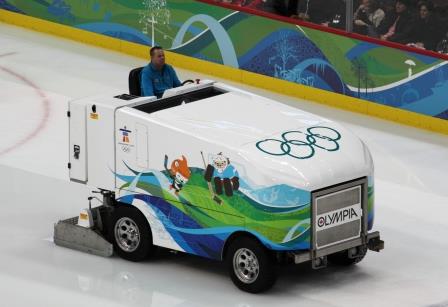
-
Article
Zed
Zed is the name of the letter Z. The pronunciation zed is more commonly used in Canadian English than zee. English speakers in other Commonwealth countries also prefer the pronunciation zed. As zed is the British pronunciation and zee is chiefly American, zed represents one of the rare occasions in which most Canadians prefer the British to the American pronunciation. Use of zee is often stigmatized among Canadian English speakers, which is likely the reason why zee has not taken root as quickly as other influences from American English.
"https://d3d0lqu00lnqvz.cloudfront.net/media/media/bba69356-805d-4743-9183-fb7af3195266.png" // resources/views/front/categories/view.blade.php
https://d3d0lqu00lnqvz.cloudfront.net/media/media/bba69356-805d-4743-9183-fb7af3195266.png
-
Article
Zellers
Zellers was a Canadian department store chain, operating under both Canadian and American ownership. The company began in 1928 as Zellers Limited and was acquired by an American company before being repurchased by its founder in 1931. Hudson’s Bay Company (HBC) purchased the stores in 1978. After closure of the Zellers chain in 2013, the name was used for Hudson’s Bay liquidation stores (2013–20), and a discount section of Hudson’s Bay stores (2021–25). With HBC’s bankruptcy in 2025, Quebec retailer Les Ailes de la Mode purchased the brand, opening their first Zellers store that year.
"https://d3d0lqu00lnqvz.cloudfront.net/zellers/zellersstoreinmoncton.jpg" // resources/views/front/categories/view.blade.php
https://d3d0lqu00lnqvz.cloudfront.net/zellers/zellersstoreinmoncton.jpg
-
Article
Zero Patience
Zero Patience (1993), director/writer/video artist John GREYSON's first theatrical release, is one of his most scathing and strangely hilarious indictments of systematic homophobia.
"https://thecanadianencyclopedia.ca/images/tce_placeholder.jpg?v=e9dca980c9bdb3aa11e832e7ea94f5d9" // resources/views/front/categories/view.blade.php
https://thecanadianencyclopedia.ca/images/tce_placeholder.jpg?v=e9dca980c9bdb3aa11e832e7ea94f5d9
-
Article
Zinc
Zinc (Zn) is a bluish-white metal of low to intermediate hardness that melts at 419°C and is estimated to comprise about 0.013% of the earth's crust. Zinc is an essential element for human health; over 200 enzymes in the body require zinc for proper functioning.
"https://thecanadianencyclopedia.ca/images/tce_placeholder.jpg?v=e9dca980c9bdb3aa11e832e7ea94f5d9" // resources/views/front/categories/view.blade.php
https://thecanadianencyclopedia.ca/images/tce_placeholder.jpg?v=e9dca980c9bdb3aa11e832e7ea94f5d9
-
Article
Zoning
Zoning is the term used to describe the control by authority of the use of land, and of the buildings and improvements thereon. Areas of land are divided by appropriate authorities into zones within which various uses are permitted.
"https://thecanadianencyclopedia.ca/images/tce_placeholder.jpg?v=e9dca980c9bdb3aa11e832e7ea94f5d9" // resources/views/front/categories/view.blade.php
https://thecanadianencyclopedia.ca/images/tce_placeholder.jpg?v=e9dca980c9bdb3aa11e832e7ea94f5d9
-
Article
Zooarchaeology
In Canada most zooarchaeologists study teeth, bone and marine shells, because these materials are commonly preserved on archaeological sites. Preservation of specimens depends on what happened to them before burial, the rate at which they were buried, and the burial environment.
"https://d3d0lqu00lnqvz.cloudfront.net/media/media/c7b9ec57-7920-40cb-8cc4-704d9f75d445.jpg" // resources/views/front/categories/view.blade.php
https://d3d0lqu00lnqvz.cloudfront.net/media/media/c7b9ec57-7920-40cb-8cc4-704d9f75d445.jpg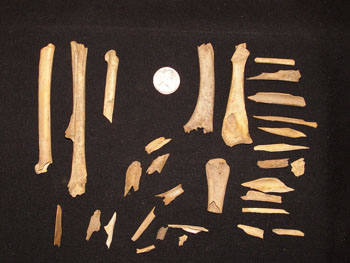
-
Article
Zoology
Zoology is the study of animals. Zoologists have many interests: some study form (morphology) or function (physiology), from gross to molecular levels; behaviour (ethology); association (ecology); or distribution (zoogeography); and some specialize in one kind of animal.
"https://d3d0lqu00lnqvz.cloudfront.net/media/media/3a709b78-b386-493f-a455-f16fe201283d.jpg" // resources/views/front/categories/view.blade.php
https://d3d0lqu00lnqvz.cloudfront.net/media/media/3a709b78-b386-493f-a455-f16fe201283d.jpg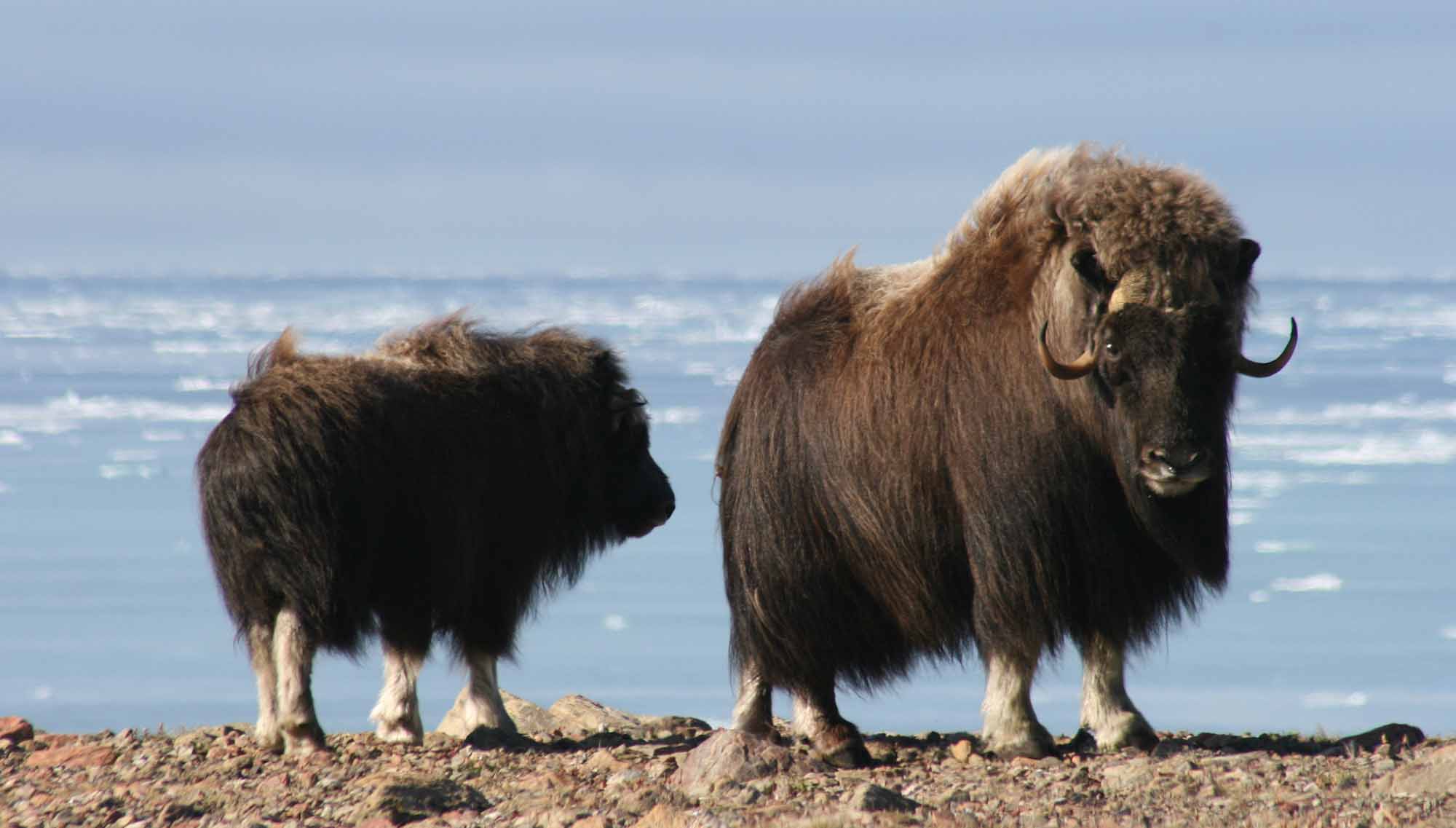
-
Collection
Zoology
Zoology is the study of animals, including their classification, behaviour and distribution. Generally speaking, animals are multicellular organisms that eat, move and sexually reproduce. This means that, for example, fish, snakes, clams, spiders, butterflies and humans are all animals, but so are countless other small and unique organisms most people are unfamiliar with. The Canadian Encyclopedia is home to over 300 articles on Canadian animals and related topics, organized in this collection by category.
"https://d3d0lqu00lnqvz.cloudfront.net/media/media/76466b5d-e9ad-4752-b340-80f9ba594f83.jpg" // resources/views/front/categories/view.blade.php
https://d3d0lqu00lnqvz.cloudfront.net/media/media/76466b5d-e9ad-4752-b340-80f9ba594f83.jpg
-
Article
Zooplankton
Zooplankton are weakly swimming animals belonging to many phyla (primary divisions of the animal kingdom), which, as larvae or adults, exist wholly suspended within a water body. The marine zooplankton is dominated by copepod crustaceans, found in great numbers in all oceans. The following organisms appear in lesser quantities in the zooplankton: euphausiid crustaceans (e.g., krill), chaetognaths (arrow worms), pteropods (small gastropod molluscs), tunicates (protochordates), ctenophores (comb jellies) and jellyfish. Animals that are planktonic for only part of their lives include clam, crab and barnacle larvae, and fish eggs and larvae. Hundreds of species occur in Canadian waters, but few exclusively.
"https://d3d0lqu00lnqvz.cloudfront.net/media/media/49995814-c22c-45b3-ae32-1441dc8afc05.jpg" // resources/views/front/categories/view.blade.php
https://d3d0lqu00lnqvz.cloudfront.net/media/media/49995814-c22c-45b3-ae32-1441dc8afc05.jpg
-
Article
Zoos
Zoos, also known as zoological gardens, are facilities exhibiting wild and domesticated animals for purposes of education, recreation, conservation and research. Zoos range from conventional, dense-occupancy facilities to open animal parks and game farms. They can incorporate aquariums exhibiting fish and other aquatic life forms. There are 28 accredited zoos in Canada, according to the Canadian Association of Zoological Parks and Aquariums. Canada’s largest zoo is the Toronto Zoo.
"https://d3d0lqu00lnqvz.cloudfront.net/media/media/ba0d486f-9155-41ad-9d2a-6f681619898f.JPG" // resources/views/front/categories/view.blade.php
https://d3d0lqu00lnqvz.cloudfront.net/media/media/ba0d486f-9155-41ad-9d2a-6f681619898f.JPG
-
Article
Zouaves
Between February 1868 and September 1870, 7 contingents totalling 507 Canadians enrolled in the papal army (whose soldiers were known as Papal Zouaves) to help defend Rome from the Italian troops who wanted to bring about Italian unification.
"https://thecanadianencyclopedia.ca/images/tce_placeholder.jpg?v=e9dca980c9bdb3aa11e832e7ea94f5d9" // resources/views/front/categories/view.blade.php
https://thecanadianencyclopedia.ca/images/tce_placeholder.jpg?v=e9dca980c9bdb3aa11e832e7ea94f5d9
-
Article
Zundel Case
The Zundel case (1992) centred on the constitutional validity of section 181 of the Criminal Code which prohibits the wilful dissemination of false news. Zundel had published a brochure entitled "Did Six Million Really Die?".
"https://thecanadianencyclopedia.ca/images/tce_placeholder.jpg?v=e9dca980c9bdb3aa11e832e7ea94f5d9" // resources/views/front/categories/view.blade.php
https://thecanadianencyclopedia.ca/images/tce_placeholder.jpg?v=e9dca980c9bdb3aa11e832e7ea94f5d9