
Browse "Things"
-
Article
Technology in Canada
Technology is the manipulation of the physical world to achieve human goals. Technological knowledge is often embodied in physical objects such as tools. Technologies affect and are affected by the society that uses them — in Canada, for example, Indigenous peoples developed different types of canoes depending on the type of water being travelled. (See also Birchbark Canoe; Dugout Canoe.) Later, technology facilitated the colonization of the country through the development of agricultural tools, railroads and new forms of shelter. (See also Railway History in Canada.) Today, Canada remains at the forefront of technological development in areas including transportation, communications and energy.
"https://d3d0lqu00lnqvz.cloudfront.net/media/media/d42168e9-b088-44c8-8e61-25af2ac1ff3c.jpg" // resources/views/front/categories/view.blade.php
https://d3d0lqu00lnqvz.cloudfront.net/media/media/d42168e9-b088-44c8-8e61-25af2ac1ff3c.jpg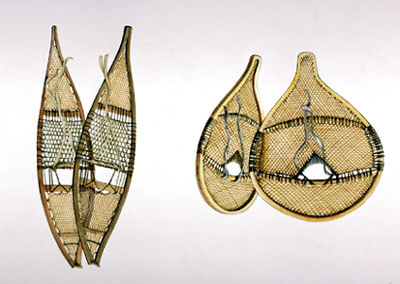
-
Macleans
Teen Describes Murders
This article was originally published in Maclean’s magazine on December 25, 1995. Partner content is not updated. Following their brutal murders in suburban Montreal last April, Frank Toope, a 75-year-old retired Anglican minister, and his wife, Jocelyn, 70, were uniformly praised by friends and former parishioners as a warm, caring and generous couple.
"https://thecanadianencyclopedia.ca/images/tce_placeholder.jpg?v=e9dca980c9bdb3aa11e832e7ea94f5d9" // resources/views/front/categories/view.blade.php
https://thecanadianencyclopedia.ca/images/tce_placeholder.jpg?v=e9dca980c9bdb3aa11e832e7ea94f5d9
-
Macleans
Teen Killing in Toronto
This article was originally published in Maclean’s magazine on November 29, 1999. Partner content is not updated. At the foot of Dmitri Baranovski's bed are some weights, a soccer ball, tennis rackets and - what his stepfather picked up at a garage sale to help him adjust to Canadian life - a football and two hockey sticks.
"https://thecanadianencyclopedia.ca/images/tce_placeholder.jpg?v=e9dca980c9bdb3aa11e832e7ea94f5d9" // resources/views/front/categories/view.blade.php
https://thecanadianencyclopedia.ca/images/tce_placeholder.jpg?v=e9dca980c9bdb3aa11e832e7ea94f5d9
-
Article
Telecommunications
Telecommunications is defined as the electronic communication of information over distance. In theory, this definition covers all forms of electronic communication and does not distinguish between different kinds of information: voice, data, text and video.
"https://thecanadianencyclopedia.ca/images/tce_placeholder.jpg?v=e9dca980c9bdb3aa11e832e7ea94f5d9" // resources/views/front/categories/view.blade.php
https://thecanadianencyclopedia.ca/images/tce_placeholder.jpg?v=e9dca980c9bdb3aa11e832e7ea94f5d9
-
Article
Telegraph
In 1868 the Montreal Telegraph Co began facing direct competition from the newly established Dominion Telegraph Co and price wars broke out.
"https://d3d0lqu00lnqvz.cloudfront.net/media/media/3529c1a0-90c8-4e24-b04d-a02c760268b8.jpg" // resources/views/front/categories/view.blade.php
https://d3d0lqu00lnqvz.cloudfront.net/media/media/3529c1a0-90c8-4e24-b04d-a02c760268b8.jpg
-
Article
Telephones
The invention of the TELEGRAPH (1837) by Samuel Morse and the telephone (1876) by Alexander Graham BELL were milestones in the quest to communicate over great distances with reliability, accuracy and speed.
"https://thecanadianencyclopedia.ca/images/tce_placeholder.jpg?v=e9dca980c9bdb3aa11e832e7ea94f5d9" // resources/views/front/categories/view.blade.php
https://thecanadianencyclopedia.ca/images/tce_placeholder.jpg?v=e9dca980c9bdb3aa11e832e7ea94f5d9
-
Article
Television
Overlaying these two perspectives is the reality that Canadians have long been among the world's most avid television viewers with tastes that do not necessarily discriminate between domestic and foreign content, or between entertainment and education.
"https://d3d0lqu00lnqvz.cloudfront.net/media/media/19954988-d8b9-48c4-b611-8619640190be.jpg" // resources/views/front/categories/view.blade.php
https://d3d0lqu00lnqvz.cloudfront.net/media/media/19954988-d8b9-48c4-b611-8619640190be.jpg
-
Article
Telidon
Telidon, a combination of the Greek words meaning "to know at a distance," was a waypoint en route to the Internet and was an early demonstration of how technology can provide on-demand access to information.
"https://thecanadianencyclopedia.ca/images/tce_placeholder.jpg?v=e9dca980c9bdb3aa11e832e7ea94f5d9" // resources/views/front/categories/view.blade.php
https://thecanadianencyclopedia.ca/images/tce_placeholder.jpg?v=e9dca980c9bdb3aa11e832e7ea94f5d9
-
Article
Temperance Movement in Canada
The temperance movement was an international social and political campaign of the 19th and early 20th centuries. It was based on the belief that drinking was responsible for many of society’s ills. It called for moderation or total abstinence from alcohol. This led to the legal prohibition of alcohol in many parts of Canada. The Canada Temperance Act (Scott Act) of 1878 gave local governments the “local option” to ban the sale of alcohol. In 1915 and 1916, all provinces but Quebec prohibited the sale of alcohol as a patriotic measure during the First World War. Most provincial laws were repealed in the 1920s in favour of allowing governments to control alcohol sales. Temperance societies were later criticized for distorting economic activity, and for encouraging drinking and organized crime.
"https://d3d0lqu00lnqvz.cloudfront.net/media/media/c0f20001-e566-4ebf-9c88-f1a5ae278291.jpg" // resources/views/front/categories/view.blade.php
https://d3d0lqu00lnqvz.cloudfront.net/media/media/c0f20001-e566-4ebf-9c88-f1a5ae278291.jpg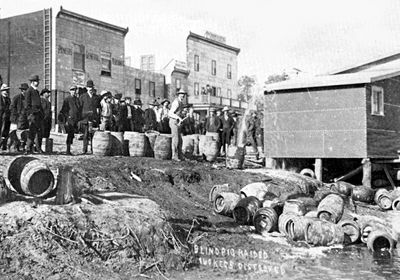
-
Article
Tenant League
Tenant League, popular name for the Tenant Union of Prince Edward Island, a militant agrarian movement fd 19 May 1864 in Charlottetown, PEI.
"https://thecanadianencyclopedia.ca/images/tce_placeholder.jpg?v=e9dca980c9bdb3aa11e832e7ea94f5d9" // resources/views/front/categories/view.blade.php
https://thecanadianencyclopedia.ca/images/tce_placeholder.jpg?v=e9dca980c9bdb3aa11e832e7ea94f5d9
-
Article
Tennis
Modern tennis almost certainly originated in France in the 11th century as a form of handball called le jeu de paume. The game, also called "court tennis" or "real tennis," was played on an indoor court - originally in a monastery - with a ball, and by 1500 a racquet was introduced.
"https://d3d0lqu00lnqvz.cloudfront.net/media/media/4a1b5adc-3316-4917-a8e5-3a14dc42a3bd.jpg" // resources/views/front/categories/view.blade.php
https://d3d0lqu00lnqvz.cloudfront.net/media/media/4a1b5adc-3316-4917-a8e5-3a14dc42a3bd.jpg
-
Article
Tenure
Generally, tenure is the holding of a secure position within an educational institution or system, although it can also refer to an individual's length of service in a particular position or system.
"https://thecanadianencyclopedia.ca/images/tce_placeholder.jpg?v=e9dca980c9bdb3aa11e832e7ea94f5d9" // resources/views/front/categories/view.blade.php
https://thecanadianencyclopedia.ca/images/tce_placeholder.jpg?v=e9dca980c9bdb3aa11e832e7ea94f5d9
-
Article
Termite
Termites are social insects of the infraorder Isoptera. They may be thought of as “social cockroaches,” as they evolved from their wood-eating cockroach ancestors approximately 200 million years ago.
"https://d3d0lqu00lnqvz.cloudfront.net/media/media/4be4a60c-706f-461e-864a-8092a1f88036.jpg" // resources/views/front/categories/view.blade.php
https://d3d0lqu00lnqvz.cloudfront.net/media/media/4be4a60c-706f-461e-864a-8092a1f88036.jpg
-
Article
Tern
The tern is a medium-sized bird of the gull family. Terns are usually grey and white; in spring and summer most species have a black cap. Similar to gulls in appearance, terns differ in having more pointed wings and usually a noticeably forked tail. Terns are more streamlined than gulls and fly more buoyantly. When feeding, most species dive into the water, which gulls rarely do.
"https://d3d0lqu00lnqvz.cloudfront.net/media/media/57646e15-f83e-46df-a681-c7f1214f0325.jpg" // resources/views/front/categories/view.blade.php
https://d3d0lqu00lnqvz.cloudfront.net/media/media/57646e15-f83e-46df-a681-c7f1214f0325.jpg
-
Article
Territorial Government in Canada
Under Canada’s federal system, the powers of government are shared between the federal government, provincial governments and territorial governments. The territories — Northwest Territories, Nunavut and Yukon — are governed by their respective governments. They receive their legislative authority (the ability to create laws) from the federal government. Ottawa has given territorial governments authority over public education, health and social services; as well as the administration of justice and municipal government. More and more of these powers have been handed down from the federal government in a process called devolution. Crown-Indigenous Relations and Northern Affairs Canada is the federal ministry responsible for the territories.
"https://d3d0lqu00lnqvz.cloudfront.net/media/media/b9f1e62c-f97e-49dc-ad8f-ef525846081d.jpg" // resources/views/front/categories/view.blade.php
https://d3d0lqu00lnqvz.cloudfront.net/media/media/b9f1e62c-f97e-49dc-ad8f-ef525846081d.jpg