
Browse "Things"
-
Article
Smelt
Smelt (Osmeridae) are a family of small, iridescent fishes of class Osteichthyes, found in coastal seas, streams and lakes of the northern hemisphere. Worldwide, six genera and thirteen species are known; in Canada, six genera and nine species. Rainbow smelt and capelin occur on all three coasts; pond smelt on the Arctic coast and drainage; pygmy smelt in Quebec and New Brunswick lakes; the others on the Pacific coast and drainage. Some smelts are marine fishes; some live in fresh water; others live in the sea but spawn in fresh water (anadromous). The family name derives from their characteristic, cucumber-like odour.
"https://d3d0lqu00lnqvz.cloudfront.net/media/media/8e96e384-01b8-4e53-a3be-0cfebd2bee83.jpg" // resources/views/front/categories/view.blade.php
https://d3d0lqu00lnqvz.cloudfront.net/media/media/8e96e384-01b8-4e53-a3be-0cfebd2bee83.jpg
-
Article
Smoking
Smoking is a universal health hazard. All forms of TOBACCO smoking are risky. Canadian consumption of cigarettes has been declining since the monitoring of smoking began in 1965, when an estimated 50% of adults smoked. In 1981 smoking prevalence had dropped below 40%.
"https://thecanadianencyclopedia.ca/images/tce_placeholder.jpg?v=e9dca980c9bdb3aa11e832e7ea94f5d9" // resources/views/front/categories/view.blade.php
https://thecanadianencyclopedia.ca/images/tce_placeholder.jpg?v=e9dca980c9bdb3aa11e832e7ea94f5d9
-
Article
Canada and the Smoot-Hawley Tariff Act
The Smoot-Hawley Tariff Act was passed in 1930 by the United States Congress. The Act legislated higher tariffs on agricultural and industrial products imported into the US. Named after two Republican lawmakers, Senator Reed Smoot (Utah) and Congressman Willis Hawley (Oregon), the Smoot-Hawley Tariff Act worsened the effects of the Great Depression and contributed to the collapse of international trade. Tariffs were reduced in 1935 but were not eliminated until the Canada-US Free Trade Agreement of 1988. (See Free Trade.)
"https://d3d0lqu00lnqvz.cloudfront.net/media/media/4b5beb76-524c-45d8-81fb-a0228fb51abf.jpg" // resources/views/front/categories/view.blade.php
https://d3d0lqu00lnqvz.cloudfront.net/media/media/4b5beb76-524c-45d8-81fb-a0228fb51abf.jpg
-
Article
Smuggling
Smuggling has always been an important issue of Canadian history and life and remains so to this day. With over 7000 km of shared border with the US, the opportunity to smuggle is ever-present. The provinces with a shared US border are not the only ones at risk.
"https://d3d0lqu00lnqvz.cloudfront.net/media/media/24ba1d7b-72f3-4d1f-9a7b-9ccf3d952f95.jpg" // resources/views/front/categories/view.blade.php
https://d3d0lqu00lnqvz.cloudfront.net/media/media/24ba1d7b-72f3-4d1f-9a7b-9ccf3d952f95.jpg
-
Article
Snail
Snail is the common name for members of several groups of gastropod molluscs. Snails inhabit all moist habitats, but most forms are marine.
"https://d3d0lqu00lnqvz.cloudfront.net/animalsonlyincanada/banff-springs-snail.jpg" // resources/views/front/categories/view.blade.php
https://d3d0lqu00lnqvz.cloudfront.net/animalsonlyincanada/banff-springs-snail.jpg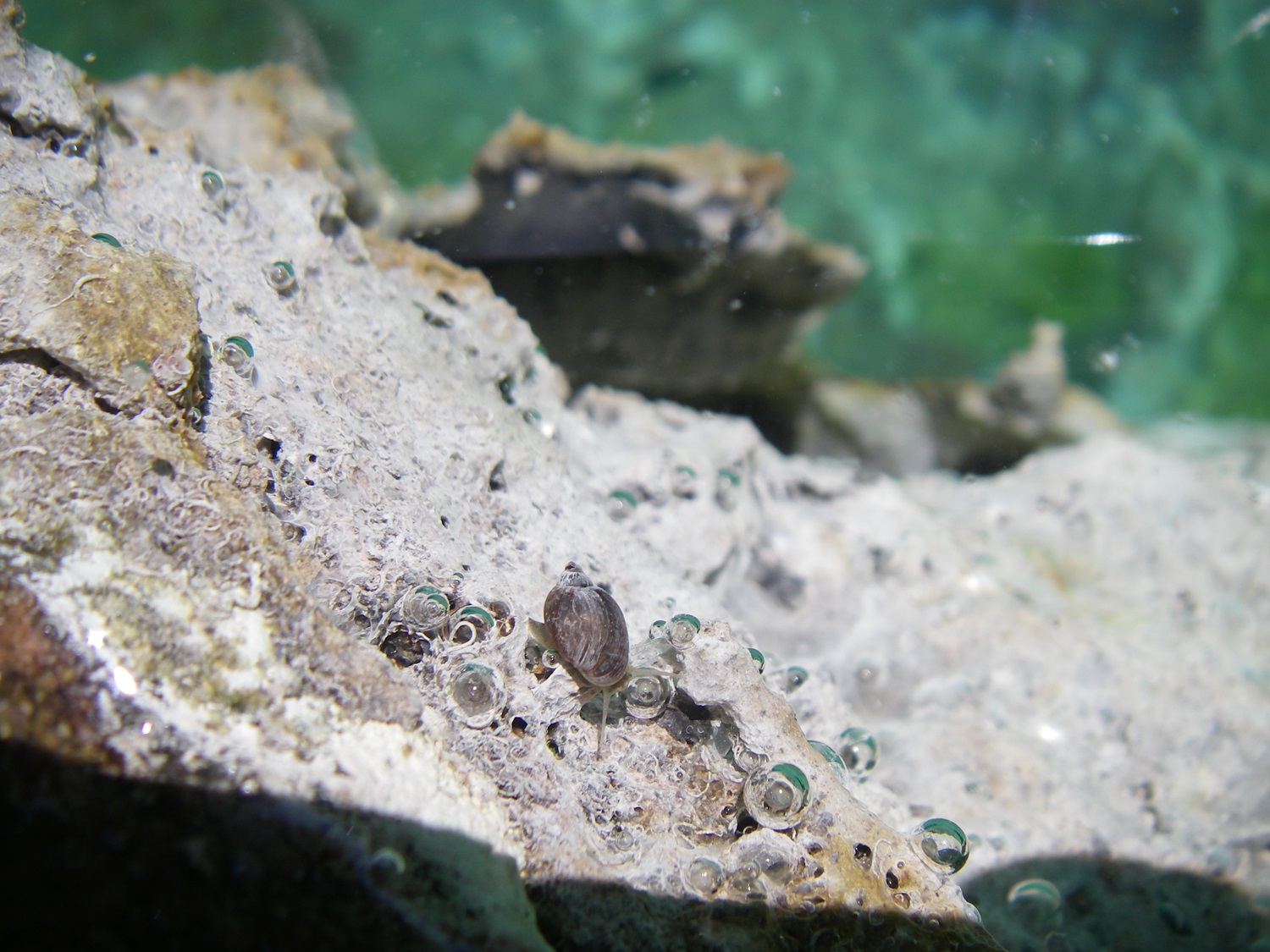
-
Article
Snake Species in Canada
A snake is a long, slender reptile of the suborder Serpentes, within the order Squamata (which also includes lizards). There are 25 species of snake currently found in Canada. In addition, one species, the timber rattlesnake, and one subspecies, the Pacific gophersnake, are extirpated. This means that, while they continue to live in other parts of their range, they are no longer found in Canada. Snake species in Canada belong to one of three taxonomic families: Boidae, Viperidae or Colubridae. Most species live in the southern part of the country; however, the common gartersnake can be found as far north as the 60th parallel, near Fort Smith, Northwest Territories.
"https://d3d0lqu00lnqvz.cloudfront.net/media/media/15a34f7a-129d-4b53-87e4-cea8bb9b67fa.jpg" // resources/views/front/categories/view.blade.php
https://d3d0lqu00lnqvz.cloudfront.net/media/media/15a34f7a-129d-4b53-87e4-cea8bb9b67fa.jpg
-
Article
Snapping Turtle
The snapping turtle (Chelydra serpentina) is a large freshwater turtle native to North America. In Canada, snapping turtles are indigenous to the southern portions of Saskatchewan, Manitoba, Ontario, Quebec, New Brunswick and Nova Scotia.
"https://d3d0lqu00lnqvz.cloudfront.net/media/new_article_images/SnappingTurtle/27109394592_7806ac9eb0_c.jpg" // resources/views/front/categories/view.blade.php
https://d3d0lqu00lnqvz.cloudfront.net/media/new_article_images/SnappingTurtle/27109394592_7806ac9eb0_c.jpg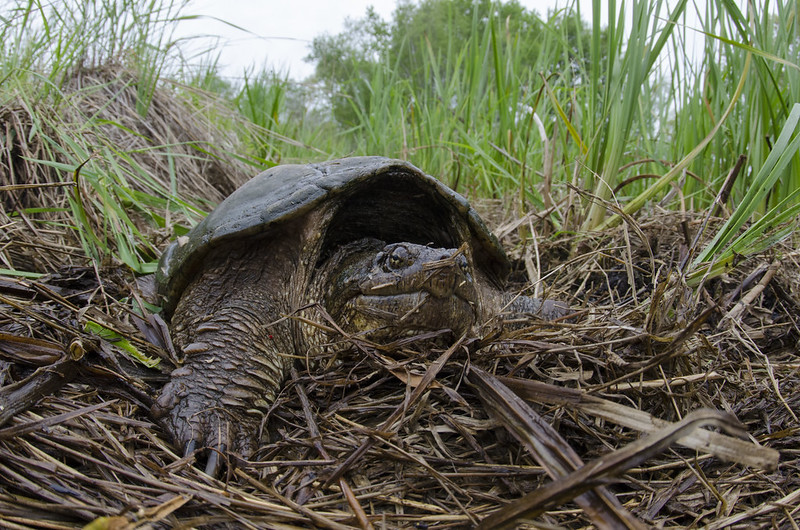
-
Article
AtkinsRéalis
AtkinsRéalis (formerly SNC-Lavalin) is a global engineering and construction firm based in Montreal, Quebec. It works in several industries including oil and gas, mining, cybersecurity and nuclear power. It also builds public and private infrastructure around the world. The company began in 1911 as an engineering consultant for power projects. In 1991, the original company, called SNC, merged with competitor Lavalin to become SNC-Lavalin. Since 2011, allegations of fraud and corruption on the part of SNC-Lavalin and several of its executives have plagued the company with scandal. In 2023, SNC-Lavalin changed its name and rebranded to AtkinsRéalis. Today the company employs over 30,000 people in several countries. In 2022, it registered $7.5 billion in revenue. In Canada, the company has received contracts to build major transit projects in cities including Toronto, Montreal and Vancouver. Worldwide, AtkinsRéalis oversees resource-extraction and infrastructure projects in North America, the Asia-Pacific region, Europe and the Middle East. Click here for definitions of key terms used in this article.
"https://d3d0lqu00lnqvz.cloudfront.net/media/new_article_images/SNCLavalin/dreamstime_xl_144110990.jpg" // resources/views/front/categories/view.blade.php
https://d3d0lqu00lnqvz.cloudfront.net/media/new_article_images/SNCLavalin/dreamstime_xl_144110990.jpg
-
Article
Snipe
Snipe is the name given to 19 species of small to medium-sized shorebirds (254–406 mm) of the sandpiper family. Like woodcocks, snipes have long bills with flexible tips and eyes set well back on the skull, allowing almost all-round vision.
"https://d3d0lqu00lnqvz.cloudfront.net/media/media/58b1f67e-84e1-4107-8882-d2fe8a0d4c9a.jpg" // resources/views/front/categories/view.blade.php
https://d3d0lqu00lnqvz.cloudfront.net/media/media/58b1f67e-84e1-4107-8882-d2fe8a0d4c9a.jpg
-
Article
SNOLAB
SNOLAB, an expanded version of the facility originally known as the Sudbury Neutrino Observatory, is a particle physics laboratory located in the Creighton Mine, about 12 kilometers west of Sudbury, Ontario. Situated approximately two kilometres below ground, the laboratory takes advantage of layers of Canadian Shield rock to protect sensitive experiments from high-energy particles which constantly bombard the Earth. SNOLAB currently hosts an array of particle physics experiments, along with experiments focused on the life sciences and quantum technology (see Physics). Work carried out at the lab in the 1990s and early 2000s, involving the subatomic particle known as the neutrino, led to a Nobel Prize in Physics, in 2015, for Canadian physicist Arthur B. McDonald. (See also Nobel Prizes and Canada.)
"https://d3d0lqu00lnqvz.cloudfront.net/SNOLAB/snolabbuilding.png" // resources/views/front/categories/view.blade.php
https://d3d0lqu00lnqvz.cloudfront.net/SNOLAB/snolabbuilding.png
-
Article
Snow
Snow consists of particles of ice that have grown large enough in the atmosphere to fall to the ground. Canada is a snowy country, with many parts of the country experiencing snow cover for 5–6 months of the year.
"https://d3d0lqu00lnqvz.cloudfront.net/snow/Snow-in-Lunenburg.jpg" // resources/views/front/categories/view.blade.php
https://d3d0lqu00lnqvz.cloudfront.net/snow/Snow-in-Lunenburg.jpg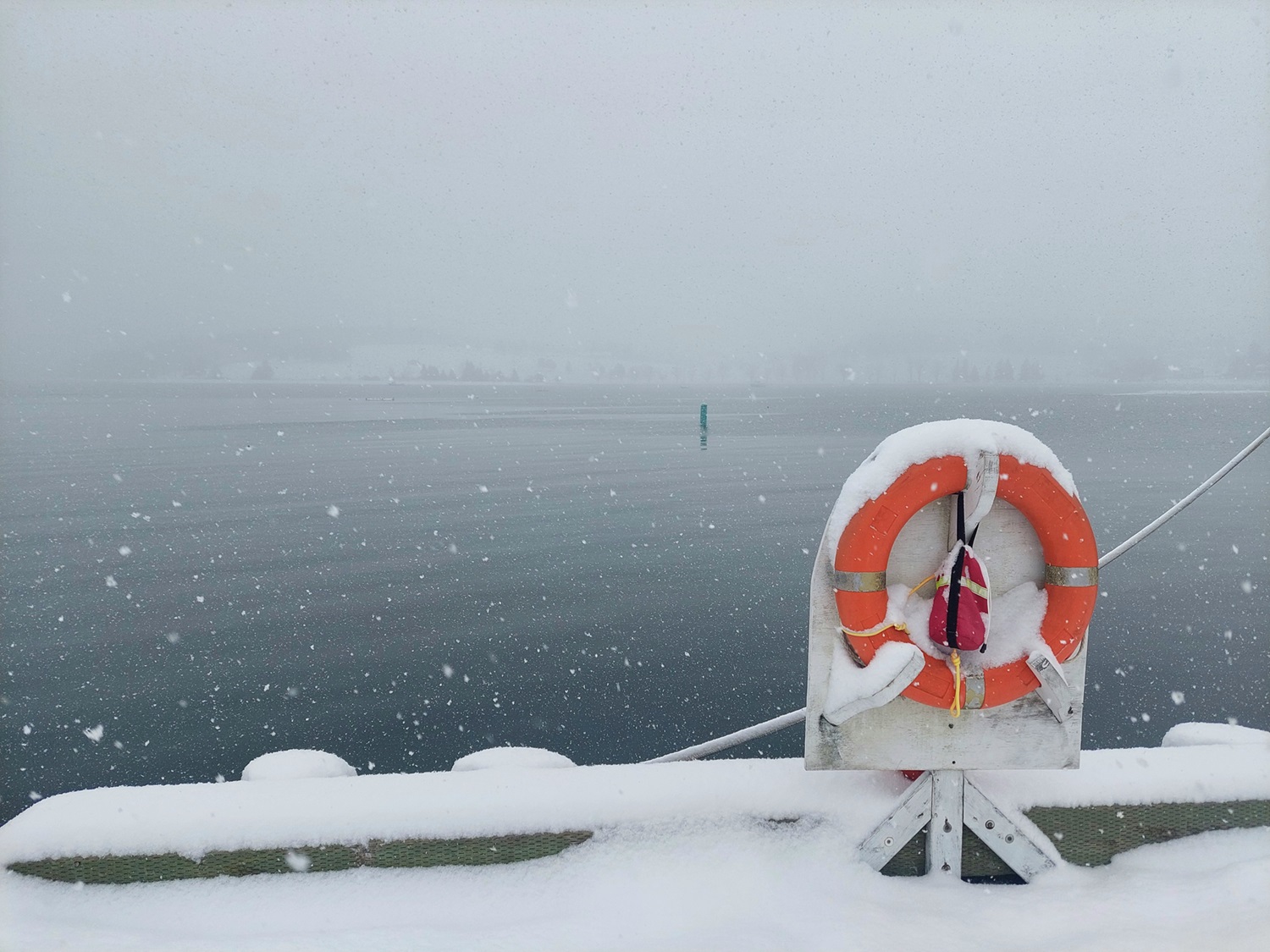
-
Article
Snow Blower
A snow blower is a mechanical device that clears snow from a surface by collecting it and forcibly throwing it to another location. It was invented in Quebec by Arthur Sicard in 1925. Snow blowers typically use an auger — a corkscrew-shaped blade made of metal, rubber or plastic — to collect and then distribute snow. Some snow blowers, known as two-stage snow blowers, also feature a collecting chamber and impeller to make it easier to clear large deposits of snow. These powerful machines help keep streets, sidewalks and driveways clear during winter.
"https://d3d0lqu00lnqvz.cloudfront.net/media/new_article_images/SnowBlower/SicardSnowBlower.jpg" // resources/views/front/categories/view.blade.php
https://d3d0lqu00lnqvz.cloudfront.net/media/new_article_images/SnowBlower/SicardSnowBlower.jpg
-
Article
Snowbirds
The Canadian Forces Snowbirds are a military aerobatics team. They are officially known as "431 Air Demonstration Squadron." Since 1971, the team has performed across North America before millions of people. The Snowbirds have been recognized as among the best in the world at precision formation aerobatics and stunning solo crosses with minimum separation between the aircraft.
"https://d3d0lqu00lnqvz.cloudfront.net/media/media/3d26459f-4f24-4f5c-a33b-b6d9ac0f4515.jpg" // resources/views/front/categories/view.blade.php
https://d3d0lqu00lnqvz.cloudfront.net/media/media/3d26459f-4f24-4f5c-a33b-b6d9ac0f4515.jpg
-
Article
Snowboarding
Snowboarding is the sport of riding a large flat ski downhill over snow. Unlike downhill skiing, snowboarding does not require the use of poles and both feet are placed sideways on the same board. A relative newcomer to the family of winter sports, snowboarding began to gain popularity in the 1960s and rose in status from the latest "gimmick" to an accredited Olympic event in 1998, a relatively short period of time. Canadians have had great success over the years in international snowboarding at the Olympic Winter Games, Winter X Games and World Snowboarding Championships. Eight Canadian snowboarders have won Olympic medals — Ross Rebagliati, Dominique Maltais, Mike Robertson, Maëlle Ricker, Jasey-Jay Anderson, Mark McMorris, Max Parrot and Laurie Blouin. Rebagliati, Ricker and Anderson won Olympic gold, while Maltais and McMorris are multiple medallists.
"https://d3d0lqu00lnqvz.cloudfront.net/media/media/75162e3a-4e1e-471e-9b5d-6401e9734938.jpg" // resources/views/front/categories/view.blade.php
https://d3d0lqu00lnqvz.cloudfront.net/media/media/75162e3a-4e1e-471e-9b5d-6401e9734938.jpg
-
Article
Snowmobiles in Canada
A snowmobile is an automotive vehicle for travel on snow. It is steered by skis at the front and propelled by a belt of track at the back. Québécois mechanic Joseph-Armand Bombardier made the first snowmobile in 1935. Today, there are more than 600,000 registered snowmobiles in Canada. They are used for transportation, recreation, hunting and trapping, especially in rural areas and the North.
"https://d3d0lqu00lnqvz.cloudfront.net/media/new_article_images/Snowmobile/snowmobile.jpg" // resources/views/front/categories/view.blade.php
https://d3d0lqu00lnqvz.cloudfront.net/media/new_article_images/Snowmobile/snowmobile.jpg