
Browse "Things"
-
Macleans
Our Dying Seas
This article was originally published in Maclean’s magazine on October 5, 1998. Partner content is not updated.
"https://thecanadianencyclopedia.ca/images/tce_placeholder.jpg?v=e9dca980c9bdb3aa11e832e7ea94f5d9" // resources/views/front/categories/view.blade.php
https://thecanadianencyclopedia.ca/images/tce_placeholder.jpg?v=e9dca980c9bdb3aa11e832e7ea94f5d9
-
Article
Overlanders of 1862
The Overlanders of 1862 were a group of some 150 settlers who travelled from Fort Garry (now Winnipeg, Manitoba) to the interior of British Columbia, following the Cariboo Gold Rush. They were led by Thomas McMicking of Stamford Township, Welland County, Canada West [Ontario].
"https://d3d0lqu00lnqvz.cloudfront.net/media/new_article_images/CatherineSchubert/Tales_Campfire_Hind.jpg" // resources/views/front/categories/view.blade.php
https://d3d0lqu00lnqvz.cloudfront.net/media/new_article_images/CatherineSchubert/Tales_Campfire_Hind.jpg
-
"https://d3d0lqu00lnqvz.cloudfront.net/media/media/3b8732d2-85fe-4a68-a92b-a6b0f4e83560.jpg" // resources/views/front/categories/view.blade.php
https://d3d0lqu00lnqvz.cloudfront.net/media/media/3b8732d2-85fe-4a68-a92b-a6b0f4e83560.jpg
-
Article
Own the Podium
Own the Podium is a non-profit organization that assists national sports bodies in Canada with their investment and training strategies. Based in Ottawa and Calgary, the program provides financial assistance to high-performance Canadian athletes and coaches. It enables them to compete as well as possible at the Olympic and Paralympic Games, with the goal of medalling (reaching the podium) as much as possible. It was created in 2005, in advance of the 2010 Olympic Winter Games in Vancouver. Own the Podium is funded by the Government of Canada, the Canadian Olympic Committee, the Canadian Paralympic Committee and the Canadian Olympic Foundation.
"https://d3d0lqu00lnqvz.cloudfront.net/media/media/91155314-b1f0-4655-95da-9be32d385be6.jpg" // resources/views/front/categories/view.blade.php
https://d3d0lqu00lnqvz.cloudfront.net/media/media/91155314-b1f0-4655-95da-9be32d385be6.jpg
-
Article
Oyster
Oyster is a common name for bivalve (hinged shell) molluscs, including true oysters (order Ostreoida) and tropical pearl oysters (order Pterioida), found chiefly in temperate and warm shallow waters.
"https://d3d0lqu00lnqvz.cloudfront.net/media/media/6a58f82b-ba7c-49c1-aa61-19d39fc58887.jpg" // resources/views/front/categories/view.blade.php
https://d3d0lqu00lnqvz.cloudfront.net/media/media/6a58f82b-ba7c-49c1-aa61-19d39fc58887.jpg
-
Article
Oystercatcher
Oystercatcher is a name given to 11 species of large shorebirds of the family Haematopodidae. Oystercatchers are either black and white or entirely black. Their orange-red bills are elongated and compressed from side to side, allowing the birds to chisel open clams and other molluscs.
"https://d3d0lqu00lnqvz.cloudfront.net/media/media/63d6a4bc-8c16-469e-85e3-feaad1973eab.jpg" // resources/views/front/categories/view.blade.php
https://d3d0lqu00lnqvz.cloudfront.net/media/media/63d6a4bc-8c16-469e-85e3-feaad1973eab.jpg
-
Article
Ozone Depletion
Ozone depletion is a chemical thinning of the OZONE LAYER in the stratosphere or upper atmosphere. Scientists determined in the 1970s that it is caused by ozone depleting substances (ODSs), particularly by the use of chlorofluorocarbons (CFCs).
"https://thecanadianencyclopedia.ca/images/tce_placeholder.jpg?v=e9dca980c9bdb3aa11e832e7ea94f5d9" // resources/views/front/categories/view.blade.php
https://thecanadianencyclopedia.ca/images/tce_placeholder.jpg?v=e9dca980c9bdb3aa11e832e7ea94f5d9
-
Article
Ozone Layer
The development of the ozone layer is thought to have been a significant factor permitting the evolution of life on Earth. Ozone is the main atmospheric gas that absorbs the biologically damaging part of the sun's ultraviolet radiation (UV radiation), known as UV-B (ultraviolet-biologically active).
"https://d3d0lqu00lnqvz.cloudfront.net/media/media/26ba232c-8118-479b-90f7-3cbcfb5175fe.jpg" // resources/views/front/categories/view.blade.php
https://d3d0lqu00lnqvz.cloudfront.net/media/media/26ba232c-8118-479b-90f7-3cbcfb5175fe.jpg
-
Article
Paardeberg Day
The Battle of Paardeberg was the first time men in Canadian uniform, fighting in a Canadian unit, made war overseas. It also inspired one of the first remembrance ceremonies in Canada: from 1900 until the end of the First World War, Canadians gathered not on November 11, but on February 27 — Paardeberg Day — to commemorate the country’s war dead and its achievements in South Africa (see also Remembrance Day in Canada).
"https://d3d0lqu00lnqvz.cloudfront.net/media/new_article_images/paardeberg/Paardeberg 2.jpg" // resources/views/front/categories/view.blade.php
https://d3d0lqu00lnqvz.cloudfront.net/media/new_article_images/paardeberg/Paardeberg 2.jpg
-
Article
Pablum
Pablum is a multi-grain processed cereal developed as a nutritious, precooked digestible food for infants. The cereal was first developed at the Hospital for Sick Children in Toronto in 1930 by pediatric doctors Theodore Drake and Frederick Tisdall under the supervision of physician-in-chief Alan Brown. Pablum became commercially available in 1934 through an agreement with the Mead Johnson & Company and was used as a brand name through the early 21st century.
"https://d3d0lqu00lnqvz.cloudfront.net/pablum/pablumcontainer.jpg" // resources/views/front/categories/view.blade.php
https://d3d0lqu00lnqvz.cloudfront.net/pablum/pablumcontainer.jpg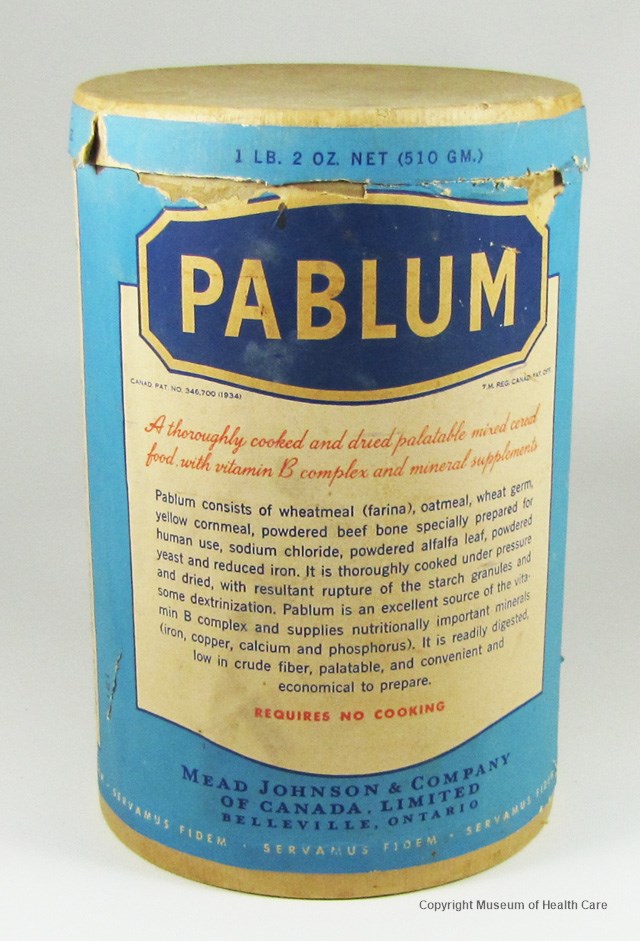
-
Article
Pacheedaht
The "Pacheedaht" or "Pacheenaht" ("People of the Sea Foam") are a Nuu-chah-nulth people who take their name from the former village site of "p'a:chi:da" (pronounced "pah-chee-da") at the head of Port San Juan Bay on southwest Vancouver Island. The area between Sheringham Point and Bonilla Point is now recognized as Pacheedaht territory. Their territorial claims also extend into the ocean to include several offshore fishing banks. As of September 2025, Pacheedaht First Nation had 303 registered members, with 97 members living on Pacheedaht First Nation’s reserve (see also Reserves in British Columbia).
"https://thecanadianencyclopedia.ca/images/tce_placeholder.jpg?v=e9dca980c9bdb3aa11e832e7ea94f5d9" // resources/views/front/categories/view.blade.php
https://thecanadianencyclopedia.ca/images/tce_placeholder.jpg?v=e9dca980c9bdb3aa11e832e7ea94f5d9
-
Article
Pacific Fur Company
The Pacific Fur Company was established on 23 June 1810 and headed by New York fur dealer John Jacob Astor. Principal partners included ex-Nor'Westers Alexander McKay, Donald McKenzie and Duncan McDougall.
"https://thecanadianencyclopedia.ca/images/tce_placeholder.jpg?v=e9dca980c9bdb3aa11e832e7ea94f5d9" // resources/views/front/categories/view.blade.php
https://thecanadianencyclopedia.ca/images/tce_placeholder.jpg?v=e9dca980c9bdb3aa11e832e7ea94f5d9
-
Article
Pacific Ocean and Canada
The Pacific Ocean is the world’s largest ocean. It covers more than 30 per cent of the Earth’s surface — an area roughly the same as the Atlantic and Indian oceans combined. Canada’s relationship with the Pacific Ocean is synonymous with the West Coast of British Columbia. The province’s entire ocean shoreline, including the coasts of Vancouver Island and Haida Gwaii, form Canada’s Pacific coastal region. More than 75 per cent of the province’s 5 million residents live within 50 km of the coast.
"https://d3d0lqu00lnqvz.cloudfront.net/media/new_article_images/PacificOcean/PacificOceanMapEN-1.png" // resources/views/front/categories/view.blade.php
https://d3d0lqu00lnqvz.cloudfront.net/media/new_article_images/PacificOcean/PacificOceanMapEN-1.png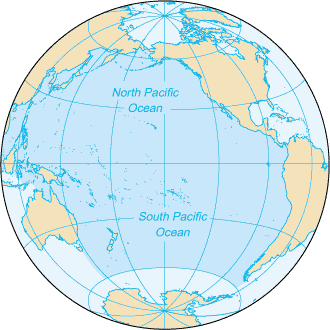
-
Article
Pacific Salmon
Pacific salmon include seven species of fish belonging to the genus Oncorhynchus, family Salmonidae. Two are native to Japan (O. masou and O. rhodurus); five to Canada, pink (O. gorbuscha), chum (O. keta), sockeye ( O. nerka), coho (O. kisutch) and chinook (O. tshawytscha). The genus name refers to the hooked snout characteristic of most spawning males. The native range of Pacific salmon includes the north Pacific Ocean, Bering Strait, southwestern Beaufort Sea and surrounding fresh waters. They occur in an estimated 1,300–1,500 rivers and streams in BC, notably the Skeena River and Nass River in the north; the Fraser River in the south accounts for about 75 per cent of the total salmon numbers. Pacific salmon are distinguished from other salmonids by their large number of anal fin rays (13–19). The Pacific salmon is the provincial fish of British Columbia.
"https://d3d0lqu00lnqvz.cloudfront.net/media/media/e9b9b391-1dc4-48d3-bdb1-36e27a35cf6d.jpg" // resources/views/front/categories/view.blade.php
https://d3d0lqu00lnqvz.cloudfront.net/media/media/e9b9b391-1dc4-48d3-bdb1-36e27a35cf6d.jpg
-
Article
Pacific Western Airlines Ltd
In 1984, with the advent of the Economic Regulatory Reform (ERR), most of Canada experienced a deregulation program similar to that in the United States. The ERR had several significant effects. Two large trunk carriers, CAI and Air Canada, emerged, competing on major domestic routes.
"https://d3d0lqu00lnqvz.cloudfront.net/media/media/5c388c63-b1f0-49ff-a8bf-0f60b265c315.jpg" // resources/views/front/categories/view.blade.php
https://d3d0lqu00lnqvz.cloudfront.net/media/media/5c388c63-b1f0-49ff-a8bf-0f60b265c315.jpg