Browse "Things"
-
Article
Defence Research
Defence research, initiation and development of weapons or technologies likely to be useful in national defence, is a comparatively recent phenomenon in Canada.
"https://thecanadianencyclopedia.ca/images/tce_placeholder.jpg?v=e9dca980c9bdb3aa11e832e7ea94f5d9" // resources/views/front/categories/view.blade.php
https://thecanadianencyclopedia.ca/images/tce_placeholder.jpg?v=e9dca980c9bdb3aa11e832e7ea94f5d9
-
Article
Degrassi
The Degrassi franchise — consisting of five separate but interrelated TV series, several TV movies and a webseries of shorts — is Canada’s longest-running dramatic series. Following various Toronto youths and their realistic high school experiences, Degrassi has aired off and on for over 40 years, spanning more than 500 episodes. Praised by many as the most successful example of television franchising in Canadian history, Degrassi is licensed in over 140 countries. It has launched the careers of several Canadian talents, most notably Drake. The franchise has received four Primetime Emmy nominations, two International Emmy Awards, 25 Gemini Awards, 16 Canadian Screen Awards and a Peabody Award. It was inducted into Canada’s Walk of Fame in 2023.
"https://d3d0lqu00lnqvz.cloudfront.net/media/media/c4db08ff-bf21-4a0a-8ef9-b86030d51386.jpg" // resources/views/front/categories/view.blade.php
https://d3d0lqu00lnqvz.cloudfront.net/media/media/c4db08ff-bf21-4a0a-8ef9-b86030d51386.jpg
-
Article
Quebec Delegations
The government of Quebec has at various times over the years operated up to 20 or more delegations, or offices, representing Quebec abroad to symbolize the province's open relations with the rest of the world after decades of introversion (see also La Grande Noirceur (The Great Darkness); The Quiet Revolution). These offices have handled issues related to public relations, international trade and in fact all areas in which the provincial government is active.
"https://d3d0lqu00lnqvz.cloudfront.net/media/media/3d3fb86b-61d3-48f1-a4cc-159ce47d256d.jpg" // resources/views/front/categories/view.blade.php
https://d3d0lqu00lnqvz.cloudfront.net/media/media/3d3fb86b-61d3-48f1-a4cc-159ce47d256d.jpg
-
Article
Delgamuukw Case
The Delgamuukw case (1997) (also known as Delgamuukw v. British Columbia) concerned the definition, the content and the extent of Aboriginal title (i.e., ownership of traditional lands). The Supreme Court of Canada observed that Aboriginal title constituted an ancestral right protected by section 35(1) of the Constitution Act, 1982. Influenced by the Calder case (1973), the ruling in the Delgamuukw case had an impact on other court cases about Aboriginal rights and title, including in the Tsilhqot’in case (2014).
"https://d3d0lqu00lnqvz.cloudfront.net/media/Twitter_Cards/supreme court-1.jpg" // resources/views/front/categories/view.blade.php
https://d3d0lqu00lnqvz.cloudfront.net/media/Twitter_Cards/supreme court-1.jpg
-
Article
Law of Delict in Québec
In Québec civil law, delict is a civil wrong other than a breach of contract. The law of delict covers generally the same field as that of torts in common law.
"https://d3d0lqu00lnqvz.cloudfront.net/media/media/18e234be-ab36-4e5d-aae3-beb23bb8d8b7.jpg" // resources/views/front/categories/view.blade.php
https://d3d0lqu00lnqvz.cloudfront.net/media/media/18e234be-ab36-4e5d-aae3-beb23bb8d8b7.jpg
-
Article
Delisle-Richler Controversy
In June 1991, the newsmagazine L’Actualité published portions of Esther Delisle’s doctoral thesis. It argued that antisemitic and pro-fascist sentiments were prominent amongst the French Canadian intelligentsia prior to the Second World War. Delisle claimed that Lionel Groulx was responsible for antisemitic statements made in the pages of the influential Montreal newspaper Le Devoir between 1929 and 1939. This research interested Mordecai Richler, who referenced Delisle’s work in his controversial 1992 bestseller, Oh Canada! Oh Quebec! Requiem for a Divided Nation. Delisle and Richler’s arguments and conclusions remained controversial for over a decade.
"https://d3d0lqu00lnqvz.cloudfront.net/media/media/EstherDelisle1992.jpg" // resources/views/front/categories/view.blade.php
https://d3d0lqu00lnqvz.cloudfront.net/media/media/EstherDelisle1992.jpg
-
Article
Delmar Music Co.
Delmar Music Co. Montreal music publishing firm listed in city directories from 1908 to 1919, with a known range of copyrights from 1907 to 1919. Some 50 of these are known to exist, ranging from marches, and dances (including ragtime music) to songs.
"https://thecanadianencyclopedia.ca/images/tce_placeholder.jpg?v=e9dca980c9bdb3aa11e832e7ea94f5d9" // resources/views/front/categories/view.blade.php
https://thecanadianencyclopedia.ca/images/tce_placeholder.jpg?v=e9dca980c9bdb3aa11e832e7ea94f5d9
-
Article
Canadian Census
A census is a count of a population in a specific region. In Canada, there are two types of censuses: the Census of Population and the Census of Agriculture. Both are conducted every five years by Statistics Canada, a department of the federal government. The larger of the two censuses, the Census of Population, gathers demographic information. This information includes where people live, as well as their age, sex, marital status and ethnic origin. The government uses this information to establish electoral boundaries, to make federal transfer payments (money given to the provinces) and to monitor various social programs and policies (e.g. Canada Pension Plan, health care and education). In addition, the data is available to non-governmental organizations and to the general public. Some older data is available to individuals interested in genealogical research.
"https://d3d0lqu00lnqvz.cloudfront.net/media/media/ad69249b-5ff2-49d9-8707-44ae93e5b977.jpg" // resources/views/front/categories/view.blade.php
https://d3d0lqu00lnqvz.cloudfront.net/media/media/ad69249b-5ff2-49d9-8707-44ae93e5b977.jpg
-
Article
Demography
Most demographers, however, devote themselves to studies that go beyond this core; eg, by questioning why purely demographic phenomena (fertility, mortality, nuptiality, age structure) vary and what social consequences may result from these variations.
"https://thecanadianencyclopedia.ca/images/tce_placeholder.jpg?v=e9dca980c9bdb3aa11e832e7ea94f5d9" // resources/views/front/categories/view.blade.php
https://thecanadianencyclopedia.ca/images/tce_placeholder.jpg?v=e9dca980c9bdb3aa11e832e7ea94f5d9
-
Article
Dene Games
Dene games are tests of physical and mental skill that were originally used by the Dene (northern Athabascan peoples) to prepare for the hunting and fishing seasons, and to provide entertainment. Today, Dene games (e.g., Finger Pull and Hand Games) are still played in many schools and community centres in the North as a means of preserving tradition and culture. As competitive sports, Dene games are also featured in various national and international athletic competitions, including the Arctic Winter Games.
"https://d3d0lqu00lnqvz.cloudfront.net/media/media/ef59eb2c-6b7b-4d8d-9af4-96e54bad8220.jpg" // resources/views/front/categories/view.blade.php
https://d3d0lqu00lnqvz.cloudfront.net/media/media/ef59eb2c-6b7b-4d8d-9af4-96e54bad8220.jpg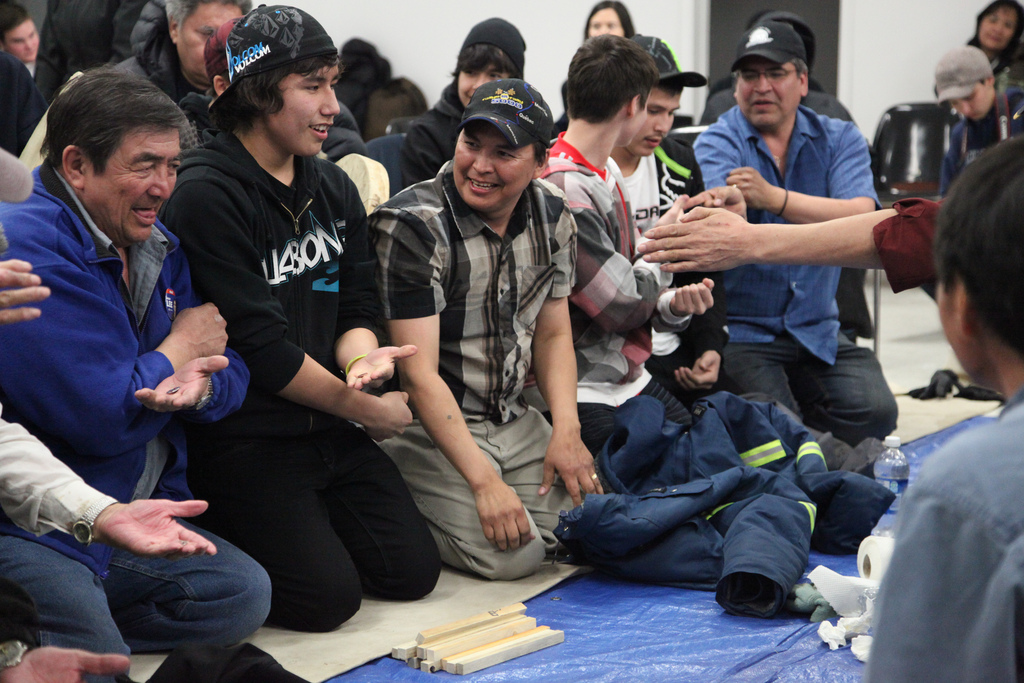
-
Article
Dene Nation (organization)
Established in 1969–70 as the Indian Brotherhood of the Northwest Territories, the Dene Nation (renamed in 1978) is the political organization that represents the Dene, or northern Athabaskan-speaking peoples and their descendants, of Denendeh, which includes the Mackenzie River Valley and the Barren Grounds in the Northwest Territories, in the settlement of outstanding land and governance issues with the Government of Canada.
"https://d3d0lqu00lnqvz.cloudfront.net/media/media/bd07ff31-bf6a-42a5-9636-8159f6b0c9ab.jpg" // resources/views/front/categories/view.blade.php
https://d3d0lqu00lnqvz.cloudfront.net/media/media/bd07ff31-bf6a-42a5-9636-8159f6b0c9ab.jpg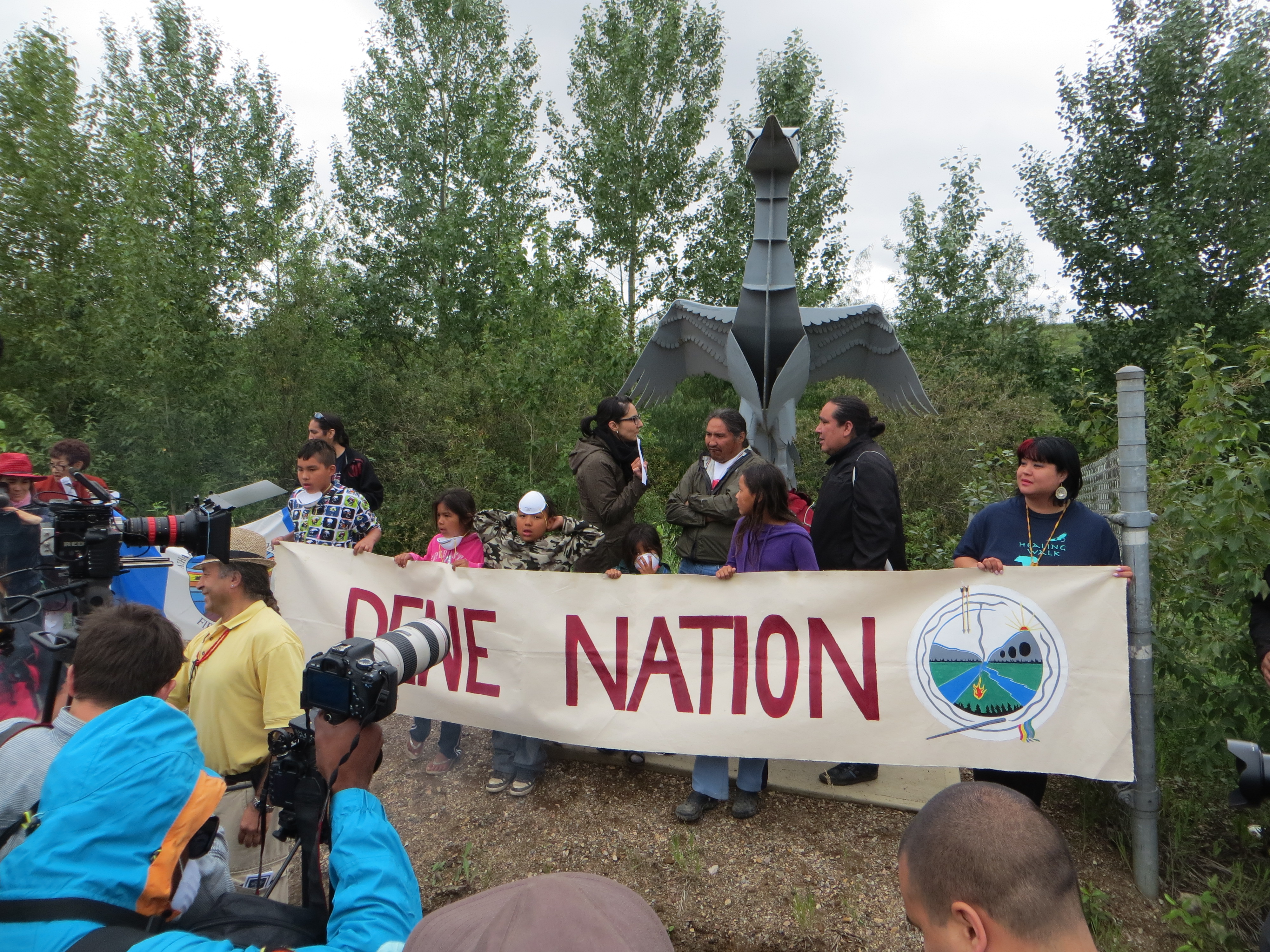
-
Article
Danish Music in Canada
The earliest settlement in Canada from this southernmost Scandinavian country was that founded at New Denmark, NB, in 1872. Danes also settled in Ontario, near London in 1893, and at Pass Lake, north of Port Arthur (Thunder Bay) in 1924.
"https://thecanadianencyclopedia.ca/images/tce_placeholder.jpg?v=e9dca980c9bdb3aa11e832e7ea94f5d9" // resources/views/front/categories/view.blade.php
https://thecanadianencyclopedia.ca/images/tce_placeholder.jpg?v=e9dca980c9bdb3aa11e832e7ea94f5d9
-
Article
Dennis Oland Case
On 19 December 2015, Dennis Oland was convicted of second-degree murder in the bludgeoning death of his father, Richard (Dick) Oland. A year later the conviction was overturned on appeal, and a new trial ordered. The initial, 65-day trial was the longest in New Brunswick history. It also drew national attention due to its brutal nature and revelations about the storied Oland family, founders of the Moosehead brewing empire. In 2019, Dennis Oland was found not guilty of the murder in his retrial.
"https://d3d0lqu00lnqvz.cloudfront.net/media/media/545ffb94-7603-4ae2-86dc-ed6ef9ed95d2.jpg" // resources/views/front/categories/view.blade.php
https://d3d0lqu00lnqvz.cloudfront.net/media/media/545ffb94-7603-4ae2-86dc-ed6ef9ed95d2.jpg
-
Article
Dentistry
Dentistry is the art of the treatment of teeth and their supporting tissues. The Egyptians, in their papyri dating back to 3500 BC, described dental and gingival ("of the gums") maladies and their management, and evidence of teeth restoration has been found in Egyptian mummies.
"https://thecanadianencyclopedia.ca/images/tce_placeholder.jpg?v=e9dca980c9bdb3aa11e832e7ea94f5d9" // resources/views/front/categories/view.blade.php
https://thecanadianencyclopedia.ca/images/tce_placeholder.jpg?v=e9dca980c9bdb3aa11e832e7ea94f5d9
-
Article
Dépanneur
A dépanneur — often shorted to dep in both Quebec French and Quebec English — is a convenience store particular to the province of Quebec. It is distinct from other convenience stores in Canada primarily because of a law that permitted small establishments the right to operate and sell certain items that were deemed essential outside of normal business hours. Dépanneurs are found throughout Quebec. In large cities like Montreal it is not uncommon for many dépanneurs to be found in close proximity in high-density neighbourhoods. Canada’s largest chain of convenience stores, Couche-Tard, is headquartered in Quebec and emerged from the popularity of dépanneurs in the province. The dépanneur has historically been a viable small business, particularly for low-income families or new immigrants. Independently owned dépanneurs tend to be highly idiosyncratic, carrying a diverse range of goods tailored to the unique needs of the community they serve. Some dépanneurs will also sell freshly made food, like sandwiches or baked goods, while others may offer other diverse items — such as houseplants, fresh fruit and vegetables, or hard-to-find ethnic foods — to distinguish themselves from their competitors.
"https://d3d0lqu00lnqvz.cloudfront.net/depanneur/depanneurdelagare.jpg" // resources/views/front/categories/view.blade.php
https://d3d0lqu00lnqvz.cloudfront.net/depanneur/depanneurdelagare.jpg